Best Splitting Maul: 5 Mauls for Splitting Firewood by Hand
Five splitting mauls compared by head weight, handle length and material, overall weight, overstrike protection and warranty, from a 6 lb Fiskars to a steel-handled Truper.
 By FirewoodGearHQ Editorial
Updated October 5, 2026
By FirewoodGearHQ Editorial
Updated October 5, 2026
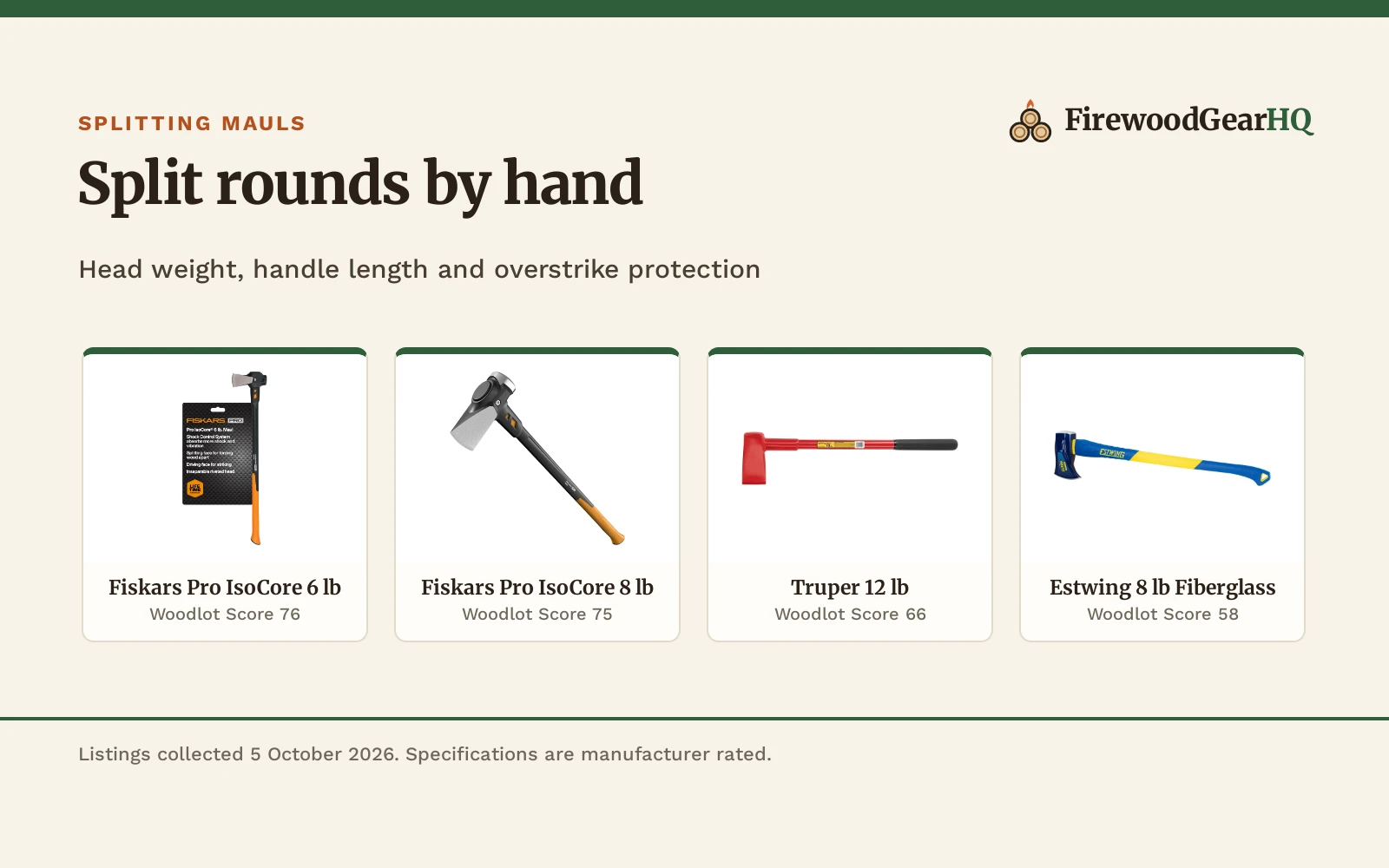
A splitting maul is still the cheapest way to turn rounds into firewood, and for a cord or two a year it may be all you need. This guide compares five mauls by head weight, handle length and material, overall weight, overstrike protection and warranty, from a 6 lb Fiskars that is easy to swing all afternoon to a steel-handled Truper for knotty wood.
FirewoodGearHQ earns a commission when you buy through links on this page, at no extra cost to you. Affiliate disclosure.
Quick picks
- Best Overall Fiskars Pro IsoCore 6 lb: 6 lb head on a 36 in IsoCore handle with a wedge-driving face and a lifetime warranty. Check price
- Best for Big Hardwood Fiskars Pro IsoCore 8 lb: Fiskars’ heavier IsoCore maul with a riveted head and a lifetime warranty. Check price
- Best Steel Handle Truper 12 lb: Short 27 in steel handle and a heavy head; states it exceeds ASME B107.54M. Check price
- Best Fiberglass Handle Estwing 8 lb Fiberglass: 8 lb forged head hardened to 50 to 55 HRC on a fiberglass handle. Check price
Compare the picks
| Model | Woodlot Score | Head weight | Handle length | Handle material | Overall weight (listed) | Warranty (stated) |
|---|---|---|---|---|---|---|
| Fiskars Pro IsoCore 6 lb | 76 | 6 lb | 36 in | IsoCore dual-layer | 8.6 lb | Lifetime |
| Fiskars Pro IsoCore 8 lb | 75 | 8 lb (title); 6.4 lb (table) | 36 in | IsoCore | 10.4 lb | Lifetime |
| Truper 12 lb | 66 | 12 lb (title); 8 lb (table) | 27 in | Steel, cushion grip | 15 lb | Not stated |
| Estwing 8 lb Fiberglass | 58 | 8 lb | 36 in overall | Fiberglass | 10.5 lb | Not stated |
| Crescent 8 lb HEADLOCK | 57 | 8 lb | 36 in overall | Fiberglass core | 11.1 lb | Not stated |
Specifications are manufacturer rated, collected 5 October 2026. Listed weights can include packaging, and two listings give a different head weight in the title and the product table; we show both.
The picks
| Award | Product | Woodlot Score About the HQ ScoreThe Woodlot Score runs from 0 to 100 and weighs rated performance, build, value, safety listing and warranty, using only what the manufacturer and the listing publish. How we pick › | |
|---|---|---|---|
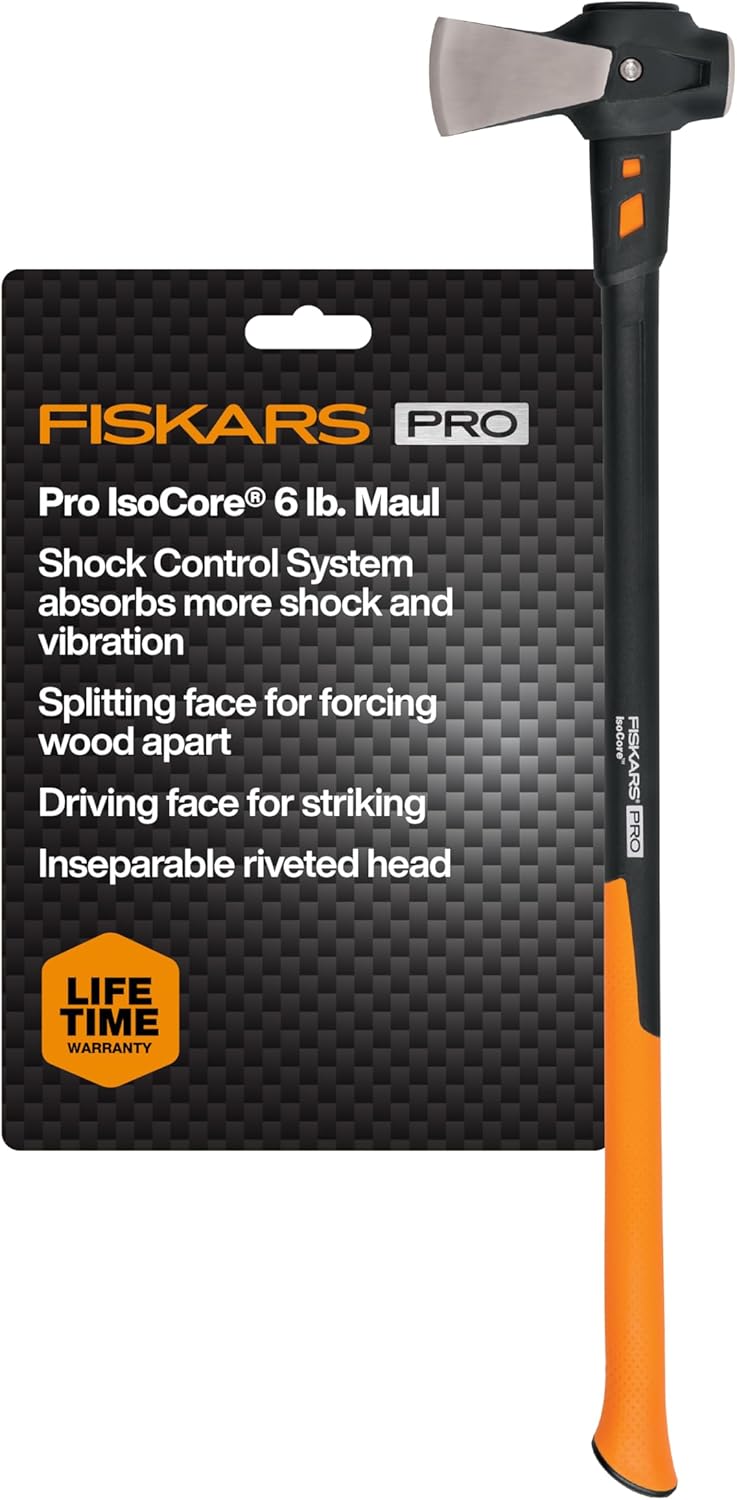 Fiskars Pro IsoCore 6 lb Splitting Maul
|
76/100 | Buy | |
 Fiskars Pro IsoCore 8 lb Splitting Maul
|
75/100 | Buy | |
 Truper 12 lb Splitting Maul
|
66/100 | Buy | |
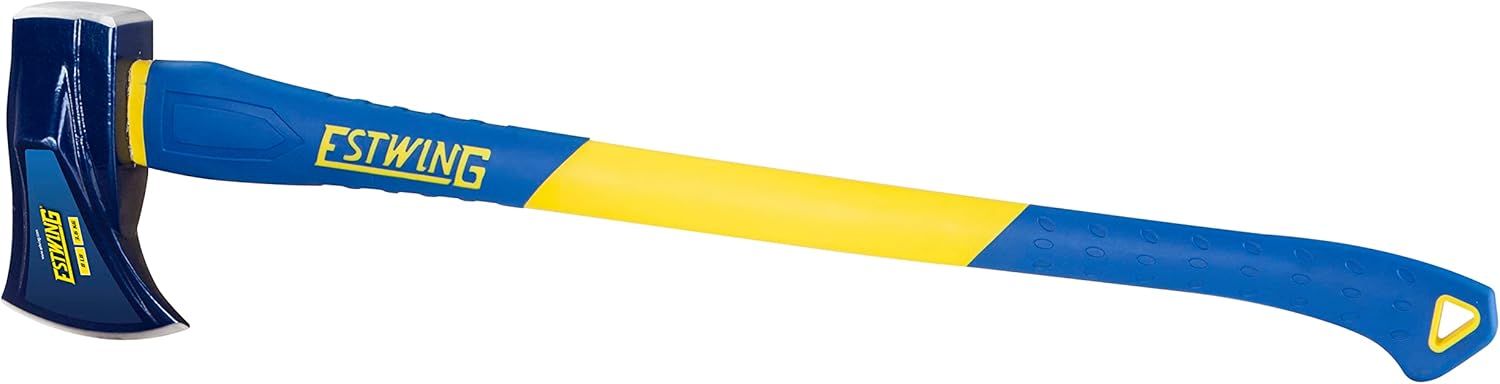 Estwing 8 lb Wood Splitting Maul with 36-Inch
|
58/100 | Buy | |
 Crescent 8 lb. HEADLOCK™ Fiberglass Splitting Maul
|
57/100 | Buy |
Fiskars Pro IsoCore 6 lb Splitting Maul
A 6 lb splitting maul on a 36 in IsoCore shock-absorbing handle, with a forged heat-treated head, a driving face for wedges and a riveted head that will not loosen.
Pros
- Driving face for striking wedges
- IsoCore handle claims 2X less shock than wood-handled mauls
- Inseparable riveted head and steel overstrike sleeve
- Full lifetime warranty
Cons
- 6 lb head needs more swings on big knotty rounds
- 36 in handle suits taller users
- Durability claim cites unnamed ISO standards
- Listing table labels the handle simply as wood
Fiskars Pro IsoCore 8 lb Splitting Maul
Fiskars' 8 lb class splitting maul on a 36 in IsoCore shock-absorbing handle, with a riveted forged steel head, overstrike protection and a protective sheath.
Pros
- Heavier head for large hardwood rounds
- Inseparable riveted head
- IsoCore shock-absorbing handle with overstrike protection
- Full lifetime warranty and protective sheath
Cons
- Listing table shows a 6.4 lb head despite the 8 lb title
- Heavier to swing for long sessions
- No wedge-driving face mentioned
- No safety or durability standard stated
Truper 12 lb Splitting Maul
A heavy splitting maul on a short 27 in high-strength steel handle with a 9 in non-slip cushion grip, stated to exceed ASME standard B107.54M.
Pros
- Steel handle will not break on an overstrike
- States it exceeds ASME B107.54M
- Heavy head for knotty rounds
- Sheath included
Cons
- Heaviest overall here, about 15 lb listed
- Short 27 in handle gives less reach and swing speed
- Steel handle passes more shock to the hands
- No warranty term stated
Estwing 8 lb Wood Splitting Maul with 36-Inch
An 8 lb splitting maul with a forged head hardened to 50 to 55 HRC on a 36 in dual-injection fiberglass handle.
Pros
- Full 8 lb head stated in title and bullets
- Forged head hardened to 50 to 55 HRC
- Fiberglass handle with over 70% fiberglass content
- 36 in overall length for reach
Cons
- No warranty term stated
- No overstrike guard mentioned
- Made in India, unlike Estwing's US-forged one-piece tools
- 10.5 lb listed weight
Crescent 8 lb. HEADLOCK™ Fiberglass Splitting Maul
An 8 lb splitting maul with Crescent's HEADLOCK head attachment, steel overstrike protection and a full-length fiberglass core handle.
Pros
- HEADLOCK system keeps the head from separating
- Steel overstrike protection
- Full-length fiberglass core reduces shock
- 8 lb head
Cons
- Heaviest of the 36 in mauls here at 11.1 lb listed
- Few ratings so far
- No warranty term stated
- Very short listing
How we scored them
Each maul is scored out of 100 on performance, build, value, safety and warranty, using only what the listing publishes. Safety credit goes to a named standard (such as ASME B107.54M) or a stated durability standard. The weights are on our How We Pick page.
| Product | Woodlot Score | Perf. | Build | Value | Safety | Warranty |
|---|---|---|---|---|---|---|
| Fiskars Pro IsoCore 6 lb | 76 | 22 | 18 | 17 | 5 | 14 |
| Fiskars Pro IsoCore 8 lb | 75 | 27 | 18 | 16 | 0 | 14 |
| Truper 12 lb | 66 | 26 | 15 | 17 | 8 | 0 |
| Estwing 8 lb Fiberglass | 58 | 25 | 16 | 17 | 0 | 0 |
| Crescent 8 lb HEADLOCK | 57 | 25 | 17 | 15 | 0 | 0 |
Buying guide: choosing a splitting maul
Maul or splitting axe?
A maul has a heavy, blunt wedge-shaped head that pushes the wood apart; it works best on large, straight-grained rounds and can drive a wedge. A splitting axe is lighter with a sharper edge, faster on small and medium rounds. If most of your wood is over about 12 in across, start with a maul.
Head weight
Six to eight pounds of head is the usual range. Heavier is not always better: accuracy and head speed split more wood than raw mass, and a maul you can swing for an hour beats one you can swing for ten minutes.
Handle length and material
A 36 in handle gives taller users more reach and head speed; shorter handles are easier to control. Wood handles feel good but crack on overstrikes. Fiberglass and composite handles resist that, and steel handles are nearly indestructible but pass more shock to your hands.
Overstrike protection and head attachment
Most maul damage comes from missing the round and hitting the handle on its edge. A steel collar or sleeve below the head and a riveted or locked head make a maul last much longer.
When to step up to a splitter
If you split several cords a year, or a lot of elm, gum or other stringy wood, a hydraulic or kinetic splitter saves your back. Our log splitter tonnage calculator estimates the force your wood needs. For kindling, a kindling splitter is safer than a hatchet.
Pick the wood species, the biggest round you split and its condition to get the splitter tonnage to shop for.
Clear the swing area (overhead too), split on a solid chopping block at a comfortable height, keep your feet apart with the block in front of you, and wear eye protection and sturdy boots. Replace a cracked or loose handle before you swing again. Read our Safety Disclaimer.
Frequently Asked Questions
Is a 6 lb or 8 lb maul better?
For most people a 6 lb head is easier to swing accurately for longer. An 8 lb head helps on large, knotty rounds if you have the strength to swing it with control.
What is the difference between a maul and a splitting axe?
A maul is heavier with a blunt wedge head and usually a striking face; a splitting axe is lighter with a sharper, thinner profile. Mauls suit big rounds, axes suit small and medium rounds.
Can I hit a wedge with a splitting maul?
Only if the listing says the back of the head is a driving or striking face. Never strike a wedge with an axe.
Which wood is hardest to split by hand?
Stringy, interlocked woods like elm are the hardest. Straight-grained ash and oak split much more easily, especially when the wood is frozen or partly dry.
What safety gear do I need for splitting?
Eye protection, gloves and sturdy boots at minimum. Split on a solid chopping block at a comfortable height, keep a clear swing zone and keep people and pets well back.
Related guides
See the axes and mauls hub. Cut your rounds first with the best chainsaw for firewood or a chainsaw under $300, then make fire-starting wood with a kindling splitter. Planning a winter’s supply? Use the firewood cord calculator. Thinking about a powered splitter? Read how many tons of log splitter you need and our comparison of gas vs electric log splitters, or see the best electric log splitters under $500.
About the author
The FirewoodGearHQ editorial team researches firewood and wood heating equipment from published specifications, ratings and warranty terms, and scores every pick the same way. We do not run our own product trials.