Bushcraft Axe vs Camp Axe: Which One Should You Buy?
How a bushcraft axe and a camp axe differ in length and job, and which style suits splitting at home versus chores at camp.

On this page
Top picks at a glance
As an Amazon Associate I earn from qualifying purchases.
- 1
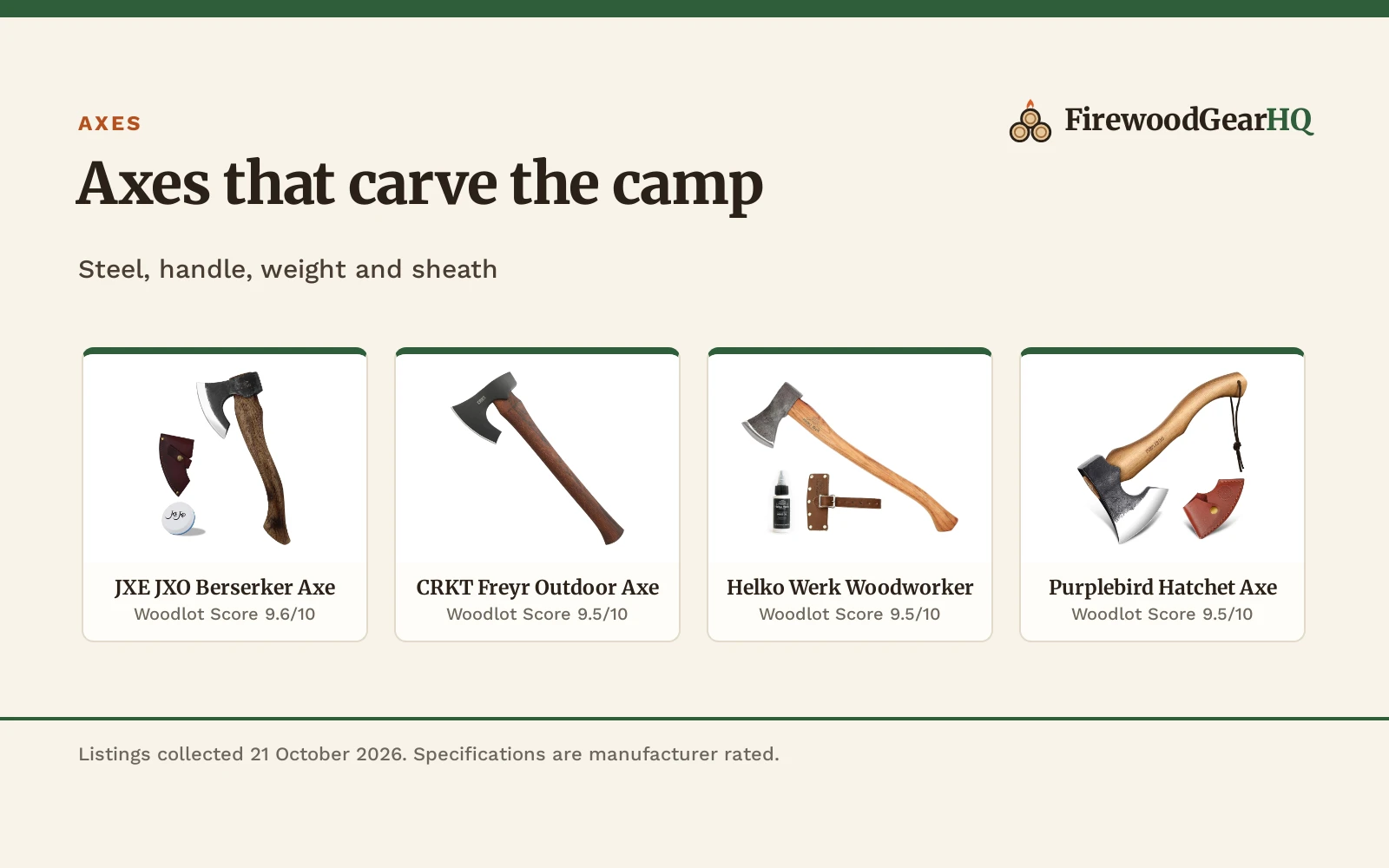
 The Berserker9.4/10View on Amazon
- 2
 Schrade Delta Class Bedrock Camp Axe with 3Cr13 Stainless9.6/10View on Amazon
- 3
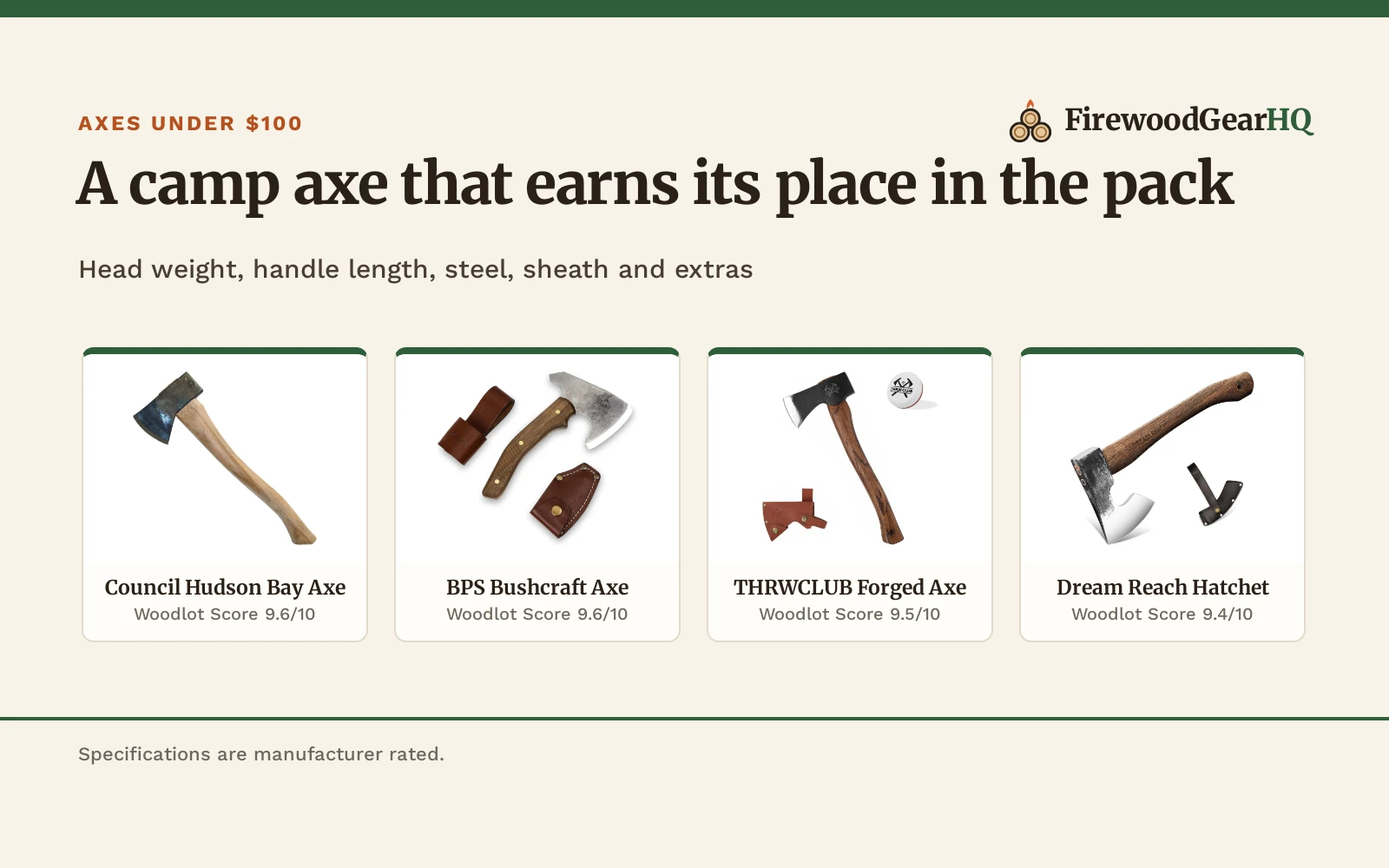
 COUNCIL TOOL 2 lb Hudson Bay Camp Axe9.4/10View on Amazon
- 4
 Grumpy Bear Camping HatchetView on Amazon
- 5
 HX OUTDOORS Multifunctional Splitting Axe Small SurvivalView on Amazon
- 6
 LIANTRAL Camping AxeView on Amazon
- 7
 Camping AxeView on Amazon
- 8
 Tivoli Camping Hatchet Axe with SheathView on Amazon
- 9
 WEYLAND Bushcraft HatchetView on Amazon
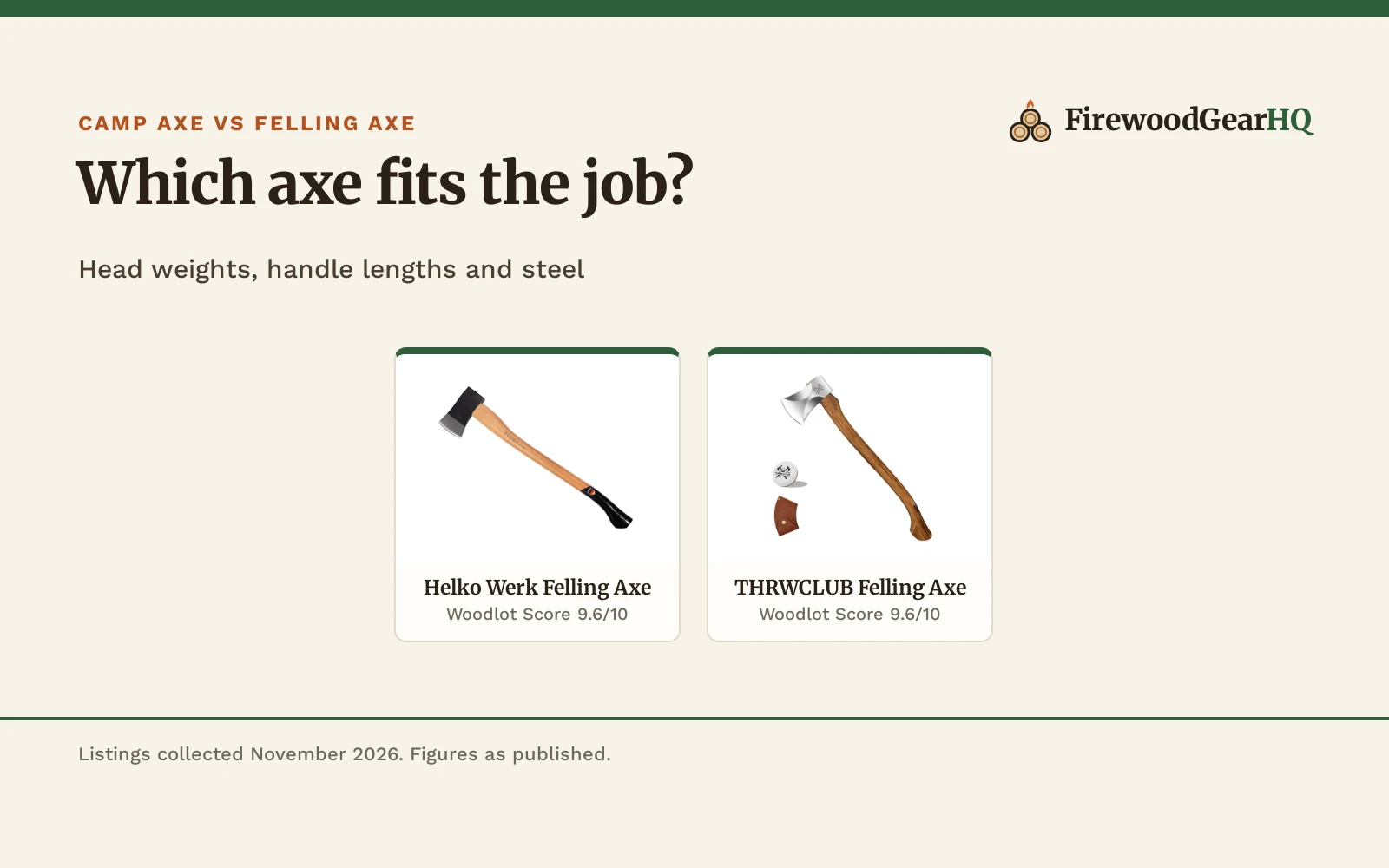
Fall splitting and winter burning start with the same choice at the woodpile, and bushcraft axe vs camp axe comes down to length and job: the bushcraft axe leans longer for splitting and woodcraft, while the camp axe stays short and packable for camp chores and preparing firewood. For firewood work around the home, the longer bushcraft style handles the bigger splitting jobs, and the camp style earns its place when the axe rides in a pack.
More options to weigh up
 Grumpy Bear Camping HatchetCheck price on Amazon
 HX OUTDOORS Multifunctional Splitting Axe Small SurvivalCheck price on Amazon
 LIANTRAL Camping AxeCheck price on Amazon
 Camping AxeCheck price on Amazon
 Tivoli Camping Hatchet Axe with SheathCheck price on Amazon
 WEYLAND Bushcraft HatchetCheck price on Amazon
FirewoodGearHQ earns a small commission if you buy through links on this page. The price you pay stays the same.
Bushcraft axe vs camp axe: the difference
The difference is length, weight of work and extras. The bushcraft axe is the longer tool, shaped for splitting, chopping logs and woodcraft around a firewood pile. The camp axe is the shorter tool, shaped for packing, preparing firewood and quick chores at camp. The line between them is soft: a camp axe can prepare firewood, and a bushcraft axe can travel, but length is one factor in how much splitting comfort each style gives. For readers weighing a close cousin of this choice, survival axe vs camp axe covers a similar split.
Handles and blades tell the same story in miniature. A longer bushcraft axe usually pairs a wood handle with a forged head, built for grip and leverage through long sessions. A shorter camp hatchet often trades that for a grippy wrap, a covered head and a few extras, such as a secondary edge for bark or rope. Check each listing for what the maker actually states, since claims vary from one listing to the next.
The gear
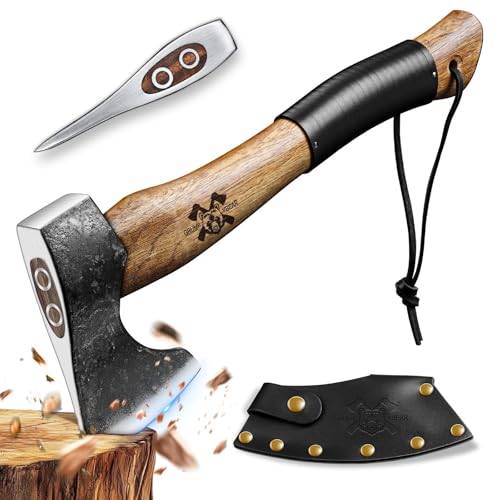
The Grumpy Bear pick is the bushcraft-style choice for splitting work. Its listing states a forged high-carbon steel blade with a smooth polished finish for clean cuts, a walnut handle wrapped in leather, and a built-in safety lanyard that the listing says helps keep the axe from slipping during use. The title calls it ideal for bushcraft, wood splitting and outdoor adventures, and the bullets say it tackles everything from kindling to large logs. A figure inside the listing disagrees with the rest: the title states 15 inches while the spec table lists 11.0 inches, so this guide trusts the title figure.
Its listing also says the leather-wrapped handle is designed to minimize hand strain over extended use, which matters on a long splitting afternoon. The listing does not state a sheath, a warranty term or a weight, so those items are Not stated. For handle materials in general, fiberglass vs wood handle axe compares the options.
Handling and safe use
Keep a clear swing zone around the chopping spot, with no people, pets or gear inside the arc of the swing. Carry any axe with the head covered, and use the lanyard the Grumpy Bear listing includes for grip security. Check the head and handle before work, and store the axe dry, with the edge covered, out of reach of children. For sheath materials, leather vs nylon axe sheath compares the options.
FAQ: wood, fire and gear
Which axe is better for splitting firewood?
The longer bushcraft style suits splitting best. The Grumpy Bear pick has a forged high-carbon steel blade that the title calls ideal for wood splitting, and its bullets cover kindling to large logs.
Can a camp axe split logs?
A short camp axe can chop branches and prepare firewood, but large logs suit a longer bushcraft style like the Grumpy Bear pick, whose bullets cover kindling to large logs.
How long is a bushcraft axe?
The Grumpy Bear title states 15 inches, while its spec table lists 11.0 inches. This guide trusts the title. Length alone does not settle the choice, but a longer handle generally gives more leverage for splitting.
Does the Grumpy Bear pick include a sheath or a lanyard?
The listing states a built-in safety lanyard. It does not state a sheath, so a separate sheath is worth planning for to cover the edge in storage and transport.
Can the same axe cover bushcraft and camp chores?
Yes, with trade-offs: the Grumpy Bear title covers bushcraft, wood splitting and outdoor adventures, and its bullets also mention camping and hiking. A shorter camp hatchet packs easier, while the longer axe splits more comfortably.
More firewood guides
Also see our survival axe vs camp axe. Also see our camp axe vs splitting axe. Also see our fiberglass vs wood handle axe. Also see our leather vs nylon axe sheath. Also see our hatchet vs splitting maul.