Fiberglass vs Hickory Handle Splitting Maul: Which One Should You Buy?
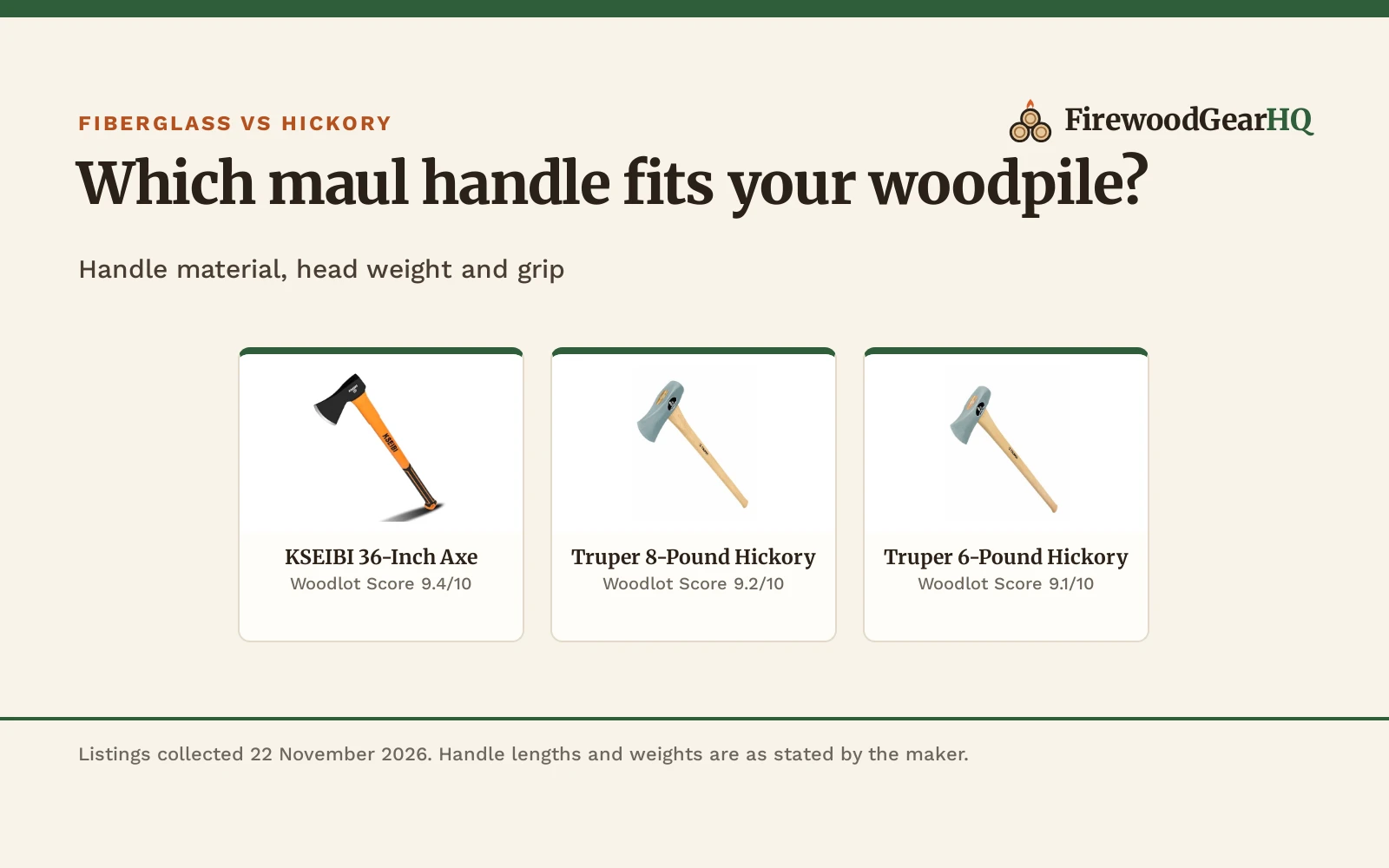
Fiberglass and hickory handle splitting mauls compared on handle material, head weight and grip, with one fiberglass example and two hickory examples from the…

Splitting axes, splitting mauls, wedges, felling axes and hatchets. Guides compare head weight, handle length and material, and which tool suits which wood and which person swinging it.
Pick the wood species, the biggest round you split and its condition to get the splitter tonnage to shop for.
Fiberglass and hickory handle splitting mauls compared on handle material, head weight and grip, with one fiberglass example and two hickory examples from the…
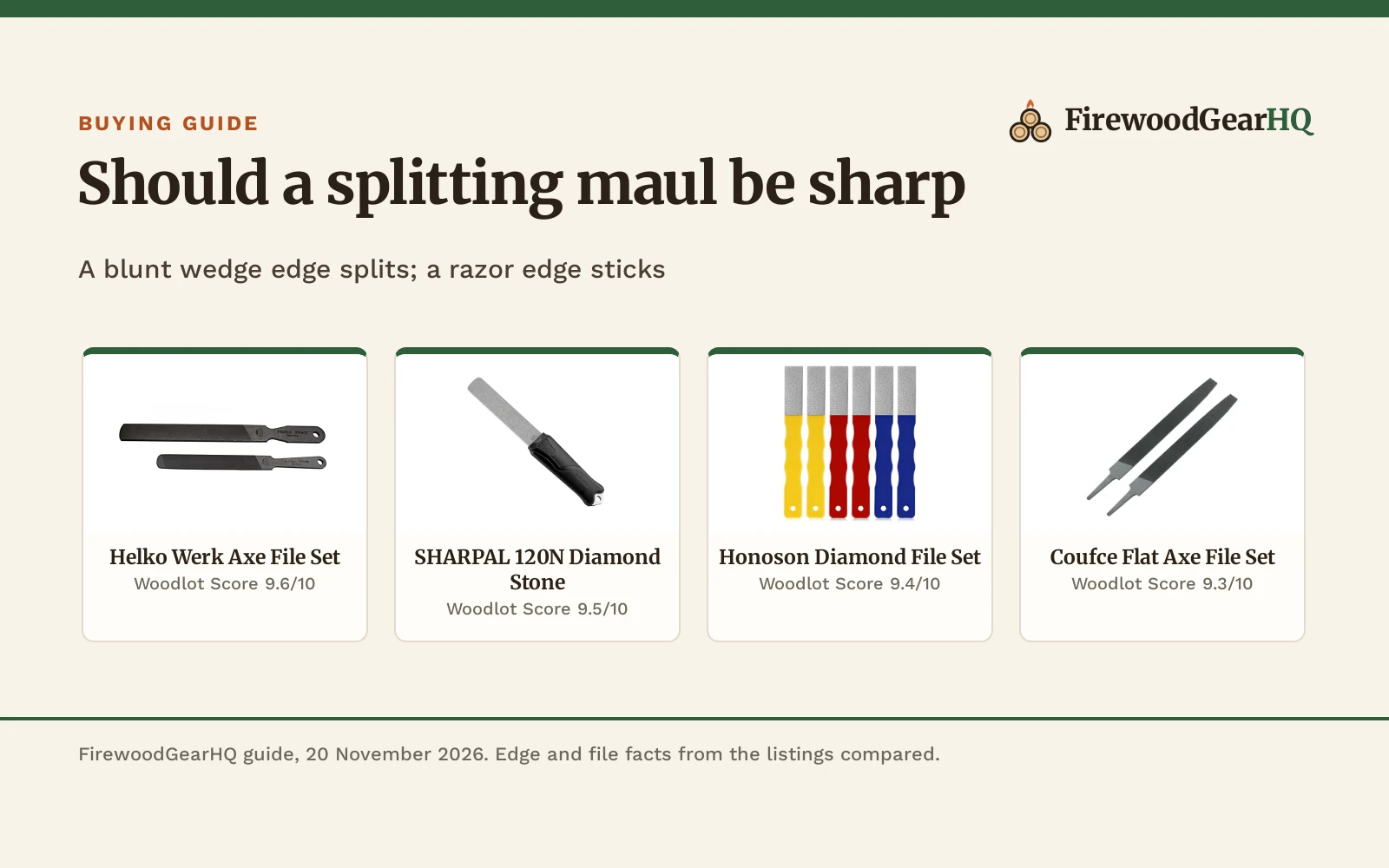
A splitting maul should not be razor sharp: it needs a blunt wedge edge that splits wood apart, and a file keeps that edge…
How to use a froe to rive shakes, shingles and kindling along the grain, with the mallet strike, the handle pull and the sizes…
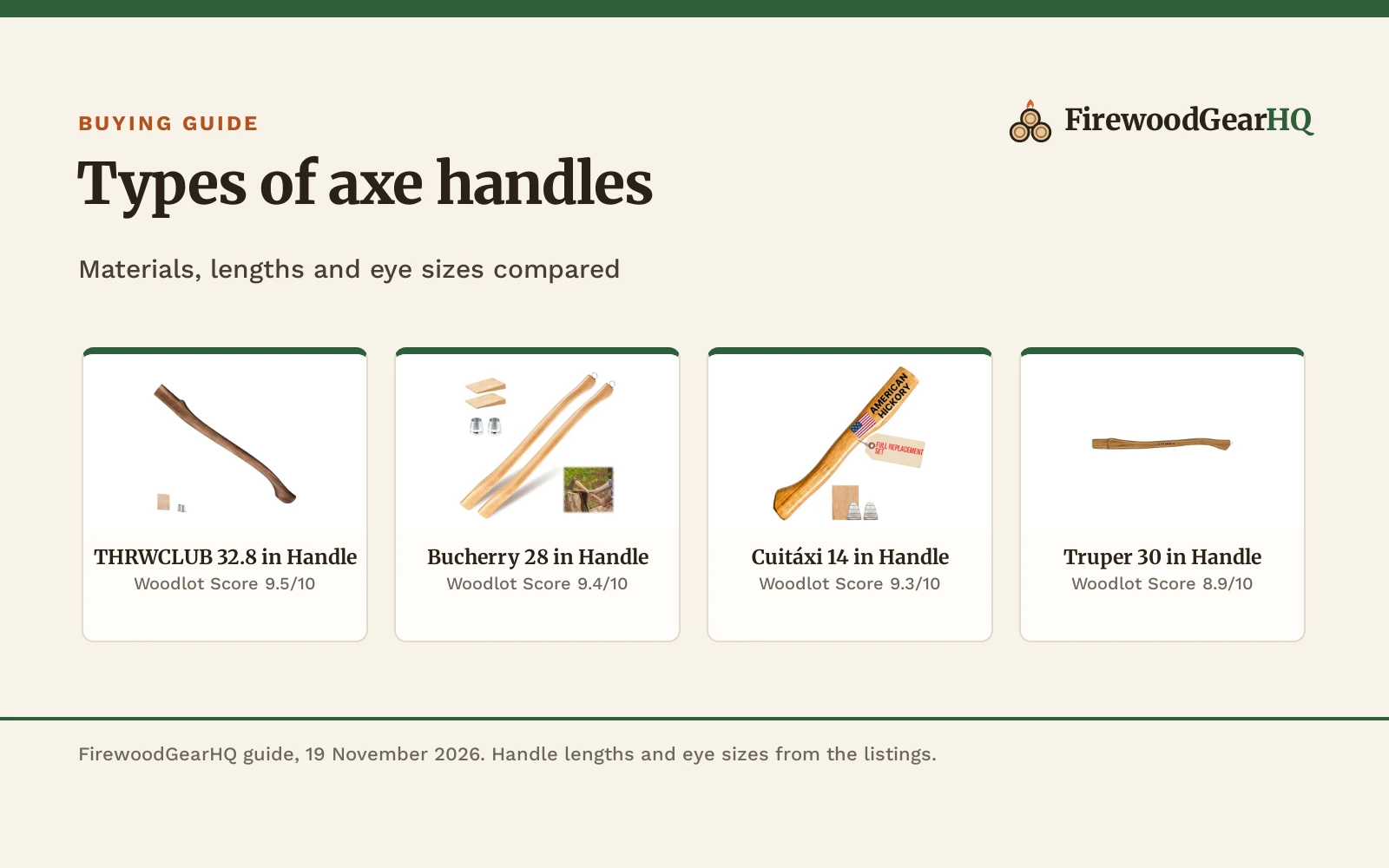
Hickory, beech and carbonized hickory axe handles compared by material, length and eye size, with four replacement handles for splitting, camp and hatchet axes.
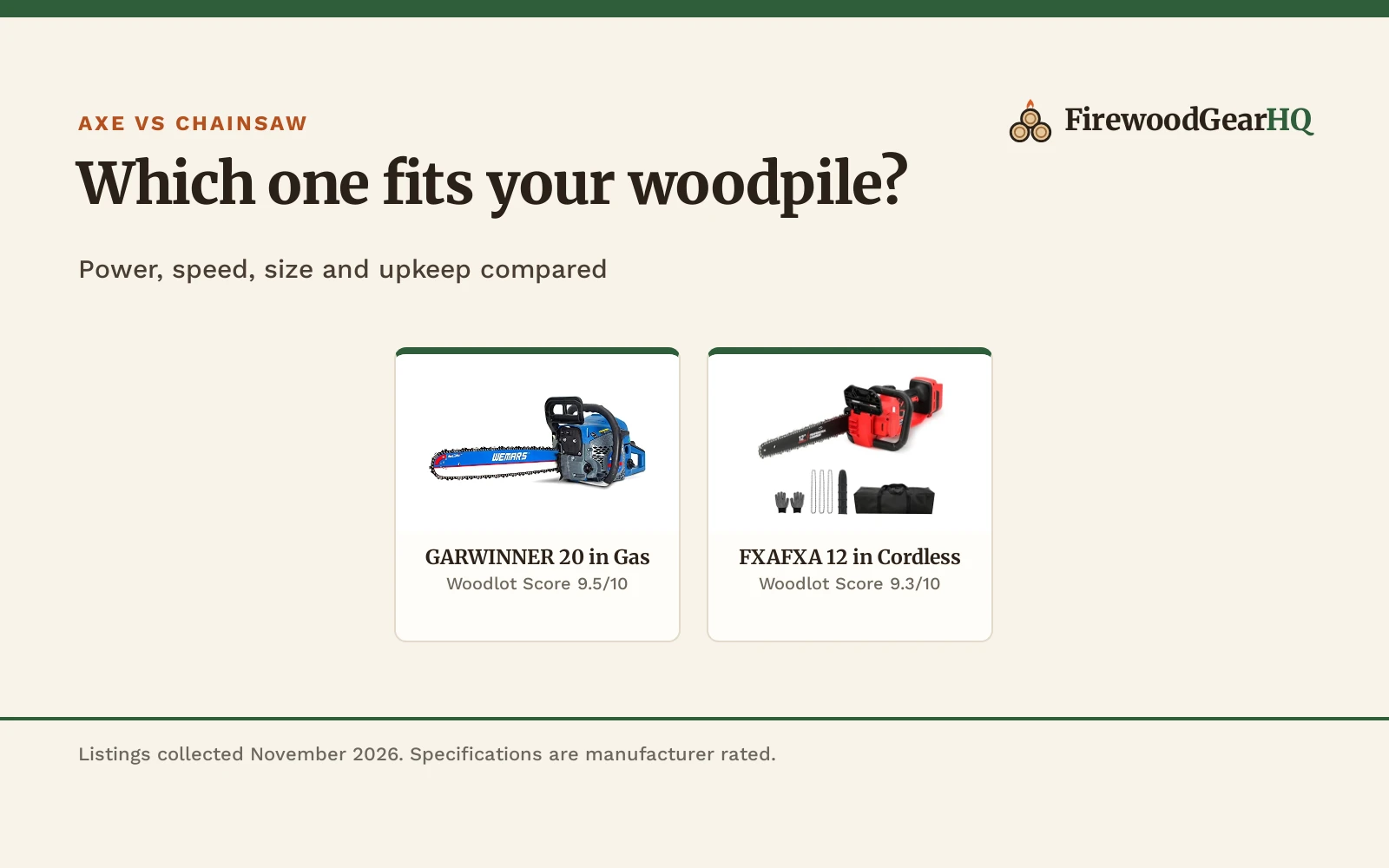
An axe vs chainsaw comparison with two chainsaw examples, a 12 in cordless saw for trimming and a 20 in gas saw for felling.
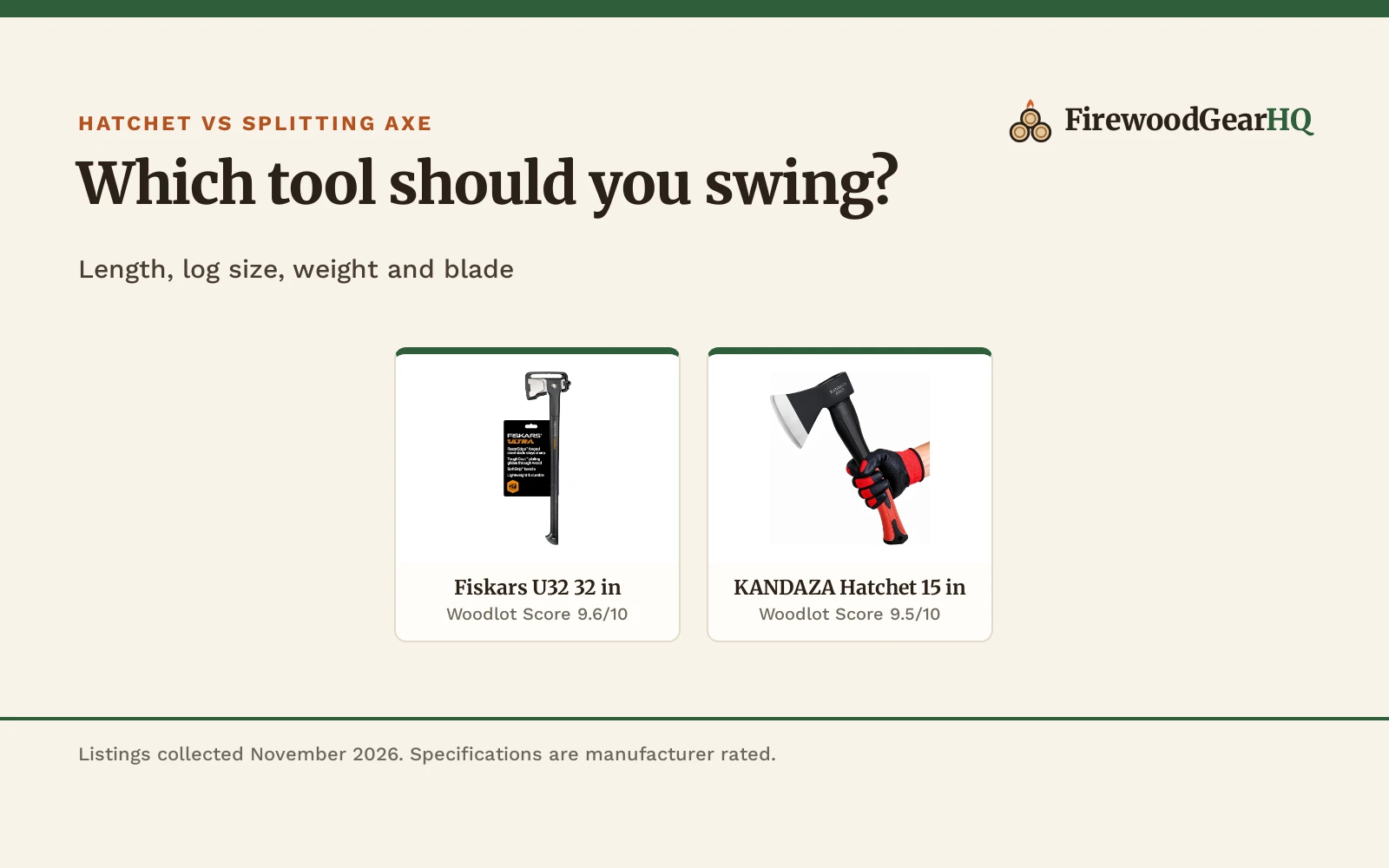
Hatchet vs splitting axe compared through a 15 in hatchet and a 32 in splitting axe, with log size, weight, blade and handle side…
Uses for a hatchet, from splitting kindling and trimming branches to camp chores, with size and carrying advice.
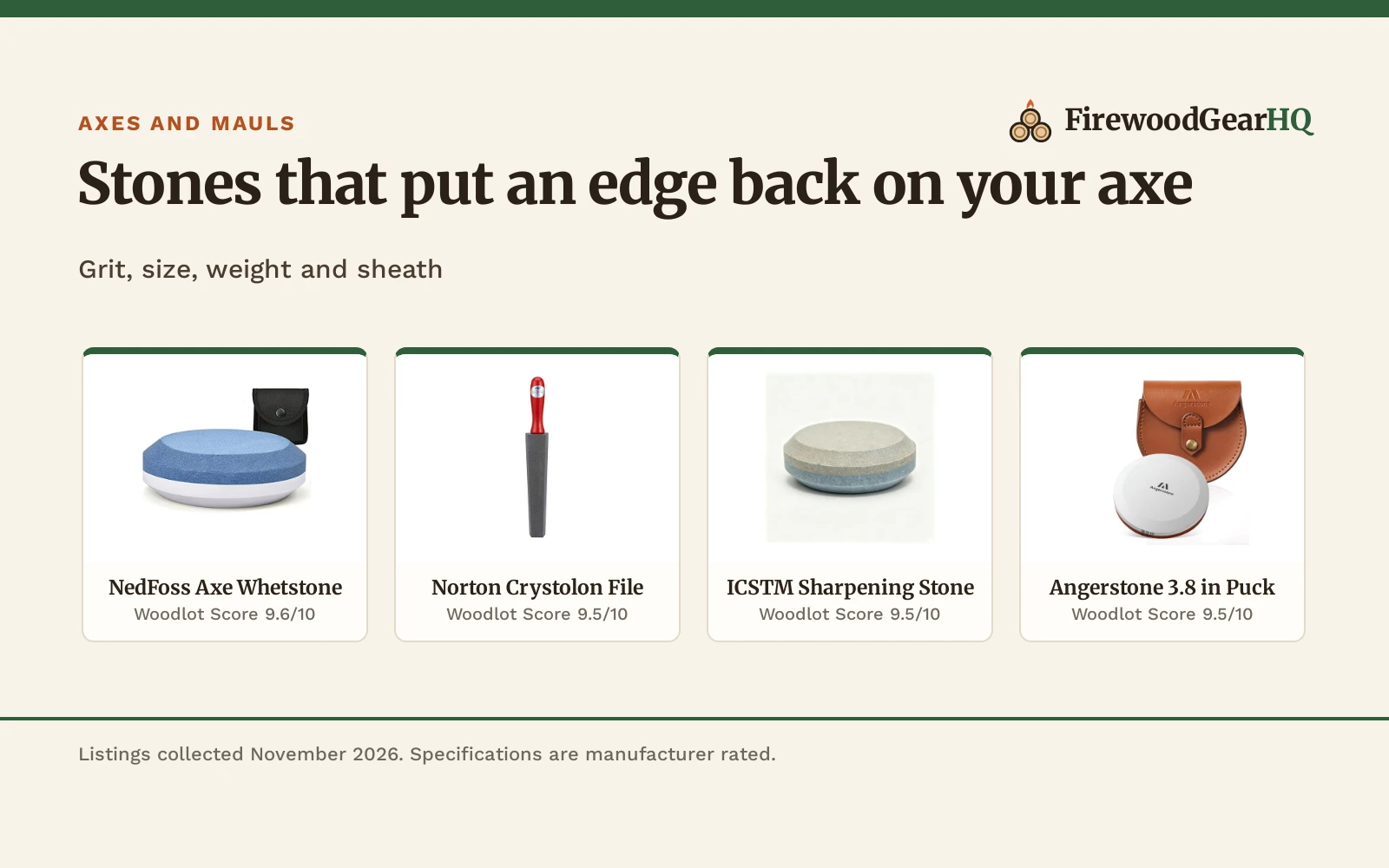
Dual-grit pucks and a long file stone for axes compared by grit, size, weight, sheath and warranty, for a keen edge on a first…
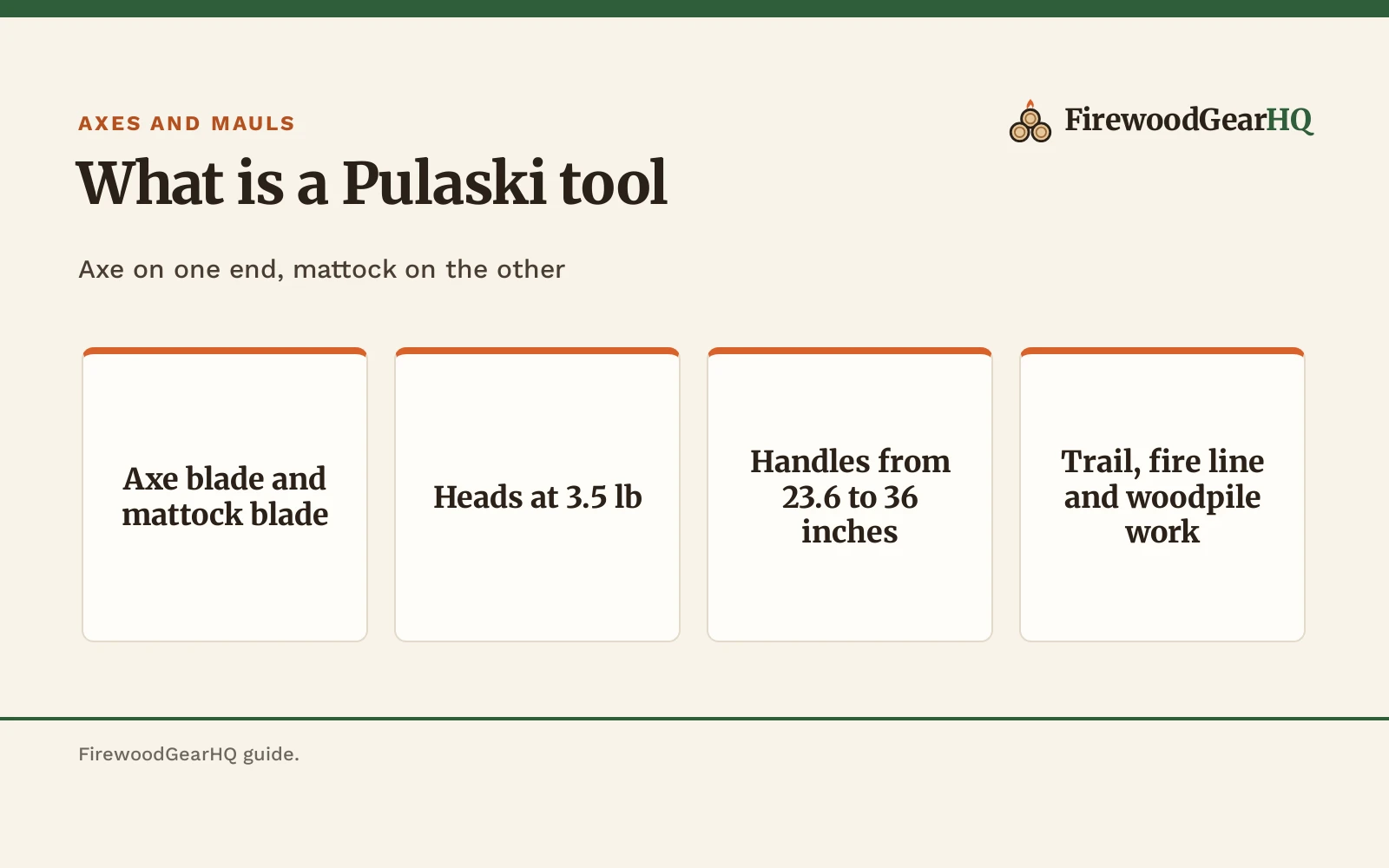
A Pulaski pairs an axe blade with a mattock blade on one head, so a single tool chops, digs and clears roots on the…
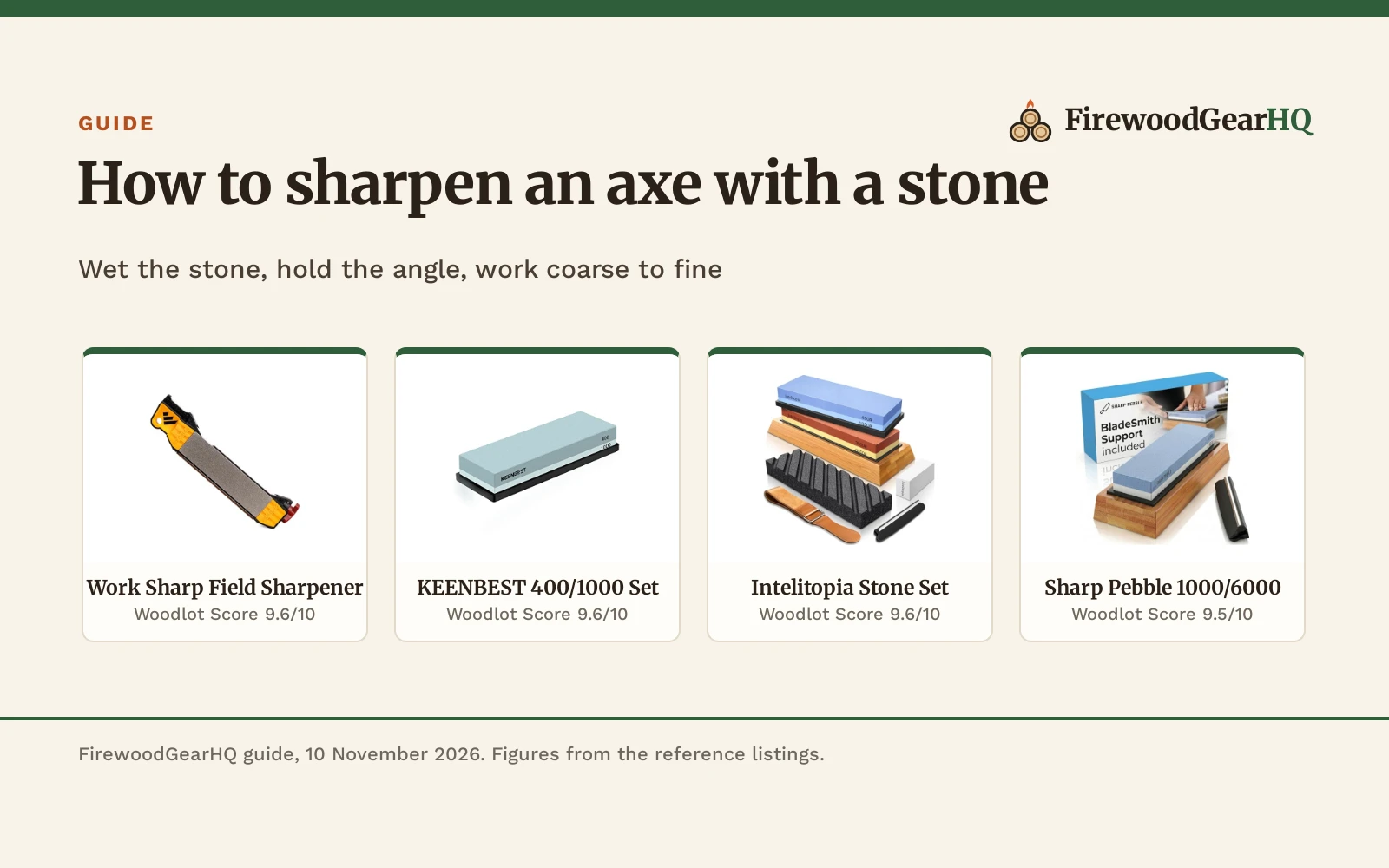
How to sharpen an axe with a stone: wet the whetstone, hold the bevel with an angle guide, work from coarse grit to fine,…