How to Use a Froe for Splitting Wood
How to use a froe to rive shakes, shingles and kindling along the grain, with the mallet strike, the handle pull and the sizes makers list.

On this page
Top picks at a glance
As an Amazon Associate I earn from qualifying purchases.
- 1
 Lehman's Wood Froe and Mallet SetView on Amazon
- 2
 Lehman's Wood-Splitting FroeView on Amazon
- 3
 Lehman's Hardwood Froe Striking MalletView on Amazon
Fall splitting season brings a pile of short rounds and boards to the woodpile, and a froe turns that pile into shingles, shakes and kindling with a calm, controlled motion. Learning how to use a froe means learning to rive wood along the grain instead of chopping across it, and the tool rewards a steady hand and a wooden mallet. This guide walks through the setup, the strike and the pull, plus how to pick a froe that fits the work.
More options to weigh up
 Lehman's Wood Froe and Mallet SetCheck price on Amazon
 Lehman's Wood-Splitting FroeCheck price on Amazon
 Lehman's Hardwood Froe Striking MalletCheck price on Amazon
FirewoodGearHQ earns a small commission if you buy through links on this page. The price you pay stays the same. Read our affiliate disclosure.
The quick answer
Set the froe blade on the end of a short log or board, with the edge across the grain where the split should run. Strike the top edge of the blade with a wooden mallet until the edge bites in, then pull the long handle toward you to lever the wood apart along the grain. Keep the blade moving straight and let the grain guide the split, and reposition the froe to finish a long piece in sections.
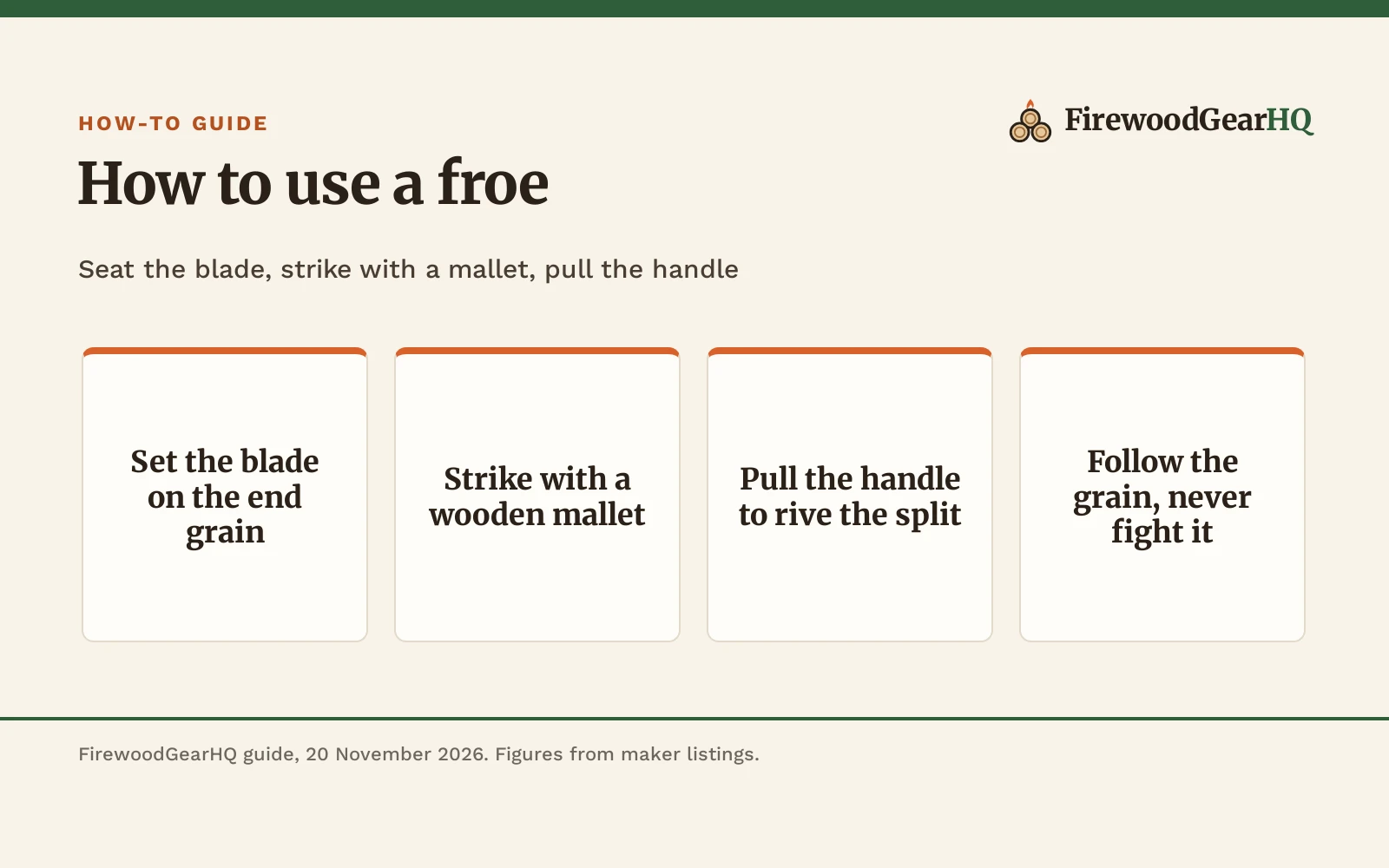
How to use a froe
Set the blade on the end grain
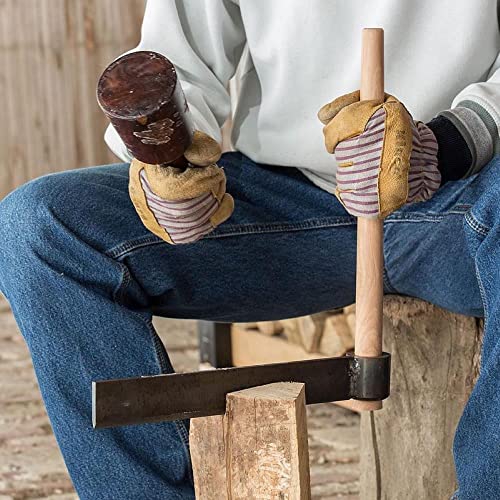
Stand the piece upright on a firm chopping block or on level ground, with the end grain facing up and the split line where you want it. Rest the froe edge on the end of the piece and hold the handle upright with a relaxed grip, keeping hands clear of the edge and clear of the strike zone. The blade sits across the end grain, not along the side, so the split follows the grain down the length of the piece.
Strike the top edge with a mallet
Tap the top edge of the blade with a wooden mallet to seat it, then strike with firm, even blows until the edge sinks into the wood. A wooden mallet is the right striking tool here, since a steel hammer can chip a hardened edge. Makers pair froes with mallets for this reason: Lehman’s sells a set with a mallet about 9-3/4 inches tall and a head 3 inches in diameter, and LemonRoad lists a set with a mallet about 9.7 inches tall and a head 3 inches across.
Pull the handle to rive the split
After the blade is seated, pull the handle toward you in a smooth levering motion. The handle gives the leverage that opens the split, and the wood parts along the grain instead of being cut across it. If the split stalls, drive the blade a little deeper with the mallet and pull again, or work the froe along the split line in stages. Keep your stance balanced and keep the swing zone clear, with nobody standing close while the blade is under load.
Work long pieces in sections
For a board or a shake blank longer than the blade, start the split at the near end and walk the froe down the split line, striking and pulling as the split runs ahead of the blade. Straight grain rives cleanly, while knots and twisted grain can pull the split off line, so slow down around them and let the blade follow the wood. When the piece parts, stack it flat and move on to the next piece.
What a froe is for
A froe is a riving tool, not a chopping tool. It splits shakes and shingles for a roof, kindling for a stove, and blanks for chair spindles, spoons and turning work, all by following the grain. Makers are clear about its limits: Lehman’s notes that a froe is not meant to split large logs, and that it is designed for already-split lumber or small logs for woodworking, making kindling and more. For rounds and firewood, a splitting maul or a splitting axe does the heavy work, and the froe takes over when the pieces are small and the split needs to be precise.
Froe sizes from maker listings
| Maker | Blade | Handle | Weight |
|---|---|---|---|
| Carmyra | 15 inches | 18 inches | 3.15 pounds |
| Lehman’s | 15 inches | 16 inches | 4 pounds |
| FIKDCMJ | 16.5 inches | 18 inches | Not stated |
| Seven Pines Forge | 12-inch cutting edge | 17 inches overall | 2.75 pounds |
| Timber Tuff | 15 inches, 2 inches deep | Hardwood | 3.08 pounds |
| Sharky | 10 inches | Ash wood | 2.28 pounds |
Blade length sets how wide a piece the froe can start across, and handle length sets the leverage for the pull. A 10-inch blade suits kindling, planks and shingles, while the longer blades suit shakes and shingles.
Choosing a froe
Blade length
Match the blade to the widest piece you plan to rive. A 10-inch blade suits kindling, planks and shingles, a 15-inch blade covers shakes, shingles and turning blanks, and a 16.5-inch blade suits wider boards.
Handle length and material
Handles run from 16 inches to 18 inches in the listings, with hickory, ash and hardwood named by the makers. A longer handle gives more leverage on the pull, and a hardwood handle with a tapered fit locks into the blade eye so the head stays put. Carmyra describes a handle that tapers so the blade jam fits in place, and LemonRoad lists a 17.7-inch handle with the same tapered fitting.
Forged steel and edge
Look for a hardened or case-hardened steel blade with a sharp edge, since the edge has to bite and hold through repeated strikes. Carmyra lists a hardened steel blade, Lehman’s lists a case-hardened steel blade, and Sharky lists a hand-forged blade of hardened 52100 carbon steel. A black coating or an anodized finish helps against rust when the tool lives in a shed or an outbuilding.
Froe and mallet sets
Lehman’s froe and mallet set lists a 15-inch blade, a 16-inch hickory handle and a total weight of 4 pounds, with a birch hardwood mallet about 9-3/4 inches tall. LemonRoad lists a froe and mallet set with a 13.8-inch blade, a 17.7-inch handle and a mallet about 9.7 inches tall.
Safety while riving
A froe keeps the hands above the cutting edge, which is part of its appeal, and the work still deserves care. Keep the swing zone clear, wear gloves and eye protection, and strike only with a wooden mallet. Seat the handle firmly before striking, and never strike a froe blade with a steel hammer. Work on stable footing with the piece held firm, and store the blade covered when the froe is not in use.
FAQ: wood, fire and gear
Can a froe split large logs?
No. Makers state plainly that a froe is not meant to split large logs, and that it is designed for already-split lumber or small logs for woodworking and kindling. Use a splitting maul or a log splitter for rounds, and save the froe for the fine work. See the best splitting maul picks and the kindling splitter vs splitting maul comparison.
What mallet should I use with a froe?
A wooden mallet, sized to the froe. Maker sets pair a mallet about 9-3/4 inches tall with a head 3 inches in diameter, or a mallet about 9.7 inches tall with a head 3 inches across. A wooden face seats the blade without chipping the edge, and a mallet with a ball end stays in the hand through a long session.
What is a froe used for?
A froe rives wood along the grain to make shakes, shingles, kindling, chair spindles, spoons, bow staves and turning blanks. It suits traditional woodworking, shingle making and campfire kindling, and it works on cedar and other types of wood. It is a riving tool, not a chopping tool, so it complements an axe rather than replacing it.
How do I keep a froe blade sharp?
Keep the edge clean and dry, oil it lightly when it goes back on the shelf, and hone it with a stone when it stops biting cleanly. See the best axe sharpening stones for stones sized for axes and blades. Strike only with a wooden mallet, since a steel face can chip a hardened edge.
Can I use a froe to make kindling?
Yes, kindling is a main job for a froe. Set a short split piece on end, seat the blade, strike with a wooden mallet and pull the handle to rive off thin slices. See the best kindling splitters and the fire tinder vs kindling guide.
What size froe should I buy?
Match the blade to the work: a 10-inch blade for kindling, planks and shingles, a 15-inch blade for shakes, shingles and turning blanks, and a 16.5-inch blade for wider boards. Handles in the listings run from 16 inches to 18 inches, so pick a length that gives a comfortable pull. A froe and mallet set suits a new froe buyer, since the mallet arrives sized for the blade.
More firewood guides
See the axes and mauls hub, the best splitting axes and the best kindling splitters. Compare tools in the kindling splitter vs splitting maul guide, and see the best wood chunk splitters for kindling work. Keep edges keen with the best axe sharpening stones.