Uses for a Hatchet: What a Hatchet Is Good For
Uses for a hatchet, from splitting kindling and trimming branches to camp chores, with size and carrying advice.

On this page
When the splitting season starts and the woodpile grows, the work divides into big jobs and small jobs. The splitter and the maul handle the rounds, while the hatchet handles everything smaller: trimming a branch, splitting kindling, shaping a stake, clearing a path to the stack. Uses for a hatchet cover that whole middle ground between a knife and a full axe, and the tool earns its place by doing small cutting jobs with control rather than force.
As an Amazon Associate I earn from qualifying purchases. FirewoodGearHQ earns a small commission if you buy through links on this page. The price you pay stays the same. Read our affiliate disclosure.
The quick answer
A hatchet is good for chopping small trees, splitting firewood into kindling, trimming branches, clearing brush and shaping stakes and pegs around camp and the woodpile. Its short handle suits work done close to the body with short, controlled swings, while longer axes and splitters suit bigger rounds and felling work. The two listings behind this guide measure 14.7 inches long for the THRWCLUB hatchet (on Amazon) and 13 inches long for the Grumpy Bear hatchet (on Amazon).
Uses for a hatchet around the woodpile
Most hatchet work falls into a short list of jobs that repeat through the cutting and burning seasons. Each suits a short handle and a controlled swing, and each one is easier with a sharp edge and a clear swing zone.
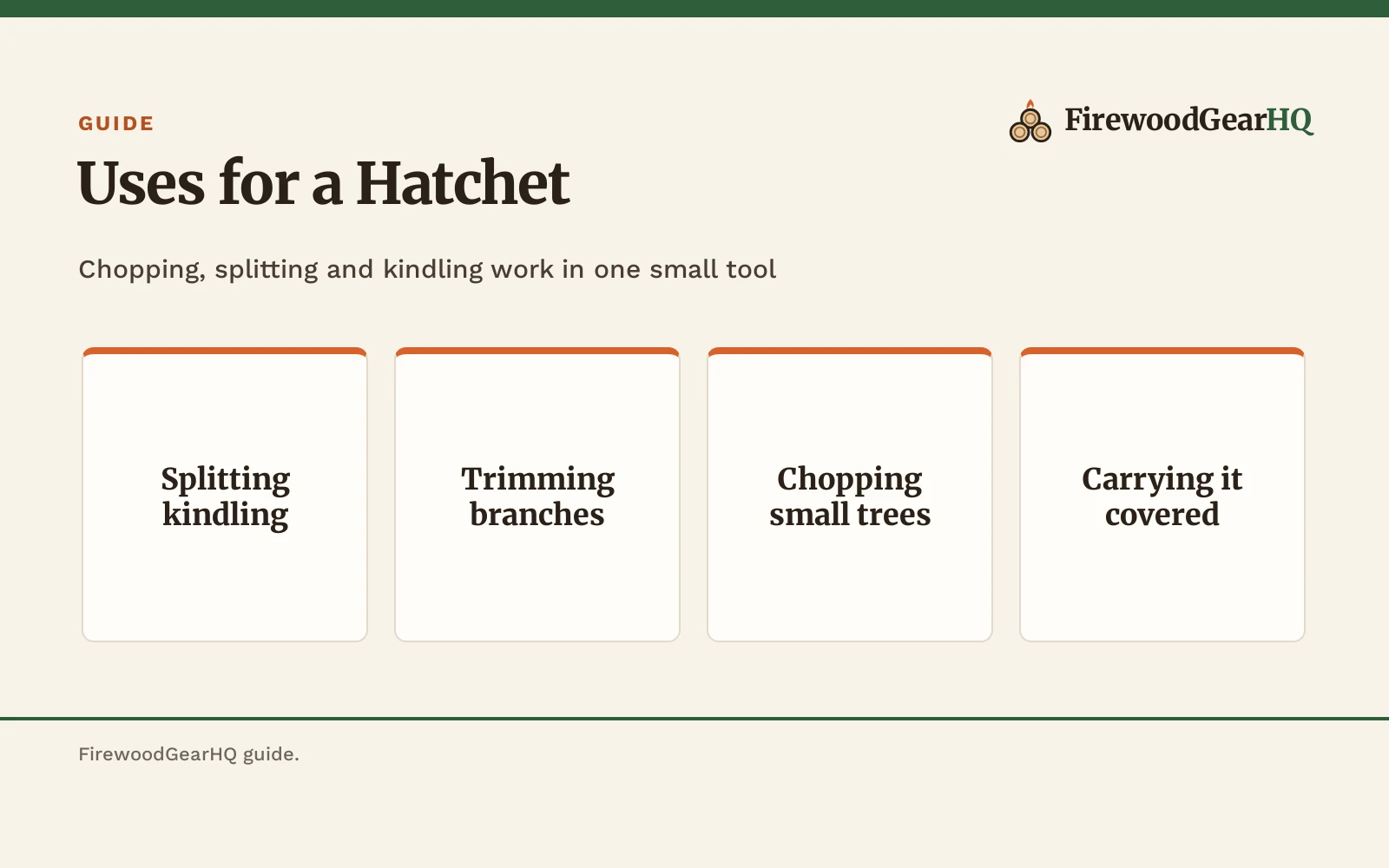
Splitting kindling
Kindling is the hatchet’s steadiest job at the woodpile. Small splits catch fast and build a fire that can take larger pieces, and a hatchet splits them with more control than a maul. The THRWCLUB listing names preparing kindling among its uses, and the Grumpy Bear listing names splitting wood and clearing a campsite. Split on a flat chopping block, keep hands clear of the blade path, and stop when the pieces are thin enough to catch from a match.
Trimming branches and clearing brush
Limbs left on a felled tree, saplings crowding a path and brush around the stack all fall to a hatchet. The THRWCLUB listing names trimming branches, and the Grumpy Bear listing names clearing brush. Work from the base of a limb outward and keep the swing zone clear.
Chopping small trees
A hatchet chops small trees and saplings. The THRWCLUB listing names chopping small trees. A hatchet suits small trees; larger felling work belongs to a longer axe or a saw. See felling axe vs hatchet for where the line sits.
Camp chores and shaping wood
At camp the hatchet earns its keep on tent pegs, stakes, poles and firewood prep. The THRWCLUB listing names everyday outdoor tasks and camping use, and its sheath carries a belt loop for carrying. The Grumpy Bear listing names bushcraft and survival use, with a leather-wrapped handle and a safety lanyard. Shaping a peg or a stake is the same controlled cutting as kindling, done with the grain and away from the body.
What a hatchet is not for
A hatchet is the wrong tool for big rounds, heavy splitting and felling larger trees. Big rounds need the weight of a maul or a splitter, and felling larger trees needs a longer axe with reach. The axe vs wood splitter comparison sets out where hand tools end and powered splitting begins, and the best log splitter axe and best splitting axe under 100 guides cover longer tools for that work.
Choosing a hatchet size
Size is the main choice. The THRWCLUB hatchet measures 14.7 inches long with a rubber handle and a nylon sheath, while the Grumpy Bear hatchet measures 13 inches long with a wood handle wrapped in leather and a safety lanyard. A longer handle gives more reach and leverage on the swing, while a shorter handle packs easier and suits close work. Either length covers the kindling, trimming and camp jobs above, so pick the handle and grip that suit the hands holding it.
Carrying and storing a hatchet
A hatchet should travel covered and rest covered. The THRWCLUB listing includes a heavy-duty nylon sheath with a belt loop, and the Grumpy Bear listing includes a sheath and a safety lanyard. Keep the edge sheathed between jobs, store the tool dry and out of reach of children, and sharpen it with a file or stone when the edge dulls. See a cheap axe sheath if the sheath that came with the tool wears out.
FAQ: wood, fire and gear
Can a hatchet split firewood?
Yes, for kindling and small splits. Big rounds need a maul or a splitter, as the axe vs wood splitter comparison explains.
What is a hatchet good for at camp?
Preparing kindling, shaping tent pegs and stakes, trimming branches and clearing a campsite. The best hatchet under 100 guide lists small axes suited to that work.
Can I use a hatchet to trim branches?
Yes. Trimming branches is one of the uses the THRWCLUB listing names, and a hatchet suits limbs and saplings around the woodpile and the path to the stack.
Is a hatchet the same as a felling axe?
No. A hatchet has a short handle for close, controlled work, while a felling axe has a longer handle for reach and power. See felling axe vs hatchet.
How should I carry a hatchet?
Sheathed, with the edge covered. The THRWCLUB sheath has a belt loop, and the Grumpy Bear hatchet has a safety lanyard. See a cheap axe sheath for a replacement cover.
More firewood guides
See the best hatchet under 100 guide, and compare longer tools in the best felling axe under 100 and best axe for bushcraft under 100 guides.