Leather vs Nylon Axe Sheath: Which One Should You Buy?
Leather or nylon axe sheath? Leather molds, welts and lasts for decades; nylon shrugs off weather and costs little. Four full grain leather sheaths compared.

On this page
Top picks at a glance
As an Amazon Associate we earn from qualifying purchases.
- 1
 34.6 Inch Double Bit Axe9.7/10View on Amazon
- 2
 14.4" Camping Hatchet with Full Tang Forged Construction &9.8/10View on Amazon
- 3
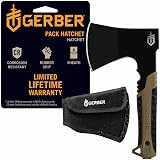 Gerber Pack Hatchet & Sheath9.6/10View on Amazon
- 4
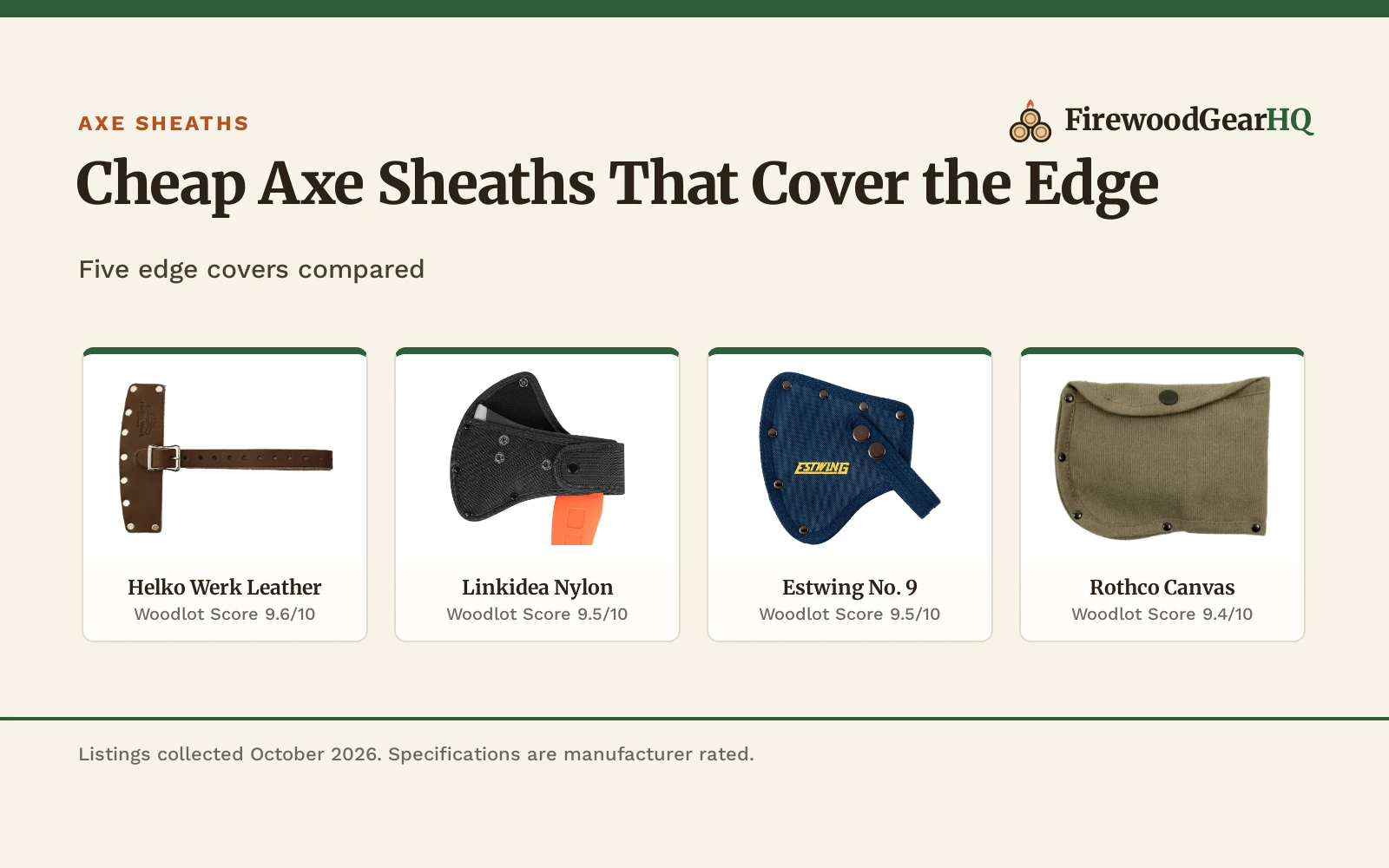
 1844 Helko Werk Made in USA Genuine Leather Axe Sheath SizeView on Amazon
- 5
 1844 Helko Werk Made in USA Genuine Leather Axe Handle CollarView on Amazon
- 6
 American Bench Craft Leather Hatchet Sheath fits ESTWINGView on Amazon
- 7
 American Bench Craft Leather Hatchet SheathView on Amazon
- 8
 ESTWING Sportsman's AxeView on Amazon
- 9
 Hitdudu Camping AxeView on Amazon
Leather vs nylon axe sheath: which one should you buy? Buy leather for the sheath you will own for decades: it molds to the head, protects the edge with a welt on welted patterns, and can be re-oiled for as long as the axe lasts. Buy nylon for the sheath you will abuse: it shrugs off rain, mud and truck beds, weighs almost nothing, and costs little enough to replace without a thought. The listings below are all leather, which is where the quality end of this market sits.
More options to compare
 1844 Helko Werk Made in USA Genuine Leather Axe Sheath SizeCheck price on Amazon
 1844 Helko Werk Made in USA Genuine Leather Axe Handle CollarCheck price on Amazon
 American Bench Craft Leather Hatchet Sheath fits ESTWINGCheck price on Amazon
 American Bench Craft Leather Hatchet SheathCheck price on Amazon
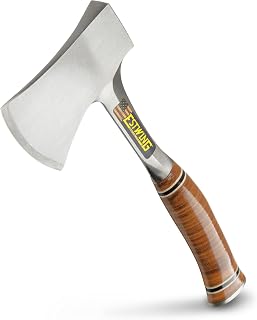 ESTWING Sportsman's AxeCheck price on Amazon
 Hitdudu Camping AxeCheck price on Amazon
FirewoodGearHQ may earn a small commission if you buy through links on this page. The price you pay stays the same. Affiliate disclosure.
Below: how the two materials age and fail, where each one wins, the four leather sheaths in the current listings ranked, and the questions axe owners ask before choosing.
Leather vs nylon axe sheath: the difference is how it fails
A sheath has one job: keep a sharp edge from cutting anything except wood, including the owner, the truck seat and the other tools in the box. Leather does it with structure. A good leather sheath is built around a welt, a strip of leather sandwiched where the edge rests, so the blade sits against sacrificial material instead of against the stitching or rivets that hold the sheath together. It starts stiff, then molds to the head over seasons of use. Nylon does the same job with fabric and hardware: a woven sheath, usually padded or stiffened, closed with a snap or Velcro, that does not care about water, rot or conditioning, and whose failure mode is fraying, cut webbing and worn fasteners rather than dried-out hide.
| Leather | Nylon | |
|---|---|---|
| Edge protection | On welted patterns, a welt takes the edge; the blade never rests on hardware | Padding or a stiffener keeps the edge off the seams |
| Weather | Needs oil or wax treatment; dries and cracks if neglected | Indifferent to rain and mud; dries on the line |
| Fit over time | Molds to the head and gets better with use | Fits the same on day one and day one thousand |
| Fastening | Buckle straps and snaps in these listings | Snaps and hook-and-loop are the pattern |
| Repair | Re-oiling stated by Helko; repairs depend on construction | Usually replaced, not repaired |
Where leather wins
- The edge itself. A welted leather sheath is the only design here where the blade’s resting place is a designed feature, named in two of the listings below.
- Longevity. Vegetable-tanned full grain leather, oiled as it dries, is a decades material; the Helko listing sells exactly that promise, and Valhalla sells full-grain leather with a lifetime guarantee.
- Fit. Leather molds. The American Bench Craft listing says it outright: stiff at first, then softening and molding to the tool.
- Silence and manners. No hook-and-loop tear in a quiet camp, no plastic hardware to crack in the cold.
Where nylon wins
- Wet work. A nylon sheath goes on a wet axe in the rain and asks for nothing after; a leather one wants drying and, in time, oil.
- Weight and bulk. Fabric sheaths weigh next to nothing and pack flat in a kit bag.
- Price of a mistake. A sheath left on a tailgate or run over by the truck is a smaller loss in nylon.
- Utility axes. For a hardware-store hatchet that lives in a bucket of tools, nylon’s indifference beats leather’s ceremony.
The gear: four leather sheaths
No nylon sheath is in the current listings; all four are leather, ranked by what they state.
1. 1844 Helko Werk Leather Axe Sheath, Medium (S122)
The complete leather pattern. Full grain, vegetable-tanned cowhide saddle leather treated and infused with oils and waxes for moisture protection, a heavy duty welt the blade edge rests against, nickel-plated rivets and an adjustable buckle strap for a snug fit, made in the USA. It is sized medium for blades up to 4-3/4 inches wide, fitted for Helko Werk axes but stated to fit most other brands, at 2.08 ounces. Who it fits: an owner who wants the sheath treated as part of the axe, welt, buckle and all.
2. American Bench Craft Leather Hatchet Sheath
The fitted specialist: thick full-grain leather built for two named axes, the Estwing Sportsman’s Axe E14A and E24A, with riveted construction and no thread stitching to fray, a thick leather welt so the blade never touches the rivets, and a brass snap closure. Made in Wilmington, MA. The listing is honest about the break-in: stiff initially, then softening and molding to the tool. A D-ring holster for belt carry is a separate purchase, not included. Who it fits: an Estwing owner who wants the exact sheath; everyone else should check their head against its stated fit first.
3. Valhalla Gear Riveted Axe Head Sheath
The handmade option: full grain leather, hand-cut and hand stitched by artisans in Antigua, Guatemala, from leather sourced in Peten, with a string closure and a bourbon brown finish, at 6.5 by 6 inches and 2.08 ounces. Its stated cover is the strongest here by a distance: a 100% Lifetime Customer Satisfaction Guarantee, with replacement or refund on a word. Who it fits: a gift buyer or a traditionalist who values the making as much as the sheath.
4. WEKBOSS Leather Hatchet Sheath
The belt-carry budget pattern: thick leather with an adjustable carabiner design and sturdy snaps for easy on and off, made to strap around you while camping so the edge cannot stab, at 5.5 by 5.1 inches for axes with an opening under 5.1 by 4.3 inches. The documentation is the thinnest here, a handful of short bullets, and nothing states a welt, a treatment or a warranty. Who it fits: a camp hatchet that lives on a belt and wants a simple snap cover.
Can nylon replace leather?
For keeping an edge covered, yes, and for a working axe that lives outdoors it may be the smarter buy. What it does not replace is the welted fit and the decades-long service the leather listings above are selling, nor the way a leather sheath becomes part of a good axe’s kit. The usual settlement mirrors the gloves question in the welding shop: leather for the axe you keep, nylon for the axe you lend.
Edges and storage. A sheath is not storage for a wet axe: dry the head before it goes away, whichever material covers it, because trapped moisture rusts steel under leather and nylon alike. Keep the edge off the sheath’s fasteners, which is the welt’s whole purpose on welted sheaths, and store the axe where the covered edge cannot be stepped on or driven over.
Frequently Asked Questions
How do I size a leather axe sheath?
By blade width, on these listings: the Helko medium fits blades up to 4-3/4 inches wide, the WEKBOSS fits openings under 5.1 by 4.3 inches, and the American Bench Craft is fitted to two named Estwing models, the E14A and E24A. Measure across the widest part of the head and buy to that figure.
Does a leather sheath need a welt?
It is the feature that decides the sheath’s life. The Helko listing describes the welt as the strip the blade edge rests against, protecting the blade and lengthening the sheath’s life, and the American Bench Craft states its thick welt keeps the blade from ever touching the rivets. A sheath without a welt lets the edge work on the seams that hold it together.
How do I care for a leather axe sheath?
The Helko listing answers for its own leather: the treatment of oils and waxes prevents drying and cracking, and customers can apply conditioners, polishes or creams over time, which vegetable-tanned leather accepts well.
Is nylon better for a truck or boat axe?
For an axe that lives wet, yes: nylon asks for no conditioning, tolerates being thrown in a wet box, and is cheap to replace. The leather listings here are aimed at kept axes, hatchets with names and models, which is a different life.
What warranty do these sheaths carry?
Only the Valhalla states one: a 100% Lifetime Customer Satisfaction Guarantee with replacement or refund. The Helko, American Bench Craft and WEKBOSS listings state no warranty term.
Related guides
See the axes and mauls hub, our axe sheath for belt picks and the best axe for camping.