Splitting Axe vs Splitting Wedge: Which One Should You Buy?
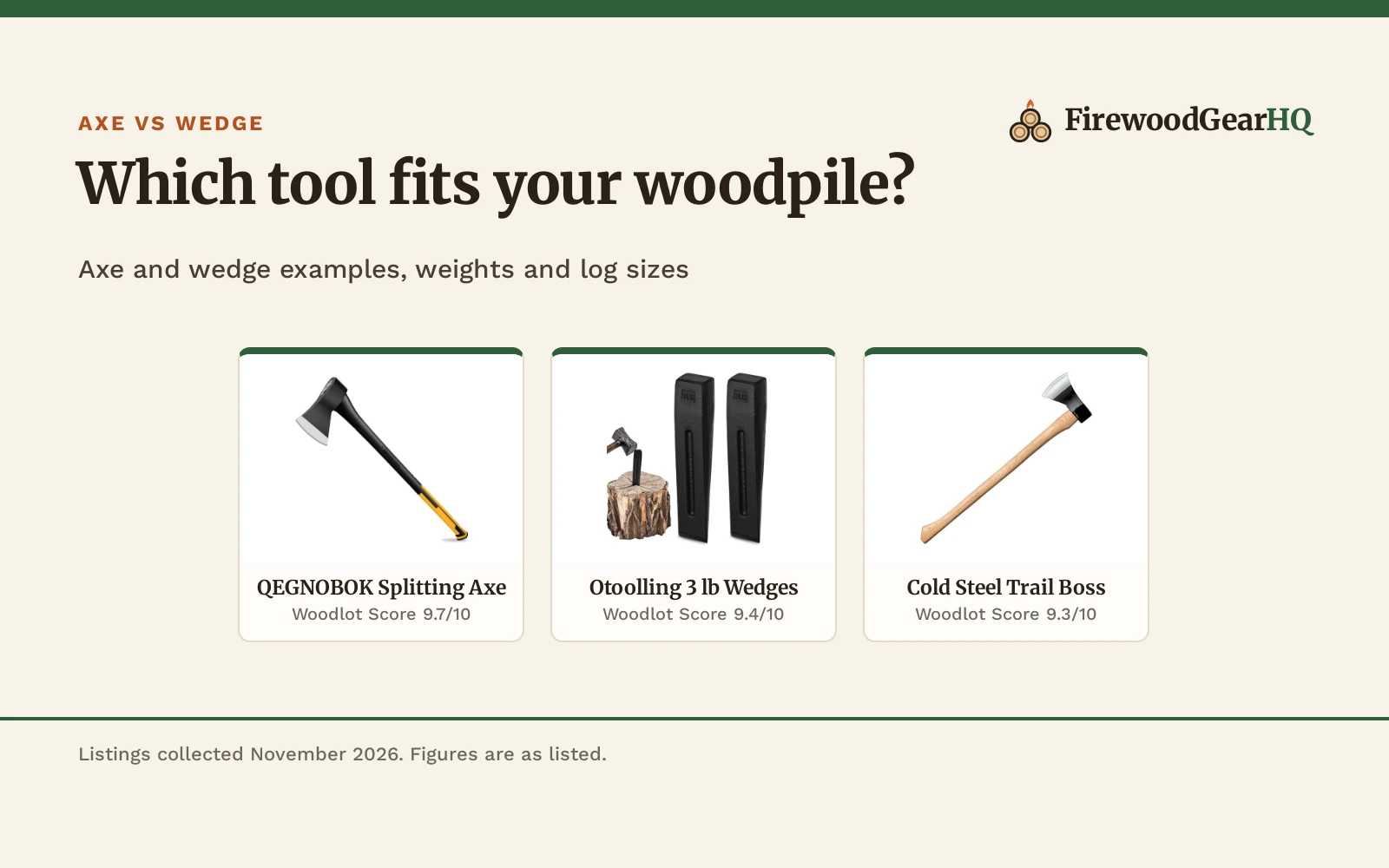
Splitting axe and splitting wedge compared on how they split, weight, handle, log size and warranty, with three examples from the listings.

On this page
Top picks at a glance
As an Amazon Associate I earn from qualifying purchases.
- 1
 QEGNOBOK Splitting Axe, 34" Chopping Axe9.6/10View on Amazon
- 2
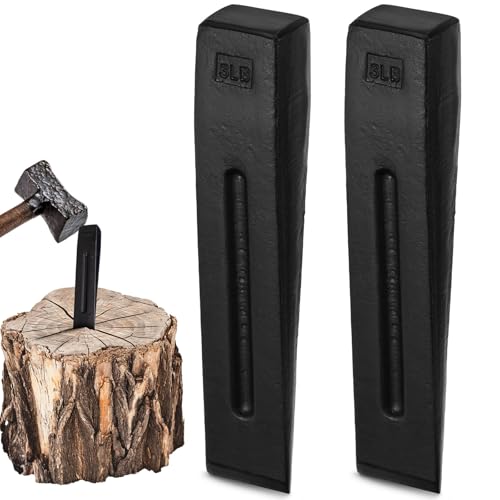 Otoolling 2 Pcs 3 Lbs Wood Splitting Wedges Manual9.1/10View on Amazon
- 3
 Cold Steel Trail Boss Axe, 27 Inch9.0/10View on Amazon
Verdict: Choose a splitting axe if you want a swung tool for splitting and chopping around the woodpile. Choose splitting wedges if you want a hammer-driven split for small to medium logs, with a spare wedge ready when a wedge sticks.
Fall prep brings the woodpile back into focus: rounds to split, stacks to build, and winter burning ahead. This comparison covers splitting axe vs splitting wedge, using the listings as concrete examples.
FirewoodGearHQ earns a small commission if you buy through links on this page. The price you pay stays the same. Affiliate disclosure.
The examples
| # | Product | Woodlot Score | Buy |
|---|---|---|---|
| 1 | QEGNOBOK Splitting Axe, 34" Chopping Axe | 9.6/10 | Buy on Amazon |
| 2 | Otoolling 2 Pcs 3 Lbs Wood Splitting Wedges Manual | 9.1/10 | Buy on Amazon |
| 3 | Cold Steel Trail Boss Axe, 27 Inch | 9.0/10 | Buy on Amazon |
QEGNOBOK Splitting Axe, 34" Chopping Axe
A splitting axe for hardwood large logs, with a forged steel blade and a shock-absorbing handle; suited to a reader who wants a swung splitting tool, and less suited to a reader who wants a hammer-driven wedge.
Pros
- Forged steel blade, double-hardened, with a precision-ground cutting edge
- Shock-absorbing handle with textured non-slip grip
- 34 inch handle, listed as ideal for taller users
- Low-friction blade plating helps the blade glide through wood
Cons
- No safety certification is stated
- No maximum log diameter is stated
- One-strike wording is a maker claim, not a measured figure
- No handle material is stated
Otoolling 2 Pcs 3 Lbs Wood Splitting Wedges Manual
A pair of steel splitting wedges for small to medium logs, driven with a hammer; suited to a reader who wants a hammer-driven split, and less suited to a reader who wants large or heavily knotted hardwoods.
Pros
- Pair of two wedges, so a spare wedge is ready when one sticks
- 45 carbon steel, forged, with a black paint coating
- Sharpened edge for an easy initial bite into wood grain
- Flat top cross-section gives a solid target for hammer strikes
Cons
- Use on heavily knotted or large-diameter hardwoods is not recommended
- No warranty term is stated
- No safety features or certifications are stated
Cold Steel Trail Boss Axe, 27 Inch
A trail axe with a European style head and a hickory handle; suited to a reader who wants kindling and trail work, and less suited to a reader who wants a dedicated splitting maul.
Pros
- European style head with a 4 inch blade and a 4 1/2 inch cutting edge
- Straight-grained American hickory handle, described as sturdy and durable
- Listed for kindling, clearing roads and trails, and building blinds
- Listed weight of 2.59 pounds
Cons
- No warranty term is stated, only a manufacturer warranty
- No safety features or certifications are stated
- No splitting-specific log size is stated
More options to weigh up
 6.6 lb Splitting MaulCheck price on Amazon
 Gransfors Bruks SMALL SPLITTING AXE Camping New #441Check price on Amazon
 Collins 5 lb. Forged Steel Square Splitting WedgeCheck price on Amazon
 ESTWING Sure Split WedgeCheck price on Amazon
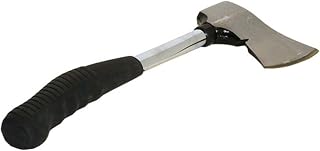 Coleman Axe with Durable Steel Head & Non-Slip Grip HandleCheck price on Amazon
 ESTWING Fireside Friend Splitting MaulCheck price on Amazon
Side by side
| Tool | Woodlot Score | Weight | Length or handle | Warranty |
|---|---|---|---|---|
| QEGNOBOK Splitting Axe | 9.6/10 | 4.4 pounds | 34 inch handle | 1-year warranty |
| Otoolling 3 lb Wedges | 9.1/10 | 3 pounds each | 8.07 inch in bullets | Not stated |
| Cold Steel Trail Boss | 9.0/10 | 2.59 pounds | 27 inch in title | Manufacturer warranty, no term |
Example figures are as listed, collected 2 November 2026.
Splitting axe vs splitting wedge in use
An axe splits by swing: the listing for the QEGNOBOK example states an ultra-sharp blade that glides through wood, while the Cold Steel example is listed for chopping kindling and clearing roads and trails. A wedge splits by hammer drive: the Otoolling example states a sharpened edge for an easy initial bite, a flat top cross-section as a solid target for hammer strikes, and force directed through the wedge to propagate a split. The difference is in the tool in hand, not in one figure that applies to a whole side.
Weight and reach
Weights differ by example, not by side. The QEGNOBOK example weighs 4.4 pounds, the Cold Steel example weighs 2.59 pounds, and the Otoolling example weighs 3 pounds each. Reach also differs by example: the QEGNOBOK example lists a 34 inch handle, ideal for taller users. The Cold Steel title states 27 inch, while its spec table lists 23.0 inches, so that length is unclear. The Otoolling bullets state 8.07 inch length, while its spec table lists 10.83 inches, so that length is also unclear. Neither unclear figure is a win for either side.
Log size and limits
Log size is stated most clearly for the wedge example. The Otoolling example suits small to medium-sized logs, and its listing states that use on heavily knotted or large-diameter hardwoods is not recommended. The QEGNOBOK example is listed for hardwood large logs, with no maximum diameter stated, so that limit is unclear. The Cold Steel example is listed for kindling and a fair sized tree, with no splitting log size stated. With diameters missing for the axe examples, the comparison rests on the stated limits, not on a claimed size win.
Upkeep and storage
Upkeep is stated for the wedge example and for one axe example. The Otoolling example states a black paint coating that helps protect the tool from rust and corrosion during outdoor storage. The Cold Steel listing states a hand wash care instruction, while the QEGNOBOK listing states no upkeep. No listing states storage dimensions.
Scoring the woodpile
Each example is scored on performance, build, value, safety and warranty, using only what the listing publishes. The weights are on our How We Pick page.
| Product | Woodlot Score | Perf. /35 | Build /25 | Value /25 | Safety /10 | Warranty /5 |
|---|---|---|---|---|---|---|
| QEGNOBOK Splitting Axe | 9.6 | 30 | 21 | 20 | 7 | 3 |
| Otoolling 3 lb Wedges | 9.1 | 26 | 20 | 21 | 0 | 0 |
| Cold Steel Trail Boss | 9.0 | 23 | 20 | 19 | 0 | 0 |
We never show a score below 8.8 or above 9.8. Points set where a pick lands, and every rank in a guide sits at least 0.1 under the rank before it, so scores never tie.
Clear the swing area (overhead too), split on a solid chopping block at a comfortable height, keep your feet apart with the block in front of you, and wear eye protection and sturdy boots. Replace a cracked or loose handle before you swing again. Read our Safety Disclaimer.
Around the Woodpile
- Keep a clear swing zone around the axe, with no one in the swing path.
- Strike the wedge on its flat top with a hammer, keeping hands clear of the wedge.
- Store axes and wedges dry; the wedge listing states a black paint coating helps protect against rust during outdoor storage.
- Use the wedge pair on small to medium logs; the listing states use on heavily knotted or large-diameter hardwoods is not recommended.
FAQ: wood, fire and gear
Should I pick a splitting axe or a splitting wedge?
Pick an axe if you want a swung tool for splitting and chopping. Pick wedges if you want a hammer-driven split for small to medium logs.
Can a wedge split large or knotted logs?
The Otoolling example states that use on heavily knotted or large-diameter hardwoods is not recommended.
Do I need a hammer with a wedge?
Yes, the Otoolling example is designed to be used with a hammer.
What warranty does the QEGNOBOK example list?
The QEGNOBOK example lists a 1-year warranty.
Why do the Cold Steel figures differ?
The Cold Steel title states 27 inch, while the spec table lists 23.0 inches. The review trusts the title over the spec table, so the length is treated as unclear in the spec table.
More firewood guides
See the axes and mauls hub, the best splitting axe, the best splitting wedge and how to use a splitting wedge.