Axe Sharpener vs Axe File: Which One Should You Buy?
An axe sharpener maintains the edge at a set angle; an axe file cuts metal fast to repair it. When to use each, plus four sharpening tools compared for the woodpile.

On this page
Top picks at a glance
As an Amazon Associate we earn from qualifying purchases.
- 1
 Sharpal 112N 3-in-1 Knife and Garden Tool Axe Sharpener9.6/10View on Amazon
- 2
 1844 Helko Werk Germany Dual Sided 11.5 Inch Axe Sharpener9.4/10View on Amazon
- 3
 SHARPAL 181N Dual-Grit Diamond Sharpening Stone File Garden9.4/10View on Amazon
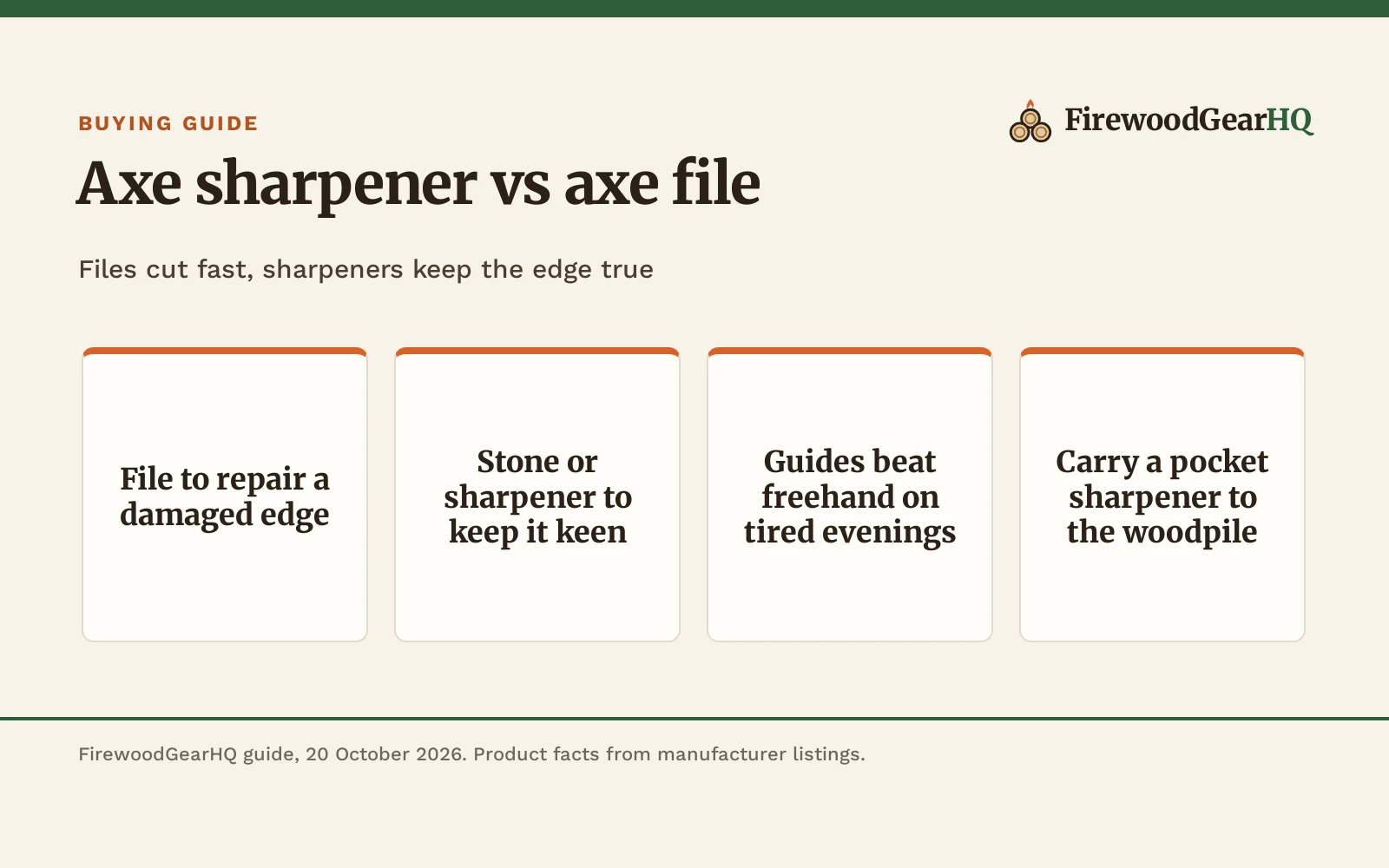
An axe sharpener is a shaped sharpening tool, a slot, stone or multi-stage system, that restores and maintains an edge at a set angle. An axe file is a toothed steel tool that cuts metal fast, made for reprofiling a nicked or rolled edge. Around the woodpile you will reach for both: the file repairs a damaged edge, and the sharpener or stone keeps a working edge keen through the splitting season.
FirewoodGearHQ may earn a small commission if you buy through links on this page. The price you pay stays the same. Read our affiliate disclosure.
axe sharpener vs axe file: what each one does
A file removes metal quickly and leaves the edge straight again. Files are the right first step after the axe meets a stone, a nail or a season of neglect: they take off enough steel to erase nicks and restore the bevel. A sharpener works slower and finer. It refines the edge a file left behind, keeps it true between bigger repairs and usually guides your angle so you do not grind a lopsided bevel into the bit.
Think of it as two jobs, not two rivals. The file does the heavy reshaping, then a stone, ceramic rods or a guided sharpener finish and maintain. Skip the file and you will spend an afternoon polishing a nick that was never removed. Skip the sharpener and the edge loses its keenness fast because nothing trued it up after filing.
Files: fast metal removal
A mill or flat file is the classic axe tool because it is simple, cheap and cuts aggressively. Work from the poll toward the bit, follow the existing bevel, and keep the file flat so you do not round the edge. Files are also the tool for taking a damaged edge back to clean steel, the step no ceramic stone can do in reasonable time. The listings in the gear section below show the other end of the trade: the DDF iohEF stone lists a coarse 180-grit side for quick work and a fine 320-grit side for finishing, which is the same two-step idea in one tool.
Sharpeners: guided, quick and field-ready
Guided sharpeners trade some metal removal for consistency. The Work Sharp Guided Field Sharpener carries five stages in one 4.6-ounce tool: coarse 220 and fine 600 grit diamond plates, ceramic rods that also hone serrations, and a leather strop to polish the finish. Built-in 20-degree and 25-degree angle guides keep the bevel consistent, which is the part freehand filing gets wrong on tired evenings. The Fiskars XSharp takes a different route: a ceramic grind stone in a fiberglass-reinforced plastic case, with the blade sliding back and forth in a groove that sets the angle automatically, plus non-slip pads on the base for a stable tabletop.
The SHARPAL 129N sits between the two ideas. Its tungsten carbide blade is made for quickly sharpening or repairing damaged blades, and the ceramic blade then hones and removes the burr the carbide leaves. It is pen-clip small at 5 by 1 by 0.5 inches and 32.2 grams, so it rides in a pocket or on a belt during a day of cutting. The maker states a 3-year commitment on after-sale service.
The gear: four sharpening tools compared
Ranked by what each listing states, from the most complete kit to the simplest stone.
| Tool | Type | Abrasive | Weight | Warranty |
|---|---|---|---|---|
| Work Sharp Guided Field Sharpener | 5-stage field system | 220 and 600 grit diamond, ceramic, leather strop | 4.6 oz | 3 year per bullets (table says Limited Lifetime) |
| SHARPAL 129N | Two-blade pocket sharpener | Tungsten carbide plus ceramic | 32.2 g | 3-year commitment stated |
| Fiskars XSharp | Ceramic slot sharpener | Ceramic stone | 90 g | Not stated |
| DDF iohEF sharpening stone | Dual-sided stone with bag | 180 and 320 grit corundum | 9.12 oz | Not stated |
1. Work Sharp Guided Field Sharpener. The most complete of the four: diamond plates in two grits, ceramic rods, a leather strop, angle guides at 20 and 25 degrees, a hook-groove ceramic rod for fish hooks and a broadhead wrench. It weighs 4.6 ounces and measures 9.53 by 5.42 by 1.12 inches, and the maker says no power or extra accessories are needed. One caution from the listing itself: the bullets back it with a 3-year warranty while the spec table calls it a Limited Lifetime warranty. The bullets take precedence, so read it as 3 years.
2. SHARPAL 129N. A pocket sharpener with two stages: a tungsten carbide blade for fast sharpening and repair, then a ceramic blade to hone and clear the burr. The listing says to use the corner of the carbide tool against the edge, not the flat surface. It handles axes, hatchets, machetes, pruners and mower blades, and the pen clip and lanyard hole make it easy to carry. The maker states 3 years of commitment and after-sale service, with branches listed in Germany and Australia besides the California headquarters.
3. Fiskars XSharp. The axe-specific pick: a ceramic sharpening stone in a fiberglass-reinforced plastic body, sized 16.5 by 4.5 by 5 centimeters at 90 grams. The blade slides back and forth in a groove, which sets the angle automatically and suits right- and left-handed users. Non-slip pads hold it steady, and the ceramic system is meant for long life. No warranty term is stated.
4. DDF iohEF sharpening stone. The simplest option: a dual-sided corundum stone, 180 grit red side for dull edges and 320 grit white side for restoring and finishing, at 3.15 by 3.15 by 0.98 inches and 9.12 ounces. It comes with a soft leather bag for the belt or pack. The listing names hatchets, machetes, lawnmower blades, shovels and other chopping tools among its uses. No warranty term is stated.
Which one should you buy
- Choose a guided sharpener (Work Sharp or Fiskars) when your edges are in fair shape and you want consistent bevels with little skill. The angle guides do the work your hands cannot repeat.
- Choose a file first when the edge is nicked, rolled or has met a rock. No stone in this group removes metal as fast as a good file, and the SHARPAL’s carbide blade is the closest shortcut the listings offer.
- Choose the pocket SHARPAL when sharpening happens in the field. It is the smallest of the four and covers both repair and honing in one tool.
- Choose the DDF stone when you want the simplest two-step option and do not need angle guides.
Frequently Asked Questions
Can I sharpen an axe with just a file?
Yes, a file reshapes and straightens the edge, which is the hard part. Follow it with a stone or ceramic hone to refine the edge the file leaves, or the axe will cut but not stay keen for long.
What is the difference between a sharpener and a whetstone?
A whetstone is a flat abrasive you move freehand, which takes practice to hold at one angle. A sharpener like the Work Sharp or Fiskars XSharp builds the angle into the tool, either with guides or a groove, so each stroke stays consistent.
Do I need both a file and a sharpener?
For regular firewood work, yes. The file repairs damage and reprofiles; the sharpener or stone maintains the edge between repairs. The SHARPAL 129N is the closest single tool to both, with its carbide blade for repair and ceramic blade for honing.
How often should a splitting axe be sharpened?
Often enough that it bites instead of bouncing. A few strokes on a stone or sharpener after a day of splitting keeps the edge true; reach for the file when nicks appear or the edge has gone round.
What angle should an axe edge be?
Follow the bevel the axe came with. The Work Sharp sharpener offers 20-degree and 25-degree guides; the Fiskars XSharp sets its angle automatically in the groove. Match the tool to the axe rather than changing the angle.
Related guides
See the axes and mauls hub and our best axe sharpener roundup for more tools. Learn the strokes in how to sharpen a splitting axe, then compare axes in the best splitting axe guide and the fiberglass vs wood handle axe comparison.