Splitting Maul vs Sledgehammer: Which One Should You Buy?
Splitting maul vs sledgehammer: a splitting maul's wedge head splits firewood while a sledgehammer's flat face drives wedges and stakes. Three tools compared.

On this page
Top picks at a glance
As an Amazon Associate we earn from qualifying purchases.
- 1
 Fiskars Pro IsoCore 6 lb Splitting Maul9.7/10View on Amazon
- 2
 MAXPOWER 4lb Sledge Hammer9.5/10View on Amazon
- 3
 Fiskars Pro IsoCore 8 lb Splitting Maul9.7/10View on Amazon
- 4
 Channellock Maul AxeView on Amazon
- 5
 Estwing 6 lb Wood Splitting Maul with 36-Inch FiberglassView on Amazon
- 6
 Wood Splitting Maul 15"View on Amazon
- 7
 Husqvarna 32" Wooden Splitting MaulView on Amazon
- 8
 Truper Sa De Cv TJR-8SOF-C Splitting Maul Brand: SHAKLAKView on Amazon
- 9
 Estwing 4.5 lb Wood Splitting Maul with 36-Inch FiberglassView on Amazon
Verdict: Pick a splitting maul when the job is splitting firewood: the wedge head does the work. Pick a sledgehammer when the job is driving something: wedges, stakes and pins.
They look similar on the rack and they are not the same tool. A splitting maul vs sledgehammer choice comes down to the head: the maul carries a wedge that splits wood apart, while the sledgehammer carries a flat face that drives things into other things. Three tools here, two mauls and one sledge, compared on what the listings state.
FirewoodGearHQ may earn a small commission if you buy through links on this page. The price you pay stays the same. Read our affiliate disclosure.
| # | Product | Woodlot Score | Buy |
|---|---|---|---|
| 1 |  Hooyman Splitting and Chopping Axes | 9.7/10 | Buy on Amazon |
| 2 | 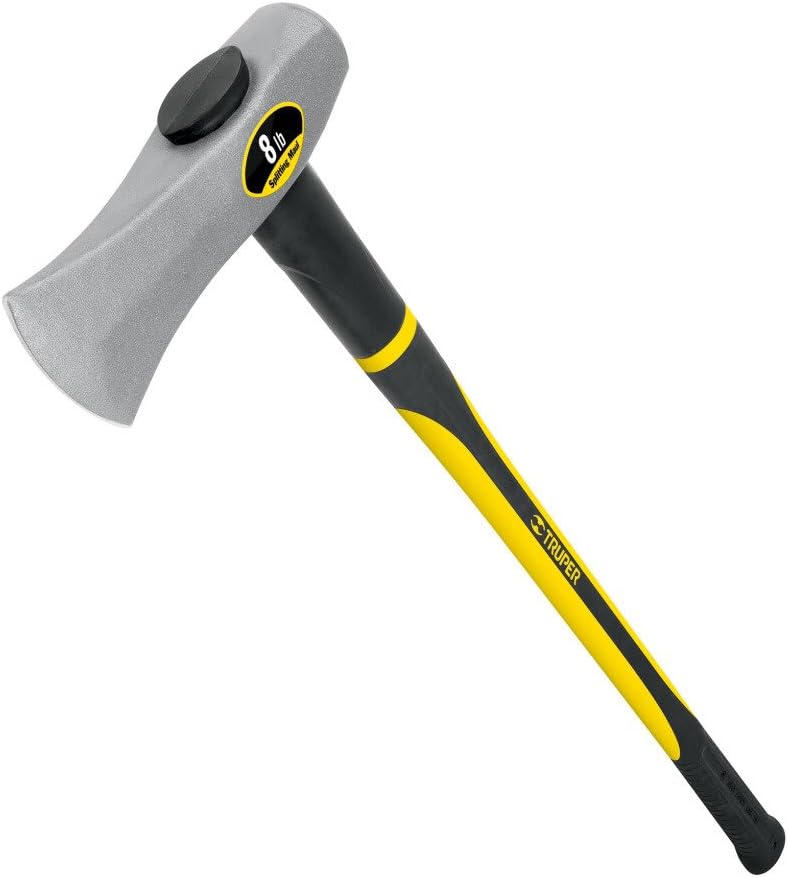 Truper 30958 8-Pound Splitting Maul | 9.6/10 | Buy on Amazon |
| 3 | MAXPOWER 4lb Sledge Hammer | 9.5/10 | Buy on Amazon |

Hooyman Splitting and Chopping Axes
A 36 in, 8 lb splitting maul in 1045 forged steel with a convex grind, HRC 45-60 and H-Grip handle, with a limited lifetime warranty.
Pros
- 1045 high strength forged steel
- Convex grind, HRC 45-60
- H-Grip handle turns tacky when wet
- Limited lifetime warranty
Cons
- 8 lb needs full swings
- No overstrike guard stated
- Heaviest pick here
- H-Grip tackiness is a claim, not a figure
Truper 30958 8-Pound Splitting Maul
An 8 lb splitting maul on a 36 in fiberglass handle with rubber grip and overstrike guard, drop forged.
Pros
- 8 lb head, 36 in handle
- Double injected fiberglass handle
- Overstrike guard
- Drop forged, bevel-edged face
Cons
- No hardness figure stated
- No specific warranty term
- Heaviest handle design
- No tacky-grip feature stated

MAXPOWER 4lb Sledge Hammer
A 4 lb sledgehammer on a 12 in fiberglass handle with a drop-forged steel head for driving stakes, wedges and pins.
Pros
- Drop-forged steel head
- 12 in fiberglass handle
- One-hand control at 4 lb
- Ergonomic grip
Cons
- Flat face does not split like a wedge
- 4 lb is light for big rounds
- 12 in handle gives less leverage
- No warranty term stated
More options to compare
 Channellock Maul AxeCheck price on Amazon
 Estwing 6 lb Wood Splitting Maul with 36-Inch FiberglassCheck price on Amazon
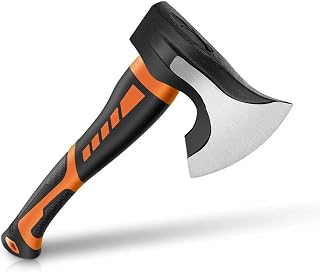 Wood Splitting Maul 15"Check price on Amazon
 Husqvarna 32" Wooden Splitting MaulCheck price on Amazon
 Truper Sa De Cv TJR-8SOF-C Splitting Maul Brand: SHAKLAKCheck price on Amazon
 Estwing 4.5 lb Wood Splitting Maul with 36-Inch FiberglassCheck price on Amazon
splitting maul vs sledgehammer: the difference in one paragraph
A splitting maul is a wedge on a long handle: you swing it at a round and the tapered head forces the wood apart. A sledgehammer is a flat-faced hammer on a shorter handle: you swing it at a wedge, a stake or a pin and the flat face drives it home. One splits; the other strikes.
Side by side
| Splitting maul | Sledgehammer | Listed by | |
|---|---|---|---|
| Head | Wedge that splits wood apart | Flat face that drives | General |
| Handle | 36 in | 12 in | The listings |
| Head weight | 8 lb | 4 lb | The listings |
| Steel | 1045 forged (Hooyman); drop forged (Truper) | Drop forged | The listings |
| Warranty | Limited lifetime (Hooyman) | Not stated | The listings |
Example figures are manufacturer rated, as published on each listing and collected 19 October 2026.
What a splitting maul does
The Hooyman is the spec-sheet maul: 36 in long, 8 lbs, with a head of 1045 high strength forged steel, a convex grind and an HRC of 45-60, on a handle with an H-Grip that turns tacky when wet. It carries a limited lifetime warranty from Hooyman. The Truper is the workhorse maul: an 8 lb head on a 36 in fiberglass handle with a rubber grip and an overstrike guard, drop forged with a round bevel-edged striking face. Both are full-size, full-weight splitting tools: the 8 lb head and 36 in handle are a common full-size formula for splitting rounds. The Hooyman also lists driving a wedge among its uses, which is where the maul and sledgehammer jobs overlap.
What a sledgehammer does
The MAXPOWER is a 4 lb sledgehammer on a 12 in fiberglass handle with a drop-forged steel head and an ergonomic grip. Its listing names driving stakes, splitting firewood, cracking concrete and demolition. At 4 lb and 12 in it is a one-hand tool, built for controlled strikes rather than full swings: driving a wedge into a stubborn round, setting fence posts, or tapping a pin. It is not a splitting tool by design, though the listing claims firewood among its uses; the flat face has no wedge to separate the grain.
Choose the splitting maul if
- Splitting firewood rounds is the job
- You want full-size leverage: 36 in handles, 8 lb heads
- You value the Hooyman’s limited lifetime warranty
- You also drive wedges occasionally
Choose the sledgehammer if
- Driving wedges, stakes and pins is the job
- You want one-hand control: 4 lb on a 12 in handle
- You crack concrete or do demolition work
- You pair it with a wedge for the stubborn rounds
The three picks
How we scored them
| Product | Woodlot Score | Perf. /35 | Build /25 | Value /25 | Safety /10 | Warranty /5 |
|---|---|---|---|---|---|---|
| Hooyman Splitting Maul | 9.7 | 30 | 22 | 21 | n/a | 4 |
| Truper 8 lb Splitting Maul | 9.6 | 28 | 21 | 21 | n/a | 0 |
| MAXPOWER 4 lb Sledgehammer | 9.5 | 26 | 20 | 21 | n/a | 0 |
Scores run from 9.2 to 9.8: each product’s point total is placed on that range, so more points always means a higher score. Safety counts only for powered gear or where the listing states safety features; where it does not apply, the score is taken over the remaining 90 points.
Clear the swing area (overhead too), split on a solid chopping block at a comfortable height, keep your feet apart with the block in front of you, and wear eye protection and sturdy boots. Replace a cracked or loose handle before you swing again. Read our Safety Disclaimer.
Choosing your weight and handle
Weight is the first decision. Both mauls here carry an 8 lb head on a 36 in handle: the full-size splitting formula, swung two-handed for driving through rounds. The MAXPOWER sledgehammer is 4 lb on a 12 in handle: a one-hand tool for controlled strikes on wedges, stakes and pins. The 8 lb head does the splitting work; the 4 lb head does the driving work. Handle length follows the same logic: the 36 in maul handles give full-swing leverage, while the 12 in sledge handle gives control for aimed strikes. Handle material matters too: the Truper maul runs a fiberglass handle with a rubber grip and an overstrike guard, which protects the handle when a swing misses the round. The Hooyman runs its H-Grip, which the listing says turns tacky when wet: a wet-weather grip advantage for work in rain or sweat. The MAXPOWER sledge also runs fiberglass with an ergonomic grip. If you swing in all weather, grip and overstrike protection deserve as much attention as head weight.
Wedge heads and striking faces
The head tells you what the tool does. A splitting maul head is a wedge: the Hooyman pairs 1045 high strength forged steel with a convex grind and an HRC of 45-60, a tapered profile that forces wood apart as it drives in. The Truper maul is drop forged with a round bevel-edged striking face, which matters because both mauls here also drive: the Hooyman lists driving a wedge among its uses, and the Truper’s striking face is built for it. A sledgehammer head is the opposite: the MAXPOWER’s drop-forged steel head has a flat face with no wedge, which is why it drives superbly and splits poorly. Hardness counts for edge life: the Hooyman’s stated HRC 45-60 range covers the working hardness of its 1045 forged steel head. When you compare, match the head to the job: wedge profile for splitting rounds, flat face for driving wedges and stakes, and a striking face on the maul for the times a round needs a wedge driven home.
When to own both
The honest answer for a firewood cutter is both tools, because they cover each other’s gaps. The maul splits the rounds; the sledgehammer drives the wedge into the rounds that will not split. The Hooyman maul already bridges the two: it lists driving a wedge among its uses, so one tool can split and drive in a pinch. But a dedicated 4 lb sledge on a 12 in handle gives one-hand control for aimed strikes that a 36 in maul cannot match, which is why the MAXPOWER earns its place even in a maul owner’s kit. Buy the maul first if splitting is the job; add the sledgehammer when you start driving wedges, setting fence posts or cracking concrete. The two together cost less than the frustration of splitting with a flat face or driving with a wedge.
Frequently Asked Questions
Can I split firewood with a sledgehammer?
The MAXPOWER listing names splitting firewood among its uses, but a sledgehammer’s flat face has no wedge to separate the grain. It works best paired with a splitting wedge that it drives. For direct splitting, the maul is the right tool.
What weight splitting maul do I need?
Both mauls here are 8 lb on 36 in handles, the standard full-size formula. Lighter mauls exist for smaller users, but 8 lb is the common full-size weight. See our maul axe types guide for head shapes and weights.
What does HRC 45-60 mean on the Hooyman?
HRC is the Rockwell hardness scale, and 45-60 is the stated hardness range of the Hooyman’s 1045 forged steel head. Harder steel holds its edge longer; the range covers the head’s working hardness.
Can a splitting maul drive wedges?
Yes. The Hooyman lists driving a wedge among its uses, and both mauls have striking faces. When a round will not split, set a wedge and drive it with the maul or the sledgehammer.
Related guides
Also see our splitting axe vs felling axe and the kindling cracker vs splitting axe.