Sharpal 112N Review: Pros, Cons and Who It’s For
A research-based look at the Sharpal 112N: a handheld 3-in-1 sharpener for axes and garden tools with carbide and ceramic abrasives, what the listing states and who should buy it.

On this page
Top picks at a glance
As an Amazon Associate we earn from qualifying purchases.
- 1
 Sharpal 112N 3-in-1 Knife and Garden Tool Axe Sharpener9.6/10View on Amazon
- 2
 SHARPAL 181N Dual-Grit Diamond Sharpening Stone File Garden9.4/10View on Amazon
- 3
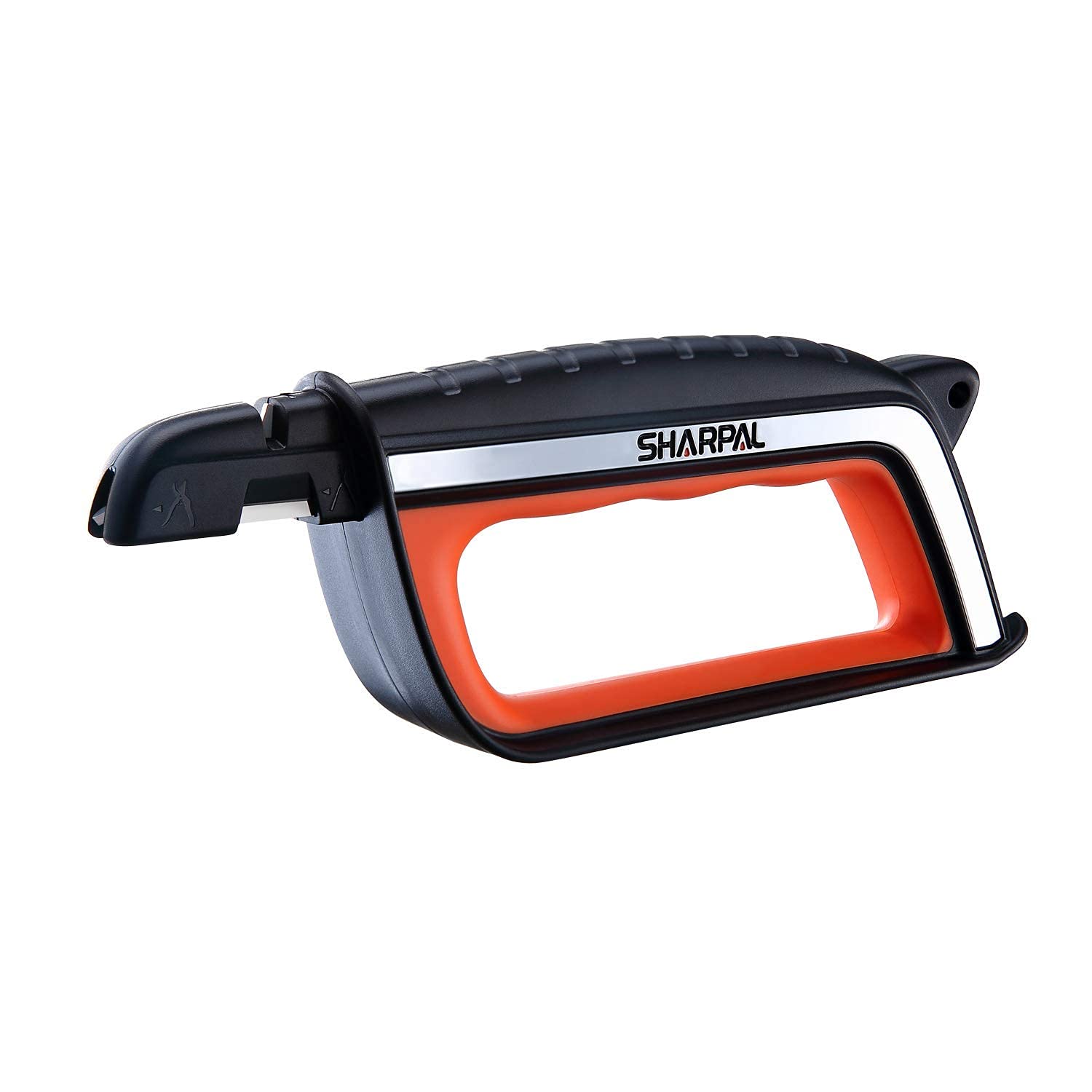 SHARPAL 103N All-in-1 Knife Garden Tool Lawn Mower Blade9.4/10View on Amazon
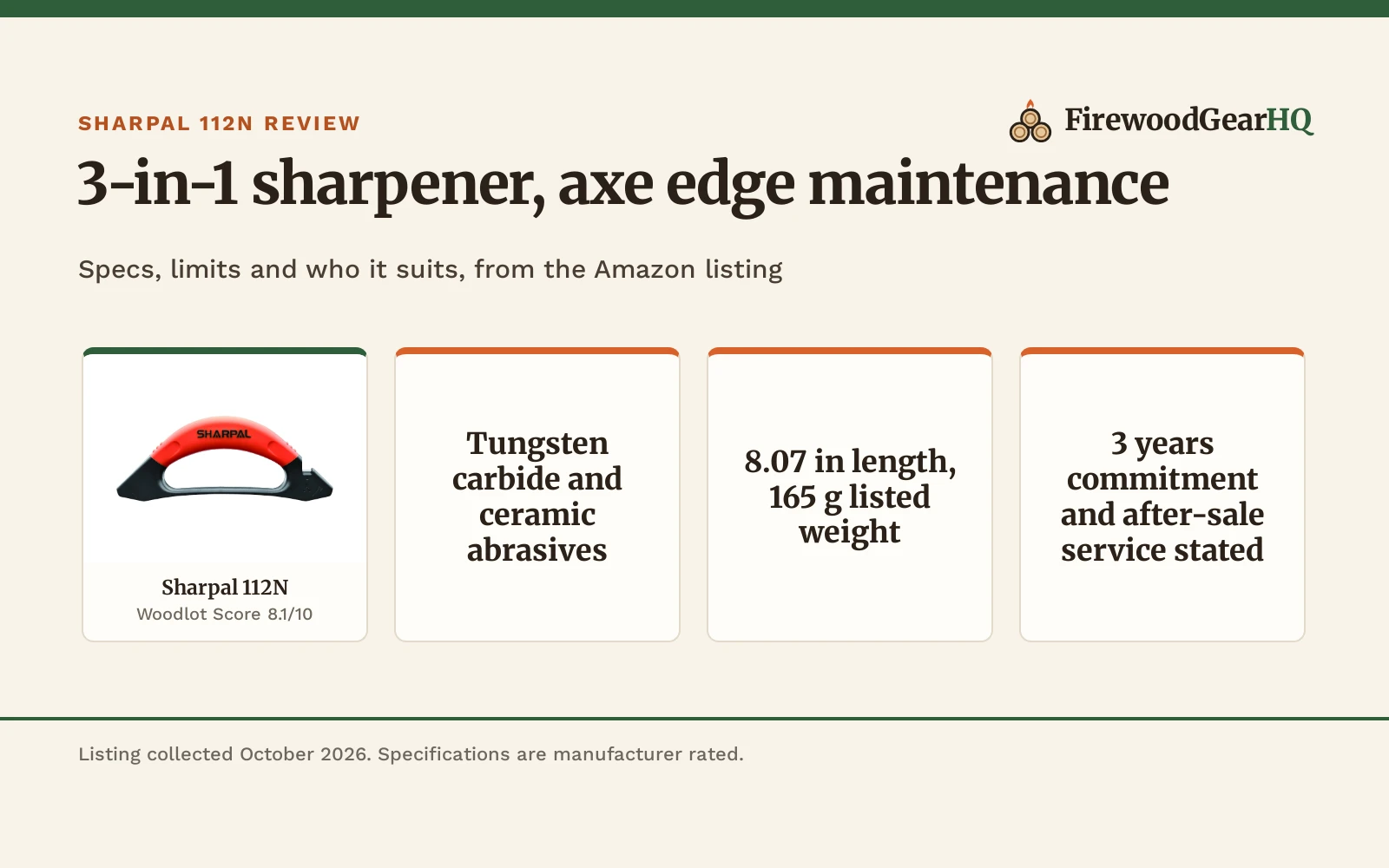
When fall prep is underway and you are facing a stack of hardwood rounds to split for the winter burner, a dull axe bit turns clean splits into exhausting work. A sharp cutting edge bites into the wood rather than bouncing off stubborn grain, saving your shoulders and keeping your swings predictable. This Sharpal 112N review looks at a compact handheld sharpener built to touch up working edges right at the chopping block. The 112N is marketed for axes, hatchets, machetes and scissors, using preset tungsten carbide and ceramic slots in an 8.07 inch frame. We have not used this sharpener ourselves; the review is based on the manufacturer’s listing on Amazon, collected 14 October 2026, and what its published specifications mean for firewood work.
FirewoodGearHQ may earn a small commission if you buy through links on this page. The price you pay stays the same. Read our affiliate disclosure.

Sharpal 112N 3-in-1 Knife and Garden Tool Axe
A handheld 3-in-1 sharpener for axes, hatchets, machetes and scissors, featuring tungsten carbide for coarse edge restoration and ceramic for fine honing in a 165 g body.
Pros
- Preset slots with tungsten carbide for coarse edge repair and ceramic for fine honing
- Versatile design stated for axes, hatchets, machetes and scissors
- Compact dimensions at 8.07 by 2.95 by 1.38 inches with an ergonomic handle
- Lightweight 165 g listed weight is easy to carry to the woodpile or campsite
Cons
- Listing bullets promise 3 years of commitment and service, but spec table only states Manufacturer Warranty without a term
- Exact sharpening angles in degrees and ceramic grit numbers are not stated
- No safety hand guard or certification is listed for hand protection during use
- Fixed preset slots cannot match custom bevel angles on specialized felling axes
Sharpal 112N review: the short verdict
A dedicated splitting axe or camp hatchet does not stay keen forever. Striking knotty rounds, brushing the chopping block, or working through gritty bark slowly rolls the edge. The Sharpal 112N addresses edge maintenance with a simple handheld format: a tungsten carbide slot to re-establish a working bevel on dull blades, and a ceramic slot to hone the edge smooth. It also includes an abrasive slot dedicated to scissors, and the maker lists hatchets and machetes among its intended tools.
For anyone managing firewood, the appeal is field convenience. At a listed weight of 165 g, it easily slips into a pocket or tool pouch, allowing quick edge touch-ups without carrying a heavy bench stone out to the woodpile. However, the listing leaves several technical details unstated, including the exact preset angles in degrees and the specific grit rating of the ceramic abrasive. There is also a contradiction regarding warranty coverage between the listing bullets and the specification table.
Key specs
| Product | Woodlot Score | Abrasive Materials | Item Dimensions | Listed Weight |
|---|---|---|---|---|
| Sharpal 112N | 9.6/10 | Tungsten carbide and ceramic | 8.07″L x 2.95″W x 1.38″H | 165 g |
Specifications are manufacturer rated, as published on the Amazon listing. The listing highlights a 3-in-1 design intended for axes, hatchets, machetes, and scissors, featuring tungsten carbide for coarse sharpening and ceramic for fine honing. The spec table lists dimensions of 8.07 inches long, 2.95 inches wide, and 1.38 inches high, with a weight of 165 g. However, the exact sharpening angle in degrees is not stated, described only as a preset optimal design. Additionally, the listing bullets promise 3 years of commitment and superior after-sale service, while the specification table simply lists manufacturer warranty without defining a term. We report the numbers directly from the maker’s listing.
The sharpener
What the Sharpal 112N does well
Carbide and ceramic abrasive slots
The 112N provides both coarse and fine sharpening surfaces in a single handheld body. The listing specifies a sturdy tungsten carbide blade for coarse sharpening and ceramic for fine honing. For firewood tools, having both materials available is practical. Carbide removes metal quickly to restore a nicked or blunt edge, while ceramic smooths out the burr left by the coarse abrasive. Having both stages mounted together allows a woodcutter to dress a rolled axe bit without juggling separate stones.
Multi-tool versatility
While firewood cutters focus on axes and hatchets, the maker lists this tool as a 3-in-1 sharpener suitable for axes, hatchets, machetes, and scissors. The inclusion of a dedicated scissor sharpening slot expands its utility beyond the hearth. For homesteaders who use shears for garden upkeep, brush machetes for trail clearing, and hatchets for making kindling, one small sharpener covers multiple chores around the property.
Compact size and woodpile portability
The physical specifications make this tool easy to carry directly to where work happens. With dimensions of 8.07 inches in length, 2.95 inches in width, and 1.38 inches in height, along with a listed weight of 165 g, the 112N fits easily into a coat pocket, logging pack, or kindling tote. An ergonomic handle is integrated into the body to assist with grip during field sharpening. Being able to touch up an axe edge at the woodpile avoids bringing tools back to a workshop bench.
Preset angles for quick touch-ups
The maker highlights a preset design intended to simplify blade maintenance. Instead of requiring the user to gauge bevel angles by eye as with traditional bench whetstones or pucks, the fixed abrasive slots guide the blade at a uniform angle. For casual firewood cutters who want a sharp working edge without mastering freehand stone techniques, pull-through slots offer straightforward repeatability.
Limitations
- Unstated sharpening angles. While the listing advertises a preset optimal design, it does not state the bevel angle in degrees. Different wood-splitting tools benefit from different edge profiles; a heavy splitting maul typically requires a wider bevel than a keen felling axe or carving hatchet. Without stated degree measurements, you cannot verify whether the preset angle matches your tool manufacturer’s factory bevel.
- Unstated abrasive grits. The spec table lists the grit type as medium and mentions tungsten carbide and ceramic abrasives, but the specific ceramic grit rating is not stated. Those who want precise abrasive progression for polished edges will have to rely on general field results rather than published grit numbers.
- Contradictory warranty information. The listing bullets claim 3 years of commitment and superior after-sale service, but the specification table states only manufacturer warranty without specifying any time period. Buyers who require clear, written warranty terms should check with the seller or manufacturer before purchasing.
- Not built for major blade restoration. While the listing mentions blade repair and restoration, handheld pull-through sharpeners remove material in narrow contact strips. Axes with severe chips, mushroomed polls, or badly deformed cutting profiles require a file, bench stone, or grinder rather than a compact field sharpener.
- No safety certification or guard stated. The listing does not mention safety certifications or an integrated protective knuckle guard. Pulling an axe blade past your hand requires deliberate attention and proper placement on a stable surface.
How we scored it
The Woodlot Score evaluates performance, build quality, value, safety features, and warranty terms using only facts published on the manufacturer’s listing. The complete rating criteria are explained on our How We Pick page.
| Product | Woodlot Score | Perf. /35 | Build /25 | Value /25 | Safety /10 | Warranty /5 |
|---|---|---|---|---|---|---|
| Sharpal 112N | 9.6 | 29 | 20 | 20 | n/a | 4 |
Scores run from 9.2 to 9.8: each product’s point total is placed on that range, so more points always means a higher score. Safety counts only for powered gear or where the listing states safety features; where it does not apply, the score is taken over the remaining 90 points.
Who should buy the Sharpal 112N, and who should skip it
Buy it if
- You split firewood regularly and want a portable, lightweight tool to keep axe and hatchet edges keen at the chopping block.
- You prefer pull-through preset sharpening slots over freehand whetstones or pucks.
- You maintain a variety of property tools, including hatchets, machetes, and household scissors.
- You want an abrasive tool that weighs only 165 g and measures 8.07 inches long for easy pack storage.
Skip it if
- You need to reprofile heavily damaged axes with deep nicks, which requires a bastard file or bench grinder rather than a handheld pull-through sharpener.
- You prefer traditional round stones, bench whetstones, or dedicated pucks that allow customized bevel angles by hand.
- You need specific bevel angles in degrees tailored to specialized carving or felling axes.
- You swing a heavy maul where splitting force comes from head geometry rather than a refined cutting edge.
Alternatives to consider
Traditional axe stones and pucks
Dual-grit whetstone pucks remain the benchmark for axe care around rural woodlots. Unlike fixed-slot sharpeners, a puck allows you to vary the angle along the curved cheek of an axe bit. Round stones require more user practice to maintain consistent angles, but they allow you to blend the bevel into the cheek smoothly. If you prefer manual stone control, explore the manual stone options in our best axe sharpener roundup.
Mill bastard files
When an axe bit strikes a hidden stone or grit in frozen bark, the resulting deep gouge is often too severe for ceramic or light carbide slots. A flat mill bastard file removes damaged metal rapidly and re-establishes the primary bevel before fine honing begins. Learn how to combine file work with stones in our detailed walkthrough on how to sharpen a splitting axe.
Choosing the right splitting tool
Before focusing on sharpening, ensure you are using the right tool for your woodpile. If you are splitting straight-grained rounds for kindling, a smaller tool featured in our best hatchet for kindling guide may reduce blade wear. For stubborn logs, compare head shapes in our guide on splitting axe vs maul, or check our recommendations for the best splitting axe.
Safety and gear
Clear the swing area (overhead too), split on a solid chopping block at a comfortable height, keep your feet apart with the block in front of you, and wear eye protection and sturdy boots. Replace a cracked or loose handle before you swing again. Read our Safety Disclaimer.
Sharpening any bladed tool requires focused care, especially when working with heavy axe heads. When using a handheld sharpener, place the axe head securely against a firm, non-slip surface such as a steady chopping block, keeping the cutting edge pointed away from your body. Wear cut-resistant work gloves to protect against slips, and keep your hands clear of the blade path. When handling axes around the woodpile, maintain a clear swing zone, wear sturdy leather boots, and keep blades covered with a protective sheath when not in use. Review safe technique in our guide on how to split wood with an axe.
Around the Woodpile
- Store the sharpener in a dry tool pouch or tote alongside your axe sheath to prevent moisture from contacting the abrasive assembly.
- Wipe metal shavings and abrasive residue from the carbide and ceramic slots after sharpening to keep the abrasive channels clear.
- Place the axe or hatchet flat on a firm, stable chopping block when drawing the 165 g sharpener along the edge.
- Keep blades sheathed whenever you transport them between the splitting area and firewood storage stacks.
Frequently Asked Questions
Can the Sharpal 112N sharpen a splitting axe?
Yes, the manufacturer listing states that the 112N sharpens axes, hatchets, machetes, and scissors using its coarse carbide and fine ceramic slots. It is suited for touching up a working edge at the woodpile between splitting sessions. Severely chipped bits will still require heavier filing before using this handheld sharpener.
What sharpening angle does the Sharpal 112N use?
The Amazon listing describes the sharpener as having a preset optimal design, but it does not publish the specific angle in degrees. Because the angle is fixed in the molded slot, you cannot adjust it for custom axe bevels. For standard utility and kindling axes, the preset slots provide consistent edge contact.
What warranty does the Sharpal 112N have?
The listing contains contradictory warranty details across different sections. The listing bullets state 3 years of commitment and superior after-sale service from the manufacturer, while the specification table lists manufacturer warranty without a specific duration. Contact the seller or manufacturer to confirm warranty coverage before purchase.
How heavy is the Sharpal 112N sharpener?
The listing states an item weight of 165 g, with dimensions of 8.07 inches long, 2.95 inches wide, and 1.38 inches high. This compact footprint allows it to fit easily into a pocket or tool pouch during outdoor wood splitting chores.
Does the Sharpal 112N require oil or water during sharpening?
The listing does not call for any sharpening oil or water when using the tungsten carbide or ceramic abrasive slots. It is designed as a dry field tool for quick repairs at home, in the garden, or while camping. Simply wipe the abrasives clean after use to remove accumulated metal filings.
Related guides
Explore more firewood tool guides on our axes and mauls hub, read our step-by-step instructions on how to sharpen a splitting axe, and compare sharpening tools in our best axe sharpener roundup. You can also review splitting techniques in our guide on how to split wood with an axe.