Can You Burn Pine in a Wood Stove?
Yes, you can burn pine in a wood stove safely as kindling or cordwood when it is thoroughly dry, though unseasoned pine creates heavy creosote in your chimney.
 By FirewoodGearHQ Editorial
Updated October 10, 2026
By FirewoodGearHQ Editorial
Updated October 10, 2026
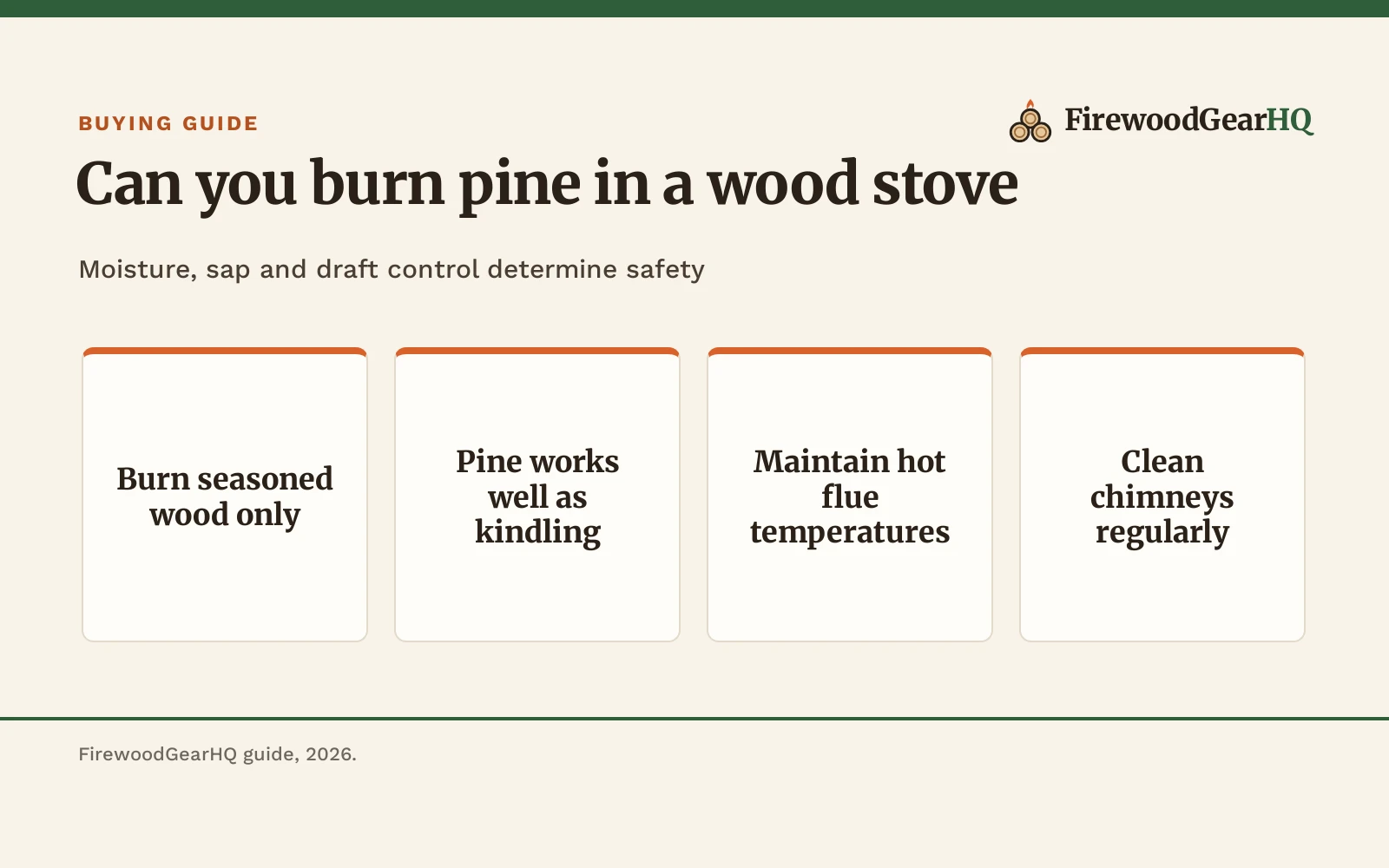
Yes, you can burn pine in a wood stove if the wood is thoroughly seasoned and dry. Clean, dry pine burns rapidly with brisk heat and creates no excess creosote when burned hot with adequate airflow. Burning wet pine causes heavy creosote accumulation and chimney fire risks, making proper seasoning essential.
FirewoodGearHQ earns a commission when you buy through links on our product pages, at no extra cost to you. Read our affiliate disclosure.
The quick answer: can you burn pine in a wood stove?
Wood burners often avoid pine because folklore claims evergreen firewood ruins stoves and clogs flues. That reputation comes from burning green pine rounds that hiss and smolder in cold fireboxes. When pine seasons until dry, its resins ignite easily and provide clean, intense warmth. In our guide to the best firewood to burn, seasoned softwoods like pine serve as practical fuel for kindling and quick morning fires.
The link between pine firewood creosote formation and chimney fires stems from wood moisture rather than resin. Burning damp wood forces firebox heat to evaporate water instead of sustaining secondary combustion. This cools flue gases, allowing unburned vapors to condense as flammable creosote. When you burn dry pine with proper airflow, resins combust completely, leaving flues clear. Understanding what is creosote and how to prevent it helps wood burners manage fires safely.
Wood stove firewood comparison chart
| Firewood type | Classification | Recommended wood stove role |
|---|---|---|
| Seasoned pine | Softwood | Kindling, starting cold fires, quick morning warmth |
| Oak | Hardwood | All-day heating, overnight burns, durable coal bed |
| Ash | Hardwood | Steady heat, easy splitting, general daytime burning |
| Hard maple | Hardwood | Sustained heat, long-lasting coals |
| Birch | Hardwood | Quick heating, establishing stove draft, steady burning |
Seasoned pine catches quickly to warm cold chimneys, while dense hardwoods sustain coals through long winter nights.
Why wood stove owners question pine
The myth of pine resin and creosote
Many homeowners believe pine sap coats chimney walls. Pine resins are volatile hydrocarbons that burn vigorously with heat and oxygen. In a hot stove, resin vaporizes and burns cleanly. Creosote forms when unburned vapors condense along cooler flue walls rather than burning in the firebox. Providing sufficient combustion air allows resin vapors to combust thoroughly before entering the chimney.
Moisture content matters more than species
The true cause of chimney creosote is water, not resin. A fire burning unseasoned wood stays cool because water absorbs heat during evaporation, dropping firebox temperatures below secondary combustion thresholds. Learning how to tell if firewood is seasoned protects your chimney system. Checking split logs with an instrument from our best firewood moisture meter guide ensures firewood is ready. Commercial mini pine kindling packs from makers like WIFER and WFLUOLUO state a moisture content of less than 6 percent for their small processed sticks, showing how kiln drying removes water.
Burn rate and heat output
Pine is a softwood with lower density than oak, hickory, or maple. A split of pine weighs less than an equal-sized hardwood split and burns faster, releasing heat in a rapid burst rather than a long burn. This makes pine ideal for morning kindling or mild autumn days when a hardwood fire would overheat the room. For overnight warmth, our comparison of hardwood vs softwood firewood explains why mixing dense hardwoods with quick-starting softwoods yields balanced results.
Airflow and flue draft
Modern EPA-certified stoves rely on secondary air tubes to burn smoke before it exits into the flue. Burning pine requires sufficient air so resins combust completely. If an operator closes air dampers prematurely to stretch burn time, the wood smolders, generating dark smoke and soot that clings to flue walls. Monitoring chimney pipe temperatures with a tool from our best stove thermometer review helps keep flue gases in the clean burning zone.
How to burn pine safely in a wood stove
Operating a wood stove safely requires proven practices, proper clearances, and routine inspections:
- Seasoned wood only: Burn only dry pine splits. The U.S. EPA Burn Wise program advises burning seasoned firewood rather than unseasoned wood to reduce smoke and prevent chimney hazards. Storing firewood under cover with exposed sides allows air to carry moisture away.
- Maintain safe clearances: Install and maintain stoves strictly according to manufacturer specifications, OSHA logging eTool safety principles, and local building codes, preserving clearances from combustible walls and furniture. Consult certified professionals for stove and chimney installation.
- Install smoke and carbon monoxide alarms: The Consumer Product Safety Commission (CPSC) emphasizes maintaining working smoke alarms and carbon monoxide detectors on every level of your home. Equip your hearth area with a detector from our best carbon monoxide detector for wood stove homes guide.
- Schedule annual chimney inspections: Have a certified sweep inspect and clean your flue annually following National Fire Protection Association (NFPA) and Chimney Safety Institute of America (CSIA) standards. Learn more in how often should you clean your chimney with a wood stove and browse our best chimney sweep kit for wood stoves review.
- Establish brisk draft when lighting: Use split pine kindling to heat the flue quickly, establishing positive draft that prevents room smoke. Our guide on how to start a fire in a wood stove details clean fire-starting methods.
- Avoid overnight banking with pine: Because pine burns quickly and leaves light ash rather than dense coals, do not use it for overnight burns. Choking air supplies causes smoldering and creosote buildup. For steady all-night heat, follow our tips on how to keep a wood stove burning all night with dense hardwoods.
What happens if you burn unseasoned pine
Burning green, wet pine causes operational problems and fire hazards. Moisture-laden pine sizzles as water turns to steam, cooling the firebox and preventing resins from igniting. Unburned vapors condense along chimney walls as flammable creosote, which restricts flue draft and fuels chimney fires.
Damp pine also coats stove glass in brown soot; see why does my wood stove glass turn black. Weak draft from cool flue temperatures can cause room smoke when reloading, as covered in why does my wood stove smoke when I open the door. In addition, never burn painted lumber or treated boards; check our guide to woods you should never burn to avoid toxic chemicals.
Kiln-dried pine and fatwood fire starters
Commercial pine products utilize natural resin concentration to ignite quickly without chemical additives.
Fatwood consists of resin-saturated pine cut from pine tree stumps. Better Wood Products offers 100% natural pine fatwood firestarter sticks in a 25 Lb box, hand-split to approximately 8 inches in length and 0.75 inches in diameter. Pure Garden supplies a 10lb box of natural pine sticks, advising users to place 2 to 3 sticks under kindling to ignite fires quickly. KABIN packages a 10 lb box containing 130 to 165 fatwood sticks for reliable hearth lighting.
Kiln-dried pine mini firewood offers another convenient kindling fuel. WIFER packages a 2 lb box of 4” kiln-dried pine sticks with a stated moisture content of less than 6 percent, with the maker noting burn times of 20 to 30 minutes. WFLUOLUO provides pre-cut 4-inch and 5-inch kiln-dried pine sticks in 4 pounds boxes with moisture content of less than 6 percent. For fireplace chimneys, Pine Mountain produces a 3.5 lb Creosote Buster firelog containing specialized powder, with the maker listing fireplace compatibility and claiming it produces up to 80 percent less carbon monoxide and 75 percent less particulate matter than cordwood when added once per season or every 40 fires. Stove owners should check their manual before using chemical firelogs. See our best fire starters for wood stoves guide for more lighting options.
Turn a stack's length, height and depth into full and face cords, and estimate how much wood a winter takes.
Frequently Asked Questions
Does burning pine cause creosote in wood stoves?
Dry, seasoned pine does not cause excessive creosote when burned hot with adequate airflow. Creosote forms when unburned wood gases condense in cool flues from damp wood or restricted dampers. Seasoned pine burns cleanly.
Can I use pine as kindling to start my wood stove?
Yes. Split pine makes excellent kindling because resin ignites easily and produces tall flames that warm chimney flues quickly. Once draft is established, add hardwood splits for sustained heat.
Why do some people say never burn pine?
This advice stems from past experiences burning unseasoned pine in leaky stoves or with choked dampers, which produced heavy smoke and creosote. Proper seasoning makes pine safe to burn.
Can pine damage a catalytic wood stove?
Dry pine will not damage a catalytic combustor. Modern catalytic stoves burn dry pine smoke efficiently. However, wet wood or household trash can foul catalyst honeycombs.
How long does pine firewood take to season?
Pine dries faster than dense hardwoods. Split small, stacked off damp soil, and covered on top in a sunny spot, pine typically dries in several months over a warm summer. Check readiness with a moisture meter.
Can you burn pine needles or pine cones in a wood stove?
Dry pine cones work well as natural fire starters. However, avoid burning piles of pine needles, as concentrated oils flare up with intense heat that can create chimney sparks.
Related guides
See our wood stoves category, our guide to the best wood for a wood stove and our wood stove safety checklist. Learn how to tell if firewood is seasoned and review the best firewood moisture meter picks. Compare heating performance in our guide to hardwood vs softwood firewood, understand chimney care in what is creosote and how to prevent it, and follow our recommendations for the best chimney sweep kit for wood stoves. For stove operation, review how to start a fire in a wood stove, check the best stove thermometer options, and inspect why does my wood stove glass turn black. For safety, install the best carbon monoxide detector for wood stove homes and see how often should you clean your chimney with a wood stove. Also see our how to keep a wood stove burning all night, woods you should never burn, best fire starters for wood stoves, why does my wood stove smoke when I open the door, how long does firewood take to season, how to season firewood fast, how to stack firewood, should you cover firewood, firewood storage, best indoor firewood rack, best firewood rack with cover, and best wood stove for heating a house.
About the author
The FirewoodGearHQ editorial team researches firewood and wood heating equipment from published specifications, ratings and warranty terms, and scores every pick the same way. We do not run our own product trials.