Why Does My Wood Stove Glass Turn Black?
Why wood stove glass turns black, the primary causes behind soot and creosote buildup, how to prevent blackened glass, and how to clean it safely.
 By FirewoodGearHQ Editorial
Updated October 9, 2026
By FirewoodGearHQ Editorial
Updated October 9, 2026
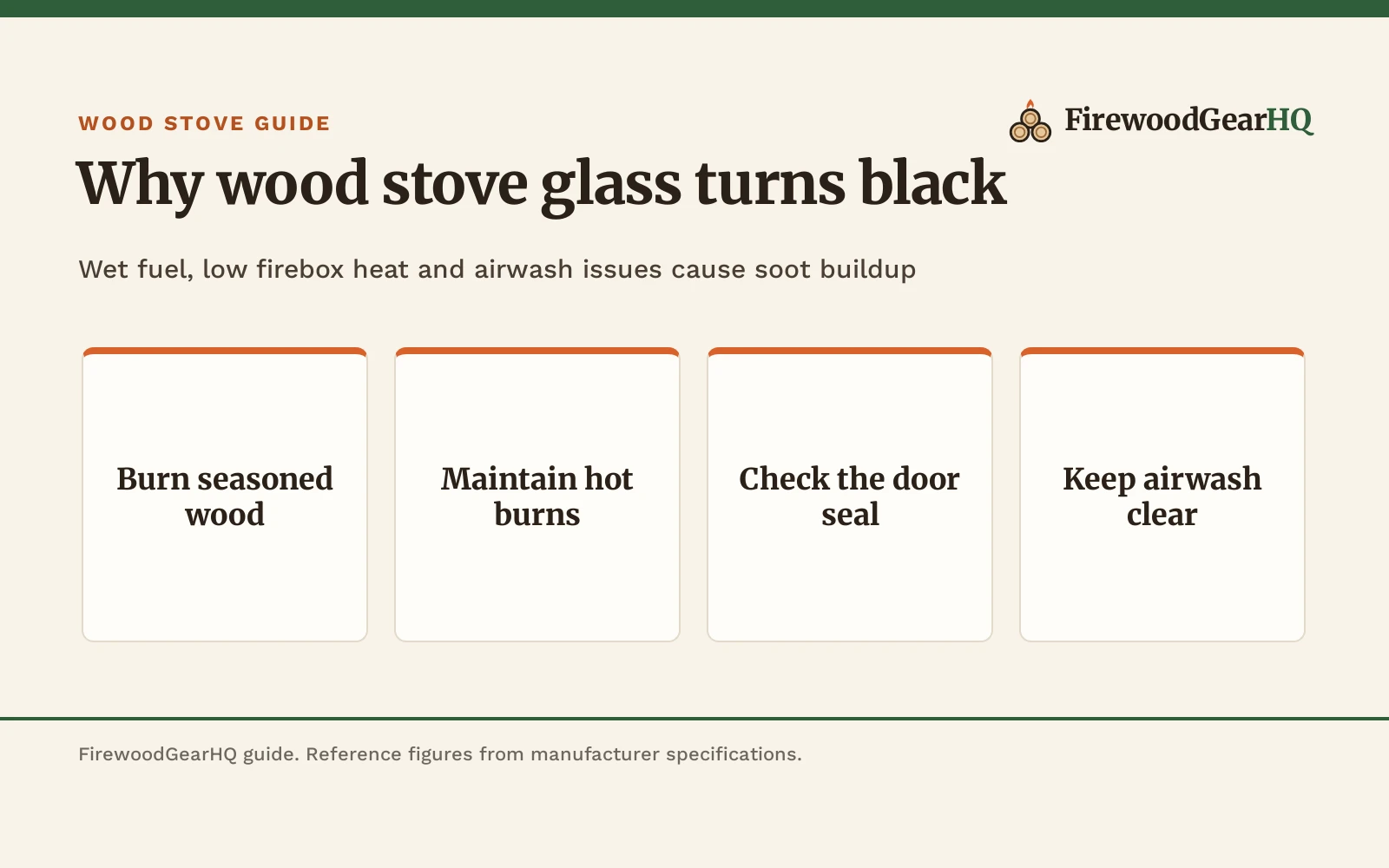
Wood stove glass turns black primarily because incomplete combustion deposits unburned soot and creosote on the cooler glass surface. Why does my wood stove glass turn black during everyday operation? The root cause is burning unseasoned firewood, running the firebox at temperatures that are too low, or dealing with a failed door gasket and blocked airwash channel. Volatile wood tars condense on the door glass rather than burning away.
FirewoodGearHQ earns a commission when you buy through links on our product pages, at no extra cost to you. Read our affiliate disclosure.
The quick answer
Incomplete combustion causes dark deposits on wood stove glass. When firewood burns with insufficient heat or oxygen, unburned volatile gases and tar droplets cling to the cooler ceramic glass door. Modern wood stoves use an internal airwash system that channels preheated air down across the glass to keep smoke away. When firewood holds excess moisture, firebox temperatures drop too low, or the airwash airflow is disrupted, soot bakes onto the glass. Preventing buildup requires burning seasoned wood, maintaining hot fires before damping down airflow, ensuring an airtight door seal, and keeping logs back from the glass.
Stove glass buildup comparison
| Buildup appearance | Likely cause | Correction |
|---|---|---|
| Light gray haze or powder | Normal fly ash | Wipes away with a damp cloth and wood ash once cool. |
| Brownish or amber film | Unseasoned wood or early creosote | Burn dry firewood and keep combustion air open until hot. |
| Heavy black flaky soot | Smoldering fire or starved airflow | Increase primary air and avoid idling the firebox. |
| Concentrated black patch | Log touching glass or blocked airwash | Load firewood back from the door and clear the airwash slot. |
Checking the buildup helps isolate whether fuel moisture, operating habits, or airflow leaks cause the soot.
Why does my wood stove glass turn black
Burning unseasoned firewood
Burning wet or green firewood is the most common reason for black stove glass. Unseasoned wood expends heat boiling off trapped water, dropping firebox temperatures and generating thick smoke laden with unburned wood tars. This cool, heavy smoke condenses directly against the glass door. Burning seasoned splits from the best wood for a wood stove ensures clean combustion. Checking that logs are dry with the best firewood moisture meter prevents moisture problems before loading.
Operating the stove at low temperatures
Restricting primary air too early causes the fire to smolder. Closing the air damper before the firebox is hot starves flames of oxygen, dropping combustion temperatures and leaving dark soot on the ceramic glass. A stove thermometer on the flue collar or stovetop shows when the firebox reaches clean-burning temperatures before you turn down the air. Distributing heat into the room with a wood stove fan provides steady warmth without needing to idle the stove.
A failing or leaking door gasket
The door gasket creates an airtight seal that directs combustion air through the stove controls. Over time, heat and latch pressure cause fiberglass rope gaskets to harden, flatten, or fray. A leaking seal lets uncontrolled air into the firebox, disrupting draft and collapsing the descending airwash curtain. Because door channels vary across models, Midwest Hearth lists replacement gasket rope made from graphite-impregnated fiberglass rated to 1000°F, sold in 7/16 in diameter and 120 in length, alongside rope diameters from 3/16 to 1 in.
A blocked airwash system
Modern EPA-certified wood stoves include an airwash channel above the door glass that draws preheated air down across the inside face of the ceramic glass. This air curtain prevents smoke and fly ash from settling on the surface. If fly ash or stray creosote flakes clog this channel, the air barrier fails, allowing soot to touch the glass directly. Checking the airwash slot during seasonal maintenance keeps airflow open.
Loading wood too close to the glass
Placing firewood too close to the front of the stove disrupts draft and blocks the descending airwash curtain. If a burning log touches or sits right next to the glass, the cold door absorbs heat, quenching combustion locally and baking dark soot onto that spot. Always load firewood toward the middle and rear of the firebox, leaving open space between the fuel load and the door frame.
How to tell if your door gasket is failing
A compromised door gasket is a common cause of stubborn soot. Check the seal using these signs:
- Paper slip resistance check: Close the door on a slip of paper. If it pulls out with little resistance, the gasket is loose and leaking air. Repeat around the door perimeter.
- Physical wear: Check the fiberglass rope for flattening, fraying, missing segments, or brittle sections.
- Loss of airwash draft: Air leaking past the door bypasses the upper airwash, disrupting the protective air curtain and letting soot settle across the glass.
- Loss of burn control: If damping the primary air intake does not slow the fire, air is entering through the gasket.
- Smoke spillage: Faint smoke escaping the door indicates a failing seal. See why does my wood stove smoke when I open the door for draft diagnosis.
What happens if you burn with dirty glass
Blackened glass indicates incomplete combustion throughout the entire appliance. When creosote coats the door, it also condenses in the stove pipe and flue, raising the hazard of a chimney fire. To help manage creosote in the firebox and flue, Rutland creosote remover is heat activated at 265°F in a 2 lb tub to turn sticky tar into loose ash. In addition, unburned wood tars and acidic compounds can etch ceramic glass over repeated firings, causing permanent clouding. Always follow manufacturer clearances to combustibles, maintain working smoke and carbon monoxide alarms, install stoves per local building codes, and schedule an annual chimney inspection with a sweep certified by the Chimney Safety Institute of America (CSIA) in accordance with National Fire Protection Association (NFPA) standards.
How to clean black glass wood stove doors
Clean wood stove glass only when the appliance is completely cool to avoid burn hazards and prevent cleaners from baking into the ceramic surface.
For routine soot, use the wood ash method. Dampen a paper towel with water, dip it into fine wood ash from the hearth, and rub the glass in gentle circles. Ensure the ash contains no grit or hard embers that could scratch the surface. The mild alkali and fine texture of the ash lift soot cleanly. Wipe clean with a dry cloth.
For stubborn baked-on deposits, Furniture Clinic supplies a stove care kit featuring a 17 oz bottle of cleaner spray to lift grime from glass and metal, noting that its metal restorer dries in 10 mins for iron touch-ups. Never use metal scouring pads or razor blades, which scratch ceramic glass. Once finished, collect fallen debris safely. Review how to dispose of wood stove ashes safely and clean cold hearths with the best ash vacuum for wood stoves.
Install stoves and inserts to the manufacturer's instructions and your local code, usually by a certified installer with a permit and inspection. Keep the listed clearances to combustibles, run working smoke and carbon monoxide detectors, have the chimney inspected and cleaned every year to prevent creosote fires, burn only seasoned wood, and check local burn rules. See EPA Burn Wise, NFPA heating safety, CPSC carbon monoxide guidance and the Chimney Safety Institute of America (CSIA). Read our Safety Disclaimer.
Frequently Asked Questions
Why does stove glass turn black on only a single side?
Uneven soot typically indicates a partially blocked airwash channel on that side or logs loaded too close to that corner. If ash clogs one section of the airwash slot, that part of the glass loses its protective air curtain and darkens.
Will a hotter fire clean black stove glass?
Yes, if the soot is light. Building a hot, brisk fire with seasoned wood elevates firebox temperatures enough to burn light carbon soot off the glass. Heavy, baked-on creosote crusts will not burn off and require manual cleaning once cool.
Can household glass cleaner clean wood stove glass?
No. Household window cleaners contain ammonia and chemicals that bake into ceramic glass during firing, causing permanent haze or streaking. Clean with plain water and fine wood ash or a cleaner formulated specifically for high-temperature wood stove glass.
How often should wood stove glass need cleaning?
With seasoned firewood and proper draft, the airwash keeps glass largely clear during everyday heating, needing only occasional wiping. If the glass turns black after every fire, check wood moisture and door gaskets rather than cleaning daily.
Why does stove glass turn white or cloudy?
A cloudy white haze that will not wipe away is chemical etching rather than soot. Overfiring the stove repeatedly causes mineral compounds in ash to fuse into the ceramic glass, creating permanent cloudiness that cannot be scrubbed away.
Does opening the air control stop glass from turning black?
Opening the primary air intake feeds the fire and engages the airwash system, sweeping incoming air across the glass to keep soot away. Closing the damper too early starves the fire of oxygen, causing smoldering that quickly coats the door in soot.
Related guides
Explore our stove accessories hub and learn about installation differences in what is a wood stove insert. Discover how ash management equipment operates in what is an ash vacuum, and review high-output heating models in our guide to the best wood burning stove with blower. Also see our comparison of the best wood stove for heating a house.
About the author
The FirewoodGearHQ editorial team researches firewood and wood heating equipment from published specifications, ratings and warranty terms, and scores every pick the same way. We do not run our own product trials.