Best Wood for a Wood Stove: 5 Firewood and Kindling Picks Compared
Five firewood and kindling options for wood stoves compared by wood species, split length, moisture content, bundle weight and heat performance.
 By FirewoodGearHQ Editorial
Updated October 9, 2026
By FirewoodGearHQ Editorial
Updated October 9, 2026
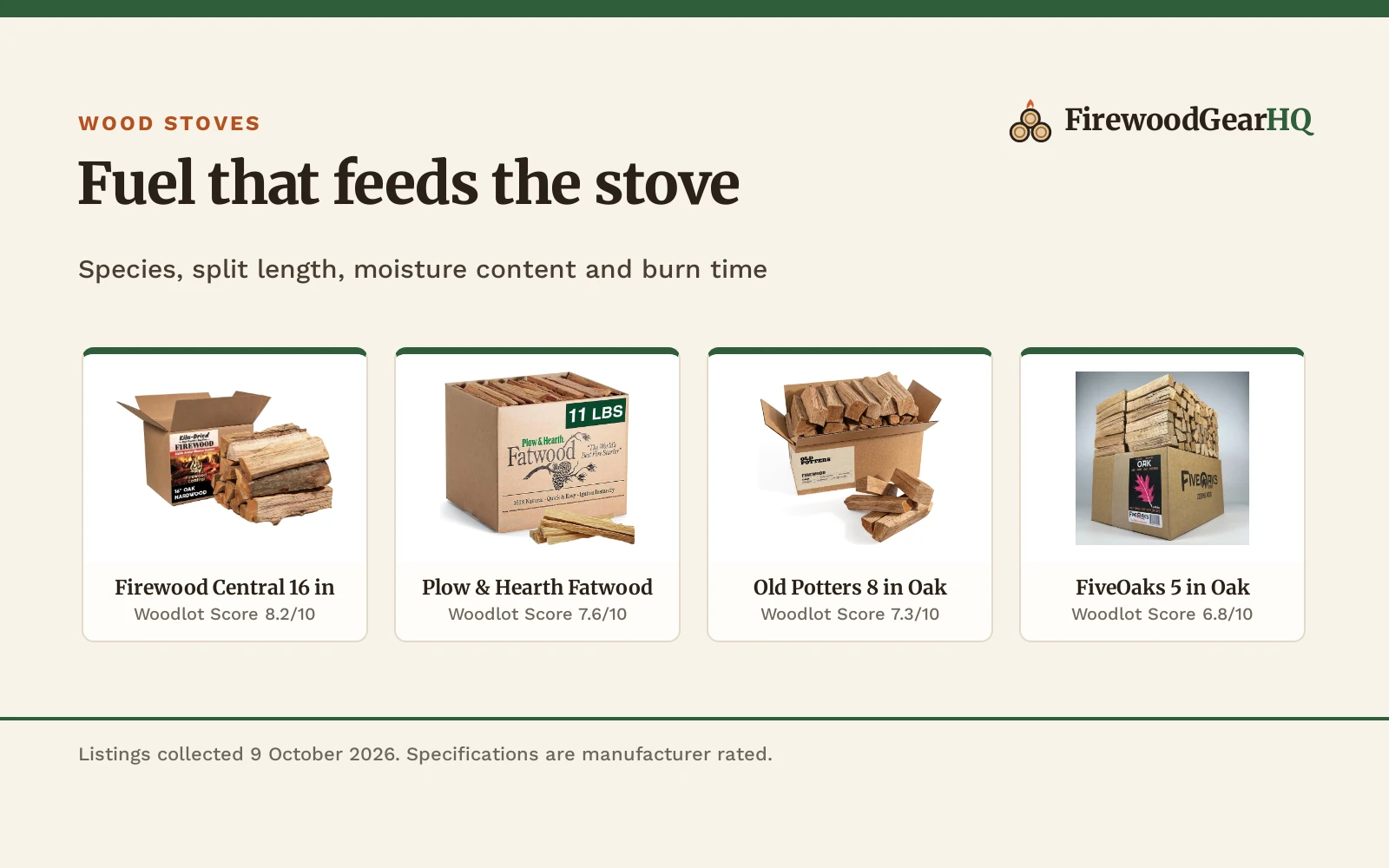
Finding the best wood for a wood stove comes down to moisture content, split length, and species density. Dense hardwoods like oak provide steady, long-lasting heat with minimal smoke when dried properly, while resin-rich pine fatwood provides the fast heat needed to ignite cold firewood logs. This guide compares five wood and kindling options for wood burning stoves by split length, listed weight, wood species, and kiln-drying standards, from standard 16-inch Pennsylvania oak splits to compact logs and natural fatwood kindling.
FirewoodGearHQ earns a commission when you buy through links on this page, at no extra cost to you. Affiliate disclosure.
Quick picks
- Best Overall Firewood Central 16 in: 16 in kiln-dried oak splits certified under 15% moisture for standard stove fireboxes. Check price
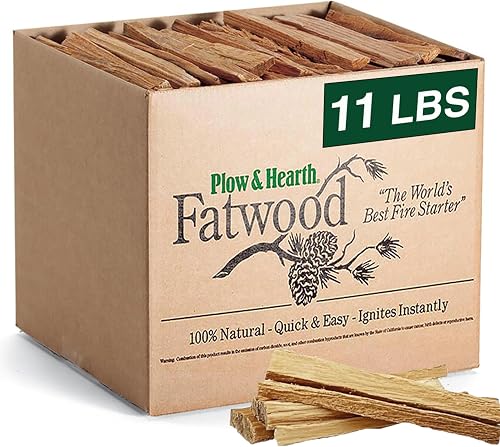
- Best Fatwood Kindling Plow & Hearth Fatwood: 11 lb bundle of resin-rich 8 in pine sticks to start fires with two sticks and no paper. Check price
- Best for Compact Stoves Old Potters 8 in Oak: 8 in kiln-dried oak logs inspected to USDA standards for smaller stove boxes and cooking. Check price
- Best Mini Kindling Splits FiveOaks 5 in Oak: 5 in kiln-dried oak splits in a 14 lb box for quick kindling or mini wood stoves. Check price
Compare the picks
| Product | Woodlot Score | Wood type | Piece size | Weight (listed) | Moisture / Cert | Warranty (stated) |
|---|---|---|---|---|---|---|
| Firewood Central 16 in | 8.2/10 | Oak hardwood splits | 16 in splits | 38 lb | PDA-certified, <=15% | Not stated |
| Plow & Hearth Fatwood | 7.6/10 | Pine fatwood sticks | 8 in sticks | 11 lb | All-natural resin | Not stated |
| Old Potters 8 in Oak | 7.3/10 | Oak wood logs | 8 in x 2.5 in | 7.35 kg | USDA Certified | Not stated |
| FiveOaks 5 in Oak | 6.8/10 | Oak hardwood splits | 5 in splits | 14 lb (6.45 kg) | Kiln dried | Not stated |
| Pine Mountain 5 lb | 6.4/10 | Pine fatwood sticks | Sticks (length unstated) | 5 lb | Additive-free | Not stated |
Specifications are manufacturer rated, collected 9 October 2026. Bundle weights are as listed. None of these firewood or kindling listings states a concrete manufacturer warranty term.
The picks
| Award | Product | Woodlot Score About the HQ ScoreThe Woodlot Score runs from 0 to 10 and weighs performance (35%), build (25%), value (25%), safety (10%, where it applies) and warranty (5%), using only what the manufacturer and the listing publish. How we pick › | |
|---|---|---|---|
 Firewood Central Kiln-Dried PA Oak
|
8.2/10 | Buy | |
 Plow & Hearth 11 LBS Fatwood Fire Starter Sticks
|
7.6/10 | Buy | |
 Old Potters Kiln Dried Firewood, 8" Logs
|
7.3/10 | Buy | |
 Kiln Dried Oak Pizza Oven Wood
|
6.8/10 | Buy | |
 Pine Mountain StarterStikk 100% Natural Fatwood
|
6.4/10 | Buy |
Firewood Central Kiln-Dried PA Oak
A 38 lb bundle of 14 to 18 Pennsylvania oak firewood splits, measuring 16 inches and kiln-dried to 15% moisture or less under PDA certification.
Pros
- 16-inch split length fits standard wood stove fireboxes without recutting
- PDA-certified kiln drying to 15% moisture or less for clean burning
- Dense Pennsylvania oak hardwood delivers long-lasting heat and low smoke
- Large 38 lb bundle provides 14 to 18 pre-split pieces
Cons
- Spec table incorrectly classifies splits as outdoor grilling pellets
- At 38 lb, the full bundle is heavy to carry in a single trip
- 16-inch length is too long for compact camp stoves or mini heaters
- No warranty term is stated
Plow & Hearth 11 LBS Fatwood Fire Starter Sticks
An 11 lb box of 8-inch fatwood kindling sticks sustainably harvested from resin-rich fallen pine trees to start wood stove fires.
Pros
- High organic pine resin content ignites quickly with two sticks
- Generous 11 lb bundle gives an ample supply for the heating season
- Pre-split 8-inch stick length is easy to place in stove kindling stacks
- Sustainably harvested from naturally fallen pine rather than live trees
Cons
- Kindling fuel only, not a substitute for dense cordwood logs
- No warranty term is stated
- Resinous pine produces soot if burned alone without airflow
- Stick count is not specified in the listing
Old Potters Kiln Dried Firewood, 8" Logs
A 7.35 kg bundle of 16 to 18 kiln-dried oak logs measuring 8 inches long and 2 to 3 inches thick, carrying USDA Certified quality.
Pros
- USDA Certified for safety and sanitation through inspection
- Kiln-dried oak wood burns hot with minimal smoke and clean coals
- 8-inch length fits smaller wood stove fireboxes and cookstoves
- Includes 16 to 18 logs totaling 1100 cubic inches
Cons
- 8-inch length leaves empty space in standard 16-inch stove fireboxes
- Bundle weighs 7.35 kg, requiring multiple boxes for steady heating
- Listed as cooking wood rather than heating cordwood
- No warranty term is stated
Kiln Dried Oak Pizza Oven Wood
A 1,000 cubic inch box of mini 5-inch kiln-dried oak splits weighing approximately 14 lb, sourced from managed Pennsylvania timber.
Pros
- Kiln-dried oak hardwood stated free from mold and pests
- Sourced from state forester managed timber in Northwest Pennsylvania
- Compact 5-inch length is suited for small fireboxes and kindling bases
- Hand-stacked box provides 1,000 cubic inches and approximately 14 lb
Cons
- 5-inch mini splits are too short for primary fuel in standard home wood stoves
- Narrow split width burns through faster than cordwood splits
- Primarily packaged for pizza ovens and tabletop stoves
- No warranty term is stated
Pine Mountain StarterStikk 100% Natural Fatwood
A 5 lb box of all-natural fatwood firestarting sticks made from resinous pine to start fires without accelerants.
Pros
- All-natural fatwood starts fires without chemical accelerants, fluids or gels
- Sticks catch quickly to ignite larger hardwood logs in the stove
- Compact 5 lb box is lightweight and easy to store near the hearth
- Additive-free pine wood harvested from renewable resources
Cons
- Listing bullets confusingly copy firelog claims regarding emissions
- Spec table states 'Warranty.' without describing terms or duration
- Smaller 5 lb pack runs out faster than 11 lb fatwood bundles
- Stick length and stick count are not stated in the listing
How we scored them
Each firewood and kindling product is scored out of 100 on performance, build, value, safety and warranty, using only what the listing publishes. The weights are on our How We Pick page.
| Product | Woodlot Score | Perf. /35 | Build /25 | Value /25 | Safety /10 | Warranty /5 |
|---|---|---|---|---|---|---|
| Firewood Central 16 in | 8.2 | 32 | 21 | 21 | 8 | 0 |
| Plow & Hearth Fatwood | 7.6 | 29 | 21 | 20 | 5 | 0 |
| Old Potters 8 in Oak | 7.3 | 28 | 19 | 19 | 7 | 0 |
| FiveOaks 5 in Oak | 6.8 | 26 | 19 | 19 | 5 | 0 |
| Pine Mountain 5 lb | 6.4 | 24 | 18 | 18 | 5 | 0 |
Buying guide: choosing the best wood for a wood stove
Firewood split length and firebox fit
A firewood split must fit comfortably inside your firebox with enough room to close the stove door safely. Standard cordwood is cut to 16-inch splits, which suits the majority of freestanding home wood stoves. If you operate a compact cabin heater, a cookstove, or a small tent stove, 16-inch pieces will be too long; shorter 8-inch logs or 5-inch mini splits fit smaller chambers without requiring a chainsaw to cut them down. Check the manufacturer firebox dimensions for your stove before ordering firewood.
Hardwood vs softwood and heat output
Dense hardwoods such as oak are preferred for overnight heating because their dense cell structure yields a steady, sustained burn and a long-lasting bed of hot coals. Softwoods like pine contain natural resins that ignite fast and burn hot, but they burn through rapidly. In a wood stove, resinous pine is best utilized as kindling to start the fire rather than as primary heating fuel. Never burn pressure-treated lumber, painted wood, driftwood, or trash, which damage catalytic combustors and chimney linings.
Moisture content and kiln drying
Moisture content determines how cleanly and efficiently firewood burns in a wood stove. Green or wet wood wastes heat energy boiling off internal water, producing excessive smoke and accelerating creosote buildup in the chimney flue. Kiln-dried firewood undergoes controlled heat treatment that drives moisture down, such as PDA-certified oak dried to 15% moisture or less. Dry wood lights quickly, burns with minimal smoke, and produces clean flue gases. To check your firewood before burning, use a calibrated pin tool like the models compared in our best firewood moisture meter guide.
Starting fires with natural fatwood kindling
Starting a fire in a cold stove requires immediate, concentrated heat to establish a strong draft up the flue. Resinous fatwood sticks, sustainably harvested from fallen pine stumps, light readily with a match without chemical fluids, gels, or rolled newspapers. Using two sticks of resinous pine kindling beneath seasoned oak splits brings the firebox up to operating temperature cleanly. Liquid accelerants must never be used in a wood stove due to the risk of flare-ups and sudden flue fires.
Wood stove safety and maintenance
Operating a wood burning stove safely requires strict adherence to manufacturer clearances and local building codes, as recommended by the National Fire Protection Association (NFPA). Always maintain functional smoke alarms and carbon monoxide detectors on every level of the home, following Consumer Product Safety Commission (CPSC) guidance. Have your stove and chimney inspected annually by a certified chimney sweep through the Chimney Safety Institute of America (CSIA) to clear creosote before each heating season. For monitoring flue temperatures to prevent creosote formation, consult our best wood stove thermometer guide.
Woodpile planning and storage
Keeping firewood dry throughout the winter requires proper elevated storage away from ground moisture, covered at the top while leaving the sides open for airflow. For indoor staging near the hearth, explore our ideas in indoor firewood rack ideas and inside wood racks for firewood. If you season green cordwood yourself, see our drying schedule in how long to season firewood.
Turn a stack's length, height and depth into full and face cords, and estimate how much wood a winter takes.
Install stoves and inserts to the manufacturer's instructions and your local code, usually by a certified installer with a permit and inspection. Keep the listed clearances to combustibles, run working smoke and carbon monoxide detectors, have the chimney inspected and cleaned every year to prevent creosote fires, burn only seasoned wood, and check local burn rules. See EPA Burn Wise, NFPA heating safety, CPSC carbon monoxide guidance and the Chimney Safety Institute of America (CSIA). Read our Safety Disclaimer.
Frequently Asked Questions
What is the best wood for a wood stove?
Dense, seasoned hardwoods like oak are the best primary fuel for a wood burning stove because they provide high heat, long burn times, and a sustained coal bed. For starting the fire, resin-rich pine fatwood sticks provide quick, clean ignition without requiring chemical accelerants.
Why does my wood burning stove smoke?
A wood stove typically smokes if the firewood has high moisture content, if the flue damper is closed, or if a cold chimney has not yet established an upward draft. Burning unseasoned wood forces the fire to smolder, creating dense smoke and creosote deposits. Ensure your wood is kiln-dried or seasoned, open the air controls fully during startup, and have the chimney inspected annually by a CSIA-certified sweep.
What size wood fits in a wood burning stove?
Most residential wood stoves accommodate 16-inch firewood splits loaded East-West or North-South depending on firebox depth. Compact stoves, tent heaters, and small cookstoves require shorter 8-inch logs or 5-inch splits. Always measure your firebox interior to ensure splits clear the door and firebrick liners.
Can you burn pine in a wood stove?
Natural pine fatwood sticks are useful kindling for starting a stove fire because natural resins ignite readily. However, pine is not recommended as primary overnight firewood because it burns quickly without forming durable coals, and unseasoned pine can contribute to chimney deposits.
How often should a wood burning stove chimney be inspected?
The Chimney Safety Institute of America (CSIA) and the National Fire Protection Association (NFPA) recommend having your wood stove chimney and flue inspected annually by a certified professional. Regular cleanings remove creosote accumulation and ensure proper draft for safe home heating.
Related guides
Explore our wood stoves hub and stove accessories for complete hearth equipment. To heat your living space efficiently, check out the best wood stove for heating a house and improve circulation with the best wood stove fan heat powered. For distributing heated air through ductwork or living areas, see the best wood burning stove with blower. Keep your hearth clean with the best ash vacuum for wood stoves and an ash bucket for fireplace cleanup. To check your firewood moisture before burning, read our guide to the best firewood moisture meter. For seasoning timelines by species, consult how long to season firewood. For organizing your logs outdoors, see our firewood storage hub and the best firewood rack with cover. For lighting fires safely, see our review of the best fire starter for indoor fireplace and the best fire starter kit. If you are researching wood heating tax credits, note that the federal credit expired and is not available in 2026; see our update on the wood stove tax credit. For portable setups, see the best tent wood stove, or read about converting an existing fireplace with what is a wood stove insert.
About the author
The FirewoodGearHQ editorial team researches firewood and wood heating equipment from published specifications, ratings and warranty terms, and scores every pick the same way. We do not run our own product trials.