Best Wood Burning Stove with Blower: 5 Blowers and Heat Reclaimers Compared (2026)
Five wood burning stove blowers and heat reclaimers compared by airflow, mounting style, electrical requirements, operating sound and stated warranty terms.
 By FirewoodGearHQ Editorial
Updated October 9, 2026
By FirewoodGearHQ Editorial
Updated October 9, 2026
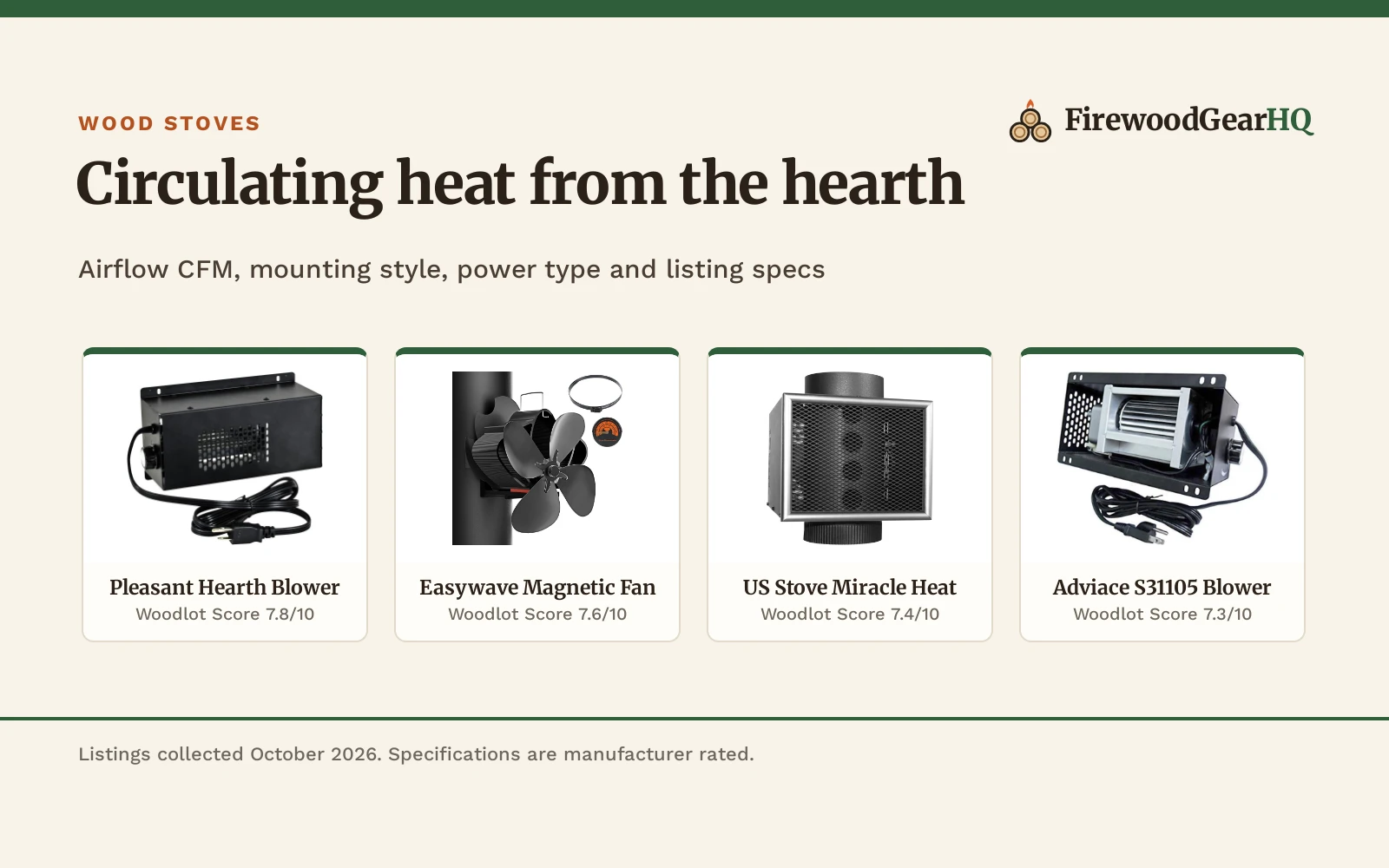
A freestanding wood stove radiates intense heat, but without active air circulation that heat often lingers near the firebox or rises directly to the ceiling. Choosing the best wood burning stove with blower setup circulates warm air across living spaces to eliminate cold spots. This guide compares 5 wood stove blowers and flue pipe heat reclaimers across airflow CFM, mounting design, electrical requirements, operating sound and stated warranty terms.
FirewoodGearHQ earns a commission when you buy through links on this page, at no extra cost to you. Affiliate disclosure.
Quick picks
- Best Overall Pleasant Hearth Blower: Dedicated wood stove blower with variable speed dial, complete hardware kit and a stated 1 year warranty. Check price
- Best Heat-Powered Pipe Fan Easywave Magnetic Fan: Generates 180 CFM airflow using flue heat with dual magnetic and clamp mounting and zero electricity needed. Check price
- Best Flue Heat Reclaimer US Stove Miracle Heat: 14 lb alloy steel reclaimer with a 100 CFM fan captures exhaust heat from standard 6 in stove pipes. Check price
- Best Universal Replacement Adviace S31105 Blower: Universal replacement kit with a 2800 RPM motor, rheostat switch, heat gasket and 6 ft grounded cord. Check price
Compare the picks
| Model | Woodlot Score | Type | Airflow | Power source | Mounting | Warranty (stated) |
|---|---|---|---|---|---|---|
| Pleasant Hearth Blower | 7.8/10 | Stove blower | Not stated | Corded (6 ft cord) | Rear mount / vent | 1 year |
| Easywave Magnetic Fan | 7.6/10 | Heat-powered fan | 180 CFM | Thermoelectric (heat) | Magnetic / clamp (pipe) | Not stated |
| US Stove Miracle Heat | 7.4/10 | Flue heat reclaimer | 100 CFM | Corded electric | 6 in flue pipe | Not stated |
| Adviace S31105 Blower | 7.3/10 | Replacement blower | 2800 RPM | Corded (110V to 120V) | Rear mount (4 holes) | Not stated |
| Vogelzang HR-6 | 6.9/10 | Flue heat reclaimer | 130 CFM | Corded electric | 6 in flue pipe | Not stated |
Specifications are manufacturer rated, collected 9 October 2026. Airflow and noise figures are as published by each listing. The Pleasant Hearth listing is the only entry that states a concrete warranty term.
The picks
| Award | Product | Woodlot Score About the HQ ScoreThe Woodlot Score runs from 0 to 10 and weighs performance (35%), build (25%), value (25%), safety (10%, where it applies) and warranty (5%), using only what the manufacturer and the listing publish. How we pick › | |
|---|---|---|---|
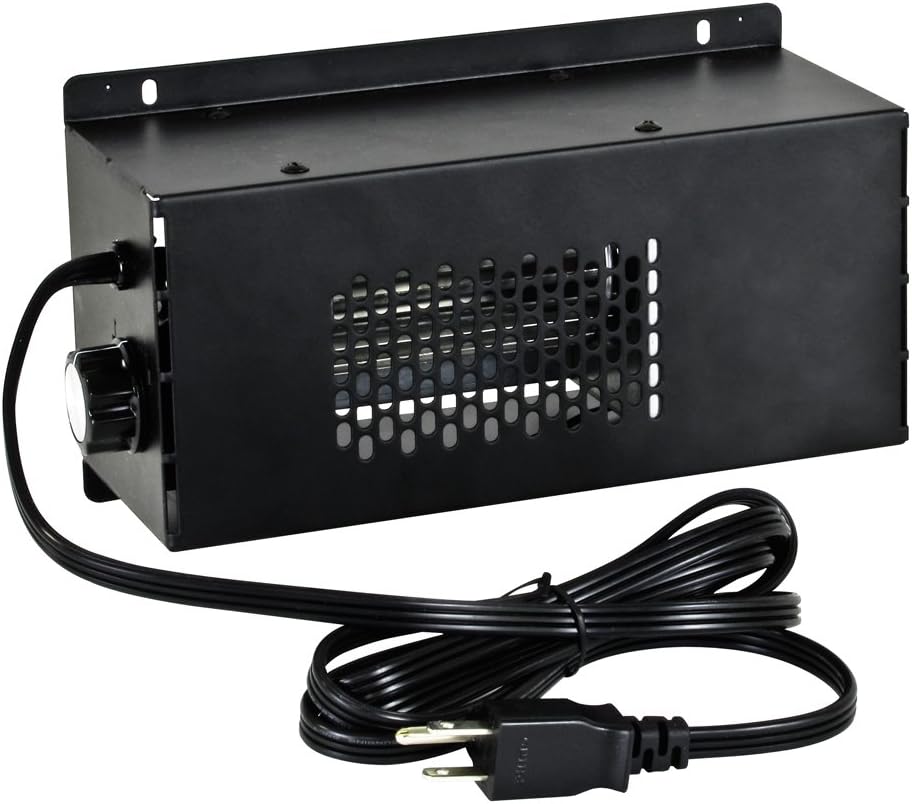 Pleasant Hearth Stove Blower
|
7.8/10 | Buy | |
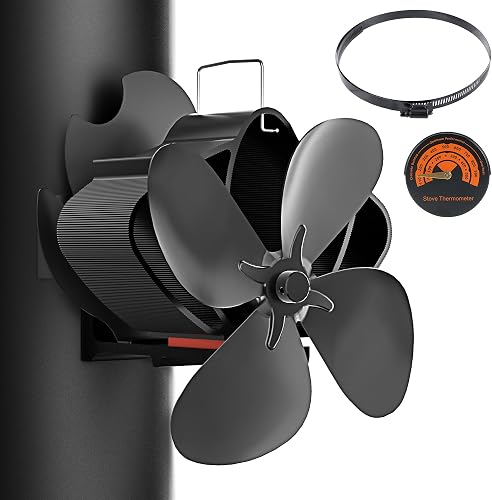 Thermoelectric Wood Stove Blower 180CFM
|
7.6/10 | Buy | |
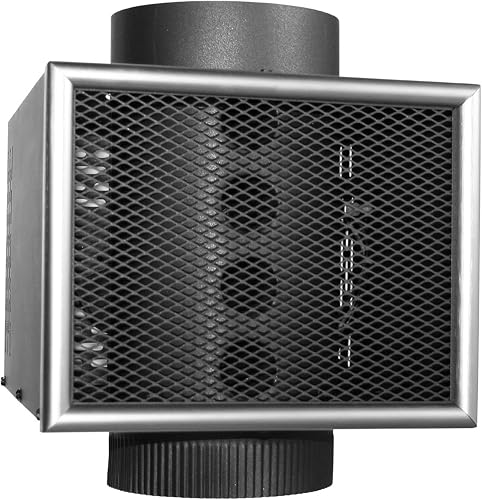 US Stove MH6-6 in Miracle Heat Reclaimer
|
7.4/10 | Buy | |
 Replacement Wood Stove Blower
|
7.3/10 | Buy | |
 US Stove Vogelzang HR-6 Heat Reclaimer
|
6.9/10 | Buy |
Pleasant Hearth Stove Blower
A dedicated stove blower designed for Pleasant Hearth wood burning and vent-free stoves, featuring variable speed control and an included 6 ft power cord.
Pros
- Variable speed control allows fine-tuning airflow and sound
- Includes complete power supply with 6 ft cord length and mounting hardware
- Certified for Pleasant Hearth wood burning and vent-free stoves
- 1 year warranty stated in the listing bullets
Cons
- Designed specifically for Pleasant Hearth stoves rather than universal fit
- Spec table lists dimensions as 28.27 x 31.93 x 14.37 in, likely packaging dimensions for a 2.7 lb unit
- Spec table describes the unit as bladeless despite listing plastic blade material
- Listing does not state an airflow CFM figure
Thermoelectric Wood Stove Blower 180CFM
A heat-powered thermoelectric stove pipe blower delivering 180 CFM airflow with magnetic or clamp mounting, quiet operation under 25 dB and dual overheat protection.
Pros
- Generates 180 CFM airflow using stove heat with zero electricity required
- Dual mounting options include magnetic attachment and an adjustable clamp for 120-150 mm pipes
- Operating sound rated under 25 dB
- Includes magnetic thermometer and built-in safety cutoff at 650°F (343°C)
Cons
- No warranty term is stated
- Airflow depends entirely on stove flue pipe reaching operating temperatures
- Spec table categorizes design as a table fan despite pipe clamp mounting
- Single speed setting with speed governed by flue surface temperature
US Stove MH6-6 in Miracle Heat Reclaimer
An inline 6 in flue pipe heat reclaimer with a 100 CFM electric circulation fan, 14 lb alloy steel housing and a fully sealed design to capture exhaust heat.
Pros
- 100 CFM circulation fan captures heat normally lost up the flue pipe
- Sturdy 14 lb alloy steel construction designed for 6 in pipes
- Fully sealed housing prevents flue gas leakage
- Compatible with wood, coal, pellet and gas heating appliances
Cons
- No warranty term is stated beyond a generic warranty note
- Spec table contradicts title by listing material as plastic rather than alloy steel
- Requires cleaning every 3 months to maintain heat recovery performance
- Requires cutting or configuring into an existing 6 in flue pipe run
Replacement Wood Stove Blower
A universal replacement wood stove blower kit with a 2800 RPM motor, rheostat variable speed switch, 6 ft 3-prong cord, mounting screws and heat gasket.
Pros
- Variable rheostat speed switch allows precise airflow and noise adjustments
- 2800 RPM motor provides active convective heat circulation
- Complete kit includes 6 ft grounded cord, heat gasket and 4 mounting screws
- Broad fitment covering multiple plate steel stove lines from CFM, GHP and Monessen
Cons
- No warranty term is stated
- Spec table incorrectly classifies mounting as floor mount instead of rear stove mount
- Spec table notes bladeless design despite plastic blade material listing
- Requires matching 4-hole mounting pattern (8 in horizontal by 4.75 in vertical)
US Stove Vogelzang HR-6 Heat Reclaimer
A 6 in flue pipe heat reclaimer featuring a fully automatic 130 CFM blower, internal thermostatic control and a sealed flue gas design.
Pros
- 130 CFM blower provides strong forced-air heat recovery
- Automatic thermostat control turns fan on and off based on flue heat
- Fully sealed design prevents flue gas leakage
- Sized for standard 6 in diameter flue pipes on wood or coal stoves
Cons
- No warranty term is stated
- Spec table contains extreme errors, listing material as wood and noise as 5 db
- Listing provides sparse bullet text and minimal documentation
- Inline flue installation requires dedicated clearance and pipe modification
How we scored them
Each blower and heat reclaimer is scored out of 100 on performance, build, value, safety and warranty, using only what the listing publishes. The weights are on our How We Pick page.
| Product | Woodlot Score | Perf. /35 | Build /25 | Value /25 | Safety /10 | Warranty /5 |
|---|---|---|---|---|---|---|
| Pleasant Hearth Blower | 7.8 | 29 | 20 | 21 | 5 | 3 |
| Easywave Magnetic Fan | 7.6 | 29 | 20 | 21 | 5 | 0 |
| US Stove Miracle Heat | 7.4 | 29 | 20 | 20 | 5 | 0 |
| Adviace S31105 Blower | 7.3 | 28 | 19 | 21 | 5 | 0 |
| Vogelzang HR-6 | 6.9 | 28 | 18 | 19 | 5 | 0 |
Buying guide: choosing the best wood burning stove with blower
Convection vs radiant heat
Freestanding wood stoves produce substantial radiant heat, warming objects, walls and people directly in front of the glass. Radiant heat travels in straight lines and does not easily turn corners into hallways or adjacent rooms. Adding a blower introduces forced convection, drawing cooler air along the floor, passing it over heated steel surfaces or heat-exchange tubes, and pushing warmed air into the room to achieve an even room temperature.
Chassis blowers vs flue pipe heat reclaimers
Stove circulation equipment divides into distinct mechanical configurations. Stove-mounted blowers attach directly to the rear or bottom convection channel of the stove chassis, pushing room air around the outer firebox walls without contacting the flue gas path. In contrast, heat reclaimers install inline into standard 6 in stove pipe runs. Heat reclaimers feature sealed internal conduction tubes where an electric fan forces room air through the unit to harvest warmth from exiting flue gases before that energy escapes up the chimney.
Powered blowers vs heat-powered thermoelectric fans
Powered electric blowers connect to standard household electrical supplies using grounded cords. They supply constant airflow between 100 CFM and 130 CFM, or run at motor speeds of 2800 RPM, providing steady circulation regardless of whether the fire is newly lit or burning down. Thermoelectric fans generate electricity directly from flue pipe heat. These units require zero electrical wiring and produce zero utility demand, delivering circulation up to 180 CFM during power outages, though their speed varies with pipe temperature.
Airflow control and operating sound
Blower noise is an essential consideration in living areas. Corded models incorporate manual rheostat dials or multi-position switches that let owners fine-tune motor speed and sound output to match room comfort. Certain flue reclaimers include integrated thermostatic switches that turn the blower on when the flue pipe reaches operating temperature and switch off when the fire dies down. Heat-powered magnetic pipe fans operate quietly, with published sound levels at or below 25 dB.
Clearances, chimney care and code compliance
Every wood stove and blower installation must strictly follow manufacturer instructions, NFPA guidelines and local building codes. Never reduce clearances to combustible wall assemblies unless approved heat shields are installed in accordance with local regulations. Always install working smoke alarms and carbon monoxide detectors on every level of the home as recommended by the CPSC. Schedule an annual chimney inspection and sweep with a CSIA-certified professional, clean reclaimer tubes regularly, and burn seasoned cordwood exclusively.
Turn a stack's length, height and depth into full and face cords, and estimate how much wood a winter takes.
Install stoves and inserts to the manufacturer's instructions and your local code, usually by a certified installer with a permit and inspection. Keep the listed clearances to combustibles, run working smoke and carbon monoxide detectors, have the chimney inspected and cleaned every year to prevent creosote fires, burn only seasoned wood, and check local burn rules. See EPA Burn Wise, NFPA heating safety, CPSC carbon monoxide guidance and the Chimney Safety Institute of America (CSIA). Read our Safety Disclaimer.
Frequently Asked Questions
How does a wood burning stove blower work?
A stove blower circulates room air across hot exterior stove surfaces or through sealed internal heat-exchange tubes in a flue pipe reclaimer. The moving air absorbs heat by convection and distributes warm air across the living area, improving room comfort and preventing hot air from collecting solely near the ceiling.
Does a wood burning stove blower require electricity?
Standard blowers and motorized heat reclaimers require household electrical power and plug into grounded outlets using standard power cords. However, heat-powered thermoelectric stove fans generate their own electricity from flue heat using the Seebeck effect, requiring no electrical outlet or batteries.
How to use a wood burning stove with a blower?
Build and establish a hot, clean-burning fire before activating a manual blower. Circulating air over a cold firebox can cool the fire prematurely and increase creosote formation. Models equipped with automatic thermostats engage the fan only after the stove or flue pipe reaches designated operating temperatures.
How to clean a wood burning stove and blower?
Disconnect electric blowers from power before inspection. Vacuum dust, pet hair and household debris from the motor housing, fan blades and intake guard. For flue-mounted heat reclaimers, follow the manufacturer recommendation to clean internal heat-exchanger tubes every 3 months to prevent soot buildup from insulating the metal surfaces.
How long does a wood stove blower last?
Stove blowers provide reliable service season after season when kept clean and operated within recommended temperature limits. Excessive flue pipe heat or heavy soot accumulation can shorten motor and blade life, which is why heat-powered units feature bimetallic safety cutoffs at 650°F (343°C) to prevent thermal damage.
Related guides
Explore our complete wood stoves section and browse essential stove accessories. For whole-home heating setups, read our guide to the best wood stove for heating a house. Compare alternative hearth circulation options in our review of the best wood stove fan and best wood stove fan heat powered, or evaluate fireplace kits in the best fireplace blower fan. If you are converting a masonry hearth, learn what is a wood stove insert. Monitor firebox and flue temperatures with the best wood stove thermometer and best stove thermometer. Keep hearth areas tidy with the best ash vacuum for wood stoves and protect floors using a fireplace screen for wood burning stove. Learn proper fuel preparation in our guide on how long to season firewood. For tax regulations, note that the federal tax credit has expired, and check details in our update on the wood stove tax credit.
About the author
The FirewoodGearHQ editorial team researches firewood and wood heating equipment from published specifications, ratings and warranty terms, and scores every pick the same way. We do not run our own product trials.