What Is Creosote and How to Prevent It: Chimney Safety Guide
What creosote is, how it forms inside chimney flues, the risks it creates, and how to prevent buildup with dry firewood, hot fires, and regular maintenance.
 By FirewoodGearHQ Editorial
Updated October 9, 2026
By FirewoodGearHQ Editorial
Updated October 9, 2026
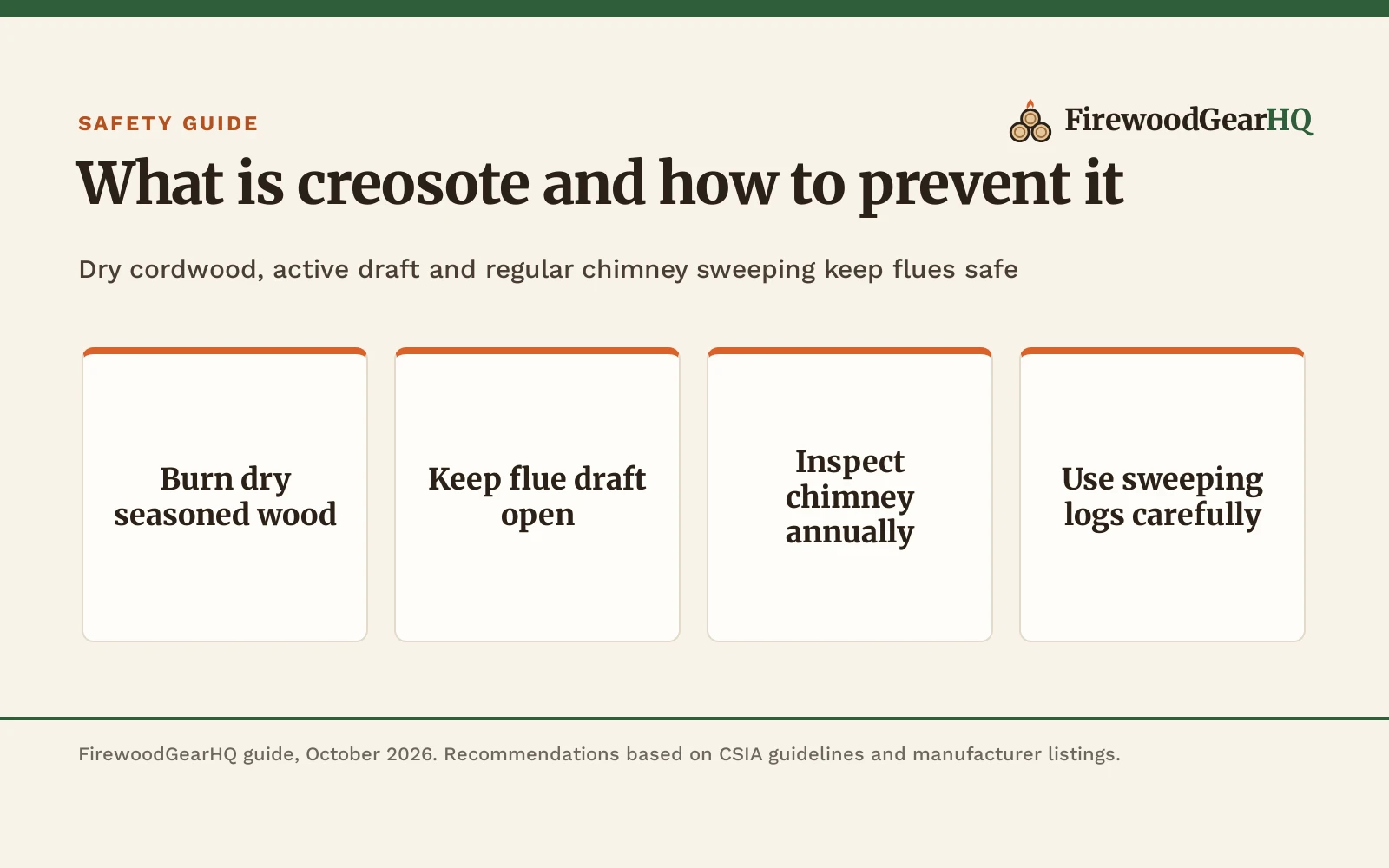
Understanding what is creosote and how to prevent it is essential for anyone heating with wood. Creosote is a flammable byproduct of incomplete wood combustion that condenses inside chimney flues as smoke cools. Preventing it requires burning dry, seasoned firewood, maintaining hot flue temperatures, providing adequate airflow, and scheduling regular chimney sweeping. When unburned gases and tar vapors leave the firebox without fully igniting, they cling to cooler flue walls. Over time, these deposits accumulate from light soot into sticky tar and hard glaze, creating the primary fuel source for dangerous chimney fires.
FirewoodGearHQ earns a commission when you buy through links on our product pages, at no extra cost to you. Read our affiliate disclosure.
The quick answer
Creosote is a dark, tar-rich deposit that accumulates inside flue pipes when smoke cools before leaving the chimney. Burning damp firewood, closing air dampers too tightly, and venting through cold flues cause rapid buildup. To prevent creosote, burn only seasoned cordwood, run brisk fires with bright flames, maintain active draft, and keep flue gases warm. The Chimney Safety Institute of America (CSIA) advises having chimneys inspected annually by a certified chimney sweep to catch deposits before lighting the winter heating season.
What is creosote and how to prevent it
When firewood burns completely at high temperatures, the exhaust consists primarily of water vapor and carbon dioxide. Incomplete combustion leaves volatile hydrocarbons unburned. As smoke rises through a cooler chimney, these vaporized tars cool below their condensation point and adhere to the flue liner, hardening into creosote.
Creosote develops through distinct forms as it accumulates:
- Flaky soot: Loose, powdery black dust that brushes away easily during routine sweeping.
- Sticky tar: Porous crusts or tacky residue that adhere firmly to flue walls, requiring stiff wire brushes or scraping.
- Glazed creosote: A dense, glossy, enamel-like tar baked repeatedly onto flue liners. Highly concentrated and flammable, glaze resists normal brushing and requires specialized professional remediation tools.
| Creosote form | Physical characteristics | Removal method |
|---|---|---|
| Flaky soot | Light, powdery, dry black dust | Standard chimney wire or poly brush |
| Sticky tar | Porous, dark crust or tacky buildup | Stiff chimney brush and mechanical scraping |
| Glazed creosote | Hard, glossy, baked-on tar enamel | Professional mechanical removal and specialized remediation |
Preventing these deposits requires eliminating the conditions that cause incomplete combustion and rapid condensation.
How to prevent creosote buildup step by step
Burn seasoned cordwood
Moisture in damp firewood absorbs firebox heat to evaporate water, dropping combustion temperatures and creating heavy smoke rich in unburned tar. Burn only cordwood seasoned in an open, breezy stack. Split wood small to speed drying, and check the fresh face of a split log with a firewood moisture meter. Learn more in our guides on what moisture content should firewood be and how to use a firewood moisture meter.
Maintain proper stove temperatures
Operating a stove too cool leads to incomplete combustion and heavy condensation. Use the best stove thermometer on the stovepipe to confirm your fire reaches a clean operating range. A heat-powered wood stove fan sits on the stove top to circulate warm air into the living area without altering firebox combustion or chimney draft.
Avoid smoldering and choked air intakes
Choking air dampers shut to stretch burn times starves the fire of oxygen, causing wood to smolder and release unburned tar. Build brisk kindling fires per our guide on how to start a fire in a wood stove, and maintain enough airflow for bright, active flames.
Protect chimney draft and flue warmth
Chimneys running along exterior walls cool smoke quickly, causing heavy condensation. An insulated flue liner keeps exhaust gases warm, maintains draft speed, and prevents vapors from chilling against cold masonry.
Schedule annual chimney inspections
The CSIA recommends an annual chimney inspection by a certified professional sweep. Sweeping removes soot before it bakes into stubborn glaze and reveals cracked liners. Review our wood stove safety checklist and our guide on how often should you clean your chimney with a wood stove.
How to inspect your chimney for creosote
Shine a bright light down the flue or up through the cleanout to check liner conditions:
- Liner appearance: Black, crusty, or glossy walls indicate progressive creosote buildup.
- Sooty stove glass: Blackened door glass points to cool, smoldering fires. See why does my wood stove glass turn black and clean with the best stove glass cleaner (2026).
- Sticking damper: Heavy buildup drags on moving damper plates and flue controls.
- Smoke spillage: Flue constriction causes smoke to puff indoors when opening doors. Consult why does my wood stove smoke when I open the door.
- Fallen flue flakes: Soot on the baffle or ash bed indicates loose flue deposits. Clear cold hearth ashes using the best ash vacuum for wood stoves.
What happens if creosote builds up in a flue
Allowing creosote to accumulate creates grave hazards. Creosote is combustible. When high flue temperatures or sparks ignite heavy deposits, a chimney fire erupts. Chimney fires generate intense heat that can crack masonry liners, warp metal stovepipes, and ignite nearby structural framing.
Buildup also narrows the flue passage, choking draft and pushing smoke and dangerous carbon monoxide back into living spaces. Install operating smoke detectors and carbon monoxide alarms active on every level of the home as essential safety protection.
Creosote sweeping logs and chemical removers
Specialty chemical products include sweeping logs, powders, liquid sprays, and pellet additives designed to condition creosote deposits between professional sweepings. Depending on the formula, these products aim to dry out sticky tar or loosen soot deposits so they can be swept away more easily. However, the CSIA emphasizes that chemical cleaners are maintenance aids and do not replace annual physical inspections or mechanical chimney sweeping.
Stated figures and specifications from reference listings include:
- Rutland Creosote Remover: Rutland lists this formula as heat-activated at 265°F in a 2 lb container, stating a warranty term of 18 months from manufacture. Rutland also makes toss-in packets in a 5 count case.
- Meeco’s Red Devil Creosote Destroyer: The maker packages this powder in a 5 lb container, directing users to apply 2 tablespoons every 3rd fire. The listing specifies activation in a medium fire of 325° to 350°.
- Pine Mountain Creosote Buster Firelog: The maker lists this 3.5 lb firelog for use every 40 fires, stating it burns cleaner than cordwood with up to 80% less carbon monoxide and 75% less particulate matter.
- The Creosote Sweeping Log: Joseph Enterprises lists this sweeping log to burn for approximately 90 minutes, noting ongoing treatment over 1 to 2 weeks, recommended use every 60 fires, and over 25 years of chimney protection.
- Rutland Pellet Creosote Remover: Rutland supplies an 8 pound bag made from wood pellets dried to 2-5% moisture content.
- ACS Anti-Creo-Soot: SaverSystems packages this liquid creosote cleaner in a 32 oz spray bottle with a stated 1 year warranty.
- CO-MATE Chimney Cleaner: Cignis Hearth Industries supplies a 2.2 lb powder bottle for up to 140 fires, stating it holds 10% more product than previous containers.
- Kabin Kathite Creosote Concentrate: Kabin packages toss-in packets in a 12 pack case.
Frequently Asked Questions
Does burning hot fires remove creosote?
No. While running a brisk, active fire helps prevent new creosote from condensing, building an excessively hot fire to burn off existing creosote is dangerous and can ignite a catastrophic chimney fire. Once creosote deposits form along flue walls, they must be removed mechanically or treated by a certified professional.
Do creosote sweeping logs really work?
Creosote sweeping logs release chemical compounds that can help dry out sticky tar deposits and make soot easier to brush away. However, they do not clear physical blockages or remove heavy glazed creosote, and ash remains in the flue until swept. They serve as maintenance supplements, not replacements for professional chimney sweeping.
How often should a chimney be swept to prevent creosote?
The CSIA recommends an annual chimney inspection, sweeping whenever deposits accumulate. Burning wet wood or smoldering fires requires more frequent cleanings.
What type of wood causes the most creosote?
Unseasoned or wet wood of any species causes the most creosote because high moisture content suppresses firebox temperatures and generates heavy, unburned tar smoke. While resinous softwoods can produce more soot if burned in a cool, smoldering fire, properly seasoned softwoods burn cleanly at normal operating temperatures. Moisture content is the primary factor in creosote formation.
Can a wood stove fan help prevent creosote?
No. A heat-powered stove fan circulates warm air throughout the room to improve living space comfort, but it has no direct effect on combustion chemistry, firebox heat, or draft inside the flue. Preventing creosote requires burning dry cordwood, keeping combustion air open, and maintaining proper flue temperatures.
How do I know if I have glazed creosote?
Glazed creosote appears as a dark, smooth, glassy coating that resembles hardened tar or obsidian along flue liners. Unlike flaky soot or crusty tar deposits, glazed creosote cannot be brushed away with standard wire sweeps and poses severe chimney fire risks. If you see shiny, rock-hard glaze inside your stovepipe or flue, contact a certified chimney sweep for professional remediation.
Related guides
Explore our complete hearth guides in the stove accessories hub. For chimney care schedules, see our guide on how often should you clean your chimney with a wood stove and review the seasonal wood stove safety checklist. To keep your woodpile dry and ready for clean burning, check what moisture content should firewood be, read how to use a firewood moisture meter, and browse the best firewood moisture meter picks. Monitor your burn zone with the best stove thermometer, distribute heat with the best wood stove fan, maintain clear door view with the best stove glass cleaner (2026), and clear out cold hearth debris with the best ash vacuum for wood stoves. For proper firing habits, see how to start a fire in a wood stove, why does my wood stove glass turn black, and why does my wood stove smoke when I open the door.
About the author
The FirewoodGearHQ editorial team researches firewood and wood heating equipment from published specifications, ratings and warranty terms, and scores every pick the same way. We do not run our own product trials.