Wood Stove Safety Checklist: Daily, Monthly, and Seasonal Guide
A complete wood stove safety checklist covering clearance zones, chimney maintenance, daily burn habits, alarm placement, and safe ash disposal for your home.
 By FirewoodGearHQ Editorial
Updated October 9, 2026
By FirewoodGearHQ Editorial
Updated October 9, 2026
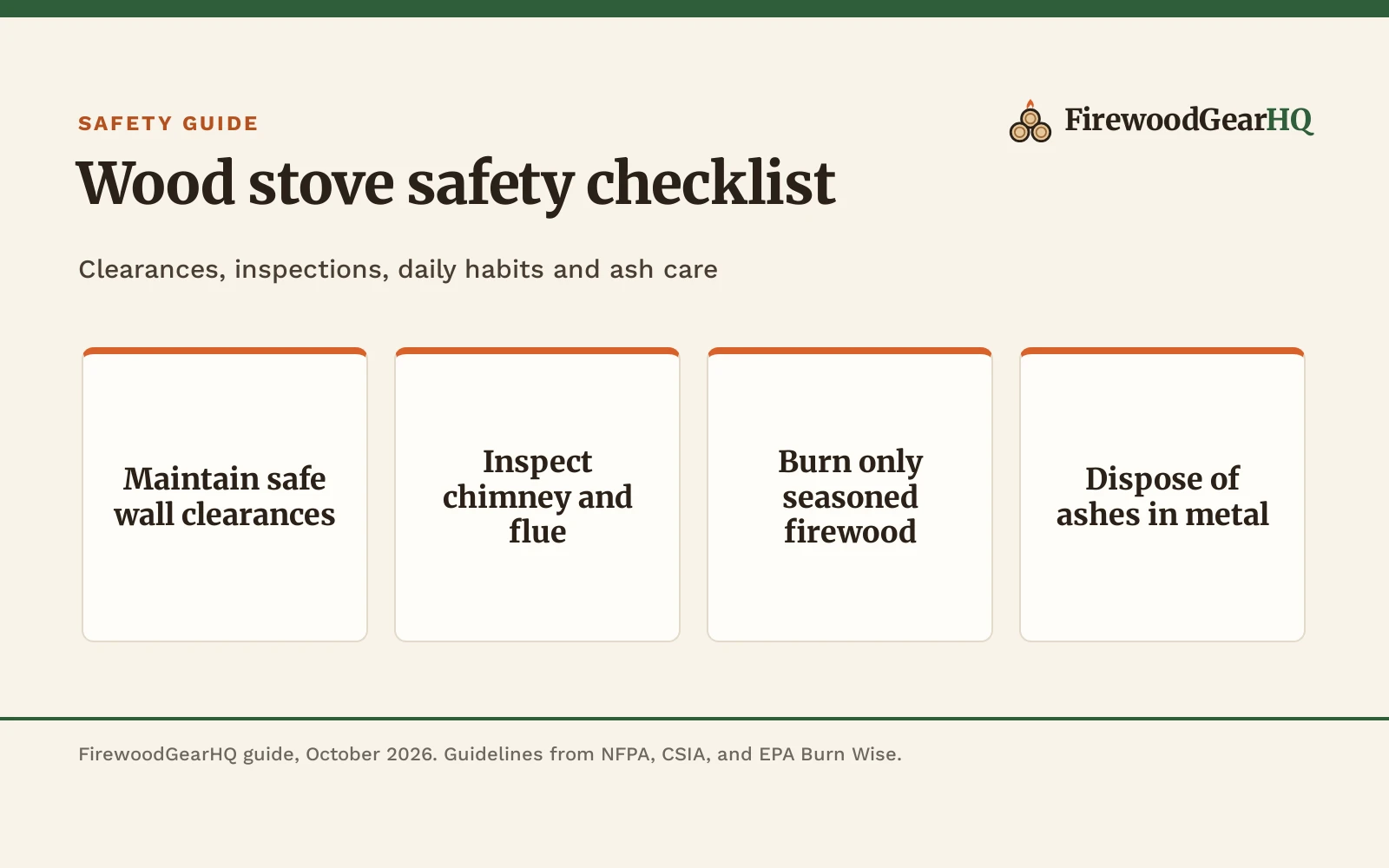
A complete wood stove safety checklist ensures your hearth operates safely throughout the heating season by addressing clearance zones, flue maintenance, daily firing habits, and ash disposal. Safe operation requires maintaining required manufacturer clearances to combustible walls, installing working smoke and carbon monoxide alarms, burning seasoned wood only, and scheduling an annual professional chimney inspection. Following these routine checkpoints minimizes chimney fire hazards and keeps your home warm and secure.
FirewoodGearHQ earns a commission when you buy through links on our product pages, at no extra cost to you. Read our affiliate disclosure.
Wood stove safety checklist: the quick answer
Operating a wood stove safely comes down to essential responsibilities: keep combustible materials away from hot surfaces, burn only seasoned split cordwood, maintain working early-warning alarms, and remove creosote before it accumulates. Wood stoves generate intense radiant heat, meaning clearances listed on the appliance safety label and local building codes must be strictly respected. Always have the chimney inspected and swept annually by a certified chimney sweep. Day-to-day safety depends on controlling airflow to prevent overfiring, safely containing embers during loading, and storing ash outdoors in a covered metal container.
Wood stove safety checklist by frequency
| Frequency | Safety checkpoint | Action required |
|---|---|---|
| Daily firing | Combustible clearance zone | Keep kindling, paper, rugs, and furniture well away from hot stove surfaces |
| Daily firing | Ember and spark containment | Keep the loading door securely latched during operation and maintain ember protection around the hearth |
| Periodic cleanout | Ash disposal | Transfer excess ash into a dedicated metal bucket placed outdoors on stone or dirt |
| Monthly check | Smoke and carbon monoxide alarms | Inspect alarm sensors, verify battery levels, and check door gasket seals |
| Seasonal startup | Chimney and flue sweeping | Schedule an annual professional inspection to remove flammable creosote glaze |
| Seasonal startup | Internal firebox components | Inspect refractory baffle boards and firebrick lining for structural cracking |
Use this schedule as a seasonal guide to prevent fire hazards before they begin.
Clearance and hearth safety requirements
Clearance to combustible walls
Heat from a wood stove radiates outward in all directions and can slowly dry out framing studs inside surrounding walls. Over time, wood exposed to continuous radiant warmth undergoes pyrolysis, lowering its ignition temperature. Every stove must be installed per maker specifications and local building code requirements. Never reduce published clearance distances unless using an approved, code-compliant wall shield system.
Heat shields and spacer hardware
When wall protection is installed to reduce clearance distances, an open air channel behind the shield is mandatory. Mounting a shield directly against a wall simply conducts heat straight into the structure. For example, the Otoolling wall shield spacing kit includes 1 inch spacers with 10 anchors and 10 screws to secure protective panels with a continuous air space. This open channel allows room air to circulate behind the panel and carry rising warmth away from the wall.
Hearth ember protectors and spark guards
The floor beneath and around your stove requires noncombustible protection against falling sparks, popping embers, and conductive heat. Ensure your hearth pad extends adequately around the stove perimeter as detailed in your appliance manual. In homes with active living spaces, placing a freestanding fireplace screen for wood burning stoves around the hearth creates a dependable barrier that keeps children, pets, and stray sparks away from hot stove surfaces.
Daily operation and fire safety practices
Burn seasoned firewood only
Burning wet, unseasoned wood is a leading cause of chimney fires. Fresh-cut timber contains excessive moisture that cools the firebox, prevents complete combustion, and sends heavy unburned vapors up the flue where they condense as volatile creosote. Burn only dry cordwood that has been split and seasoned. Check your wood supply with the best firewood moisture meter to ensure the split wood is thoroughly dry, and review the best wood for a wood stove to choose suitable firewood species for clean, efficient heating.
Monitoring firebox and flue temperatures
Operating a stove at improper temperatures creates severe hazards. Burning at temperatures that are too low leads to incomplete combustion and heavy creosote accumulation in the flue. Conversely, overfiring the stove generates excessive heat that can warp stove steel and ignite creosote deposits within the chimney. On single-wall stovepipe installations, mounting a surface thermometer from our guide to the best stove thermometers allows you to monitor flue surface heat. Keep combustion in the optimal burn range, avoiding both sluggish smoldering and uncontrolled overfiring.
Internal baffles and heat distribution
Modern clean-burning stoves rely on insulated baffles to keep combustion gases inside the firebox for cleaner secondary burning before they enter the chimney. For compatible stove models, Lynn Manufacturing rates its replacement refractory baffle board to withstand temperatures up to 2100F inside the firebox. Inspect internal baffles during cleanouts to ensure they have not cracked or warped. To circulate warmth safely across the living space without drawing electrical power, homeowners often place heat-powered models from our guide to the best wood stove fans on the upper stove deck.
Safe ash disposal and hearth tools
Dedicated metal ash containers
Never place wood stove ashes in cardboard boxes, plastic buckets, or paper bags. Coals buried inside fine ash can remain hot enough to ignite a blaze for days after a fire has died down. Always scoop ashes into an approved metal container with a raised bottom and a snug lid. Compare options in our review of the best ash buckets, and read our step-by-step instructions on how to dispose of wood stove ashes safely. Store the covered bucket outdoors on dirt, gravel, or concrete, keeping it well away from wooden porches, decks, and exterior siding.
Hearth tools and ash vacuums
Managing firewood and hot coals requires heavy-duty tools. Using tongs, a shovel, and a poker from the best fireplace tool sets gives you complete control when arranging logs and banking embers. For collecting fine stray ash around the hearth, household vacuums must never be used because fine ash bypasses standard filters and damages vacuum motors. Instead, once the firebox is completely cold, use a dedicated metal unit from our guide to the best ash vacuums for wood stoves designed specifically for fine ash filtration.
Alarms, professional inspections, and safety standards
Smoke and carbon monoxide alarm placement
Working alarms provide essential early warning against fire and toxic gas accumulation. The Consumer Product Safety Commission (CPSC) urges wood-burning households to install interconnected smoke alarms and carbon monoxide alarms on every floor of the home, especially near sleeping areas. Inspect alarm operation monthly, replace batteries on a predictable schedule, and replace entire alarm units per manufacturer expiration guidelines. Safety guidance from federal resources, including OSHA workplace fire protection rules, underscores that early detection saves lives.
Annual certified chimney sweeps
Creosote forms naturally during wood combustion, developing from flaky soot into dense, glassy glaze that clings stubbornly to flue walls. Highly combustible creosote deposits are the direct cause of structural chimney fires. The Chimney Safety Institute of America (CSIA) and the National Fire Protection Association (NFPA) urge every homeowner operating a solid-fuel appliance to schedule an annual inspection and professional sweep. Certified sweeps check for flue blockages, cracked flue tiles, mortar deterioration, and dangerous creosote accumulation.
EPA standards and federal tax credit status
The U.S. Environmental Protection Agency (EPA) Burn Wise program promotes clean burning practices to protect indoor and outdoor air quality, advising consumers to choose EPA-certified stoves and properly dried firewood. Note that the federal biomass stove tax credit expired at the end of the previous program period. It is not available in 2026. Homeowners purchasing or updating heating systems can review our wood stove tax credit guide for historical context and consult our roundup of the best wood stove for heating a house when selecting efficient, EPA-certified heating appliances.
Install stoves and inserts to the manufacturer's instructions and your local code, usually by a certified installer with a permit and inspection. Keep the listed clearances to combustibles, run working smoke and carbon monoxide detectors, have the chimney inspected and cleaned every year to prevent creosote fires, burn only seasoned wood, and check local burn rules. See EPA Burn Wise, NFPA heating safety, CPSC carbon monoxide guidance and the Chimney Safety Institute of America (CSIA). Read our Safety Disclaimer.
Frequently Asked Questions
What is on a daily wood stove safety checklist?
A daily checklist includes verifying clearances around the stove, checking the hearth for stray kindling or embers, burning seasoned split cordwood, maintaining safe flue temperatures, and ensuring the loading door latches tightly during operation.
How often should a wood stove chimney be inspected?
Have your chimney and flue inspected annually by a certified chimney sweep, preferably before the heating season begins in autumn. Regular annual sweeping removes flammable creosote deposits and ensures the flue draft operates properly without obstructions.
Where should smoke and carbon monoxide alarms be placed?
Install smoke alarms and carbon monoxide alarms on every level of the home and outside sleeping areas. Keep smoke alarms at an adequate distance from the stove area to avoid nuisance alarms during refueling while maintaining early detection throughout the house, and inspect them monthly.
What is the safest way to dispose of wood stove ashes?
Scoop cooled ashes into a heavy-gauge metal bucket fitted with a secure lid and a raised bottom. Place the closed bucket outdoors on bare dirt, stone, or concrete, keeping it far away from combustible decks, walls, or dry vegetation until coals are completely cold.
Is the federal wood stove tax credit available in 2026?
No. The federal tax credit expired for qualifying wood and pellet heating appliances and is not available for stove installations in 2026.
Related guides
Explore our complete stove accessories hub for essential hearth equipment. Monitor operating heat with the best stove thermometers and improve warm room circulation using the best wood stove fans. For daily hearth upkeep, compare the best fireplace tool sets, safely contain embers with the best ash buckets, or clean cold fly ash with the best ash vacuums for wood stoves. Protect your floor and living space using a fireplace screen for wood burning stoves. Learn safe cleanout steps in our guide on how to dispose of wood stove ashes safely, discover starting techniques in how to start a fire in a wood stove, and see why wood stove glass turns black. Check firewood fuel prep with the best wood for a wood stove and verify federal incentive status in our wood stove tax credit guide.
About the author
The FirewoodGearHQ editorial team researches firewood and wood heating equipment from published specifications, ratings and warranty terms, and scores every pick the same way. We do not run our own product trials.