Woods You Should Never Burn: Unsafe Firewood to Avoid
Woods you should never burn in a fireplace or wood stove, including treated lumber, painted wood, driftwood, green logs and toxic vines that create chimney fire hazards.
 By FirewoodGearHQ Editorial
Updated October 10, 2026
By FirewoodGearHQ Editorial
Updated October 10, 2026
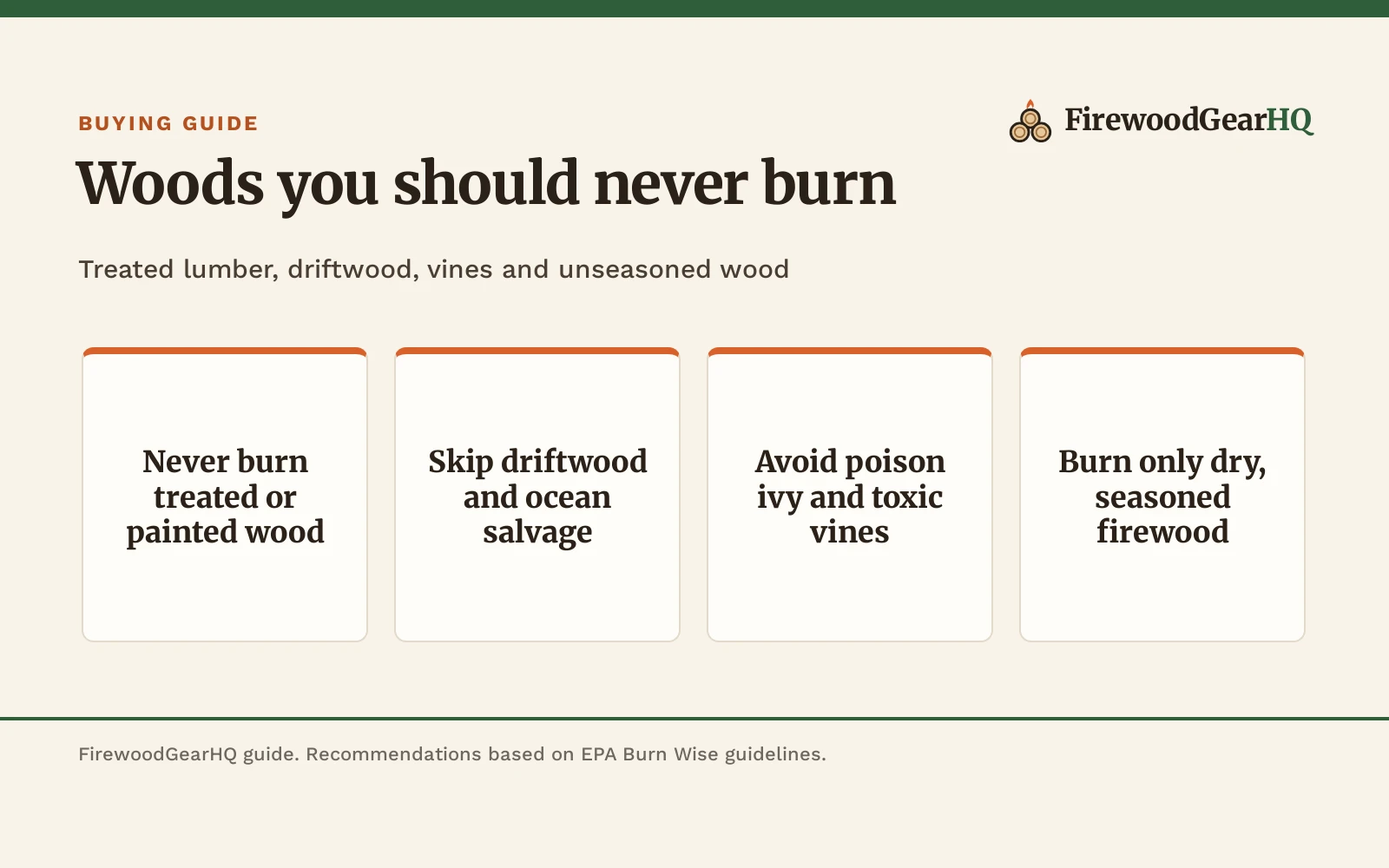
The main woods you should never burn include pressure-treated lumber, painted or stained wood, ocean driftwood, poison ivy and other toxic vines, and unseasoned green wood. Burning these materials releases harmful chemicals, coats flues in heavy creosote, damages metal stoves, or sends toxic vapors and irritating smoke into your living space. Sticking to clean, well-seasoned cordwood protects your chimney, your equipment, and your indoor air.
FirewoodGearHQ earns a commission when you buy through links on our product pages, at no extra cost to you. Read our affiliate disclosure.
The quick answer
Never burn treated lumber, manufactured wood scraps, driftwood, toxic vines, or wet unseasoned logs. Clean burning requires untreated, seasoned firewood that burns hot without producing corrosive chemicals or excessive creosote. For safe heating options, check our guide to the best firewood to burn to choose appropriate species for your hearth.
Unsafe firewood comparison chart
| Material | Primary risk | Why it is dangerous |
|---|---|---|
| Pressure-treated lumber | Chemical preservatives | Releases toxic fumes and leaves hazardous chemical ash |
| Painted or stained wood | Heavy metal residues | Produces toxic smoke and fouls catalytic combustors |
| Ocean driftwood | Salt and chlorine | Forms corrosive gases that pit metal stoves and chimney liners |
| Poison ivy, oak, and sumac | Toxic plant oils | Aerosolizes irritating resin that causes severe breathing irritation |
| Plywood, OSB, and particleboard | Glue and resin binders | Emits hazardous vapors and causes rapid creosote buildup |
| Unseasoned green firewood | High moisture content | Smothers fire, drops flue temperature, and creates dense creosote |
| Shipping pallets and salvage | Chemical spills and nails | Can contain toxic chemical residues, heavy nails, and burns too fast |
Keep all manufactured, treated, salvaged, and unseasoned wood out of your firebox. Only burn split, clean, seasoned cordwood in an indoor hearth or outdoor fire pit.
Woods you should never burn
Pressure-treated lumber
Dimensional lumber stamped with chemical treatment contains industrial preservatives designed to prevent fungal rot and insect damage. When burned, these chemical compounds do not simply disappear. They vaporize into toxic smoke and concentrate in the leftover ashes. Scrap pieces from decks, fence posts, and sill plates must never enter an indoor stove, fireplace, or outdoor bonfire. The ashes left behind also contain concentrated chemical residues that should never be spread in gardens or compost piles.
Painted, stained, or varnished wood
Old cabinetry, furniture, millwork, and painted siding release noxious fumes when ignited. Modern and historic paints contain chemical pigments, plastic polymers, or heavy metals. Burning finishes can deposit synthetic residues onto chimney flue tiles and catalytic combustors, potentially fouling catalysts and coating flues in stubborn glaze. Dispose of painted items through municipal bulky waste rather than burning them.
Ocean driftwood and salt-saturated salvage
Driftwood gathered from coastal beaches looks dry and weathered, but the wood fibers remain saturated with dried ocean salts. When sea salt meets high flame temperatures, the sodium and chloride ions separate and form corrosive chemical compounds. These acidic vapors rapidly corrode steel stove bodies, attack cast iron joints, and degrade stainless steel chimney liners. Save coastal driftwood for decorative displays away from the hearth.
Poison ivy, poison oak, and poison sumac vines
Vines often cling tightly to fallen trees and dead trunks. Burning cordwood that has dried vines attached is dangerous. Plants in the toxic ivy family contain urushiol, an oily resin that survives combustion and travels on smoke particles. Inhaling smoke carrying aerosolized urushiol can cause severe respiratory irritation and serious allergic reactions. Inspect every log before loading the hearth, and strip away any hairy aerial roots or adhering vines.
Plywood, particleboard, and engineered wood panels
Manufactured sheet goods, including oriented strand board, medium density fiberboard, and plywood, rely on industrial adhesive resins to bond wood chips and veneers together. When heated, these synthetic glues release sharp chemical fumes and leave thick, gooey soot along flue surfaces. This synthetic creosote is difficult to sweep and increases the risk of a dangerous flue fire.
Green, wet, or unseasoned logs
Freshly cut logs hold substantial amounts of water trapped inside their cells. Burning wet logs forces the fire to spend its energy boiling water into steam rather than radiating warmth. The cool smoke condenses inside the chimney flue as flammable creosote. Unseasoned wood also produces dense, choking smoke that blackens stove glass and backpuffs into living areas. Learn how to tell if firewood is seasoned before stacking logs next to the hearth.
How to identify unsafe firewood
Before loading logs into your stove or fireplace, inspect the wood for signs of contamination, chemical treatments, or excessive moisture:
- Green tint or incised marks: Pressure-treated wood often displays a distinct olive or greenish cast, incised slash marks from preservative injection, or stamp markings.
- End grain color and checks: Untreated seasoned cordwood typically displays radial cracks along graying end grain, whereas freshly cut green wood generally shows brighter end grain without visible checks.
- Unusual flame color or sharp odors: Treated wood, painted scraps, or driftwood often produce unusual green or bright blue flames along with pungent, acrid chemical smells.
- Presence of aerial vine roots: Look for fuzzy, hairy vine roots running along the bark, which indicate poison ivy or related toxic plants.
- Weight and sound: Seasoned wood generally feels lighter and makes a resonant clack when two dry pieces are struck together, while wet logs feel heavy and make a dull thud.
- Moisture meter verification: Split a log open and check the fresh inner face with a firewood moisture meter to confirm the wood has finished seasoning.
The U.S. EPA Burn Wise program advises burning only dry, untreated firewood to minimize smoke, reduce chimney buildup, and protect indoor and outdoor air quality.
What happens if you burn unsafe materials
Burning unsafe firewood introduces hazards that compromise your heating system, your chimney, and home safety. When treated scraps, trash, or driftwood ignite, they produce corrosive gases and synthetic residues that deteriorate flue linings, bypass baffles, and stove gaskets. Once metal liners pit or clay flue tiles deteriorate from corrosive exhaust, chimney integrity is compromised.
Unseasoned wood creates heavy, sticky deposits that build up rapidly inside the stovepipe. Learn what creosote is and how to prevent it to avoid chimney fire risks. To monitor operating temperatures and ensure fires burn hot enough to stay clean, mount a stove thermometer on the stovepipe, and consult our wood stove safety checklist during heating season.
Shipping pallets and salvaged lumber
Wooden shipping pallets and construction cutoffs are often treated as free firewood, but fire safety programs including EPA Burn Wise recommend keeping all pallets out of your stove. Many pallets are treated with methyl bromide, a toxic chemical fumigant identified by an MB stamp. Even pallets stamped HT for heat treatment are frequently contaminated during service with pesticide sprays, spilled industrial chemicals, and motor oil. Pallets also contain dozens of hardened steel nails that drop into the ash bed, jamming ash vacuums and creating puncture hazards. Furthermore, dry, thin pallet slats ignite aggressively and can cause overfiring in wood stoves.
Turn a stack's length, height and depth into full and face cords, and estimate how much wood a winter takes.
Frequently Asked Questions
Can you burn treated wood in a fireplace?
No. You should never burn pressure-treated wood in a fireplace, wood stove, or outdoor fire. Pressure treatment forces chemical preservatives deep into the wood grain. When burned, these chemicals vaporize into toxic fumes and leave hazardous residues in the ashes and chimney flue.
Can you burn pine in a wood stove?
Yes, clean pine can be burned safely if it is thoroughly dried and seasoned. Pine is a resinous softwood that lights easily and makes good kindling. The belief that pine causes chimney fires stems from burning wet, green pine that smolders at low temperatures and leaves heavy creosote. Once dry, pine burns cleanly and hot.
Why should you never burn driftwood?
Driftwood from the ocean absorbs large quantities of salt from seawater. When burned, the salt breaks down into corrosive chlorine compounds that attack metal stove boxes, degrade stainless steel flue liners, and destroy chimney mortar joints.
Can you burn pallet wood in a wood stove or fireplace?
No. You should avoid burning shipping pallets in a wood stove or fireplace. Even pallets marked HT for heat treatment can carry chemical residues, pesticides, or spilled oils absorbed during transit. Pallets also contain numerous nails that ruin ash cleanout tools, and the dry, thin slats burn fast enough to create overfiring risks.
What happens if you burn poison ivy wood?
Burning wood covered with poison ivy, poison oak, or poison sumac vines aerosolizes urushiol oil. The irritating oil attaches to smoke particles and can cause severe respiratory irritation and allergic reactions if inhaled. Strip all vines and aerial roots from firewood before burning.
How do you know if firewood is safe to burn?
Safe firewood comes from clean, untreated hardwood or softwood species that have been split, stacked off the ground, and seasoned until dry. Look for graying end grain with visible checks, lighter piece weight, a resonant clack when knocked together, and dry moisture meter readings across freshly split faces.
Related guides
See the firewood storage hub, the best firewood racks with covers and the best firewood moisture meters. Compare heat output across different species in the firewood BTU chart and learn the differences in hardwood vs softwood firewood. Also see our guides on how to tell if firewood is seasoned, how long does firewood take to season, how to season firewood fast, how to stack firewood, and should you cover firewood. Keep your hearth safe with our wood stove safety checklist, understand what creosote is and how to prevent it, learn how to dispose of wood stove ashes safely, and check can you bring firewood indoors. Cutting your own wood? Start with the best chainsaw for firewood, choose the best splitting maul or best splitting axe, and see the best fire starters for wood stoves. Also explore how to keep bugs out of firewood, face cord vs full cord, and how much is a cord of wood.
About the author
The FirewoodGearHQ editorial team researches firewood and wood heating equipment from published specifications, ratings and warranty terms, and scores every pick the same way. We do not run our own product trials.