Best Firewood to Burn: A Heat and Species Guide
The best firewood to burn for heat and clean burning, how hardwoods compare to softwoods, which species burn longest and how to choose the right wood for your stove.
 By FirewoodGearHQ Editorial
Updated October 10, 2026
By FirewoodGearHQ Editorial
Updated October 10, 2026
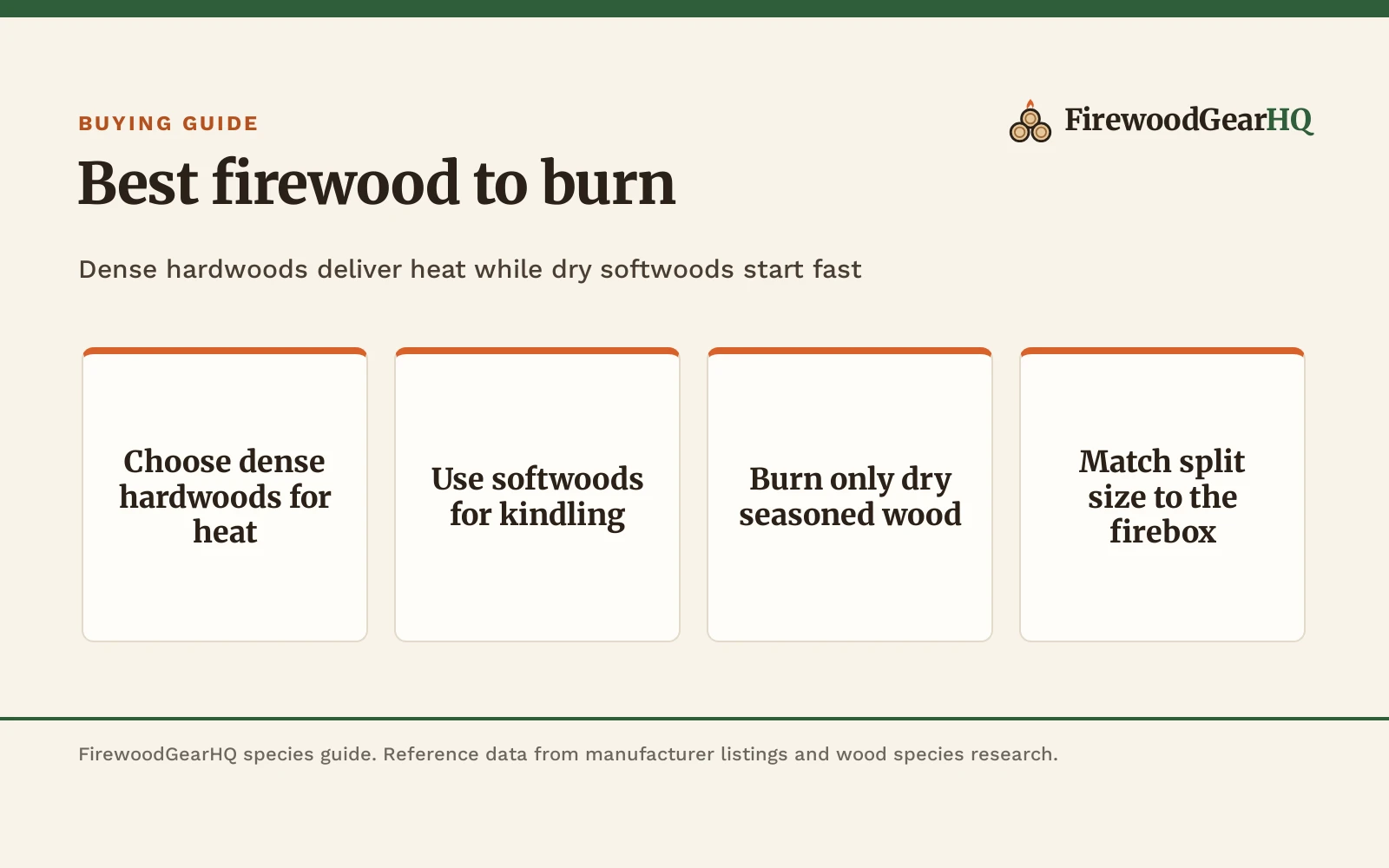
The best firewood to burn is dense, well-seasoned hardwood that produces sustained heat, burns slowly and leaves a long-lasting bed of hot coals. For heating a home through cold winter weather, seasoned hickory and white oak deliver exceptional warmth and extended burn cycles in wood stoves and hearth fireplaces. Well-dried sugar maple, beech and white ash also rank among top-tier firewood species, offering reliable heat output with minimal smoke and few flying sparks.
FirewoodGearHQ earns a commission when you buy through links on our product pages, at no extra cost to you. Read our affiliate disclosure.
The quick answer
Dense hardwoods provide the most heat and burn longest because they pack more wood fiber into each split log. If your goal is heating a home with the best wood stove for heating a house, prioritize hickory, oak, beech and hard maple for primary heat. For fast kindling and shoulder-season fires that take the chill off a room without overheating the house, clean softwoods like pine, fir and cedar light easily and produce immediate heat. Whatever wood species you cut or buy, proper seasoning matters more than species alone. Even premium hickory smolders and fouls chimneys when damp, while ordinary softwoods burn cleanly once dried.
Best firewood to burn by species
| Firewood species | Wood category | Heating value and burn qualities |
|---|---|---|
| Hickory | Dense hardwood | Exceptional heat output, long burn times, durable coals and pleasant aroma |
| White oak | Dense hardwood | High heat production, very slow burning, excellent overnight coal bed |
| Red oak | Dense hardwood | High heat output, clean burn, splits easily along straight grain |
| Beech | Dense hardwood | High heating value, low spark production, solid coal bed |
| Sugar maple | Dense hardwood | High heat, steady flame, minimal smoke and delightful scent |
| White ash | Hardwood | Steady heat output, low smoke, easy handling and clean splitting |
| Yellow birch | Hardwood | Good heat value, easy starting, burns cleanly with steady warmth |
| Black cherry | Hardwood | Moderate heat output, pleasant aroma, gentle flame with few sparks |
| Douglas fir | Softwood | Good heating value for softwood, quick ignition, pleasant resin aroma |
| White pine | Softwood | Fast burning, brisk startup heat, ideal for kindling and small campfires |
| Cedar | Softwood | Rapid ignition, pleasant aroma, crackles with sparks suitable for outdoor fire pits |
Dense hardwoods hold significantly more heat per cord than lightweight softwoods. For practical details on choosing cordwood for your hearth, read our complete guide to the best wood for a wood stove.
What makes firewood burn hotter and longer
Wood density and cell structure
Wood density determines how much solid fuel sits within a piece of cordwood. Dense hardwoods such as hickory, white oak and beech grow slowly, developing tightly packed cellular fiber. When seasoned and placed in a firebox, this compact fiber yields substantial heat and produces thick, glowing coals that sustain temperatures for hours. Lighter softwoods have broader cellular pores filled with air space, causing them to burn through quickly with tall flames rather than long-lasting heat.
Moisture level and proper drying
Moisture content is the most critical factor in firewood performance. When green wood enters a stove, combustion energy is wasted boiling off trapped water before meaningful heat radiates into the living space. Burning wet wood drops flue temperatures, creating heavy creosote that lines the chimney walls and increases chimney fire danger. Read our guides on what moisture content should firewood be and how to tell if firewood is seasoned to keep heating systems safe.
Log size and firebox loading
Log dimensions affect how rapidly combustion proceeds. Thick, unsplit rounds resist ignition and slow combustion, whereas smaller split pieces catch flame quickly and establish a bed of coals. Preparing cordwood with a dedicated splitting maul or splitting axe exposes fresh grain and accelerates seasoning. For processing winter piles efficiently, the best log splitter for home use divides large logs into uniform fuel pieces that stack stably and burn evenly.
Draft management and air supply
Controlled airflow maintains clean combustion and prevents smoldering. Opening air inlets provides ample oxygen for rapid ignition during startup. Once the firebox reaches operating temperature and a strong draft is established, gradually adjusting the draft controls maintains steady combustion without allowing flue temperatures to drop into the creosote-forming zone. Monitoring flue heat with a magnetic stove thermometer confirms the stove remains in its optimal operating range without overheating stove components.
Coaling characteristics
A deep coal bed radiates continuous radiant heat and simplifies reloading. Hardwoods like oak and hickory break down into dense charcoal chunks that glow steadily long after flames subside. This coaling ability is essential for homeowners learning how to keep a wood stove burning all night without rekindling from scratch each morning.
How to tell if firewood is ready to burn
Checking firewood before loading prevents smoldering and heavy flue buildup. Look for these practical field indicators, though only a moisture meter reading confirms whether the interior is dry:
- Moisture reading: Split a log open and press the probes of a best firewood moisture meter firmly against the fresh split face to verify low moisture.
- Radial cracking: Seasoned logs often display checking and radial cracks extending outward from the heartwood across the cut ends, although cracks alone do not guarantee that the interior is dry.
- Acoustic resonance: Knocking dry pieces of firewood together generally creates a sharp, ringing clack, whereas green logs produce a dull thud.
- Lightweight feel: Evaporated water makes dry logs feel distinctly lighter in hand than freshly cut green wood of identical volume.
- Weathered appearance: Sun and wind exposure often turns the bark and outer wood from fresh sapwood tones toward a weathered gray or muted straw shade.
- Loose bark: On many hardwood species, bark loosens and pulls away as the wood shrinks during seasoning, though some species retain tight bark even when seasoned.
Confirming dryness with a meter ensures clean combustion. The U.S. EPA Burn Wise program advises burning seasoned cordwood rather than green wood to reduce indoor emissions, prevent chimney accumulation and maximize home comfort.
What happens if you burn wet firewood
Feeding damp firewood into a stove or fireplace creates sluggish, smoky fires that produce frustratingly little heat. Water trapped inside the grain absorbs the firebox heat to convert into steam, cooling combustion temperatures and leaving charred, unburned wood chunks. This cool, vapor-laden smoke condenses inside the flue as combustible creosote. Over time, creosote accumulation poses severe chimney fire risks and clouds ceramic stove door glass. Learn what is creosote and how to prevent it and follow recommendations on how often should you clean your chimney with a wood stove. Proper firewood storage on a firewood rack with cover keeps seasoned logs dry through rain and snow.
Kiln-dried and packaged firewood
Store-bought packaged firewood offers a convenient solution when seasoned cordwood supplies run low or when preparing backyard fire pits and camp cooking. For example, Old Potters lists kiln-dried hickory firewood cut to 16 Inch logs in 1.5 Cu Ft packages weighing 38 to 45 lbs. Kiln drying uses heated chambers to remove moisture and sanitize wood against wood-boring pests, delivering fuel that lights cleanly right out of the box.
Manufactured firelogs provide another packaged alternative for open hearths and outdoor fire bowls. Duraflame lists a 2.5 lb recycled wood and agricultural fiber firelog offering a 1.5 Hour burn time with full ignition within 5 minutes. For longer gatherings, Pine Mountain lists 2-Hour firelogs in a 6 Pack weighing 16.8 pounds, as well as a 4-Hour firelog in a 6 Pack weighing 28.7 pounds. Pine Mountain notes that its firelogs burn cleaner than cordwood, producing up to 80 percent less carbon monoxide and 75 percent less particulate matter. For chimney maintenance between sweeps, Pine Mountain lists a 3.5 lb Creosote Buster firelog formulated to treat flue deposits once per season or every 40 fires.
Outdoor fire pits allow burning broader species and larger firewood rounds safely in open air. Sunnydaze lists a cauldron style wood burning steel fire pit measuring 34 inches in diameter and 23 inches high, featuring a bowl depth of 10 inches and 3 legs standing 6 inches high, with a total weight of 37 pounds. Similarly, Hykolity lists a 31 inch outdoor fire pit standing 24 inches high with a 21.06-inch cooking grate. Elevating cordwood off the fire bowl floor promotes airflow; Americangaslogs lists an 18 inch round wrought iron fire grate built with 0.9 inch thick steel bars, 3.3 inches of clearance under the crossbars and 4 legs to support burning wood.
Turn a stack's length, height and depth into full and face cords, and estimate how much wood a winter takes.
Frequently Asked Questions
What is the best firewood to burn for maximum heat?
Hickory and white oak provide the highest heating value among readily available firewood species. Their dense wood fiber burns slowly, radiates sustained warmth and forms a long-lasting bed of hot coals ideal for continuous winter home heating.
Can you burn softwood like pine in a wood stove?
Yes, thoroughly seasoned softwood burns cleanly and makes excellent kindling. Because softwoods burn rapidly with intense initial flames, wood burners often mix them with dense hardwoods rather than burning them exclusively during long heating cycles.
What firewood species burns the longest overnight?
Dense hardwoods like white oak, hickory, sugar maple and beech burn the longest. Loading thick splits over an established coal bed and setting draft dampers to a steady cruising rate sustains heat throughout the night.
Does white ash firewood really burn green?
White ash has lower natural moisture content than most green hardwoods and ignites more easily when freshly cut, but seasoned ash burns far hotter and cleaner. Seasoning ash cordwood thoroughly ensures optimal heat output and protects flues from creosote.
How do you start a fire cleanly in a wood stove?
Place dry softwood kindling or natural best fire starters for wood stoves beneath small hardwood splits, opening draft controls fully until flames establish. For detailed steps, consult our guide on how to start a fire in a wood stove.
How can you speed up firewood seasoning at home?
Split wood promptly after cutting, stack logs off damp ground on pallets or a rack, leave row sides exposed to sun and prevailing breezes, and cover the top of the stack against rain. Read our complete guide on how to season firewood fast.
Related guides
Explore our complete firewood handling hub and firewood storage guides. To calculate winter heating volume, see how much is a cord of wood, compare face cord vs full cord and check how much firewood does a wood stove use per winter. For seasoning technique, read how long to season firewood, how to season firewood fast and how to stack firewood. Cutting your own timber? Start with the best chainsaw for firewood, keep chains sharp with the best chainsaw sharpener and split logs with the best splitting maul, best splitting axe or the best log splitter for home use. Also see our best firewood rack with cover. Also see our firewood shed outdoor with roof. Also see our cheap firewood rack. Also see our firewood rack outdoor with cover. Also see our cover for firewood storage rack. Also see our firewood rack for porch. Also see our inside wood rack for firewood. Also see our metal wood racks outdoor for firewood. Also see our can you bring firewood indoors. Also see our best indoor firewood rack. Also see our best fireplace log holder. Also see our should you cover firewood. Also see our how to keep bugs out of firewood. Also see our how long does firewood take to season. Also see our what moisture content should firewood be. Also see our pin vs pinless moisture meter for firewood. Also see our best kindling splitter. Also see our best splitting wedge. Also see our best fireplace grate for wood burning.
About the author
The FirewoodGearHQ editorial team researches firewood and wood heating equipment from published specifications, ratings and warranty terms, and scores every pick the same way. We do not run our own product trials.