How to Keep a Wood Stove Burning All Night: Step-by-Step Guide
How to keep a wood stove burning all night by building a coal bed, loading dense hardwood tightly, charring the wood and adjusting the primary air control.
 By FirewoodGearHQ Editorial
Updated October 9, 2026
By FirewoodGearHQ Editorial
Updated October 9, 2026
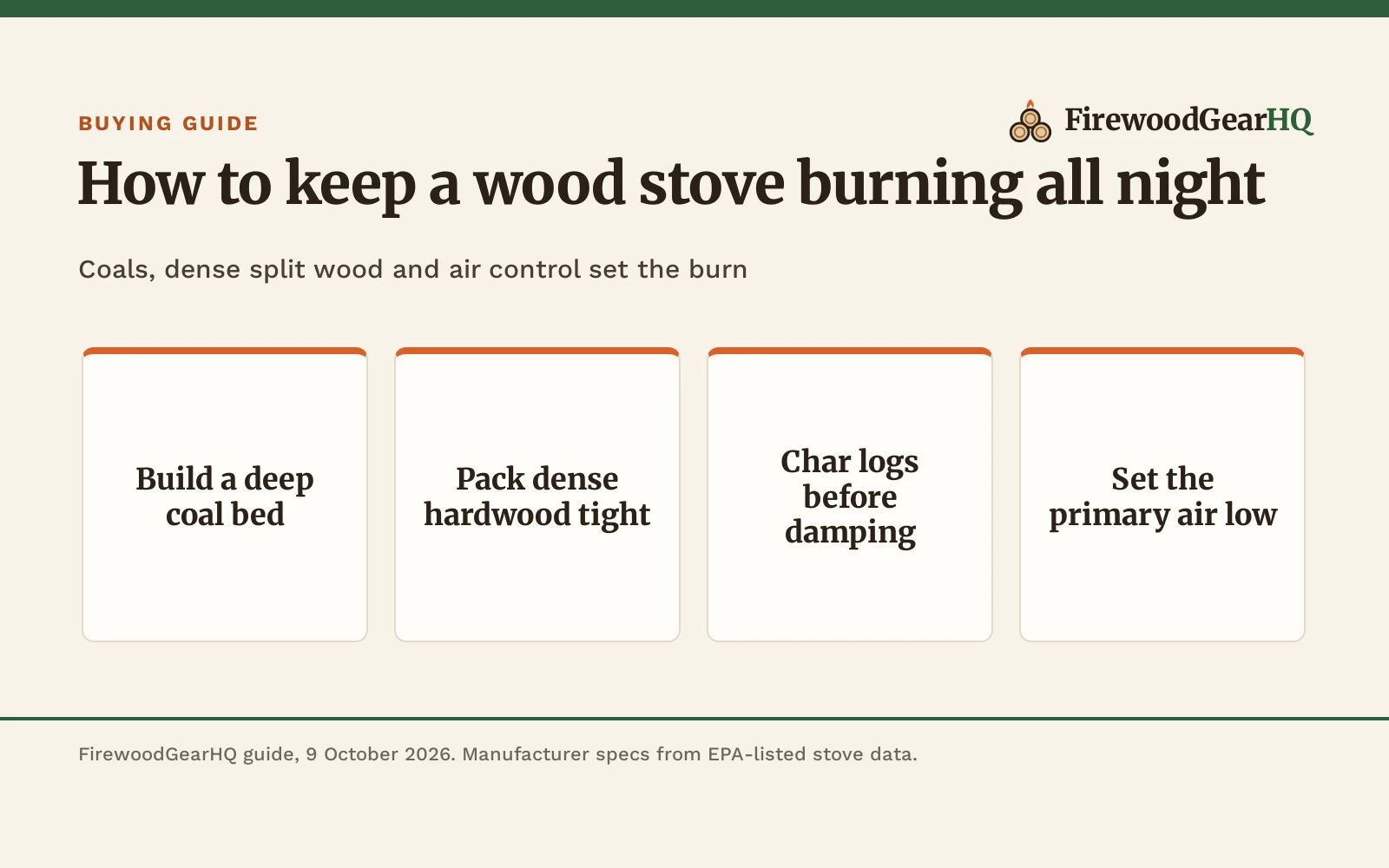
Learning how to keep a wood stove burning all night requires establishing a deep bed of hot coals, packing dense seasoned hardwood tightly to minimize airflow gaps, and adjusting the primary air damper to maintain a slow, steady burn without smoldering. By charring the outer layer of firewood before reducing the intake air, you lock in steady heat that warms your home until morning and leaves glowing coals ready for a fresh reload. This step-by-step guide covers wood selection, firebox loading techniques, and draft settings to achieve dependable overnight heat safely.
FirewoodGearHQ earns a commission when you buy through links on our product pages, at no extra cost to you. Read our affiliate disclosure.
The quick answer
To achieve a reliable burn through the night, prepare your firebox ahead of bedtime by burning a charge of firewood down to create a thick foundation of glowing embers, then rake those coals forward near the primary air intake. Pack large, split hardwood logs tightly together, minimizing empty gaps where air can rush through. Open the primary air control completely until the newly added wood chars thoroughly across its surface and secondary combustion flames appear. Once the firebox reaches its steady operating range, dial the air intake down to its low overnight position. Circulate that heat into the room with a heat-powered wood stove fan, and always check that your firewood is dry using a reliable firewood moisture meter before loading.
Firebox capacity and log size reference
| Stove model | Firebox log capacity | Stated heating area | Heat output |
|---|---|---|---|
| Cleveland Iron Works Mini Wood Stove | Up to 11-in logs | 750 sq. ft. | 26,631 BTUs |
| Comfort Glow CGWS1500 | Up to 18-in logs | 1,200 sq ft | 68,000 BTUs |
| Comfort Glow CGWS900 | Fits 22-in logs | 900 sq. ft. | Not stated |
Firebox capacity sets how much fuel can be loaded for an extended burn. Published manufacturer specifications illustrate how log length, heating area, and heat output vary by model. For example, the Cleveland Iron Works Mini Wood Stove lists capacity for logs up to 11-in, with a manufacturer-rated heat output of 26,631 BTUs and coverage up to 750 sq. ft. The Comfort Glow CGWS1500 accepts logs up to 18 inches and is rated to heat up to 1,200 sq ft with a maximum output of 68,000 BTUs, though maximum heat ratings represent best-case conditions. The cast iron Comfort Glow CGWS900 fits logs up to 22 inches, lists heating coverage up to 900 sq. ft., and specifies a 6-inch flue collar. Larger fireboxes accommodate more wood mass, which allows a stove to sustain coals longer when loaded with dense hardwood.
How to keep a wood stove burning all night
Establish a thick bed of glowing coals
A successful overnight burn starts long before you head to bed. You need a solid coal bed to ignite the heavy fuel charge and maintain enough base heat to draw air through the flue. If you need help lighting the fire from scratch earlier in the evening, read our guide on how to start a fire in a wood stove. Let your evening fire burn down until you have a deep layer of red-hot coals across the firebrick floor.
Rake coals toward the primary air intake
Use your hearth shovel or rake to pull the glowing embers forward toward the front of the firebox, near where primary air enters through the intake damper. In front-draft stoves, concentrating coals near the air inlet allows incoming oxygen to feed the hot base directly, keeping chimney draft steady and encouraging the wood charge to burn progressively from front to back rather than igniting all at once.
Pack dense hardwood splits tightly
Air spaces between logs encourage rapid, uncontrolled flaming. For an overnight fire, your goal is slow, progressive combustion. Place your largest, densest hardwood splits along the back and bottom of the firebox. Pack additional split logs tightly beside and on top of them, fitting the pieces together closely to minimize air pockets. Fill the firebox to its safe capacity as recommended by the stove manufacturer, keeping wood clear of secondary burn tubes and the top baffle.
Char the wood before damping down
Never close the draft immediately after loading fresh logs. Cold firewood temporarily lowers firebox temperatures, and reducing air too quickly causes unburned gases to smolder and deposit creosote in the flue. Leave the primary air damper open until the exterior surfaces of the logs turn thoroughly charred and vigorous flames establish along the upper baffle plate.
Set the primary air control for an overnight burn
Once the stove is thoroughly hot and the wood is fully charred, gradually reduce the primary air damper. Do not shut it completely. Close it down in small increments until active, turbulent flames soften into lazy, rolling secondary flames hovering beneath the baffle. This setting maintains sufficient draft to pull combustion gases out through the chimney while rationing oxygen so the wood burns slowly until morning.
Essential controls and monitoring tools
Running an overnight fire requires balancing draft, heat, and safety. Keep these factors in mind throughout the heating season:
- Stove thermometer reading: Monitor flue and stove surface temperatures using a stove thermometer to confirm the appliance stays in its clean operating range rather than dropping into a cool, smoldering zone.
- Wood moisture level: Burn only split cordwood that has dried thoroughly, verified with a firewood moisture meter. The EPA Burn Wise program advises burning seasoned firewood to achieve clean, efficient heat and minimize smoke.
- Room heat circulation: Freestanding wood stoves produce intense radiant heat nearby, but moving that warmth into living areas overnight requires steady airflow. A heat-powered fan placed on the cooktop circulates warm air silently across the room.
- Airflow balance: Regulate the primary intake damper so vigorous flames settle into lazy secondary flames beneath the baffle plate without dropping into a smoldering, smoky burn.
- Smoke and carbon monoxide alarms: Operating any solid-fuel heater overnight makes early-warning detection essential. Ensure operational smoke alarms and carbon monoxide alarms are installed on each living level and outside all sleeping areas, following guidelines from the Consumer Product Safety Commission (CPSC) and the National Fire Protection Association (NFPA).
- Safe clearances to combustibles: Maintain proper clearance distances between the stove body, single-wall or double-wall pipe, and any combustible walls or furniture, exactly as specified in the manufacturer documentation and local building codes.
- Annual chimney sweeping: Creosote accumulates naturally during extended, low-draft burns. Schedule an annual inspection and flue cleaning with a professional certified by the Chimney Safety Institute of America (CSIA).
What happens when a stove is damped down too far
Many homeowners try to make wood last longer by choking the primary air intake completely shut. Starving a wood fire of oxygen creates an incomplete burn. Instead of burning cleanly, the wood smolders at low temperatures and produces dense, dark smoke loaded with unburned gases and tar droplets. When these cool vapors enter the chimney, they condense against the flue walls as creosote, creating a serious chimney fire hazard. Excessive damping also causes the glass ceramic window to coat with soot; see our explanation of why wood stove glass turns black to address air wash and draft issues.
Selecting the best wood for an overnight burn
Species selection is critical for an overnight burn. Low-density softwoods such as pine, spruce, and fir ignite quickly and make excellent kindling, but they burn away rapidly and leave sparse coals. Dense hardwoods like oak, hard maple, hickory, beech, and ash contain more fuel energy per volume and create durable, long-lasting coal beds. For species comparisons and firewood characteristics, browse our guide to the best wood for a wood stove. Always allow adequate drying time before bringing wood indoors, as detailed in our guide on how long to season firewood.
Turn a stack's length, height and depth into full and face cords, and estimate how much wood a winter takes.
Frequently Asked Questions
Why does my wood stove go out overnight?
Stoves typically go out overnight because the initial coal bed was too thin, the wood contained excessive moisture, or the primary air intake was closed down too far and starved the fire. Building a deep coal bed, verifying fuel dryness, and leaving the air control slightly open prevents the fire from dying prematurely.
Should the air damper be completely closed overnight?
No. Closing the primary air damper completely cuts off the oxygen supply, resulting in smoldering wood, cold flue temperatures, blackened door glass, and rapid creosote accumulation. Keep the air intake cracked open to maintain clean secondary combustion and a steady chimney draft.
What is the best wood for keeping a stove burning all night?
Dense, slow-burning hardwoods such as white oak, red oak, hickory, hard maple, and black locust provide the best overnight performance. Their dense fiber structure yields high heat output and leaves long-lasting embers that stay hot until morning.
Can a wood stove fan help during an overnight burn?
Yes. A heat-powered stove fan runs on the thermal energy of the stove surface without electricity, moving warmed air away from the hearth and distributing it across the room even as the stove settles into its lower overnight temperature range.
Why does my wood stove glass turn black during overnight burns?
Glass turns black when firebox temperatures drop and unburned wood vapors condense on the cooler ceramic surface. This occurs when wood has high moisture content or when the air damper is choked down so low that the stove air-wash system stops functioning effectively.
How do I restart the stove from morning coals?
In the morning, use a poker to rake the remaining red coals toward the front air intake. Place small, dry kindling and split pieces on top of the coals, then open the primary air damper fully. The fresh oxygen and intense ember heat will quickly ignite the new wood without needing paper or fire starters. When excess ashes accumulate, use a metal shovel to dispose of wood stove ashes safely into an airtight metal container.
Related guides
Explore our complete hearth resources in the stove accessories hub, evaluate primary heating options with our guide to the best wood stove for heating a house, and simplify routine firebox cleaning with our picks for the best ash vacuum for wood stoves. For firewood management, consult the firewood storage hub, protect your woodpile with the best firewood rack with cover, and check seasoning timelines in our breakdown of how long to season firewood.
About the author
The FirewoodGearHQ editorial team researches firewood and wood heating equipment from published specifications, ratings and warranty terms, and scores every pick the same way. We do not run our own product trials.