Wood Stove Pros and Cons: Benefits, Drawbacks and Heating Guide (2026)
A complete guide to wood stove pros and cons, covering heating efficiency, fuel savings, installation demands, maintenance chores and how to choose the right setup.

On this page
Top picks at a glance
As an Amazon Associate we earn from qualifying purchases.
- 1
 Ashley Hearth AW2520E-P 29.8/10View on Amazon
- 2
 Ashley Hearth AW1120E-P 19.7/10View on Amazon
- 3
 Ashley Hearth AW2020-P 29.6/10View on Amazon
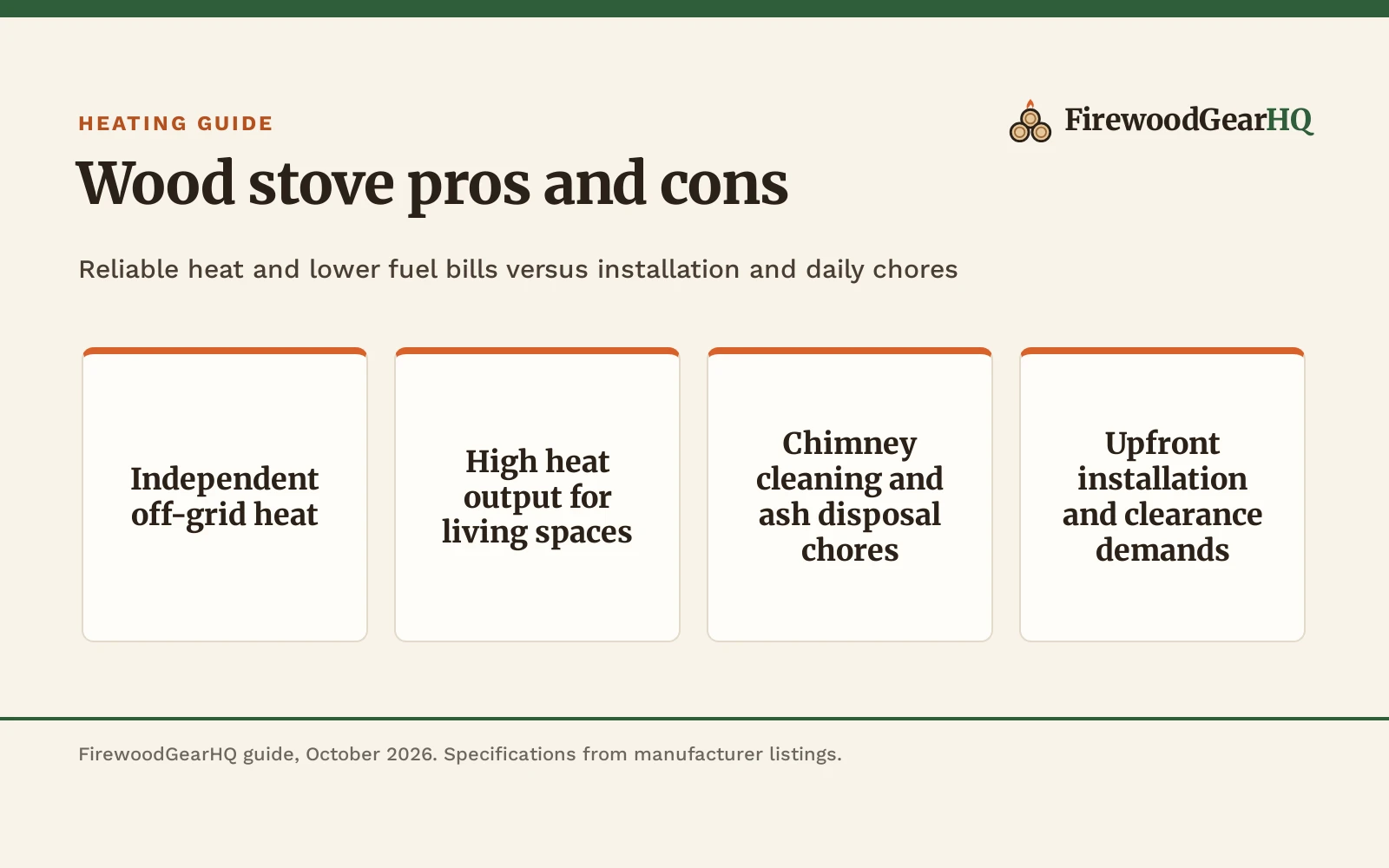
When autumn frost settles on the woodpile and winter approaches, deciding how to heat your home becomes an urgent seasonal priority. Choosing whether to install or replace a wood burning heater requires weighing the real-world wood stove pros and cons before making a long-term investment. Heating with cordwood delivers independent radiant warmth and lower seasonal utility bills if you harvest or manage your own firewood. However, operating a wood stove demands upfront installation expenses, strict clearances to combustible walls, daily labor for hauling logs and removing ash, and diligent chimney maintenance to prevent creosote buildup.
FirewoodGearHQ may earn a small commission if you buy through links on this page. The price you pay stays the same. Read our affiliate disclosure.
The quick answer
A freestanding wood stove is ideal for homeowners who want dependable radiant heat that works during winter power outages and who are comfortable handling firewood chores. If you have access to low-cost or self-harvested cordwood, a wood stove can reduce your dependence on grid electricity or fossil fuels. However, it is rarely suitable for homeowners who expect maintenance-free heat controlled by a wall thermostat, those with limited room for hearth clearances, or anyone unwilling to haul, stack, and load firewood daily.
Wood stove pros and cons: quick comparison
| Heating factor | Advantages (Pros) | Drawbacks (Cons) |
|---|---|---|
| Heat and grid | Produces independent radiant warmth during winter storm power outages | Point-source heat concentrates near the stove and requires airflow management |
| Fuel expenses | Lowers seasonal bills when sourcing, cutting, or splitting your own wood | Purchasing retail firewood bundles or processed cords reduces savings |
| Daily effort | Adequately sized fireboxes maintain steady overnight coals for morning restarts | Demands daily firewood hauling, kindling staging, fire tending, and ash disposal |
| Safety and setup | Modern EPA-certified models burn wood cleanly with reduced emissions | Demands strict wall clearances, floor protection, and regular chimney sweeping |
Wood stove pros: why heat with cordwood?
Independent heat and heating capacity
When winter storms knock down power lines, a freestanding wood stove operates without electricity, pulling draft naturally through the firebox. Cordwood also remains an economical fuel when harvested locally; see whether is heating with wood cheaper than propane. Published specifications demonstrate how heating capacity scales with firebox size. Cleveland Iron Works lists a compact stove rated for 26631 british thermal units of maximum heat output (a best-case rating under optimal fuel and draft conditions), providing heating coverage up to 750 sq. ft. and accepting logs up to 11 in, complete with a 9.5 in wide by 10.5 in high viewing window. For broader living areas, Comfort Glow publishes an EPA-certified cast iron stove that heats up to 900 sq ft, fits 22 in logs, and provides an integrated cooktop surface for emergency meal prep during blackouts. Explore sizing options in our guide to what size wood stove do I need and our review of the best wood stove for heating a house.
Wood stove cons: the trade-offs and daily labor
Installation costs, clearances, and chores
While cordwood cuts fuel bills, initial installation is a substantial expense. Setup requires a certified non-combustible hearth pad, interior connector pipe, and insulated Class A chimney. Comfort Glow lists a 6 in flue collar requiring matched chimney piping. Professional installation and permits are strongly advised (how much does it cost to install a wood stove, can you install a wood stove yourself). Previous federal biomass tax credits expired, leaving 2026 purchases unsubsidized (wood stove tax credit). Stoves also demand floor space: Cleveland Iron Works measures 14.6 in deep by 16.73 in wide by 26.77 in high with an item weight of 120.2 pounds, while Comfort Glow measures 32.5 in deep by 20 in wide by 23.5 in high on 4 legs. Beyond floor space, running a stove demands daily wood hauling, fire stoking, and ash disposal in a covered metal bucket (best ash bucket with lid, how to dispose of wood stove ashes safely). If wood smolders at low flue temperatures, unburned gases form creosote, making regular sweeping mandatory (what is creosote and how to prevent it). Circulating radiant warmth down hallways often requires a best wood stove fan or best wood burning stove with blower.
Wood stove pros and cons compared to alternatives
When deciding whether cordwood fits your property, compare freestanding stoves against other popular hearth options:
- Wood stove vs pellet stove: Pellet stoves offer thermostatic control and smaller clearances, but require continuous electricity to run internal augers. Cordwood stoves burn without electrical power (wood stove vs pellet stove).
- Wood stove vs fireplace insert: Inserts convert open fireplaces into sealed heaters, but freestanding stoves offer superior all-around radiant heat (wood stove vs fireplace insert).
- Cast iron vs steel construction: Cast iron stoves radiate heat slowly and evenly, while steel stoves warm up faster and often use firebrick linings to improve heat retention. For example, Comfort Glow uses cast iron, while Cleveland Iron Works uses carbon steel with a brick-lined firebox (cast iron vs steel wood stove).
Essential wood stove safety rules
Operating a wood heater safely requires following manufacturer clearances and local codes. The CPSC emphasizes that homes with fuel appliances require working smoke alarms and carbon monoxide detectors (best carbon monoxide detector for wood stove homes). Burn only seasoned cordwood per EPA Burn Wise guidance, monitored with a pipe thermometer (best stove thermometer) and verified on our wood stove safety checklist. Have chimney flues inspected annually by a CSIA-certified sweep.
Turn a stack's length, height and depth into full and face cords, and estimate how much wood a winter takes.
Frequently Asked Questions
What are the biggest pros and cons of a wood stove?
The primary advantages are independent off-grid heat, lower seasonal fuel expenses, and excellent heating efficiency. The main drawbacks are high installation expenses, clearance demands, daily physical chores, and regular chimney sweeping.
How much does a small wood burning stove weigh?
Weight depends on stove dimensions and firebox lining. A compact steel stove with firebrick lining weighs 120.2 pounds in the Cleveland Iron Works listing, while larger stoves weigh substantially more.
What is the smallest wood stove available for heating living spaces?
Cleveland Iron Works lists a compact floor-mount residential stove measuring 14.6 in deep by 16.73 in wide by 26.77 in high with heating coverage up to 750 sq. ft. that accommodates logs up to 11 in.
Can a wood stove burn all night?
An adequately sized stove loaded with dense hardwood splits and set to a controlled burn rate can maintain hot coals until morning (how to keep a wood stove burning all night).
Related guides
Explore our complete wood stoves hub for more buying advice, sizing tips, and heating comparisons. See what size wood stove do I need, learn how to prevent draft issues in why does my wood stove smoke when I open the door, and discover why does my wood stove glass turn black.