How to Operate a Wood Burning Stove
How to operate a wood burning stove, from lighting the fire and controlling the air to reading the stove temperature and keeping the fire going.

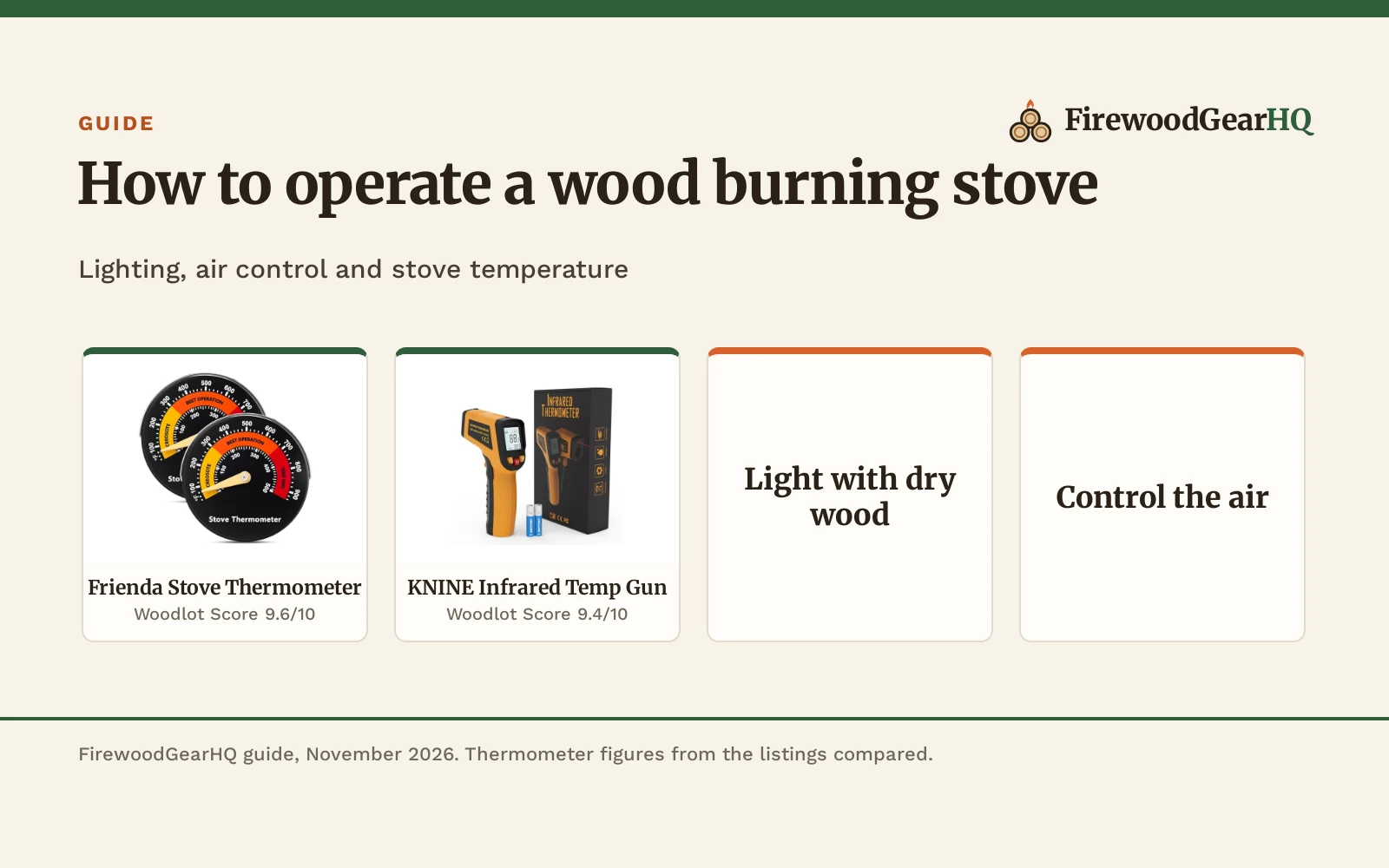
On this page
Top picks at a glance
As an Amazon Associate I earn from qualifying purchases.
- 1
 Frienda 2 Pcs Wood Stove Thermometer Accessories9.4/10View on Amazon
- 2
 KNINE OUTDOORS Infrared Thermometer Gun9.2/10View on Amazon
On a cold evening, the wood stove is the warm heart of the house, and how to operate a wood burning stove is the skill that keeps it that way. The work is simple when the rhythm is learned: light dry wood, give the fire air until it catches, ease the air back, and watch the stove temperature while the fire burns. This guide walks through each part of that rhythm, the thermometer readings that guide it, and the habits that keep the stove running clean and steady.
FirewoodGearHQ earns a small commission if you buy through links on this page. The price you pay stays the same. Read our affiliate disclosure.
Frienda 2 Pcs Wood Stove Thermometer Accessories
A magnetic wood stove thermometer, 2 pieces in the pack, with a large dial that reads 100 to 900 Fahrenheit degrees and a hook for the flue pipe.
Pros
- Large dial reads 100 to 900 Fahrenheit degrees
- Magnetic back attaches to the stove top or side
- 2 thermometers in the pack
- Aluminum dial, bimetal sensor and brass pointer
Cons
- No warranty term is stated
- Dial only; no digital readout
- Magnetic back fits most, not every, stove top or side
- Direct attachment to grilles should be avoided
KNINE OUTDOORS Infrared Thermometer Gun
An infrared thermometer gun that reads -58 to 1112 degrees Fahrenheit from a distance, with a 12 to 1 distance-to-spot ratio and a single laser for targeting.
Pros
- Reads -58 to 1112 degrees Fahrenheit
- 12 to 1 distance-to-spot ratio for readings from a distance
- Single laser for precise targeting
- Adjustable emissivity from 0.1 to 1.0
Cons
- No warranty term is stated
- Needs 2 AAA batteries to run
- A general-purpose gun, not a stove-top gauge
- Switching units takes a press over 3 seconds
How to Operate a Wood Burning Stove: The Short Version
Light the fire with dry wood and kindling, keep the air open until the fire catches, then ease the air back to hold a steady burn. Watch the stove temperature on a thermometer: a stove that runs cool smokes and builds residue, while a stove that runs hot wastes wood and risks overheat. Add wood before the fire burns down, so the new pieces catch from the heat that is already there.
Lighting the Fire
Start with dry, seasoned wood and kindling, laid loosely so air can move between the pieces. Light the kindling and keep the air control open while the fire catches, so the flames have the air they need. A fire that catches fast and burns bright is the sign the wood is dry and the air path is clear. If the fire sulks and smokes, the wood is likely damp or the air path is choked with ash.
Controlling the Air
The air control sets how fast the stove burns. Open air feeds a hot, fast fire that catches quickly and burns the wood down fast. Eased-back air slows the burn and stretches the heat over a longer time. Find the setting that holds a steady flame and a clear glass, and check the thermometer often while learning the stove.
Reading the Stove Temperature
A thermometer takes the guesswork out of running a stove. A magnetic thermometer sits on the stove top or side and shows the temperature at a glance, while an infrared gun reads the surface from a distance without touching it. The magnetic thermometer in this guide reads 100 to 900 Fahrenheit degrees, and the infrared gun reads -58 to 1112 degrees Fahrenheit. See the magnetic vs probe stove thermometer comparison and the infrared vs probe stove thermometer comparison for more on the choice.
The Gear for Watching Stove Temperature
Reading the stove temperature is the step that needs a gauge, and the 2 thermometers below cover it: a magnetic gauge that stays on the stove, and an infrared gun that reads from a distance.
Adding Wood and Keeping the Fire Going
Add wood before the fire burns down to embers, so the new pieces catch from the heat that is already there. Stoke the fire when the flames fade, and give the fresh wood air until it catches. A stove that is fed in small loads through the evening holds its heat better than a stove that is stuffed full and left to smolder.
Safety Notes for Daily Use
Run the stove per the maker and local code, keep smoke and CO alarms in place, and have the chimney inspected each year. Burn seasoned wood only, and keep the area around the stove clear. See the best carbon monoxide detector for wood stove homes for alarm options.
FAQ: wood, fire and gear
How do I know if my wood stove is running too hot?
A thermometer shows it. The magnetic thermometer in this guide reads 100 to 900 Fahrenheit degrees, and the listing states it helps avoid damage from overheat. If the needle climbs past the range the stove maker calls normal, ease the air back and let the fire settle.
Where do I put a magnetic stove thermometer?
On the stove top or side, where the magnetic back holds it. The Frienda thermometer in this guide has a magnetic back for the stove top or side, and a hook for a single wall flue pipe. Do not attach it directly to grilles.
Can I use an infrared thermometer gun on a wood stove?
Yes, for surface readings. The infrared gun in this guide reads -58 to 1112 degrees Fahrenheit from a distance, with a 12 to 1 distance-to-spot ratio and a single laser for targeting. Point it at the stove top or the flue pipe to read the surface temperature.
What kind of wood should I burn in a wood stove?
Seasoned wood only. The U.S. EPA Burn Wise program advises burning seasoned wood at low moisture for a cleaner fire. See the best wood for a wood stove and the best firewood moisture meters.
How often should I have the chimney checked?
Each year. A yearly chimney inspection is part of running a stove safely, and a certified pro should handle any blockage or damage found there.
Why does my stove glass darken?
Damp wood and a starved fire are the usual causes. Burn dry, seasoned wood, keep the air open enough for a bright flame, and clear ash from the firebox so air reaches the fire.
More firewood guides
See the stove accessories hub, the best wood stove thermometer roundup and the best stove thermometer roundup. For the fire itself, see the best fire starters for wood stoves, the can you burn pine in a wood stove guide and the best wood stove for heating a house guide.