Woodstock Progress Hybrid vs Ideal Steel Hybrid: Which One Should You Buy?
Compare the Woodstock Progress Hybrid and Ideal Steel Hybrid wood stoves to see how soapstone heat storage, steel response, loading doors, and styling differ.
 By FirewoodGearHQ Editorial
Updated October 9, 2026
By FirewoodGearHQ Editorial
Updated October 9, 2026
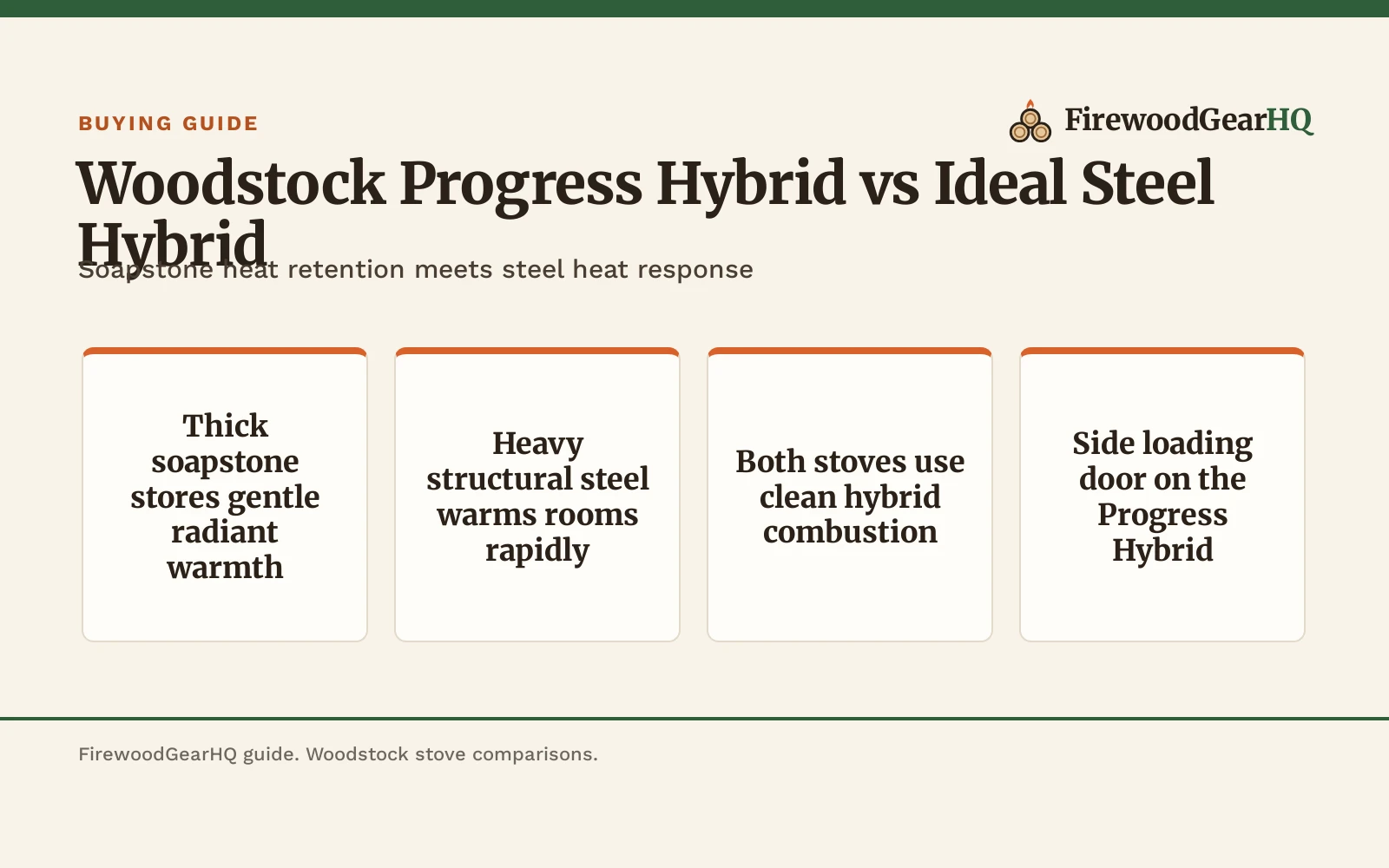
Choosing between the Woodstock Progress Hybrid vs Ideal Steel Hybrid comes down to whether you prefer steady, prolonged radiant warmth with polished stone styling or rapid room heating with customizable structural steel. The Progress Hybrid uses thick natural soapstone slabs set into a cast iron frame to store heat and release gentle warmth over long burn cycles. The Ideal Steel Hybrid pairs a heavy welded steel body with interior soapstone lining to warm living spaces quickly while delivering clean hybrid combustion efficiency. Both models are built by Woodstock Soapstone Company in New Hampshire, combining catalytic combustors with secondary burn technology.
FirewoodGearHQ earns a commission when you buy through links on our product pages, at no extra cost to you. Read our affiliate disclosure.
The quick answer
If you want continuous home heating where gentle warmth keeps living areas comfortable without temperature swings, choose the Woodstock Progress Hybrid. Its thick soapstone body absorbs fire intensity and releases radiant warmth for hours after flames fade. If you need to warm cold rooms quickly, prefer an industrial look with personalized steel artwork, or heat a workshop, choose the Ideal Steel Hybrid. Both models deliver clean burns by routing exhaust through a catalytic combustor once the firebox is warm.
Woodstock Progress Hybrid vs Ideal Steel Hybrid
While both stoves share hybrid combustion principles, their materials create distinct heating experiences. Comparing their primary design choices clarifies which model fits your home:
| Feature | Progress Hybrid | Ideal Steel Hybrid |
|---|---|---|
| Primary body construction | Thick polished soapstone slabs with cast iron frame | Heavy structural steel plate with interior soapstone slabs |
| Heat delivery style | Gentle, extended radiant heat from stone panels | Fast radiant and convective heat from steel body |
| Loading access | Front loading door and side loading door | Front loading door only |
| Cooktop design | Integrated polished soapstone and iron cooktop | Steel cooktop with optional cooking burner rings |
| Aesthetic styling | Classic fine furniture look with ornate iron accents | Industrial steel styling with customizable exterior side art |
| Combustion system | Catalytic combustor and secondary burn tubes | Catalytic combustor and secondary burn tubes |
| Recommended use | Primary living spaces seeking continuous steady heat | Cold spaces, cabins, workshops, or large open layouts |
While both stoves deliver comfortable warmth without blowers, using a best wood stove fan on suitable surfaces helps circulate warmed air through adjoining spaces without drawing electricity.
Construction and Heat Delivery Differences
Progress Hybrid: Thick Soapstone and Cast Iron
The Progress Hybrid is built around natural soapstone slabs held by an internal cast iron frame. Soapstone absorbs thermal energy slowly and radiates that warmth gradually into the room. When lighting a fire, the stone takes longer to feel hot than bare metal. Once heated, however, the stone retains stored energy and releases comforting radiant warmth long after the fuel load burns down to coals. This gentle heat transfer prevents rooms from overheating during peak burns, making it ideal for primary living areas.
Ideal Steel Hybrid: Structural Steel with Internal Soapstone
The Ideal Steel Hybrid features a welded steel outer body with soapstone slabs lining the firebox interior. Steel conducts heat faster than stone, so the Ideal Steel begins warming air quickly after establishing draft. For homeowners returning to a chilly cabin or needing rapid heat recovery on frigid mornings, the Ideal Steel delivers prompt warmth. The interior soapstone slabs shield structural steel from direct flames while soaking up residual heat to maintain high combustion temperatures for the catalytic combustor.
Everyday Operation and Design Details
Loading Doors and Firebox Management
Loading ergonomics differ noticeably between both models. The Progress Hybrid includes a front door and a dedicated side loading door. The side door allows you to slide long cordwood splits straight into the firebox without opening the front glass, reducing smoke spillage. To understand airflow dynamics when tending fires, see our guide on why does my wood stove smoke when I open the door. The Ideal Steel Hybrid relies on a front door, offering an expansive glass view of the flames.
Cooktop Utility
Both stoves offer functional cooktop surfaces, but materials change how they perform. The Progress Hybrid has an integrated stone and iron top providing gentle warmth suited for simmering or keeping kettles warm without scorching. The Ideal Steel Hybrid features an exposed steel cooktop that reaches higher temperatures, with available cast iron burner rings for direct pot contact during power outages.
Visual Styling and Customization
Aesthetics are another divider. The Progress Hybrid looks like classic architectural furniture, showcasing natural stone veining and cast iron detailing. In contrast, the Ideal Steel Hybrid embraces a contemporary silhouette. Woodstock designed the Ideal Steel with interchangeable laser-cut steel side panels, allowing owners to select decorative nature scenes, geometric patterns, or custom artwork to match interior decor.
How Hybrid Combustion Works in Both Stoves
Both models combine secondary air combustion with a catalytic combustor to deliver long burns and clean chimney flues:
- Primary and secondary combustion: Preheated air feeds startup flames, while secondary air enters through stainless steel tubes across the top of the firebox to ignite volatile gasses.
- The bypass damper: During startup, an internal bypass damper remains open to establish chimney draft. Monitoring warmth with a best stove thermometer shows when the stove reaches operating temperature.
- Engaging the catalytic combustor: Once hot, closing the bypass damper routes exhaust through the catalytic combustor, burning unburned smoke particles.
This process extracts maximum heat value from firewood while leaving minimal ash. To master overnight heating cycles, read our walkthrough on how to keep a wood stove burning all night.
Firewood Selection, Maintenance, and Chimney Safety
Clean operation in any hybrid wood stove depends on burning seasoned cordwood. Wet wood produces steam that cools the firebox, stalls the catalyst, and causes creosote inside your chimney. Understanding what is creosote and how to prevent it is vital, because creosote buildup causes chimney fires. Selecting species from our guide on the best wood for a wood stove ensures steady fires, while seasoned firewood prevents cloudy glass, as detailed in our guide on why does my wood stove glass turn black.
Follow standard wood stove safety protocols. Maintain clearances to combustible walls and floors per maker instructions and local building codes. Never attempt stove or chimney installation yourself; hire a certified professional installer to ensure proper draft, clearances, and flue assembly. Install working smoke alarms and carbon monoxide alarms on every living level per Consumer Product Safety Commission guidelines. Schedule an annual chimney inspection and sweep with a professional certified by the Chimney Safety Institute of America before each heating season, and consult our how often should you clean your chimney with a wood stove guide for maintenance intervals. When removing cooled ashes, clean the firebox with a best ash vacuum for wood stoves or place them in a covered metal container on bare ground.
Install stoves and inserts to the manufacturer's instructions and your local code, usually by a certified installer with a permit and inspection. Keep the listed clearances to combustibles, run working smoke and carbon monoxide detectors, have the chimney inspected and cleaned every year to prevent creosote fires, burn only seasoned wood, and check local burn rules. See EPA Burn Wise, NFPA heating safety, CPSC carbon monoxide guidance and the Chimney Safety Institute of America (CSIA). Read our Safety Disclaimer.
Which One Should You Buy?
To choose between the progress hybrid or ideal steel, evaluate your home layout, heating routine, and style preference. The Woodstock Progress Hybrid is the superior choice for homeowners seeking steady, prolonged radiant warmth in a main living space. Its soapstone construction tempers peak heat, radiates warmth for hours, and includes a side loading door for easy reloading.
The Woodstock Ideal Steel Hybrid is the right pick for homeowners wanting prompt heat response, versatile cooking, and a customizable appearance. Its steel body warms cold spaces rapidly while internal soapstone supports catalytic combustion. To compare broader heating options, explore our guide to the best wood stove for heating a house.
Frequently Asked Questions
What is the main difference between the Progress Hybrid and Ideal Steel Hybrid?
The primary difference is the body material and heat delivery. The Progress Hybrid uses thick soapstone slabs set in cast iron to store heat and radiate gentle warmth over extended periods. The Ideal Steel Hybrid uses a welded steel body that heats rooms quickly, lined with interior soapstone slabs for catalytic efficiency.
Does the Ideal Steel Hybrid hold heat as long as the Progress Hybrid?
No. While the Ideal Steel contains interior soapstone slabs that retain heat better than plain steel, the Progress Hybrid has far more exterior stone mass, releasing radiant warmth long after fires burn down.
Can you load the Ideal Steel Hybrid from the side?
No. The Ideal Steel Hybrid is front-loading only. Homeowners who prefer side door loading for easier firewood placement and reduced smoke spillage should choose the Progress Hybrid.
Do both stoves require a catalytic combustor to burn cleanly?
Yes. Both models use secondary burn tubes combined with a catalytic combustor. Closing the bypass damper directs smoke through the catalyst, burning remaining particles for cleaner emissions and higher heating efficiency.
How do you start a fire in a Woodstock hybrid wood stove?
Open the bypass damper completely to establish chimney draft. Build a kindling fire with dry splits, leaving the bypass open until the stove reaches operating temperature before closing the damper to engage the catalyst. For lighting steps, review our guide on how to start a fire in a wood stove.
Is Woodstock soapstone difficult to maintain?
Soapstone requires minimal maintenance. It does not rust or require paint touchups. Surface marks can be smoothed with fine sandpaper, and the stone darkens over time with heat exposure to develop a rich patina.
Related guides
See the wood stoves hub, the best wood stove for heating a house guide, and our complete wood stove safety checklist. Learn how to maintain clean burns with our guides on how to start a fire in a wood stove, how to keep a wood stove burning all night, and best wood for a wood stove. Protect your chimney by reading what is creosote and how to prevent it and how often should you clean your chimney with a wood stove. Troubleshoot draft issues with why does my wood stove smoke when I open the door and keep your view clear with why does my wood stove glass turn black. For helpful stove hearth tools, see the best stove thermometer, the best wood stove fan, and the best ash vacuum for wood stoves.
About the author
The FirewoodGearHQ editorial team researches firewood and wood heating equipment from published specifications, ratings and warranty terms, and scores every pick the same way. We do not run our own product trials.