Oak vs Maple Firewood: Heat, Burn Time and Splitting Compared
A direct comparison of oak vs maple firewood for heat output, burn duration, splitting ease, seasoning time and home heating performance.
 By FirewoodGearHQ Editorial
Updated October 10, 2026
By FirewoodGearHQ Editorial
Updated October 10, 2026
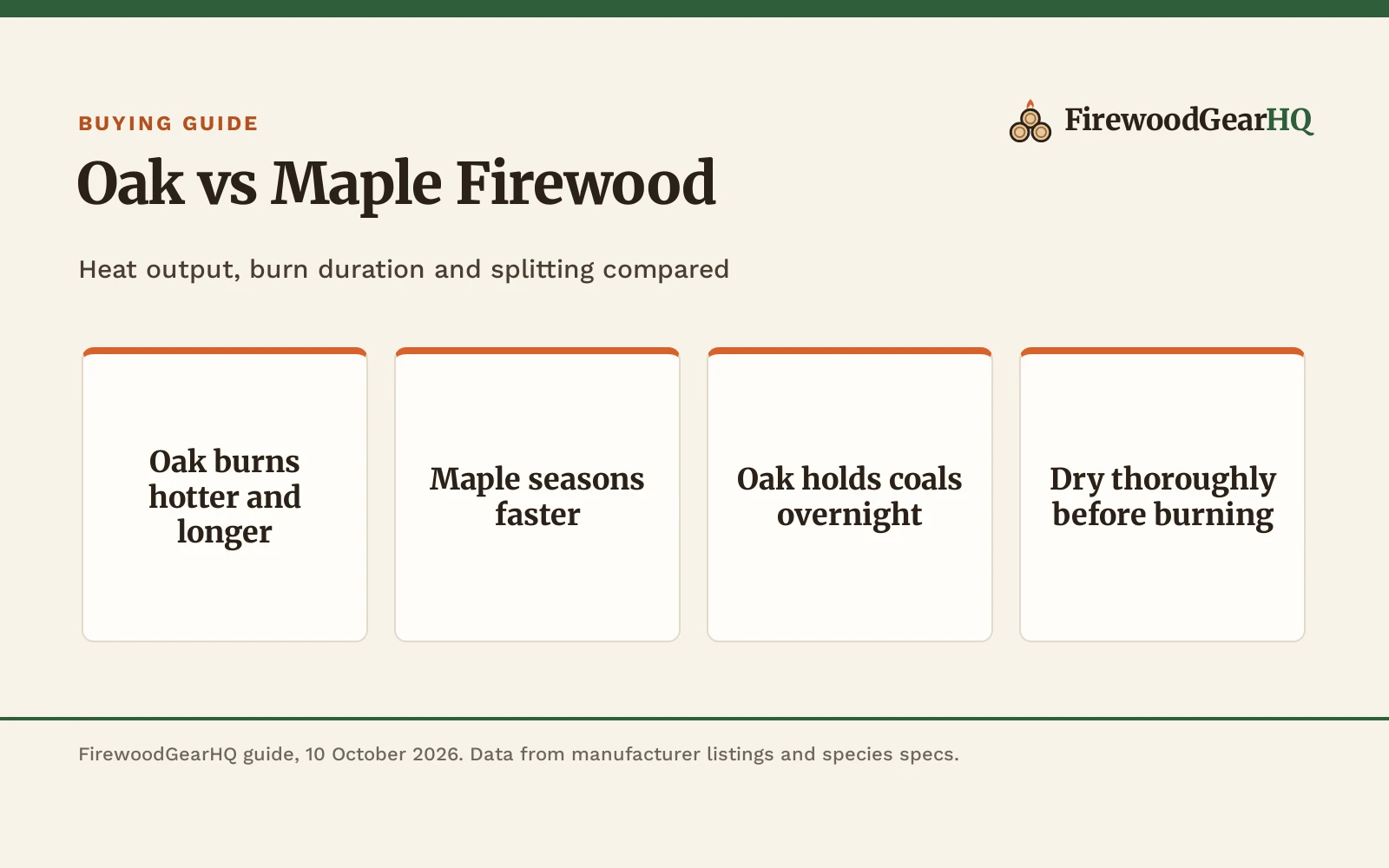
When choosing between oak vs maple firewood for home heating, oak delivers longer burn times, denser coals and higher overall heat output for overnight burns. Maple seasons faster than oak, catches fire more readily and provides excellent heat for daytime warming, especially when burning sugar maple. Burning maple during brisk days and reloading with oak before bed provides an effective heating strategy for any wood stove or fireplace.
FirewoodGearHQ earns a commission when you buy through links on our product pages, at no extra cost to you. Read our affiliate disclosure.
Oak vs maple firewood: The quick answer
Both oak and maple rank among the finest firewood hardwoods, filling distinct heating roles. Oak possesses high density, delivering maximum heat per cord and enduring coal beds for overnight burns. The trade-off is drying time: oak holds moisture and requires extra patience to season. Maple dries more rapidly, splits smoothly and produces cheerful flames that warm a room quickly. In our guide to the best firewood to burn, both varieties earn top honors for home heating.
Oak vs maple firewood comparison
| Heating Factor | Oak Firewood | Maple Firewood |
|---|---|---|
| Heat Output | Very high energy density per cord | High in sugar maple; moderate in red and silver maple |
| Burn Duration | Burns slowly with sustained output | Moderate to long; burns faster than oak |
| Coal Bed | Heavy, long-lasting overnight coals | Good coals in hard maple; light ash in soft maple |
| Seasoning Duration | Prolonged; dense pores dry slowly | Noticeably faster than oak once split and stacked |
| Splitting Behavior | Splits cleanly along straight grain green | Splits easily along grain; can be fibrous |
| Smoke and Sparks | Low smoke when dry; minimal sparks | Low smoke; clean flame with sweet aroma |
| Ideal Stove Role | Overnight heating and severe cold spells | Daytime warming, kindling and shoulder season |
Understanding the distinctions between these hardwoods helps wood burners manage their stacks and plan their heating routine effectively.
Heat output and burn duration
Wood density determines heat output and burn duration. Dense hardwoods pack more fiber per cubic foot, sustaining combustion for hours without collapsing into ash.
Oak density and sustained coal beds
Oak firewood stands out for high density and substantial weight. In a hot stove, seasoned oak catches steadily and settles into an intensely hot coal bed. These embers radiate warmth long after flames die down, making morning restarts effortless because active coals remain ready to ignite fresh kindling.
Hard maple versus soft maple varieties
Hard maple, including sugar maple, rivals oak in density and heat output, leaving durable coals with a pleasant aroma. Soft maples, including red and silver maple, have lower density. They ignite quickly, burn faster, produce moderate heat and leave less coal, excelling during shoulder seasons when a brief fire warms the house without overheating.
Splitting and handling differences
Processing firewood reveals clear handling differences. Green oak splits most easily when freshly cut, while maple splitting behavior depends on whether you have hard or soft varieties.
Working with straight grain and knots
Green oak logs generally split cleanly along straight radial lines before drying. A dedicated splitting maul or balanced splitting axe pops rounds apart cleanly. For twisted grain or stubborn crotches, using the best log splitter for home use saves labor. Straight-grained hard maple splits cleanly, while green soft maple can feel fibrous under an axe.
Packaged firewood dimensions and weights
Packaged listings show how species are sold. Wilson provides natural split maple firewood harvested in Michigan, packed in 1 regular size box measuring 16 by 12 by 8 inches with split diameters ranging from 1 to 3 inches.
Smoak Firewood offers red oak mini splits cut to 8 inches in length and 1 to 3 inches in width, in a 12 by 12 by 12 inch box with 1728 cubic inches. The maker claims 25 to 30 pounds in text, while the specification table lists 28 pounds. Old Potters packages 16-inch oak logs in a 1.5-cubic-foot bundle, claiming 38 to 45 pounds in the title while the specification table lists 50 pounds. Pointing out contradictions between listing titles and specification tables helps buyers verify claims.
Firewood Central provides kiln-dried Pennsylvania oak in 8-inch splits dried to 15 percent moisture or less, packing 30 to 35 pieces per bundle with a stated weight of approximately 39.5 pounds, while its specification table lists 39.4 pounds. FiveOaks Firewood packages oak mini splits measuring 7 to 8 inches long and 1 to 2 inches wide, providing 1248 cubic inches. VERSAWOOD lists 3.5-inch oak logs weighing 10 pounds, and Gimgsoen lists 6-inch oak logs in a 15-pound box.
Seasoning requirements and moisture control
Seasoning removes water from split wood for clean burning. Wet wood wastes heat boiling off sap, creating smoke and chimney creosote.
Why oak requires extra drying time
White oak develops microscopic tyloses that seal vascular pores, while red oak features open pores with dense cell walls. This dense structure slows water movement, so oak releases moisture far more slowly than maple. Maple possesses a more permeable structure, drying steadily once split and stacked.
Proper stacking technique
Stack split logs off bare ground using pallets or an outdoor firewood rack with cover. Air circulation underneath prevents logs from absorbing soil dampness. Keep row ends open, stack in sunny spots and cover only the top of the pile. See our guide on how to season firewood fast for drying methods.
Checking moisture levels before burning
Never judge seasoning by calendar time alone. Split a log and press the pins of one of the best firewood moisture meters into the fresh interior grain to confirm clean combustion readiness. Knowing how to tell if firewood is seasoned protects flues from creosote.
Best uses for oak and maple in wood stoves and fireplaces
Combining oak and maple creates an ideal burning schedule across the heating season.
Everyday and shoulder-season heating
During mild autumn days or sunny afternoons, burning pure oak can overheat rooms and force choked dampers, causing smoldering. Soft maple or smaller splits of hard maple provide responsive warmth without lingering. Read our guide on hardwood vs softwood firewood for fuel options.
Overnight burns and winter cold snaps
When freezing nights arrive, oak proves unmatched. Stacking seasoned oak across a coal bed in the best wood stove for heating a house sustains high heat overnight. Checking temperatures with a stove thermometer confirms an optimal burn zone without creosote buildup.
For other dense fuels, see our oak vs hickory firewood comparison, and consult our firewood BTU chart for heat values.
Kiln-dried and seasoned cordwood options
Homeowners obtain oak and maple via packaged kiln-dried wood or bulk cords. Packaged products from Old Potters, Smoak Firewood, Wilson and Firewood Central undergo commercial drying to eliminate pests and moisture. Kiln-dried wood lights easily for fire pits and hearth fires, but heating a home all winter with bundles is costly compared to seasoning bulk cords.
Turn a stack's length, height and depth into full and face cords, and estimate how much wood a winter takes.
Frequently Asked Questions
Is oak or maple better for firewood?
Neither is universally better; they serve complementary roles. Oak burns longer with durable coals for overnight heating. Maple dries faster, ignites easily and provides flexible daytime warmth.
Does oak burn hotter than maple?
Oak burns slightly hotter and longer than soft maple. However, hard sugar maple delivers heat comparable to red oak, placing both near the top for energy output.
Which firewood seasons faster, oak or maple?
Maple seasons noticeably faster than oak. Split maple stacked off the ground dries within a single season, whereas dense oak often requires an additional summer.
Can you mix oak and maple firewood in a wood stove?
Yes, mixing them works well. Maple splits build a brisk draft and hot coal bed quickly, after which dense oak splits sustain hours of steady heat.
Is hard maple or soft maple better for burning?
Hard maple is better for long heating because its density creates lasting coals. Soft maple ignites faster, making it ideal for kindling and quick shoulder-season fires.
How do you know when oak or maple firewood is dry enough to burn?
Look for end checks, loose bark and a clear ringing sound when split pieces strike together. Confirm with a moisture meter before burning.
Related guides
See the firewood handling hub, the best firewood to burn and the best firewood moisture meters. Compare species in our oak vs hickory firewood comparison, hardwood vs softwood guide and the firewood BTU chart. Learn drying techniques in our guides on how to season firewood fast and how long firewood takes to season, and check readiness with how to tell if firewood is seasoned. Splitting your own wood? Equip yourself with the best splitting mauls, best splitting axes and the best log splitters for home use. Cutting your own rounds? Start with the best chainsaw for firewood and keep edges sharp with the best chainsaw sharpener. Protect your woodpile with the best firewood rack with cover. Also see our firewood shed outdoor with roof. Also see our cheap firewood rack. Also see our firewood rack outdoor with cover. Also see our cover for firewood storage rack. Also see our firewood rack for porch. Also see our inside wood rack for firewood. Also see our metal wood racks outdoor for firewood. Also see our indoor firewood rack ideas. Also see our can you bring firewood indoors. Also see our best indoor firewood rack. Also see our best fireplace log holder. Also see our how to stack firewood. Also see our should you cover firewood. Also see our how much is a cord of wood. Also see our face cord vs full cord. Also see our how to keep bugs out of firewood.
About the author
The FirewoodGearHQ editorial team researches firewood and wood heating equipment from published specifications, ratings and warranty terms, and scores every pick the same way. We do not run our own product trials.