Pellet Stove Installation (2026): What the Job Involves
Pellet stove installation, from choosing a spot and a vent route to permits, power and the first burn, with the safety checks to plan around.

On this page
Fall prep ends and the cold settles in, and a pellet stove looks like a steady way to heat the room where the family gathers. Pellet stove installation is the work of placing the stove, venting it outside, feeding it power and pellets, and getting the first burn right, and most of that work belongs to a certified installer rather than a weekend project. This guide covers what the job involves, what to decide before the installer arrives, and what to check after.
As an Amazon Associate I earn from qualifying purchases. FirewoodGearHQ earns a small commission if you buy through links on this page. The price you pay stays the same. Read our affiliate disclosure.
The quick answer
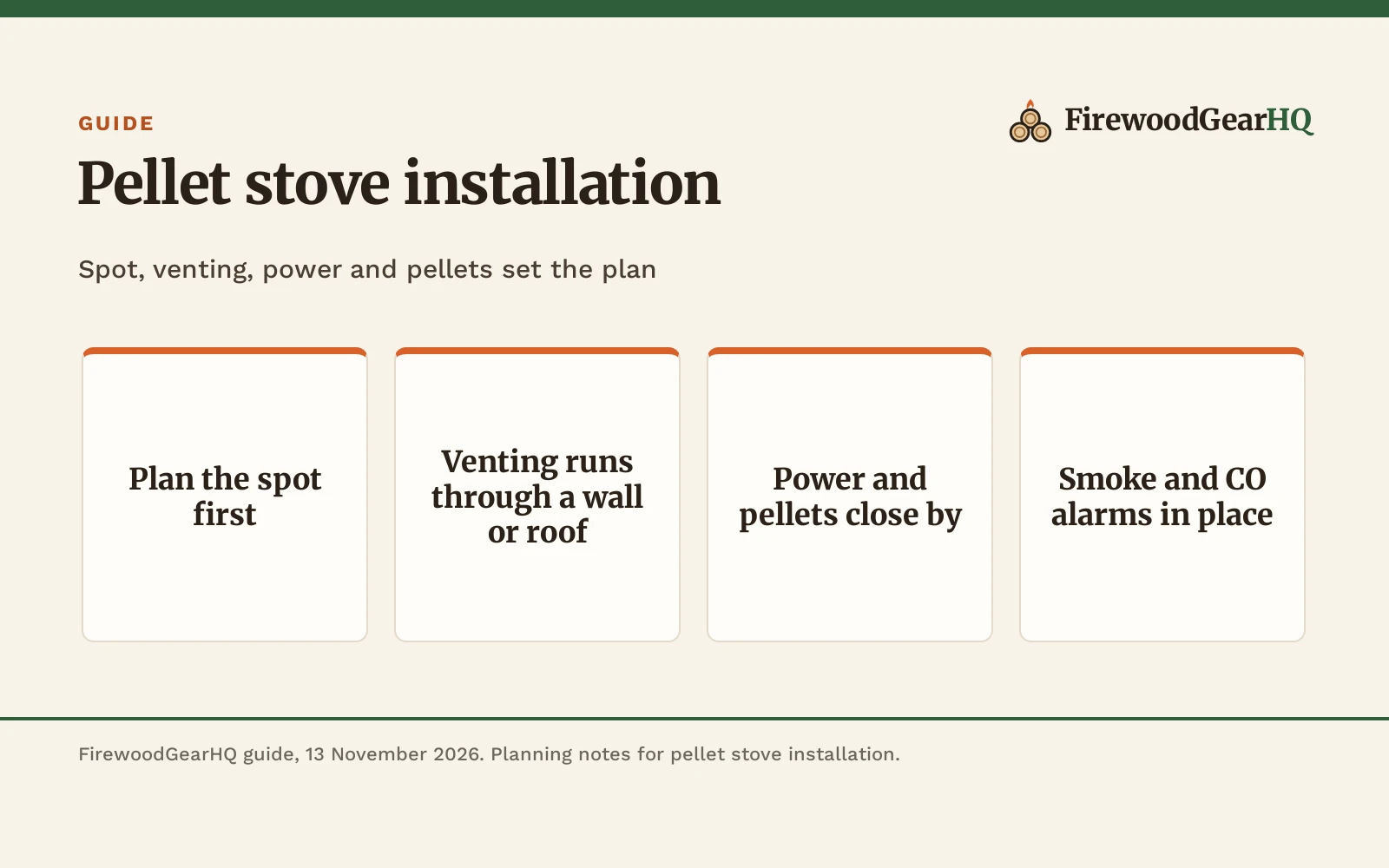
Pellet stove installation means setting a pellet-burning stove in place, running a vent to the outside, plugging it into household power, and loading the hopper with wood pellets. A pellet stove burns compressed wood pellets fed by an auger, so it needs a vent path, power and dry pellet storage nearby. The manual states the clearances, the vent parts and the power needs, and local code states whether a permit and an inspection apply. Hire a certified installer for the venting and the hookup, and plan the spot, the vent route and the pellet storage before the install day.
Pellet stove installation: what the job involves
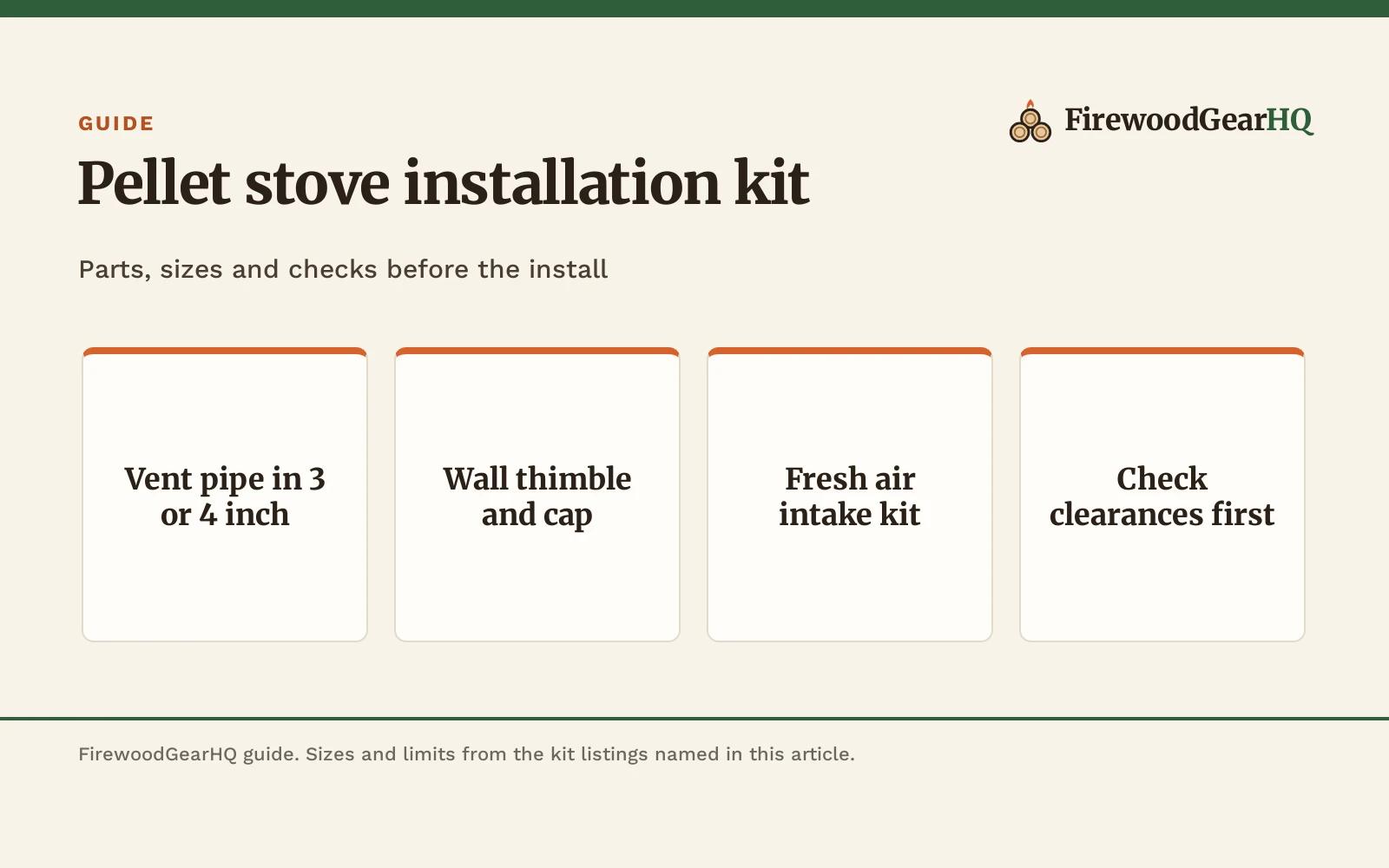
Pellet stove installation covers the stove, the vent, the power and the fuel, and each part has its own decisions. The stove needs a floor that can carry its weight and a hearth pad where the manual calls for a pad, with clearances to walls and furniture as the manual states. The vent carries exhaust outside through a wall or up through the roof, and the route shapes which vent parts the job needs. Power runs the auger, the fan and the controls, so the stove sits near an outlet the manual approves. Pellets come in bags and need dry storage near the stove, since damp pellets swell and jam the feed. A pellet stove installation kit gathers the common vent and trim parts for a standard route.
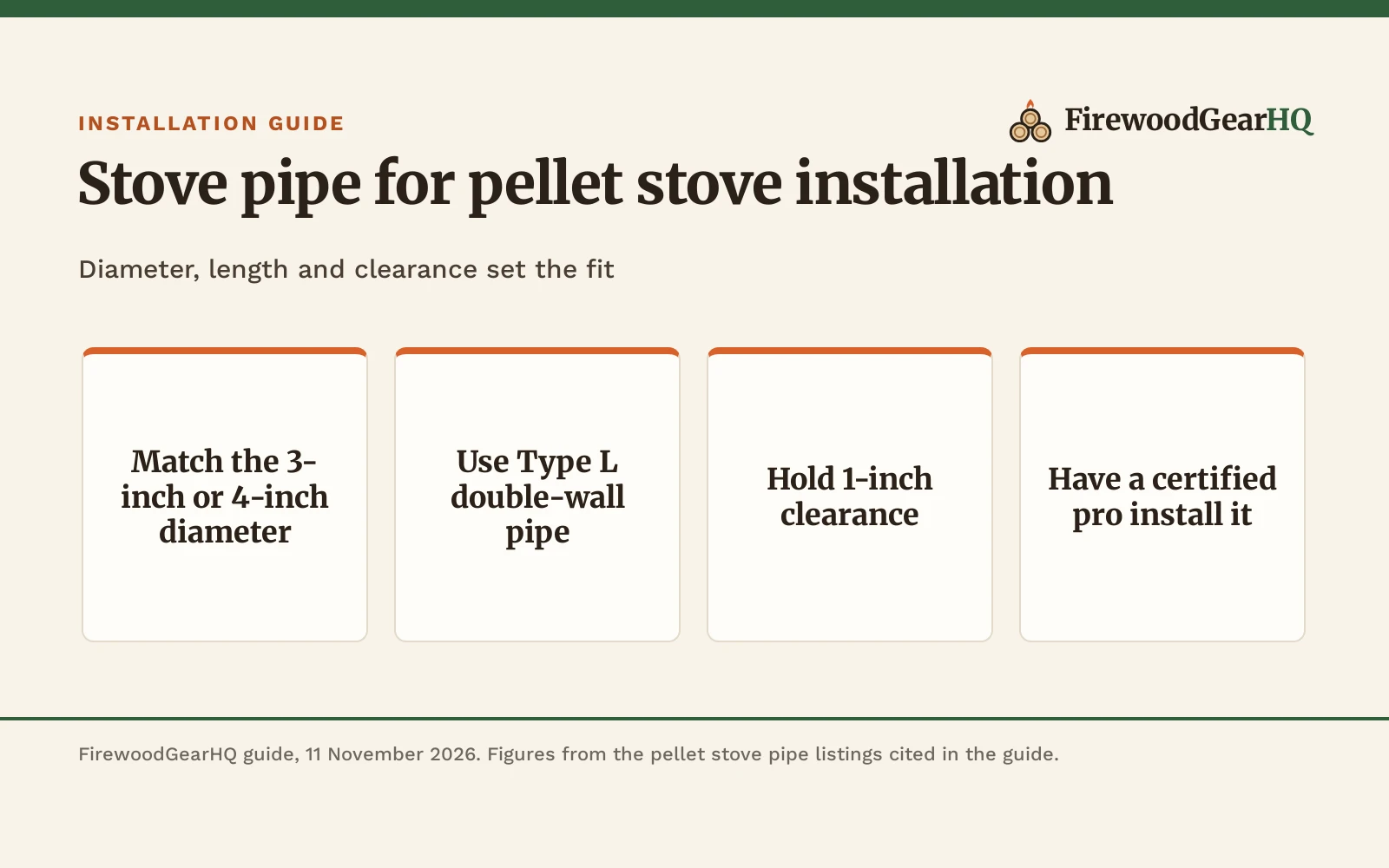
The installer sizes the vent run, sets the wall thimble or roof flashing where the vent leaves the house, and joins the vent sections so exhaust stays outside. The stove manual and local code set the clearances from the vent to windows, doors and air intakes, and the installer checks those distances on site. After the hookup, the installer runs the stove through a start cycle, checks the burn and the draft, and shows the owner how to load pellets, set the controls and shut the stove down. See the stove pipe guide for pellet stove installation for what the vent parts do.
Choosing a spot for the stove
Pick the spot with heat, venting and daily use in mind. A central spot on the main floor spreads heat through the rooms people use, while a stove tucked in a far corner heats that corner first and the rooms beyond it more slowly. The spot needs floor space for the stove and the hearth pad, wall clearances as the manual states, and a vent route that reaches outside. Check the pellet stove dimensions guide before measuring, so the spot fits the stove and the clearances around it.
Think about pellets too. The hopper holds a supply of fuel, and the bags stack near the stove in a dry spot, so the carry stays short. A pellet storage bin keeps a working supply by the stove, and bulk bags belong in a dry garage or shed off the floor. See wood pellet storage ideas for containers and setup. Keep the stove clear of curtains, furniture and firewood, and keep smoke and CO alarms in the room and in the hall outside the bedrooms.
Venting: through a wall or up through the roof
Most pellet stove installs vent horizontally through a nearby wall, since the stove sits low and the vent run stays short. A short horizontal run keeps the draft steady, with a cap that keeps rain and wind out of the vent. Where a wall route does not work, the vent runs up through the roof, which suits a stove set far from an outside wall. The wood stove pipe installation through wall guide covers the wall route in detail, and the wood stove pipe installation guide covers sizes and kits.
Clearances decide whether a route works. The manual states how far the vent termination must sit from windows, doors, air intakes and walkways, and local code may add its own distances. A vent that ends under a deck or beside a window can pull exhaust back into the house, so the installer checks the termination point from outside. The stove pipe sizes guide explains diameters and lengths, and a wall thimble shields the wall where the vent passes through it.
Power, pellets and the first burn
A pellet stove needs steady household power for the auger, the combustion fan and the controls, so plan an outlet near the spot and keep the cord clear of the hot stove body. A power cut stops the feed and the fan, so ask the installer how the stove should be shut down if the power drops.
Pellets matter as much as the stove. Heating pellets differ from barbecue pellets, and the stove manual states which grade the stove takes, so buy the grade the manual names and keep the bags dry. Damp pellets swell and jam the auger, and dusty pellets leave extra ash in the burn pot. See heating pellets vs barbecue pellets for how the grades differ, and cost of pellets for pellet stove for what to budget for fuel.
For the first burn, the installer loads the hopper, sets the controls as the manual describes, lights the stove and watches the flame settle. A clean first burn smells faintly of new paint and warm metal, so air the room out during the first heat cycle. If the stove smokes into the room or the flame looks wrong, shut it down as the manual describes and call the installer back rather than forcing it. See how to light a pellet stove manually and why a pellet stove smokes for the common causes and fixes.
Permits, code and the pro who signs off
Pellet stove installation often needs a permit and an inspection, and the rules change by town, so check with the local building department before the install day. The permit covers the stove placement, the vent route and the clearances, and the inspector checks the finished job against the manual and local code. Keep the manual, the permit and the inspection note with the stove records. See whether a wood stove needs a permit and whether you can install a wood stove yourself for how the rules frame the decision.
Hire an installer who works with pellet stoves and carries the certification the maker or the town asks for, and ask for the install in writing. A written scope keeps the job clear and gives the owner a record if a question comes up later. The pellet stove installation cost guide explains what sets the total, and the cost to install a wood stove covers the same ground for wood stoves. After the job, walk the vent route with the installer, check the alarms, and book the annual vent inspection the manual calls for. See pellet stove maintenance for the tools and supplies.
FAQ: wood, fire and gear
Can I install a pellet stove myself?
Local code and the stove manual decide that, and most installs call for a certified installer. Venting, clearances and power all have rules that vary by town, and a permit and inspection often apply. A pro who installs pellet stoves knows the vent parts and the clearances, and the finished job carries a record the owner can show later.
How far should a pellet stove sit from the wall?
That distance comes from the stove manual, since clearances change with the model, the vent route and the wall material. The manual states the clearance for the stove body and for the vent, and the installer measures it on site. Never guess a clearance or borrow a clearance from a different stove, since the manual for the stove in the room is the source that counts.
What pellets does a pellet stove burn?
Heating pellets made from compressed wood, in the grade the stove manual names. Barbecue pellets and heating pellets are not the same, and the wrong grade can burn poorly and leave extra ash. Buy the grade the manual states, keep the bags dry, and store them off the floor. See heating pellets vs barbecue pellets for the difference.
Do I need a permit to install a pellet stove?
Often yes, and the rule sits with the local building department, so check before the install day. The permit usually covers the stove placement, the vent route and the clearances, and an inspection follows the finished job. See whether a wood stove needs a permit for how the rules frame the question.
More firewood guides
See the types of pellet stoves, the pellet stove dimensions guide and the wood stove sizes guide. For venting, see the stove pipe guide for pellet stove installation, the wood stove pipe installation guide and the best chimney pipe picks. For living with the stove, see pellet stove maintenance, how to clean a pellet stove, troubleshooting pellet stove problems and the wood stove vs pellet stove comparison. Also see the wood-fired cooking hub.