Pellet Stove Insert Installation: What to Know
A plain guide to pellet stove insert installation: what an insert is, how it fits into a fireplace, and what to sort out before the installer arrives.

On this page
A cold fireplace can still heat a house when a pellet stove insert goes into it. Pellet stove insert installation means fitting a pellet-burning insert into an existing fireplace opening, venting it through the chimney, and plugging it into a wall outlet, so the fireplace becomes a working heater. This guide explains what the job involves, what to check before the installer arrives, and how to look after the insert after it is in.
As an Amazon Associate I earn from qualifying purchases. FirewoodGearHQ earns a small commission if you buy through links on this page. The price you pay stays the same. Affiliate disclosure.
Pellet stove insert installation: what it involves
An insert is a pellet stove built to sit inside a fireplace opening, with the firebox facing the room and the vent running up the chimney. The installer sets the insert into the opening, seals the gap around it, connects the vent, and plugs the unit into a wall outlet. A surround panel covers the space between the insert and the fireplace face, so the finished job looks built in. The work is a pro job, not a weekend project: the vent, the clearances and the power all have to match the maker instructions and local code, and a certified installer should carry it out. See our best mini pellet stove guide if you are still choosing the unit.
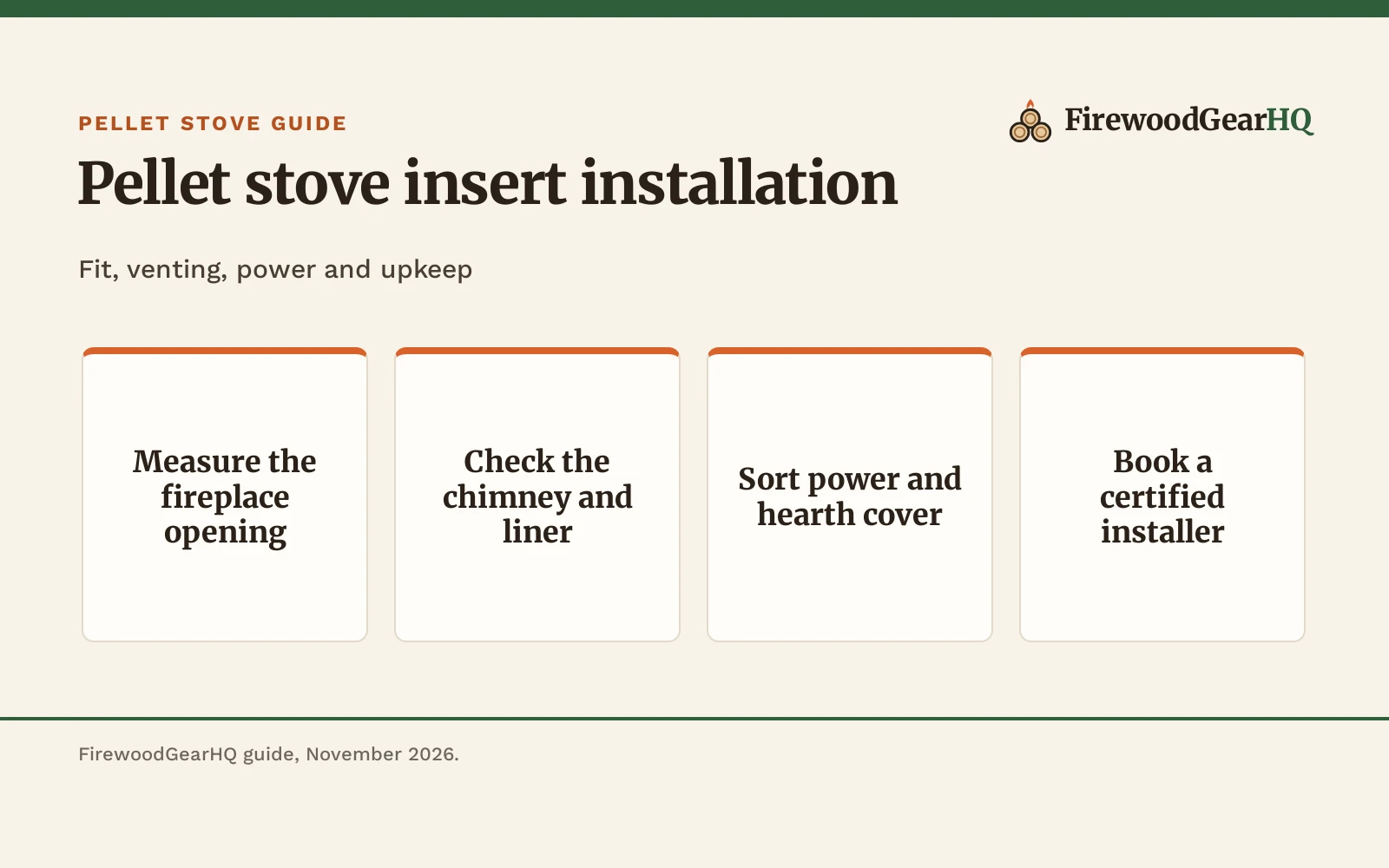
Measure the fireplace opening
Start with the opening itself. Measure the width, height and depth of the fireplace, and note the shape of the firebox and the hearth in front of it. The insert has to fit inside the opening with the clearances the maker instructions state, and the surround panel has to cover the gap between the insert and the fireplace face. Bring the measurements and a photo of the fireplace when you shop for the insert, and let the installer confirm the fit before you buy. An opening that is too small or oddly shaped can rule out an insert, and it is better to learn that before the unit is on the truck. A fireplace with a damaged firebox or a cracked hearth needs repair first, and the installer can say what has to happen before the insert goes in.
Check the chimney and the liner
A pellet insert vents through the chimney, and the chimney has to be sound before the insert goes in. Ask the installer or a chimney sweep to look inside the flue for cracks, blockages and creosote, and to check the cap and the crown. Most installs run a vent liner up the flue from the insert to the top of the chimney, and the liner has to match the insert. A chimney that is damaged or blocked needs repair first, and a flue shared with another appliance needs a pro to sort out. Ask who supplies the liner and who checks the flue, so nothing is left to guess on install day.
Power, hearth and clearances
A pellet insert needs power for the feed auger, the fan and the controls, so it plugs into a wall outlet near the fireplace. Check that an outlet is in reach of the insert, and if there is none, ask an electrician to add an outlet before install day. The hearth in front of the fireplace has to cover the floor where embers could land, and the maker instructions say how far it has to reach. Keep the front of the insert clear of anything that burns, and keep the sides and top clear to the distances in the maker instructions. Check the smoke and CO alarms in the room, and fit them if the house has none.
What to ask the installer
Book a certified installer, and ask what the quote covers before you agree to it. Ask whether it covers the liner, the surround panel, the hearth work and the first burn. Ask who pulls the permit and who books the inspection, and ask what the warranty covers and who to call if the insert will not light. Ask the installer to show you how to fill the hopper, set the controls, empty the ash pan and shut the insert down. Write the answers down with the manual, so the household knows where the paperwork lives.
After the install: first burns and upkeep
New inserts can smell on the first burns as the finish settles in, so air the room out while the insert runs. Burn dry pellets from a covered bin, and keep the bin dry and off the floor. Empty the ash pan on a regular schedule, wipe the glass when it clouds, and keep the area around the insert clear. See our best ash vacuum for a pellet stove for the gear that makes ash cleanup easier. Book an annual chimney inspection and a sweep, and have the installer or the maker look at the insert if the auger jams, the fan sounds wrong, or the insert will not light. A pellet insert that is cleaned and checked each year starts each cold season ready to run.
FAQ: wood, fire and gear
Can a pellet stove insert go in any fireplace?
No. The opening has to fit the insert, the chimney has to be sound, and the hearth has to meet the maker instructions. A fireplace that is too small, damaged, or shared with another appliance may not suit an insert, and the installer can say for sure.
Does a pellet stove insert need a chimney liner?
In most installs, yes. The vent liner runs from the insert up the flue to the top of the chimney, and it has to match the insert. The installer checks the flue and picks the liner.
Does a pellet stove insert need power?
Yes. The insert plugs into a wall outlet to run the feed auger, the fan and the controls. Without power the insert will not feed pellets or move warm air, so the outlet has to be in reach before install day.
Can I install a pellet stove insert myself?
No. The vent, the clearances and the power have to match the maker instructions and local code, and the job needs a certified installer. A bad vent or a missed clearance is a fire risk, so leave the install to a pro.
How do I look after a pellet stove insert?
Empty the ash pan on a regular schedule, wipe the glass when it clouds, keep pellets dry in a covered bin, and book an annual chimney inspection. If the insert will not light or sounds wrong, stop using it and call the installer or the maker.
More firewood guides
See the best chimney brush for a pellet stove, the best hearth rug for a pellet stove, the best pellet storage bin, the best pellet stove gasket for homeowners, the best pellet stove igniter for homeowners, and the best carbon monoxide detector for wood stove homes.