Pellet Stoves Installation Cost: What Sets the Total
Pellet stove installation cost comes down to the vent run, the hearth, the electrical work, permits and labor, and this guide explains each driver in turn.

On this page
Top picks at a glance
As an Amazon Associate I earn from qualifying purchases.
- 1
 Replacement Fireplace Blower Kit for Heat-N-Glo9.5/10View on Amazon
- 2
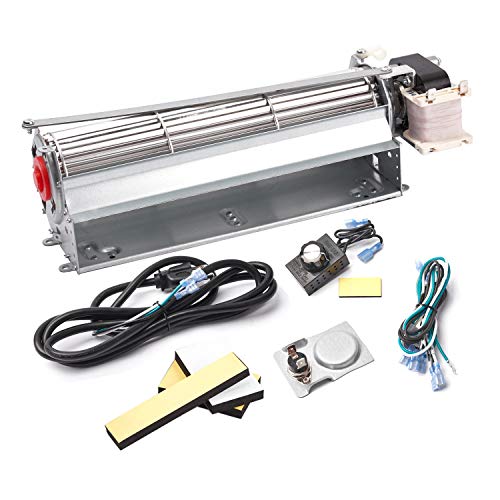 Adviace Replacement Fireplace Blower Kit for Heatilator9.4/10View on Amazon
- 3
 AC Infinity AIRBLAZE S149.3/10View on Amazon
The woodpile is stacked for the season and the cold is coming, which is when a pellet stove starts looking like easy heat, and pellet stoves installation cost is the question that decides whether the stove fits the house. The short answer is that the stove is only part of the bill: the vent run, the hearth protection, the electrical work, permits and the labor to put it all together make up the rest. This guide walks through each driver in turn, so a quote reads as a list of named jobs rather than one total.
FirewoodGearHQ earns a small commission if you buy through links on this page. The price you pay stays the same. Read our affiliate disclosure.
The quick answer
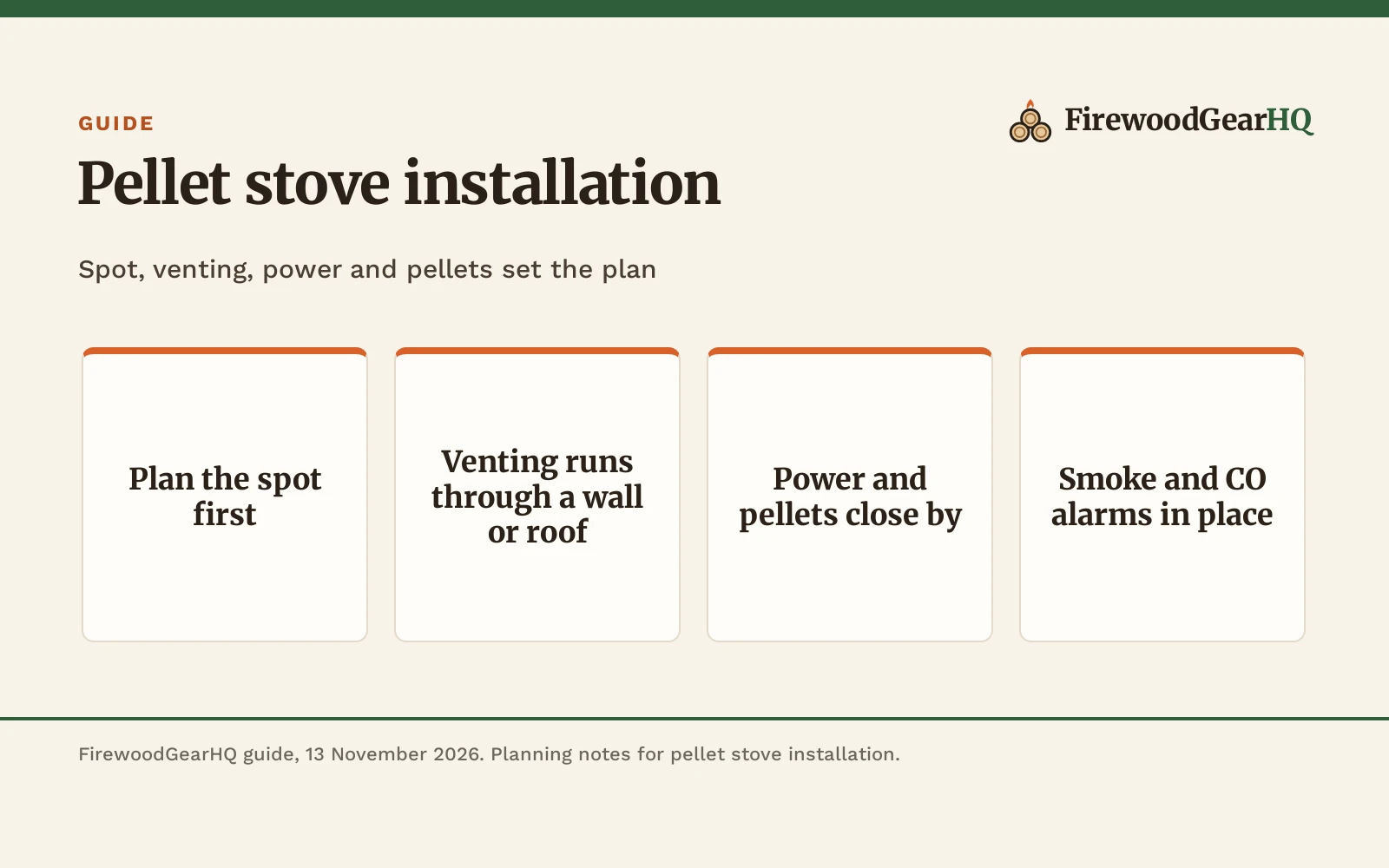
Pellet stoves installation cost has no one figure, because the stove is only one line on the bill. A certified installer prices the vent path, the hearth protection, the electrical work, the permit and the labor together, and each changes with the house. A short vent run, a hearth that already meets the maker requirements, and an outlet near the stove keep the job simple. A long vent run, a new hearth and a new circuit add work.
Pellet stoves installation cost: the parts of the bill
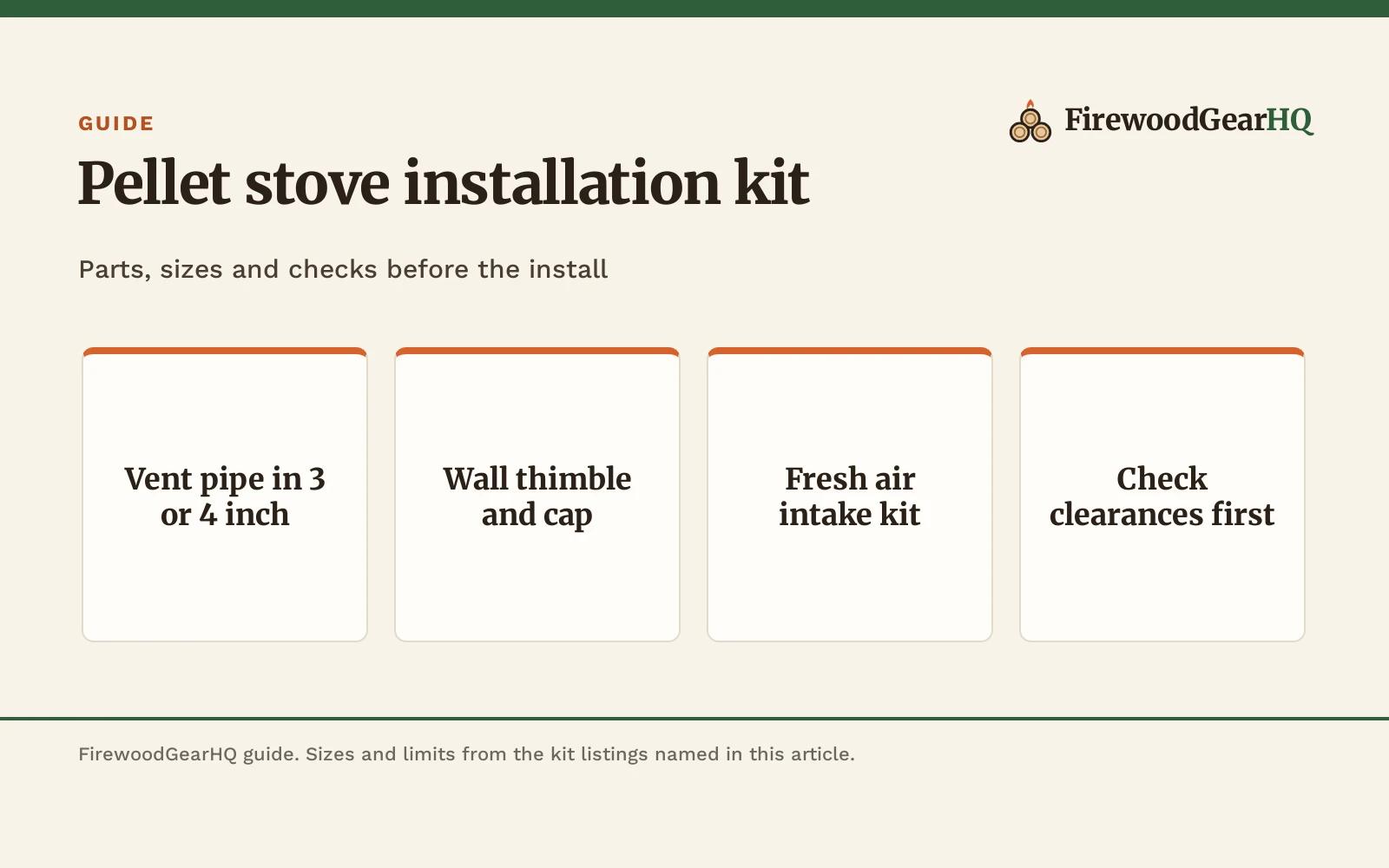
The bill breaks into parts that an installer can price separately, and the stove maker and local code set what the venting and the hearth must be.
- The stove: the unit and its hopper.
- Venting: pipe, elbows and the wall or roof exit.
- Hearth protection: floor pad and wall shielding.
- Electrical: outlet and wiring.
- Permits and inspection: the local permit and sign-off.
- Labor: installer time.
The vent run
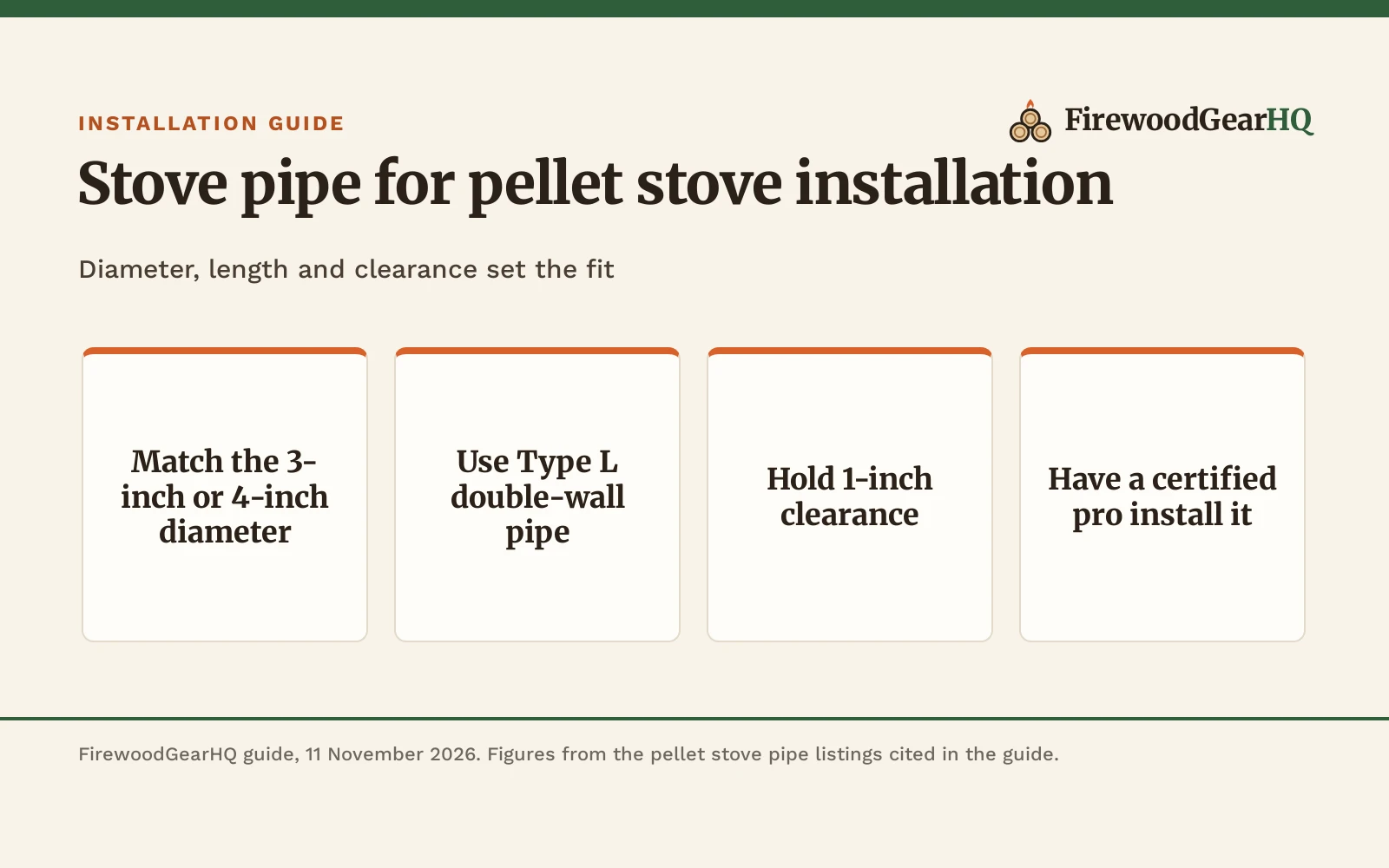
Venting usually moves the total the most, because it follows the house. A pellet stove vents through a pipe that runs to an outside wall or up through the roof, and the length of that run, the bends in it and whether it goes through a wall or a roof decide how much pipe and labor the job takes. A short, straight run to a nearby outside wall is the simplest shape; a long run, a run with bends, or a run through a roof or a masonry chimney takes more pipe, more fittings and more time.
The stove maker states the vent size the stove needs, and local code states what the exit must meet, so the installer reads those two before pricing the run. An existing chimney can help or hurt: a sound flue keeps the run short, while a flue that needs a liner adds a job of its own. Ask the installer to name the vent path on the quote.
Hearth and wall protection
A pellet stove sits on hearth protection, and the size of that protection is set by the stove maker and local code. The floor pad must cover the area the maker states, and wall shielding must meet the clearance the maker states. The reference listings show what heat-resistant fiberglass looks like: a WUERLI blanket measures 40 by 40 inches, is 0.5 mm thick, weighs 500 g and withstands heat up to 1076°F, while a Prepared Hero blanket measures 39 by 39 inches and withstands heat up to 1022°F.
A larger piece shows the same material in a bigger size: a kanhiro welding blanket (on Amazon) measures 4 by 6 ft, is 0.31 in thick and withstands heat up to 1022°F. A Klear Concepts blanket (on Amazon) measures 40 by 40 inches and withstands heat up to 1612°F. These are reference listings, not hearth pads, and the installer states what protection the stove actually needs.
| Material | Size | Heat limit | Pack |
|---|---|---|---|
| WUERLI fiberglass blanket | 40 by 40 inches | 1076°F | 2-pack and 4-pack |
| Prepared Hero fire blanket | 39 by 39 inches | 1022°F | 2-pack and 4-pack |
| kanhiro welding blanket | 4 by 6 ft | 1022°F | 2-pack |
| VEVOR fire blanket | 8 by 10 ft | 1022°F | 2-pack |
| AIERLERZHEE welding blanket | 6 by 8 ft | 1000°F | Not stated |
| Klear Concepts blanket | 40 by 40 inches | 1612°F | 2-pack |
Sizes run from 39 by 39 inches to 8 by 10 ft, and heat limits from 1000°F to 1612°F. The installer prices the pad and shielding the stove needs, not a blanket off a shelf.
Power and pellets
A pellet stove needs power: the auger feeds pellets and the fan moves air, and the two run on electricity. An outlet near the stove keeps the electrical work small; a stove far from an outlet needs wiring added. The outlet and the wiring follow local code.
Pellets need a dry place to wait. A pellet storage bin near the stove keeps the fuel dry and close; see the best pellet storage bin guide and wood pellet storage ideas for keeping pellets dry through the season.
Permits, inspection and the installer
Most places ask for a permit before a stove goes in and an inspection after the work, and the two sit on the bill as their own lines. A certified installer knows the local code, files the permit and meets the inspector. The stove maker instructions and local code set the venting, the hearth and the clearances.
Smoke and CO alarms belong in the house with any stove, and the vent and chimney need an inspection each year. Keep the alarms working and the vent clear.
What raises the total, and what holds it down
A long vent run, a roof exit instead of a wall exit, a flue that needs a liner, a new hearth and a stove far from an outlet all add work, and each one adds a line to the bill. A stove that must heat a large open room can call for a larger unit, and a larger unit can call for a larger hearth.
A short, straight vent to a nearby outside wall, a hearth that already meets the stove maker requirements, an outlet near the stove and a one-story run keep the job simple. None of those change the stove itself, and all of them cut the work around it. The lowest cost is often the one where the house already fits the stove.
Reading a quote
Ask for the quote in parts: stove, venting, hearth, electrical, permit and labor, each on its own line. A quote that names the vent path and the hearth size can be compared with another quote line by line; a quote that gives only a total cannot. Ask what the permit covers.
Get quotes from more than one certified installer, and compare the same job, not the same stove. If one quote leaves out the permit or the hearth, it is not the same job. The right quote names every part of the work, in writing, before the work starts.
FAQ: wood, fire and gear
Does a pellet stove need a chimney?
Not always. A pellet stove vents through a pipe that can run to an outside wall or up through the roof, and the stove maker states which venting the stove needs. A chimney can serve as the vent path where the maker and local code allow it. The installer states the vent path for the house.
What does the installer need to see before quoting?
The room, the vent path, the hearth and the outlet. The installer looks at where the stove will sit, how the vent reaches outside, what protection exists, and how near the power is. A visit gives a quote with named lines; a quote without a visit is a guess.
Can a pellet stove vent through a wall?
Many can, where the stove maker and local code allow a direct wall exit. The vent path, the pipe and the exit follow the maker instructions and local code, so the installer states whether a wall exit fits the house.
Is a permit needed to install a pellet stove?
Most places ask for one, and the installer usually files it and meets the inspector after the work. The permit and the inspection sit on the bill as their own lines.
What floor protection does a pellet stove need?
A hearth pad sized by the stove maker and local code. The reference listings show heat-resistant fiberglass from 39 by 39 inches to 8 by 10 ft, with heat limits from 1000°F to 1612°F. The installer states what floor protection the stove actually needs.
Does a pellet stove need electricity?
Yes. The auger feeds pellets and the fan moves air, and the two need power. An outlet near the stove keeps the electrical work small. The installer states what the stove needs.
More firewood guides
See the stove accessories hub, the best wood stove for heating a house and the best pellet storage bin. Keep pellets dry with wood pellet storage ideas, check the stove with a stove thermometer, and see the best hearth rug for a pellet stove and the best ash vacuum for a pellet stove.