How Do You Clean a Pellet Stove?
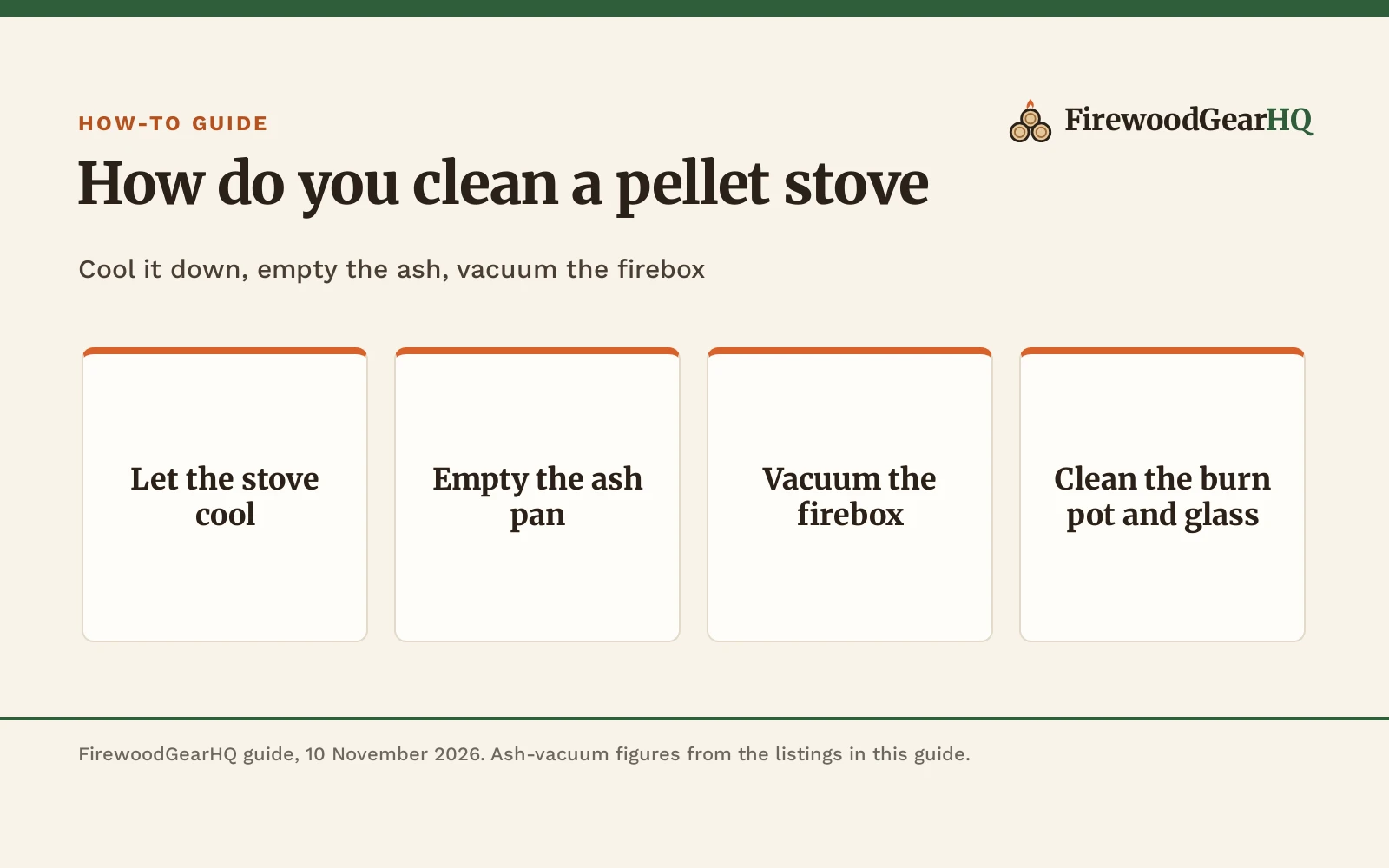
How to clean a pellet stove, step by step: cool it down, empty the ash, vacuum the firebox, clean the burn pot and glass, and check the vent.

On this page
Top picks at a glance
As an Amazon Associate I earn from qualifying purchases.
- 1
 Tomersun Wood Stove Fan Heat Powered Stove Fan HeaterView on Amazon
- 2
 Wood Stove Thermometer MagneticView on Amazon
- 3
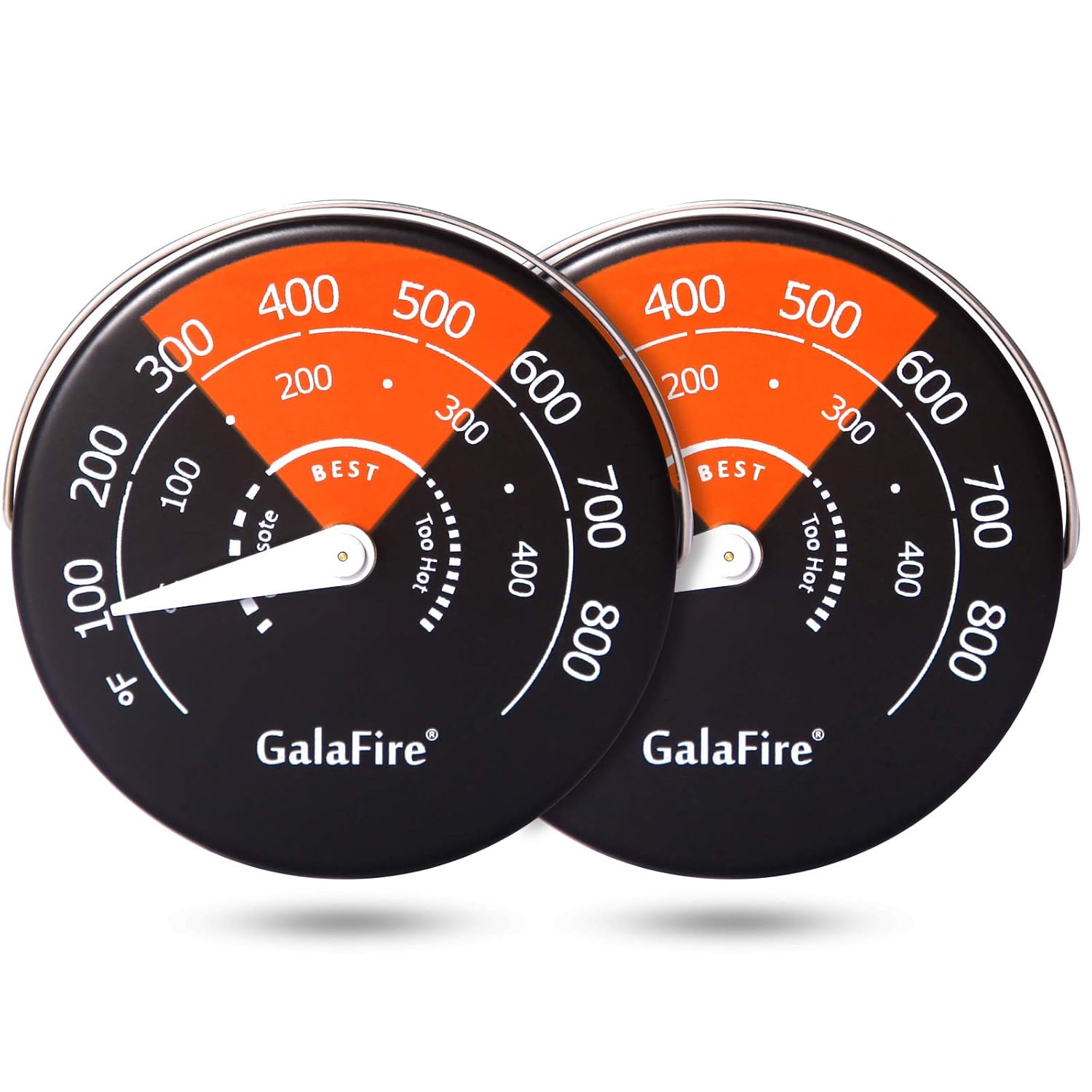 2PCS Wood Stove Thermometer Magnetic for Wood Burning StoveView on Amazon
- 4
 Hanaoyo Wood Stove Thermometer with Large DialView on Amazon
- 5
 Magnetic Wood Stove Thermometer with Large DialView on Amazon
- 6
 Fire Beauty Cast Iron Wood Stove KettleView on Amazon
A pellet stove that has burned all winter tells you it needs cleaning in plain ways: the glass clouds over, the flame burns lazy and yellow, and ash piles up in the burn pot until the pellets smother instead of burning. Cleaning it is a routine, not a repair, and it follows the same order every time. Learning how do you clean a pellet stove comes down to cooling it down, emptying the ash, vacuuming the firebox, cleaning the burn pot and glass, and checking the vent before the next fire.
More options to weigh up
 Tomersun Wood Stove Fan Heat Powered Stove Fan HeaterCheck price on Amazon
 Wood Stove Thermometer MagneticCheck price on Amazon
 2PCS Wood Stove Thermometer Magnetic for Wood Burning StoveCheck price on Amazon
 Hanaoyo Wood Stove Thermometer with Large DialCheck price on Amazon
 Magnetic Wood Stove Thermometer with Large DialCheck price on Amazon
 Fire Beauty Cast Iron Wood Stove KettleCheck price on Amazon
FirewoodGearHQ earns a small commission if you buy through links on this page. The price you pay stays the same. Read our affiliate disclosure.
How do you clean a pellet stove: the quick answer
Let the stove cool until the ash is cold, then empty the ash pan and the burn pot, vacuum the firebox with an ash vacuum, and clean the glass and the heat exchanger. Check the vent for buildup, put the parts back, and relight the stove to confirm the flame burns clean and steady. The whole job is ash removal and inspection: nothing inside the stove needs taking apart beyond the parts the maker designed to come out.
Before you start
Work on a cold stove. Ash vacuums are built for ash below 104 degrees Fahrenheit: several listings in this guide draw the line there, so let the stove cool fully and check that the ash is cold to the touch before the vacuum comes out. Wear gloves and a dust mask, and keep a metal container with a lid nearby for the ash you scoop out. Unplug the stove before you open it up, and keep the pellets in the hopper dry while you work.
How do you clean a pellet stove step by step
Take the job in order, from the ash pan to the vent, and put each part back before moving on to the next.
Let it cool
Shut the stove down and let it cool until the firebox and the ash are cold to the touch. The 104 degree limit in the ash vacuum listings is the line: ash above that temperature does not belong in a vacuum, and a stove that is still warm will keep the ash warm with it. Cleaning a cold stove is also the only safe way to reach into the firebox.
Empty the ash pan and the burn pot
Pull the ash pan out and tip the ash into the metal container. Lift the burn pot out, dump the ash and the clinkers, and scrape the holes clear so air can reach the pellets again. A burn pot choked with ash is the usual reason a pellet stove burns lazy and smoky, so this step matters more than the rest.
Vacuum the firebox
Vacuum the firebox, the burn pot seat and the ash pan housing with an ash vacuum, not a household vacuum. Ash vacuums are built for this job: metal-lined hoses, HEPA filtration that traps fine dust, and canisters sized for ash, from 2.6 gallons to 6 gallons in the listings here. Motors in the listings run from 800W to 1200W, with suction from 18 kPa to 20 kPa in the listings that state it in kPa, and cords run from 59 inches to 13 ft, so pick the size that reaches the stove without dragging the canister across the room. Work the nozzle into the corners and along the heat exchanger, and empty the canister when the suction drops: a clogged filter is the usual reason a vacuum stops pulling.
Clean the glass and the heat exchanger
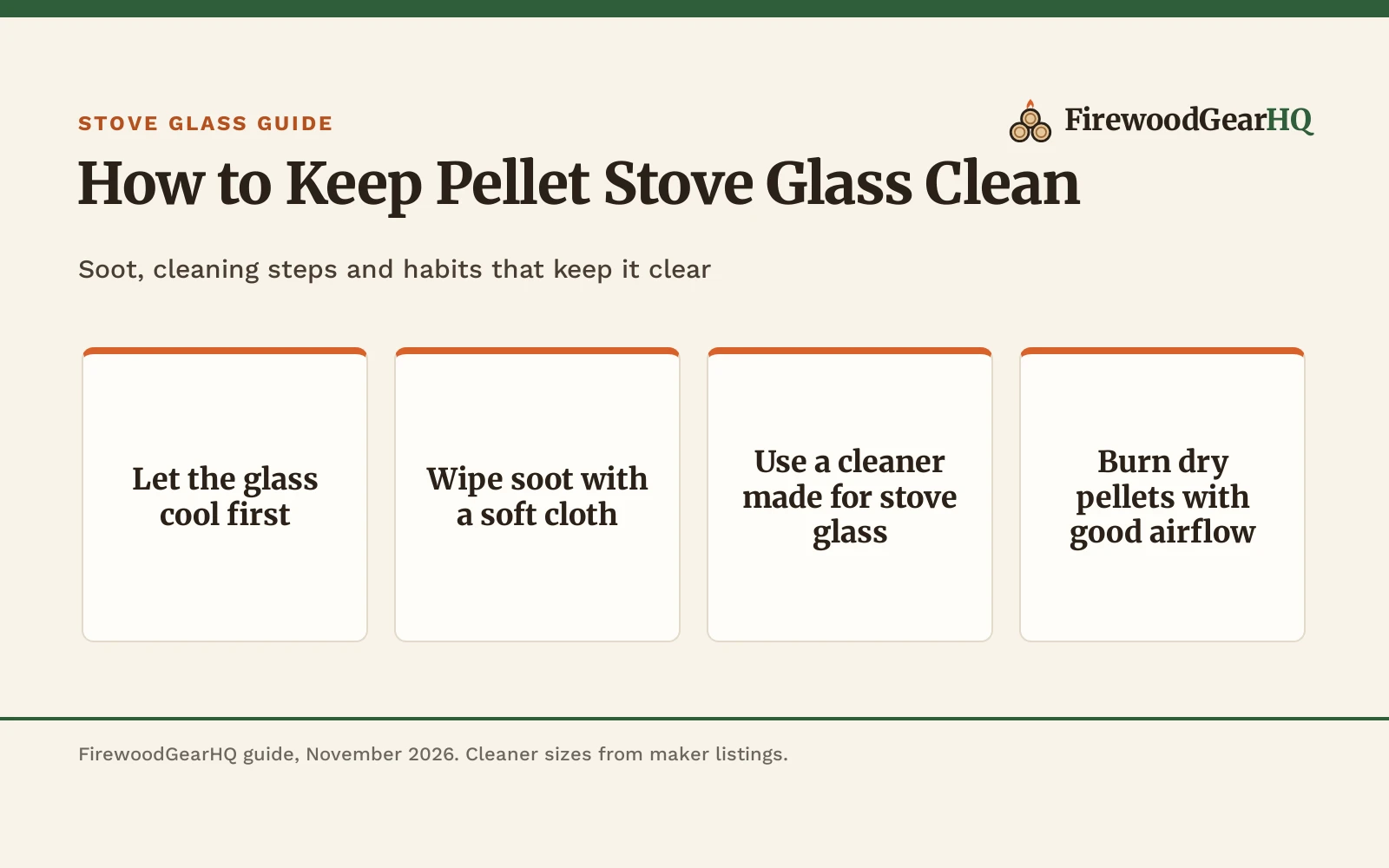
Wipe the glass with a damp cloth and a little ash from the firebox, which cuts the brown film without scratching, then wipe it clean. Brush the heat exchanger tubes so air can move through them again: ash on the tubes insulates them, and the stove gives less heat for the same pellets. Put the burn pot and the ash pan back where they belong before you move on.
Check the vent and relight
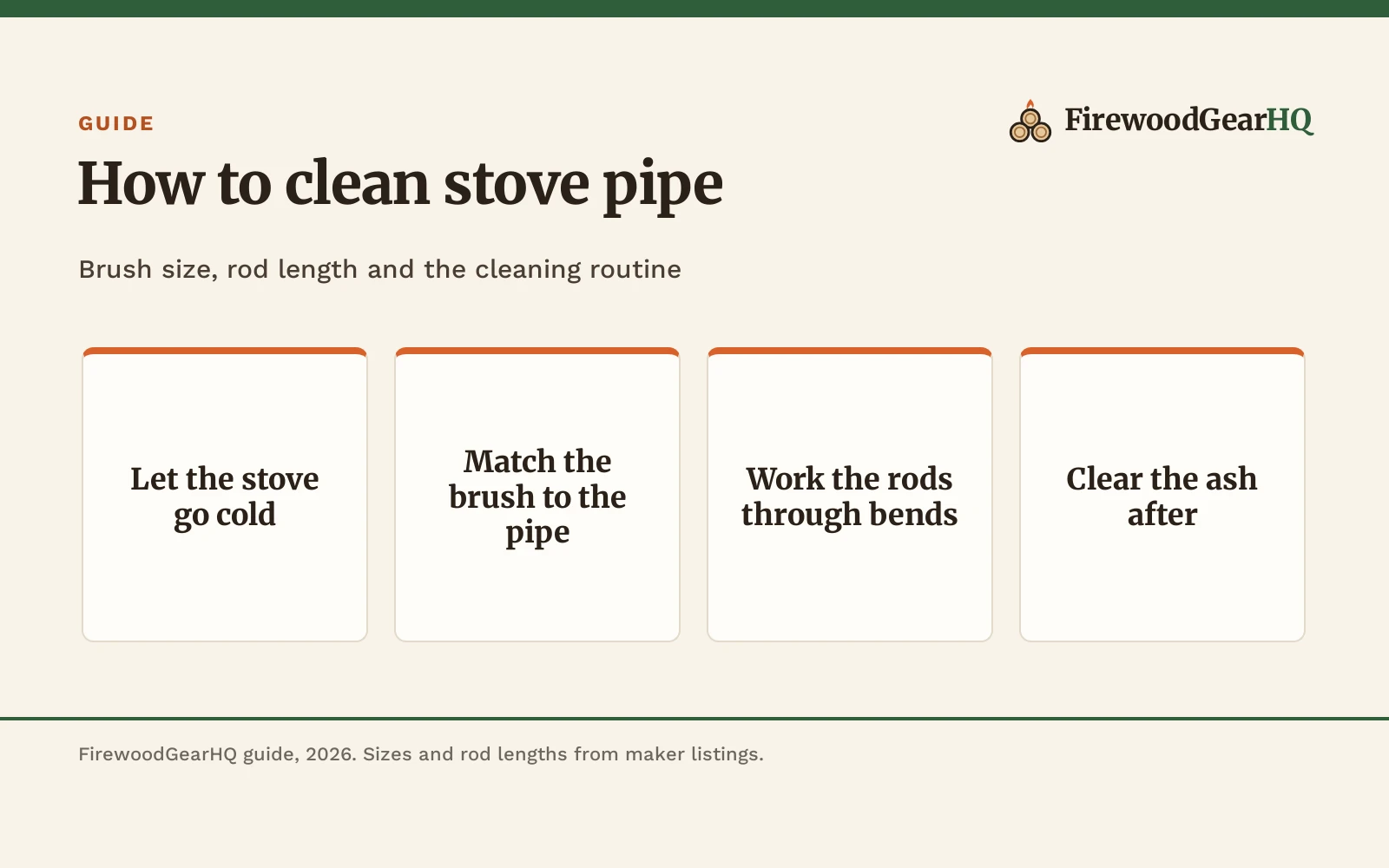
Look at the vent pipe and the exhaust path for soot and ash buildup, and clear what you can reach from inside the stove. Have the venting inspected every year: a clean firebox and a choked vent are not the same thing, and the vent is the part you cannot see from the hearth. Put the stove back together, plug it in, and relight it to confirm the flame burns clean and steady.
What the ash vacuum figures mean
The listings in this guide show what to look for in an ash vacuum, and the figures are easy to read. Power runs from 800W to 1200W, with suction from 18 kPa to 20 kPa in the listings that state it in kPa: more suction lifts ash that has settled into the corners, while a smaller motor is enough for a stove that is cleaned often. Canisters run from 2.6 gallons to 6 gallons: a bigger canister holds a full cleaning without emptying, while a smaller one is easier to carry and store. Hoses run from a 31.4 inch hose to a 5 ft hose, and cords from 59 inches to 13 ft, so the reach of the vacuum is the figure that decides whether it fits your hearth. Every listing here uses HEPA filtration, and the hoses are metal-lined or heat-resistant, which is what separates an ash vacuum from a household vacuum. See the best ash vacuum for fireplace guide for the full comparison.
Mistakes that make the job harder
Vacuuming hot ash is the dangerous one: ash above 104 degrees Fahrenheit does not belong in any vacuum, and several listings here say so. Using a household vacuum is the next mistake: fine ash passes through ordinary filters and back into the room, while an ash vacuum traps it with HEPA filtration. Skipping the vent is the quiet mistake: the firebox can look clean while the vent chokes the draft, so check it every time you clean. And letting the hopper run dry while the stove is hot can bake pellets in the auger, so keep pellets in the hopper until the stove is cool and shut down.
FAQ: wood, fire and gear
How often should I clean a pellet stove?
Clean the burn pot and the ash pan often during the burning season, and give the stove a full cleaning, firebox and vent included, before the season starts and whenever the flame turns lazy or the glass clouds over. How fast ash builds up depends on how much you burn and how clean the pellets are, so the stove itself, not the calendar, sets the schedule.
Can I vacuum a pellet stove with a regular vacuum?
No. A regular vacuum is not built for ash: fine ash passes through its filter and back into the room, and warm ash can damage it. Use an ash vacuum with HEPA filtration and a metal-lined hose, and only on ash below 104 degrees Fahrenheit. See the ash vacuum vs regular shop vac comparison for the details.
How do I know the ash is cool enough?
Let the stove cool fully and check that the ash is cold to the touch before the vacuum comes out. The listings that state a limit draw it at 104 degrees Fahrenheit.
What do I do with the ash?
Put it in a metal container with a lid and set the container away from anything that can burn, on a surface that will not catch fire. Ash can hold heat long after the fire is out, so do not tip it into a paper bag, a plastic bin or a compost heap while it is still warm.
Does a pellet stove need professional cleaning?
A homeowner can handle the firebox, the burn pot and the glass, but the venting deserves a pro: have it inspected every year, and bring in a pro when the vent is choked, the stove soots up right after cleaning, or the flame will not burn clean.
More firewood guides
See the stove accessories hub, the best ash vacuum for fireplace guide and the ash vacuum vs regular shop vac comparison. For the part that lights the pellets, see the best pellet stove igniter for homeowners guide.