How to Clean Stove Pipe Safely at Home
How to clean stove pipe at home: pick the brush size for your pipe, work flexible rods through a cold pipe, clear the ash, and know when to call a pro.

On this page
Top picks at a glance
As an Amazon Associate I earn from qualifying purchases.
- 1
 DuraVent DuraPlus 6" Diameter 24" Length DuraVent DuraPlus9.8/10View on Amazon
- 2
 Selkirk Corp 3VP-36 3" x 3' Pellet Stove Vent Pipe Brand:9.6/10View on Amazon
- 3
 Pellet Stove Cleaning Brush Kit9.6/10View on Amazon
By the time the burning season winds down, a stove pipe has carried a winter of smoke, and ash and soot settle on the inside walls where they narrow the flue and slow the draft. Knowing how to clean stove pipe at home is part of the regular maintenance routine for a wood or pellet stove, along with emptying the ash pan and checking the door gasket. The job is mostly a brush on flexible rods, worked through a cold pipe, with the loose debris caught and carried out.
FirewoodGearHQ earns a small commission if you buy through links on this page. The price you pay stays the same. Read our affiliate disclosure.
The quick answer
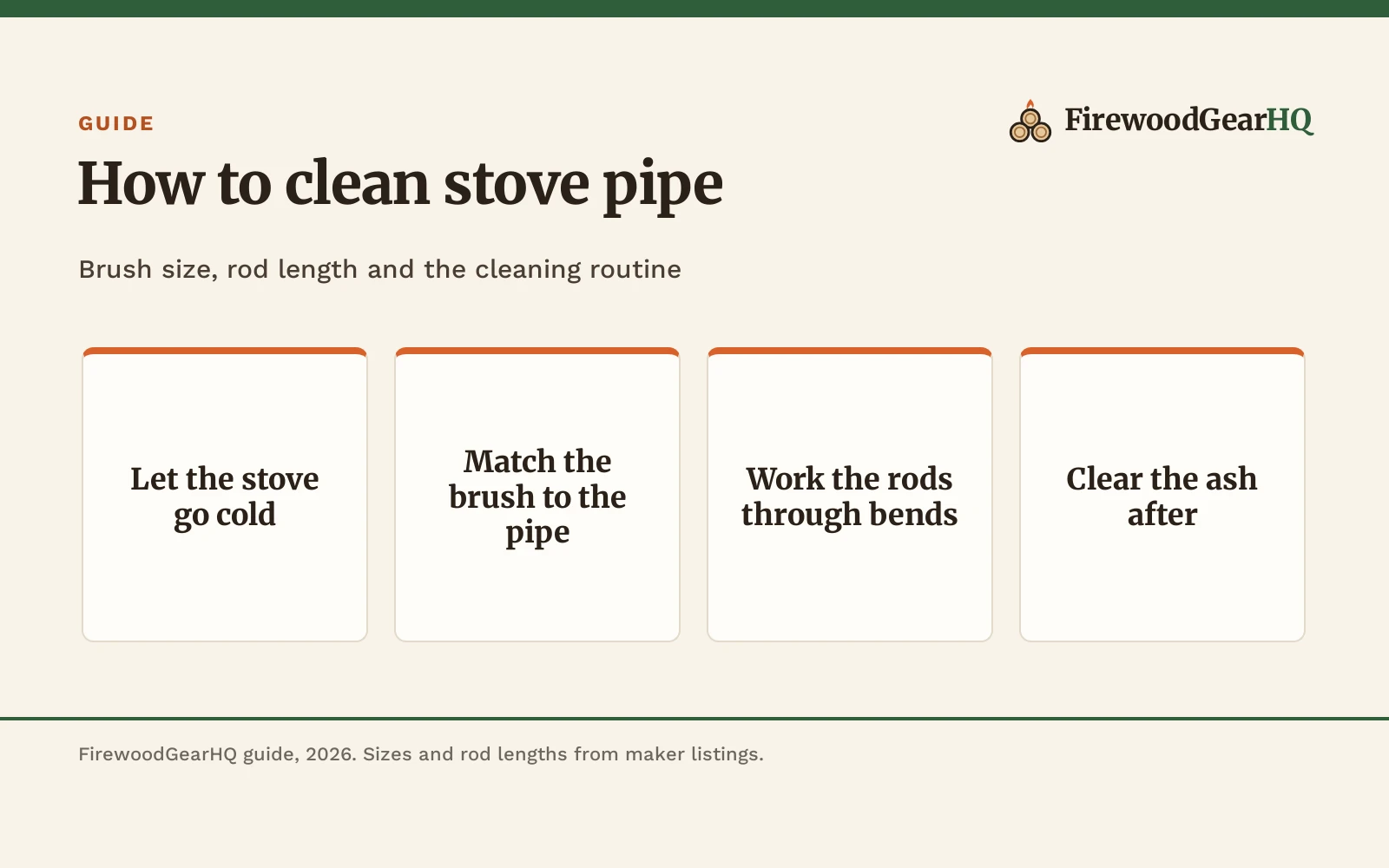
Let the stove go fully cold, then run a pipe brush sized to the pipe diameter through the stove pipe on flexible rods, working it up and down and turning it as you go, and clear out the ash and soot that fall loose. Match the brush head to the pipe: pellet stove kits are made for 3 inch and 4 inch pipe, and tent stove brushes are listed at 2 1/2 inches and 3 1/2 inches. Finish by checking the pipe joints and keeping up the annual chimney inspection your stove maker and local code call for.
How to clean stove pipe, step by step
- Let the stove and pipe go completely cold. Never brush a pipe that is still warm from a fire.
- Protect the floor and nearby surfaces. Makers of pellet stove brush kits advise protecting surrounding surfaces before cleaning, because loosened ash and soot drift out of open joints.
- Open the cleanout or remove the pipe section your stove manual shows for cleaning access. If a section will not come apart as the manual shows, stop and call a chimney professional rather than forcing it.
- Attach the brush head that matches your pipe diameter to the flexible rods, adding rod sections as the run gets longer.
- Work the brush through the pipe with a slow, steady turning motion, pushing and pulling it along the pipe walls. Pellet stove kit makers describe a clockwise circular motion, working the brush gently up and down the pipe.
- Repeat passes until the brush comes out with little new debris on it. Flexible rods bend through elbows, so keep steady pressure rather than forcing the brush around a bend.
- Clear the fallen ash and soot from the cleanout, the stove outlet and the floor, and bag it for disposal once it is fully cold.
- Put the pipe sections back the way they came apart, check that joints seat fully, and look over the pipe for damage, heavy rust or loose screws before the next fire.
Pick the brush size for your pipe
Brush heads are sized to the inside diameter of the pipe, and a head that is too small skates over the buildup while one that is too large jams. Measure the pipe or read the diameter in your stove manual before you buy a brush.
Pellet stove vent pipe is the common case for these kits. Feekoon lists kits for stainless steel and enamel pipe of 3 inch diameter, and a kit with both 3 inch and 4 inch brush heads for pipe of those diameters. Dreyoo lists its kits for pellet stove exhaust pipe of approximately 3 inches. The brush heads on these kits use nylon bristles, which the makers state scrub the pipe walls without scratching stainless steel or enamel pipe.
Small tent stove pipe takes a smaller brush. Ctsyuqoo lists a brush of 2 1/2 inches (65 mm) and another of 3 1/2 inches (90 mm), both with stainless steel bristles, made for the chimney pipes on medium size wood-burning tent stoves. For very small pipe and vents, PokShow lists stainless steel brush heads in 5/8 inch (15 mm), 1 inch (25 mm), 1-5/8 inch (40 mm) and 2 inch (50 mm), covering pipes from 15 mm to 50 mm.
Rod length and reach
Rod length decides how much pipe you can clean from one access point. Feekoon lists pellet stove kits with a 10 ft flexible steel rod, and a kit with rods totaling 20 ft for longer runs. Dreyoo lists the same spread: a 10 ft flexible extension pole, and connectable poles totaling 20 ft for pellet stove systems with longer ducts. The tent stove brushes from Ctsyuqoo use rods of 12 inches that connect to extend the reach to 50 inches. Count the elbows in your run as well as the straight length, since bends use up rod length and a flexible rod navigates them better than a stiff one.
Some kits are drill powered. PokShow lists a quick-connect adapter with a hexagonal shaft that fits a standard power drill, so the brush turns under power instead of by hand. Hand kits use a handle on the rod, and the makers describe turning the handle clockwise while working the brush along the pipe. Either way, the brush does the work by contact with the pipe wall, so steady passes matter more than speed.
When to call a chimney professional
Brushing a stove pipe is routine maintenance, and it sits alongside the inspection schedule for the whole venting system. Have the chimney inspected each year, burn seasoned wood only, and keep working smoke and carbon monoxide alarms in the house. Call a certified chimney professional when the pipe is damaged, rusted through, badly corroded, or will not come apart, when buildup is hard and glazed rather than loose soot, or when you cannot reach the full run from the access points you have. Do not use this guide for stove or chimney installation work: installation belongs with certified professionals and the official instructions for your stove and local code.
If a joint weeps smoke or a section will not seat after cleaning, our guide to how to seal wood burning stove pipe covers the materials and steps for sealing pipe joints, and the pellet stove repair and cleaning guide covers the wider cleaning routine for pellet stoves.
FAQ: wood, fire and gear
How often should I clean my stove pipe?
Clean the pipe when you can see ash and soot building up on the inside walls, and as part of the regular shutdown and startup routine for the stove. The inspection schedule in your stove manual and local code sets the formal interval, and a chimney professional can tell you how fast your system builds up deposits.
What brush size fits pellet stove pipe?
The pellet stove kits here are listed for 3 inch pipe, with one Feekoon kit adding a 4 inch head. Feekoon lists a kit for 3 inch pipe and a kit with both 3 inch and 4 inch brush heads, and Dreyoo lists kits for pipe of approximately 3 inches. Read the diameter in your stove manual and match the brush head to it.
Can I clean a stove pipe with the pipe still connected?
Many runs can be brushed through a cleanout or a removable section without taking the whole pipe down, as long as the rods reach the full run. If a section will not come apart as the manual shows or the brush cannot reach past a bend, stop and call a chimney professional rather than forcing the pipe.
What rod length do I need for a long pipe run?
Measure the run from your access point and count the bends. Feekoon and Dreyoo both list pellet stove kits with 10 ft rods and kits totaling 20 ft for longer ducts, and the Ctsyuqoo tent stove brushes connect 12 inch rods to reach 50 inches. Longer rods clean more pipe from one access point.
Should I use a nylon or stainless steel brush?
Match the bristles to the pipe material. The pellet stove kits from Feekoon and Dreyoo use nylon bristles that the makers state scrub without scratching stainless steel or enamel pipe. The tent stove brushes from Ctsyuqoo and the small brush heads from PokShow use stainless steel bristles for the tent stove and small pipe uses their makers list. Follow the brush maker’s guidance for your pipe material.
More firewood guides
Also see our how to seal wood burning stove pipe. Also see our pellet stove repair and cleaning. Also see our types of chimney liners. Also see our stove accessories.