Types of Chimney Liners for Wood Stoves and Fireplaces
Stainless steel flexible and rigid liners, clay tile and cast-in-place liners explained, with sizes, materials and what suits a wood stove or fireplace.

On this page
Top picks at a glance
As an Amazon Associate I earn from qualifying purchases.
- 1
 316 Stainless Steel Flexible Chimney Liner Insert Kit9.5/10View on Amazon
- 2316 Stainless Steel Flexible Chimney Liner Insert Kit9.5/10View on Amazon
- 3316 Stainless Steel Flexible Chimney Liner Insert Kit9.5/10View on Amazon
Fall prep ends with a full woodpile and a stove ready for the first cold night, and the flue above it decides how well that stove burns. A chimney liner is the sleeve that carries smoke and gas from the stove or fireplace up through the chimney, and the types of chimney liners differ by material, shape and the chimney they fit. Stainless steel flexible liners suit masonry chimneys, rigid stainless steel suits straight runs, clay tile lines masonry flues from the start, cast-in-place liners form a new lining inside an old flue, and aluminum liners serve gas appliances. This guide explains each type, the sizes liner kits come in, and what to ask a certified chimney professional before choosing one.
FirewoodGearHQ earns a small commission if you buy through links on this page. The price you pay stays the same. Read our affiliate disclosure.
The quick answer
The common types of chimney liners are stainless steel flexible liners, rigid stainless steel liners, clay tile liners, cast-in-place liners and aluminum liners. For a wood stove or fireplace in a masonry chimney, a stainless steel flexible liner is the usual choice, in 316 or 316L stainless steel, while rigid liners suit straight flues and clay tile suits new masonry construction. Aluminum liners are for gas appliances, not wood burning. Match the diameter to the appliance outlet and the flue, check the listing, and have a certified chimney professional inspect the chimney before a liner goes in.
Types of chimney liners at a glance
| Type | Material | Common sizes | Suits |
|---|---|---|---|
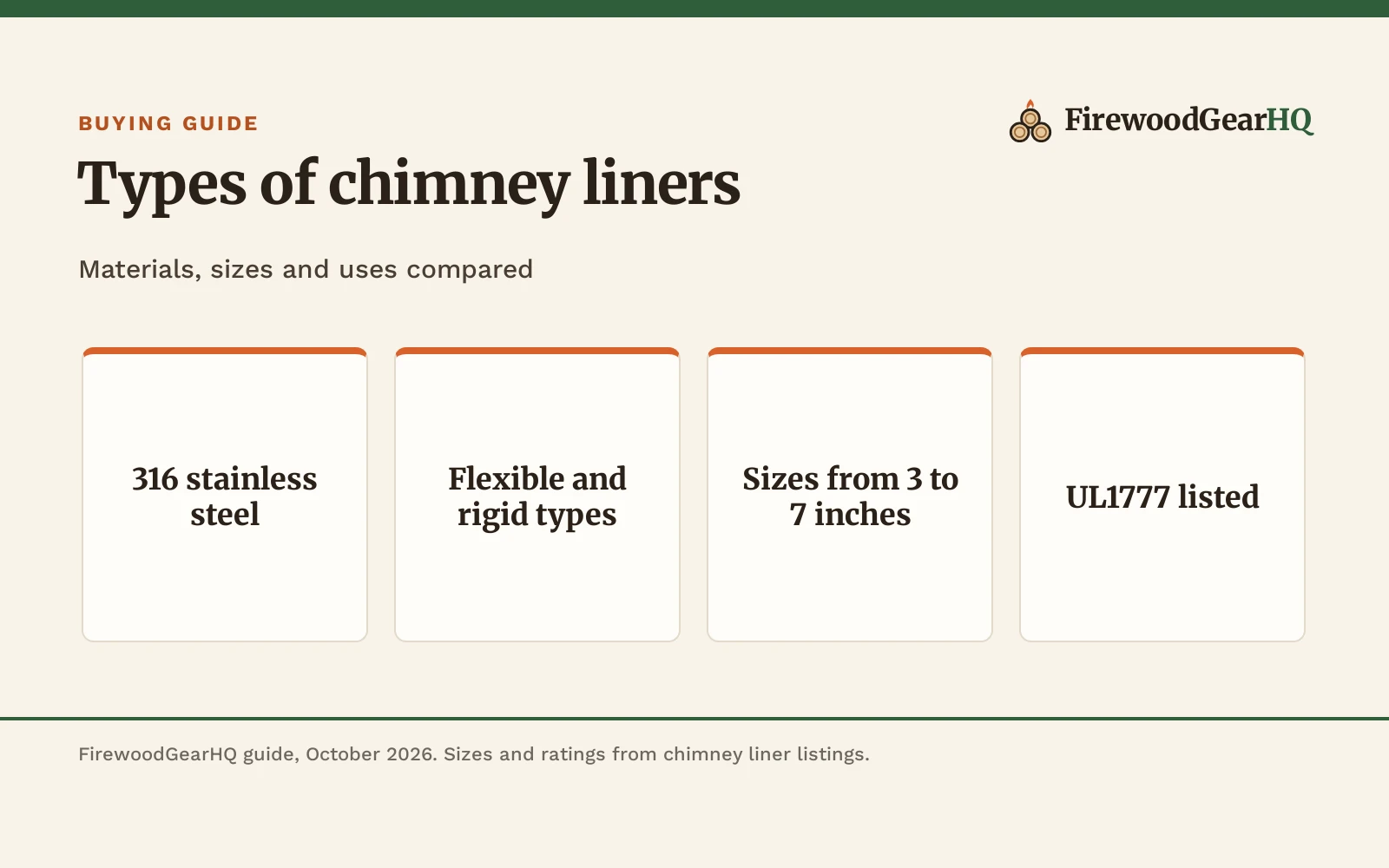
| Flexible stainless steel | 316 or 316L stainless steel | 3 to 7 inch diameters, 15 to 35 foot lengths | Masonry chimneys, wood stoves and fireplaces |
| Rigid stainless steel | Stainless steel | Sized to the flue | Straight flues |
| Clay tile | Fired clay | Set when the chimney is built | New masonry chimneys |
| Cast-in-place | Cement mixture | Poured to fit the flue | Old masonry flues |
| Aluminum | Aluminum | Sized to the appliance | Gas appliances only |
Flexible stainless steel liners
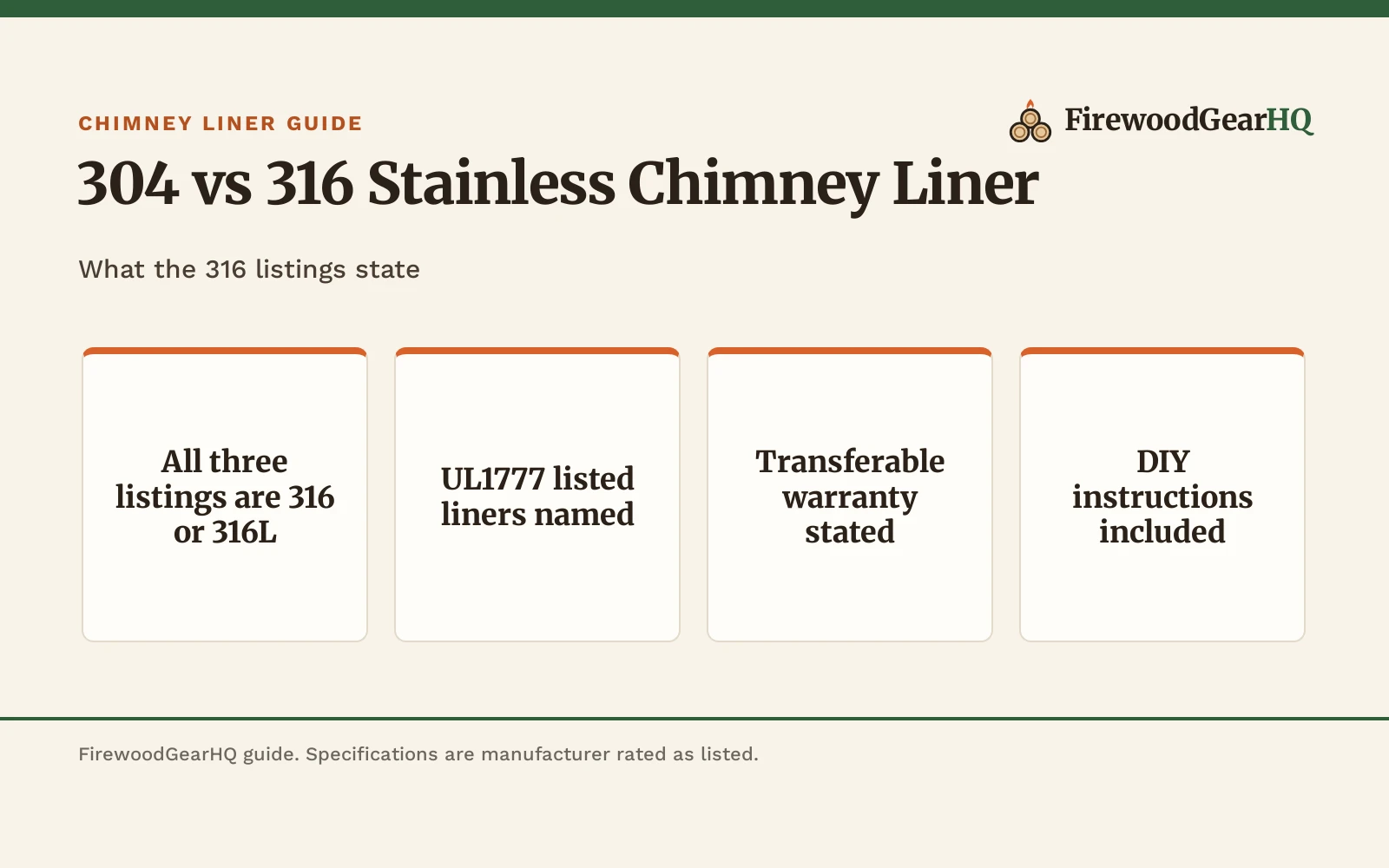
A flexible stainless steel liner is a corrugated tube that bends around offsets in a masonry chimney. Listings show 316 and 316L stainless steel, with wall thickness from .006 inch on standard kits to .012 inch on a double-ply smooth-wall kit, and .011 inch on a two-ply smooth-wall kit. Seams run 7-ply with 10 corrugations between seams on the kits that state them. Kits come in diameters from 3 to 7 inches and lengths from 15 to 35 feet. Some kits include a 13 inch by 13 inch top plate and rain cap and a tee connector for horizontal hookups. Flexible liners are only for use inside a masonry chimney, and the Rockford kits carry a UL1777 listing in the USA and ULCS635 in Canada. One maker claims its smooth-wall liner boosts draft and energy efficiency by 20 percent.
What comes in a flexible liner kit
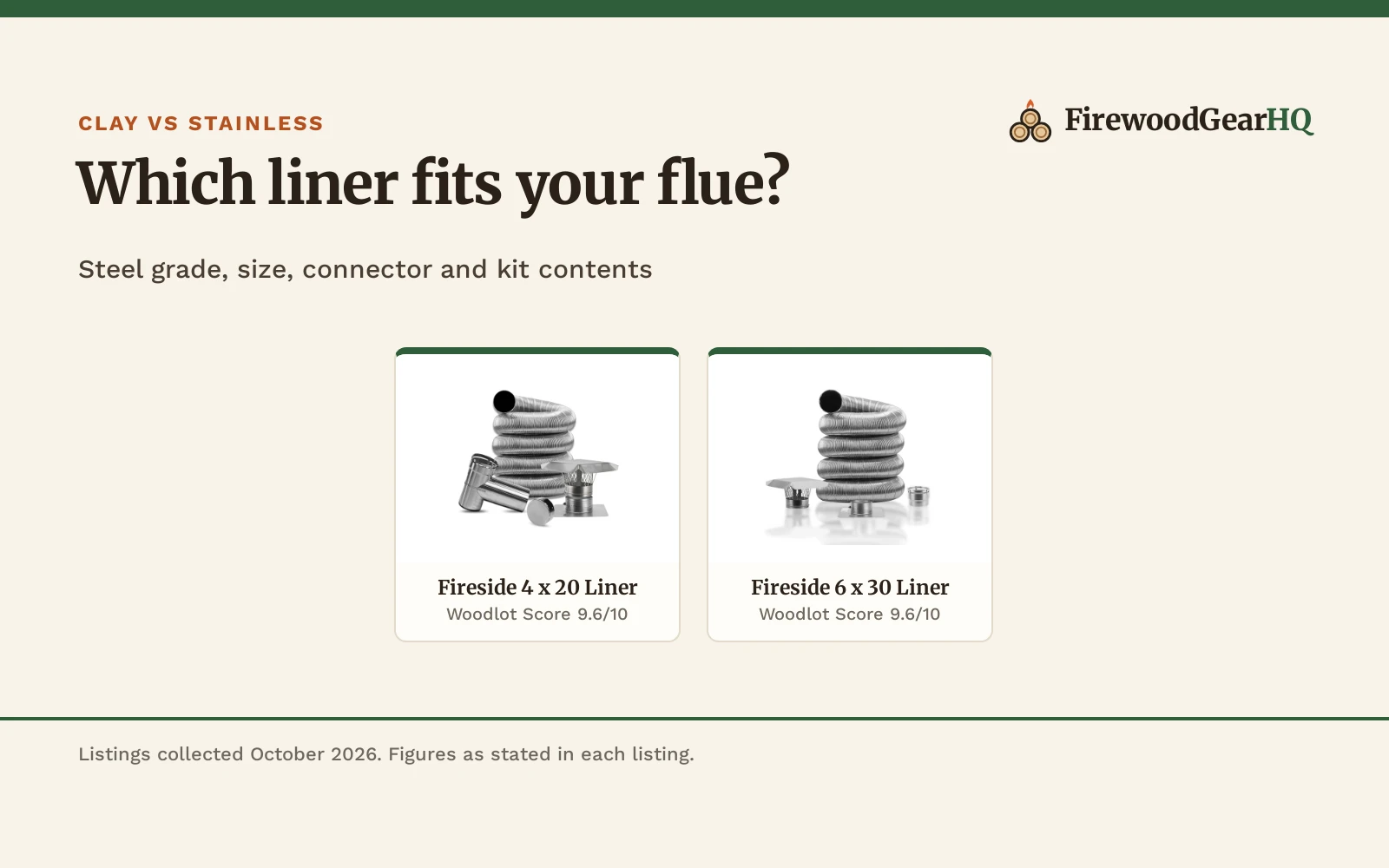
A complete kit holds the liner, a top plate with a rain cap, a tee connector and fasteners. Some kits add an insulation blanket kit with a blanket, spray adhesive, foil tape and clamps. The Fireside tee kit at 6 inches by 25 feet weighs 22.0 pounds, while a 6 inch by 35 foot kit weighs 100.0 pounds, so check the weight before moving one. A smooth-wall kit at 6 inches by 20 feet weighs 32.0 pounds, and a smooth-wall kit at 4 inches by 25 feet weighs 75.0 kilograms.
Rigid stainless steel liners
A rigid liner is a straight length of stainless steel pipe that drops into a straight flue. It suits chimneys with no offsets, and sections join to reach the height needed. Rigid liners share the stainless steel construction of flexible liners, and the same care applies: match the diameter to the appliance and the flue, and have a certified chimney professional check the fit before ordering.
Clay tile liners
Clay tile liners are the lining built into a masonry chimney when it is constructed, with one tile stacked on the next up the flue. Tile handles heat and lasts as long as the chimney stays sound, but a cracked or missing tile leaves the flue unlined, and the fix is a new liner inside the old flue. A certified chimney professional inspects tile with a camera and reports cracks, gaps or missing sections.
Cast-in-place liners
A cast-in-place liner is a cement mixture pumped or poured inside an existing masonry flue, where it hardens into a new lining. It fills gaps and cracks in an old flue and shapes itself to the chimney. The work is done by a certified chimney professional, and the chimney stays out of use while the lining sets.
Aluminum liners
Aluminum liners are light, flexible liners made for gas appliances. They suit gas furnaces, boilers and water heaters, and they are not for wood stoves or fireplaces, where flue gas runs hotter and carries creosote. A liner made for gas must never be used on a wood-burning appliance.
Sizing a liner
Diameter and length come from the appliance and the chimney. Liner kits in the listings run from 3 to 7 inches in diameter and from 15 to 35 feet long, so measure the flue and the appliance outlet and pick a kit that matches both. A liner that is too narrow chokes draft, and one that is too wide lets flue gas cool and slow. The appliance manual states the outlet size, and a certified chimney professional measures the flue and confirms the size before ordering.
Insulation, draft and listings
Insulation wraps the liner and keeps flue gas warm, which helps draft and reduces creosote accumulation. One Rockford kit adds an insulation blanket kit with a blanket, spray adhesive, foil tape and clamps, and the maker recommends insulation to help increase draft and reduce creosote. Look for a UL1777 listing in the USA and ULCS635 in Canada on stainless steel liners, and a warranty that transfers to the next homeowner on the Rockford kits.
When a liner needs attention
Have the chimney inspected annually by a certified chimney professional, and burn seasoned wood only. Smoke and carbon monoxide alarms belong in the home, and a liner that shows rust, gaps or a loose top plate needs a professional look before the next fire. Keep the rain cap in place so rain stays out of the flue, and sweep the chimney on the schedule the professional sets.
FAQ: wood, fire and gear
What is a chimney liner?
A chimney liner is the sleeve inside a chimney that carries smoke and flue gas from a stove or fireplace to the top of the stack. It protects the masonry, steadies draft and keeps flue gas from leaking into the house.
Do wood stoves need a chimney liner?
A wood stove venting into a masonry chimney needs a sound liner that matches the stove outlet and the flue. An unlined masonry flue, or a flue with cracked tile, should be inspected by a certified chimney professional before the stove is used.
What size chimney liner do I need?
Match the liner diameter to the appliance outlet and the flue. Kits in the listings run from 3 to 7 inches in diameter and from 15 to 35 feet long. A certified chimney professional measures both and confirms the size.
Can a flexible liner go in any chimney?
No. Flexible liners are only for use inside a masonry chimney. A straight metal chimney or a prefab fireplace takes a different venting part, so check the appliance manual and ask a certified chimney professional.
How long does a stainless steel chimney liner last?
A stainless steel liner lasts as long as it stays sound and dry, and its life depends on the fuel, the draft and the care it gets. Annual inspection catches rust, gaps and loose joints before they become a problem, and a liner that shows damage needs a professional look.
What is the difference between a chimney cap and a chimney liner?
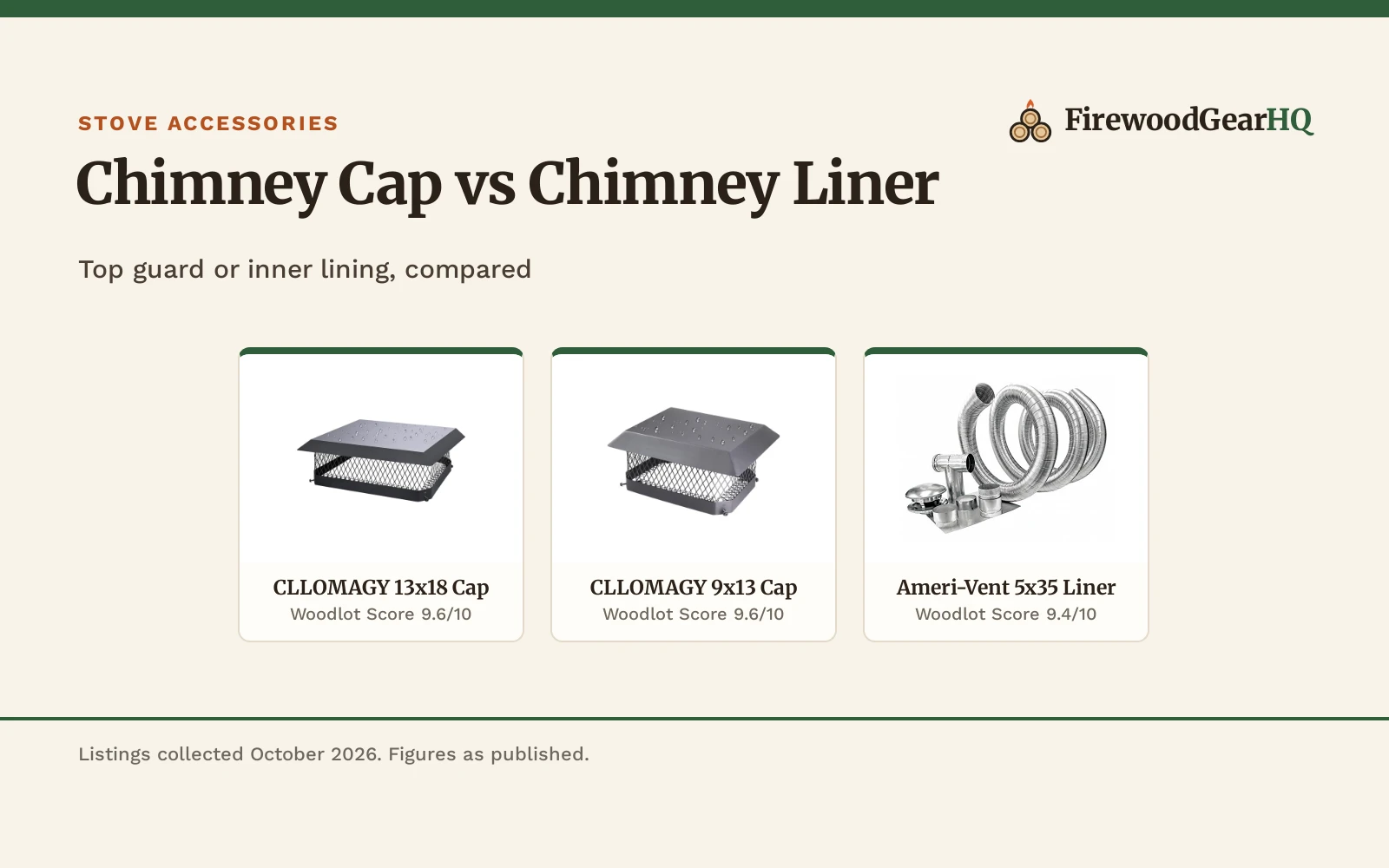
A cap sits on top of the chimney and keeps rain and animals out, while a liner runs inside the flue and carries smoke up. Many liner kits include a top plate with a rain cap, so the two parts work together. See the chimney cap vs chimney liner comparison.
More firewood guides
See the stove accessories guides and all wood stove guides. Compare caps in the types of chimney caps guide, and keep the flue clean with the poly vs wire chimney brush comparison. If a stove is on the list, see the best wood stoves and the best chimney brush for a metal chimney.