Best Stove Glass Cleaner (2026): 5 Cleaners Compared
Five stove glass cleaners compared by formula type, volume, creosote removal, surface safety, and what each listing publishes on warranty terms.
 By FirewoodGearHQ Editorial
Updated October 9, 2026
By FirewoodGearHQ Editorial
Updated October 9, 2026
Finding the best stove glass cleaner means matching the cleaning formula to the type of buildup on your stove door. For heavy soot and creosote on wood or pellet stoves, a dedicated hearth cleaner with conditioning agents or micro-scrubbers dissolves baked-on deposits without scratching ceramic glass. For daily maintenance on smooth cooktops, a streak-free spray or non-abrasive cream keeps glass clear between deeper burn cycles.
FirewoodGearHQ earns a commission when you buy through links on this page, at no extra cost to you. Affiliate disclosure.
Quick picks
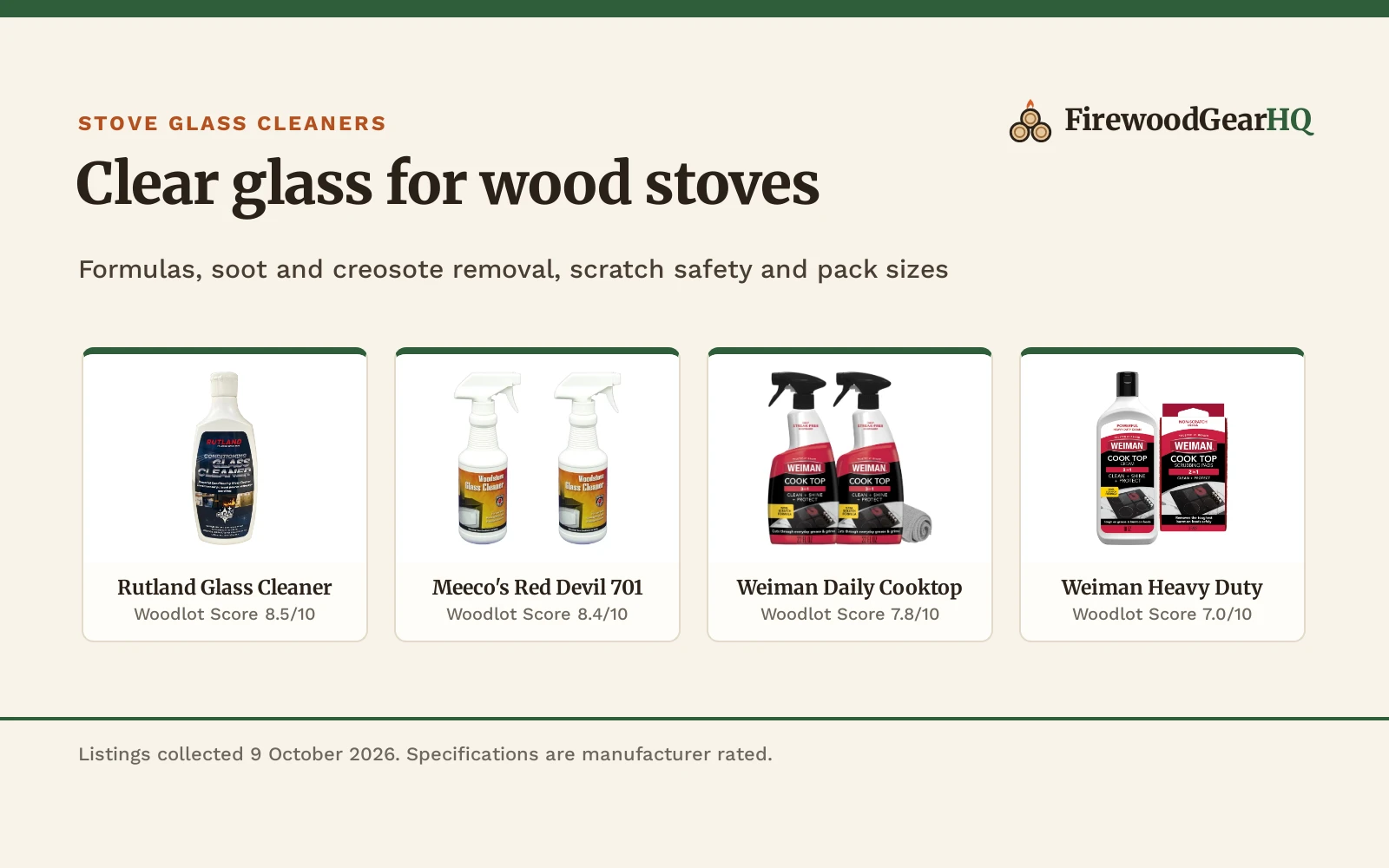
- Best Overall Rutland Glass Cleaner: Dedicated hearth formula with micro-scrubbers for soot and creosote, a silicone conditioning coat, and a 12-month warranty. Check price
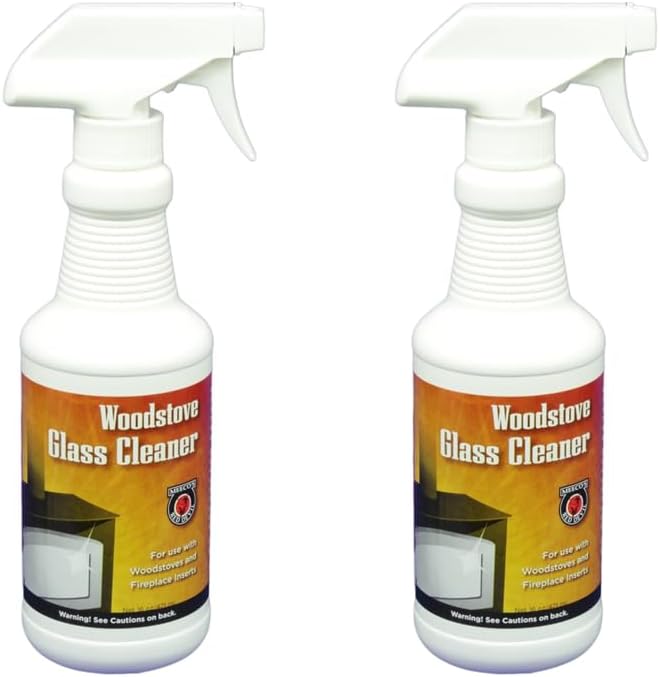
- Best Hearth Spray Meeco’s Red Devil 701: Two 16 fl oz trigger spray bottles formulated to cut baked-on creosote, soot, and smoke on wood and pellet stoves. Check price
- Best Daily Spray Weiman Daily Cooktop: Two 22 fl oz spray bottles bundled with a microfiber cloth for streak-free daily wiping and light maintenance. Check price
- Best Scrubbing Kit Weiman Heavy Duty: A 10 oz cleaning cream bundled with three non-abrasive scrubbing pads to lift stubborn burned-on residue. Check price
- Best Polish Gel Weiman Cooktop Polish: A 10 oz bottle of glass polishing gel formulated with sodium bicarbonate to clean and shine smooth glass surfaces. Check price
Compare the picks
| Model | Woodlot Score | Format | Volume | Included | Stated Target | Warranty |
|---|---|---|---|---|---|---|
| Rutland Glass Cleaner | 8.5/10 | Conditioning liquid | 8 fl oz | 8 fl oz bottle | Wood and gas stove glass | 12 months |
| Meeco’s Red Devil 701 | 8.4/10 | Trigger spray | 2 x 16 fl oz | 2 spray bottles | Wood, pellet, coal stove glass | Not stated |
| Weiman Daily Cooktop | 7.8/10 | Liquid spray | 2 x 22 fl oz | 2 spray bottles, microfiber cloth | Cooktops, stovetop, glass | Not stated |
| Weiman Heavy Duty | 7.0/10 | Cream | 10 fl oz | 1 bottle, 3 scrubbing pads | Cooktops, glass, stove | Not stated |
| Weiman Cooktop Polish | 6.3/10 | Gel | 10 fl oz | 1 bottle | Cooktops, glass, stove | Not stated |
Specifications are manufacturer rated, collected 9 October 2026. Only one listing states a concrete warranty term with a duration, and none names an independent third-party safety certification, so all five score zero for safety and most score zero for warranty.
The picks
| Award | Product | Woodlot Score About the HQ ScoreThe Woodlot Score runs from 0 to 10 and weighs performance (35%), build (25%), value (25%), safety (10%, where it applies) and warranty (5%), using only what the manufacturer and the listing publish. How we pick › | |
|---|---|---|---|
 Rutland Fireplace Glass Cleaner for Gas & Wood
|
8.5/10 | Buy | |
 MEECO'S RED DEVIL 701 Wood Stove Glass Cleaner
|
8.4/10 | Buy | |
 Weiman Daily Cooktop Cleaner & Degreaser
|
7.8/10 | Buy | |
 Weiman Heavy Duty Glass & Ceramic Cooktop Cleaner
|
7.0/10 | Buy | |
 Weiman Cooktop Cleaner & Polish Heavy Duty Stove
|
6.3/10 | Buy |
Rutland Fireplace Glass Cleaner for Gas & Wood
A dedicated hearth and glass conditioning cleaner in an 8 oz bottle, formulated with micro-scrubbers and silicone to clean soot and creosote from wood stove and fireplace glass.
Pros
- Formulated specifically for wood and gas stove glass, soot, and creosote buildup
- Micro scrubbers clean ceramic glass without scratching
- Leaves a silicone conditioning coat to make future cleaning easier
- Spec table states a concrete 12-month warranty
Cons
- Single 8 oz bottle provides less total volume than multi-pack alternatives
- Listing specifies unisex-adult department rather than detailed safety certifications
- Item form is listed as fluid ounce rather than naming liquid or paste
- Concentrated formula requires buffing rather than a quick spray-and-wipe
MEECO'S RED DEVIL 701 Wood Stove Glass Cleaner
A 2-pack of 16 fl oz trigger spray cleaners manufactured in the USA, formulated specifically to dissolve baked-on creosote, soot, and smoke on wood, pellet, and coal stove glass.
Pros
- Designed specifically to remove baked-on creosote, smoke, and soot from wood and pellet stoves
- Two-pack provides two 16 fl oz trigger spray bottles for 32 fl oz total
- Non-abrasive industrial-strength formula will not scratch glass
- Made in the USA by a manufacturer founded in 1937
Cons
- Listing explicitly notes it is not recommended for gas stove glass
- No warranty term is stated
- Listing provides no independent safety certifications
- Trigger spray may run down vertical door glass if applied heavily
Weiman Daily Cooktop Cleaner & Degreaser
A 2-pack of 22 fl oz spray bottles bundled with a microfiber cloth, designed for daily cleaning and degreasing of smooth glass and ceramic surfaces.
Pros
- Two 22 fl oz spray bottles provide 44 fl oz total volume
- Includes a soft microfiber cloth for wiping and buffing
- Non-abrasive streak-free formula requires no rinsing
- Listing notes recognition from a 2026 Good Housekeeping Award
Cons
- Formulated for cooktop grease rather than heavy wood stove creosote
- No warranty term is stated
- Bullets state sodium hydroxide while spec table lists sodium bicarbonate
- Listing provides no independent safety certifications
Weiman Heavy Duty Glass & Ceramic Cooktop Cleaner
A 10 oz cooktop cleaning cream bundled with 3 non-abrasive scrubbing pads, using micro-bead technology to lift burned-on residue from glass and ceramic surfaces.
Pros
- Includes 3 non-abrasive scrubbing pads alongside the cleaning cream
- Micro-bead cream formula targets burned-on residue without scratching
- Listing states it leaves a streak-free protective shine
- Formulated for glass, ceramic, and gas cooktops
Cons
- Major listing contradiction: title states 10 oz while spec table lists 0.34 fluid ounces and 1 ounce
- No warranty term is stated
- Scent is listed as High Shine while material features state Fragrance Free
- Designed for kitchen ranges rather than wood stove soot and creosote
Weiman Cooktop Cleaner & Polish Heavy Duty Stove
A 10 oz bottle of glass cooktop cleaner and polish gel formulated with sodium bicarbonate to remove burned residue and restore shine on smooth glass ranges.
Pros
- 10 oz bottle of gel cleaner and polish for smooth glass surfaces
- Uses sodium bicarbonate in a non-scratch polishing formula
- Spec table notes the formula is safe around vegetation
- Eco-friendly material designation in the listing specifications
Cons
- Brand and manufacturer are listed as Cleaning rather than Weiman
- No warranty term is stated
- Does not include scrubbing pads, towels, or applicators
- Listing is aimed at kitchen ranges rather than wood stove creosote
How we scored them
Each cleaner is scored out of 100 on performance, build, value, safety and warranty, using only what the listing publishes. The weights are on our How We Pick page.
| Product | Woodlot Score | Perf. /35 | Build /25 | Value /25 | Safety /10 | Warranty /5 |
|---|---|---|---|---|---|---|
| Rutland Glass Cleaner | 8.5 | 32 | 21 | 20 | n/a | 4 |
| Meeco’s Red Devil 701 | 8.4 | 30 | 22 | 22 | n/a | 0 |
| Weiman Daily Cooktop | 7.8 | 27 | 21 | 22 | n/a | 0 |
| Weiman Heavy Duty | 7.0 | 26 | 18 | 20 | n/a | 0 |
| Weiman Cooktop Polish | 6.3 | 23 | 16 | 18 | n/a | 0 |
Scores run from 0 to 10. Safety counts only for powered gear or where the listing states safety features; where it does not apply, the score is taken over the remaining 90 points.
Buying guide: choosing the best stove glass cleaner
Dedicated hearth cleaners versus cooktop formulas
Wood stove glass faces intense heat, carbon soot, and baked-on creosote from burning wood logs. Dedicated hearth cleaners, such as Rutland and Meeco’s Red Devil, are formulated specifically to break down creosote and smoke on wood, pellet, and coal stove glass. Household cooktop cleaners, such as Weiman daily spray or heavy duty cream, target kitchen grease and food splatters. While cooktop creams polish smooth glass surfaces, heavy creosote requires conditioning agents or active solvents designed for wood fires. Always verify whether a formula is suitable for wood stoves or limited to gas or kitchen ranges.
Sprays, creams, and gels
Stove glass cleaners come in multiple formats. Trigger sprays allow rapid application across wide doors, but thin liquids can drip down vertical glass onto door gaskets or hearth pads if applied too heavily. Cleaning creams and gels offer thicker consistency that stays in place on stubborn baked-on haze, allowing active ingredients to penetrate the carbon before wiping. Some formulas, like Rutland, include silicone conditioning agents intended to leave a protective film that makes future soot easier to wipe away.
Surface safety on ceramic glass
Most modern wood stoves use ceramic glass engineered to withstand high temperatures rather than standard window glass. Never use steel wool, razor blades, or harsh scouring powders that can scratch ceramic glass, as surface scratches create weak points under thermal stress. The listings evaluated here emphasize non-abrasive formulas or micro-bead technology to lift deposits without scratching. When using pads or cloths, choose soft microfiber towels or non-scratch pads approved by the maker.
Volume, pack sizes, and accessories
Consider how often you clean your stove when evaluating bottle sizes and bundle packages. Multi-packs provide higher total volume for active heating seasons: Meeco’s Red Devil offers two 16 fl oz bottles for 32 fl oz total, while Weiman Daily provides two 22 fl oz bottles for 44 fl oz. Single bottles, like Rutland’s 8 fl oz container or Weiman’s 10 oz bottles, suit occasional cleaning or end-of-season maintenance. Bundled accessories such as scrubbing pads or microfiber towels save you from purchasing separate cleaning supplies.
Preventing creosote and maintaining stove safety
Frequent glass cleaning is often a symptom of incomplete combustion inside the firebox. If you wonder why wood stove glass turns black, burning unseasoned firewood or restricting combustion air too early are common causes. Checking fuel with a firewood moisture meter and burning seasoned split logs selected from our best wood for a wood stove guide helps keep the firebox hot and glass clear. Operating within proper temperature ranges monitored by a stove thermometer reduces creosote formation. For overall firebox maintenance and inspection routines, follow our wood stove safety checklist before cleaning stove doors. Always make sure the glass is completely cool to the touch before applying any liquid or cream cleaner.
Wear eye protection and gloves for cutting, splitting and handling, follow every tool's manual, install stoves to code, and have the chimney inspected and cleaned every year. See EPA Burn Wise and NFPA heating safety. Read our Safety Disclaimer.
Frequently Asked Questions
Can I use regular glass cleaner on wood stove glass?
No. Standard household glass cleaners contain ammonia and other chemicals that are not formulated for baked-on wood smoke or creosote. Ammonia fumes can be unpleasant around a firebox, and regular window sprays lack the grease-cutting solvents or micro-abrasives needed to dissolve tough carbon deposits on ceramic stove glass.
Should I clean wood stove glass while it is hot?
Never apply cleaner to hot stove glass. Spraying cool liquid or applying damp cream onto hot ceramic glass creates thermal shock that can crack or shatter the door pane. Cleaners can also bake onto the surface or release irritating vapors. Always wait until the stove and glass are completely cold to the touch.
Does wood stove glass cleaner expire?
Most liquid and cream cleaners maintain stability for several years when stored in a cool, dry place with caps tightly sealed. Creams and gels can separate or dry out over time if left unsealed, so shaking the bottle thoroughly before each use helps restore proper consistency.
Can I use wood ash to clean stove glass?
Dipping a damp paper towel or newspaper into fine, cool wood ash is a traditional cleaning technique. The fine ash acts as a mild abrasive that lifts soot. However, avoid coarse ash particles or embers that could scratch the glass, and follow up with a damp cloth to remove any remaining residue.
Why does my stove glass get dirty so quickly?
Glass darkens rapidly when wood smolders at low temperatures or when fuel has high moisture content. Burning seasoned firewood with low moisture and allowing enough combustion air keeps firebox temperatures high, activating the stove’s air-wash system to sweep soot away from the door glass.
Related guides
Explore our complete stove accessories hub for hearth care tools and upgrades. Review our wood stove safety checklist for seasonal maintenance schedules, and read our guide explaining why wood stove glass turns black. To monitor combustion temperatures and keep glass clean, see the best stove thermometers and our guide to the best wood for a wood stove. For ash cleanout after seasonal fires, see how to dispose of wood stove ashes safely, explore the best ash vacuums for wood stoves, and compare airflow options in our best wood stove fan roundup. For new stove options, browse our wood stoves category.
About the author
The FirewoodGearHQ editorial team researches firewood and wood heating equipment from published specifications, ratings and warranty terms, and scores every pick the same way. We do not run our own product trials.