What Does EPA Certified Wood Stove Mean: Standards and Clean Burning Guide
What an EPA certified wood stove means for clean combustion, how federal emissions standards work, and how to verify certification labels on residential heaters.
 By FirewoodGearHQ Editorial
Updated October 9, 2026
By FirewoodGearHQ Editorial
Updated October 9, 2026
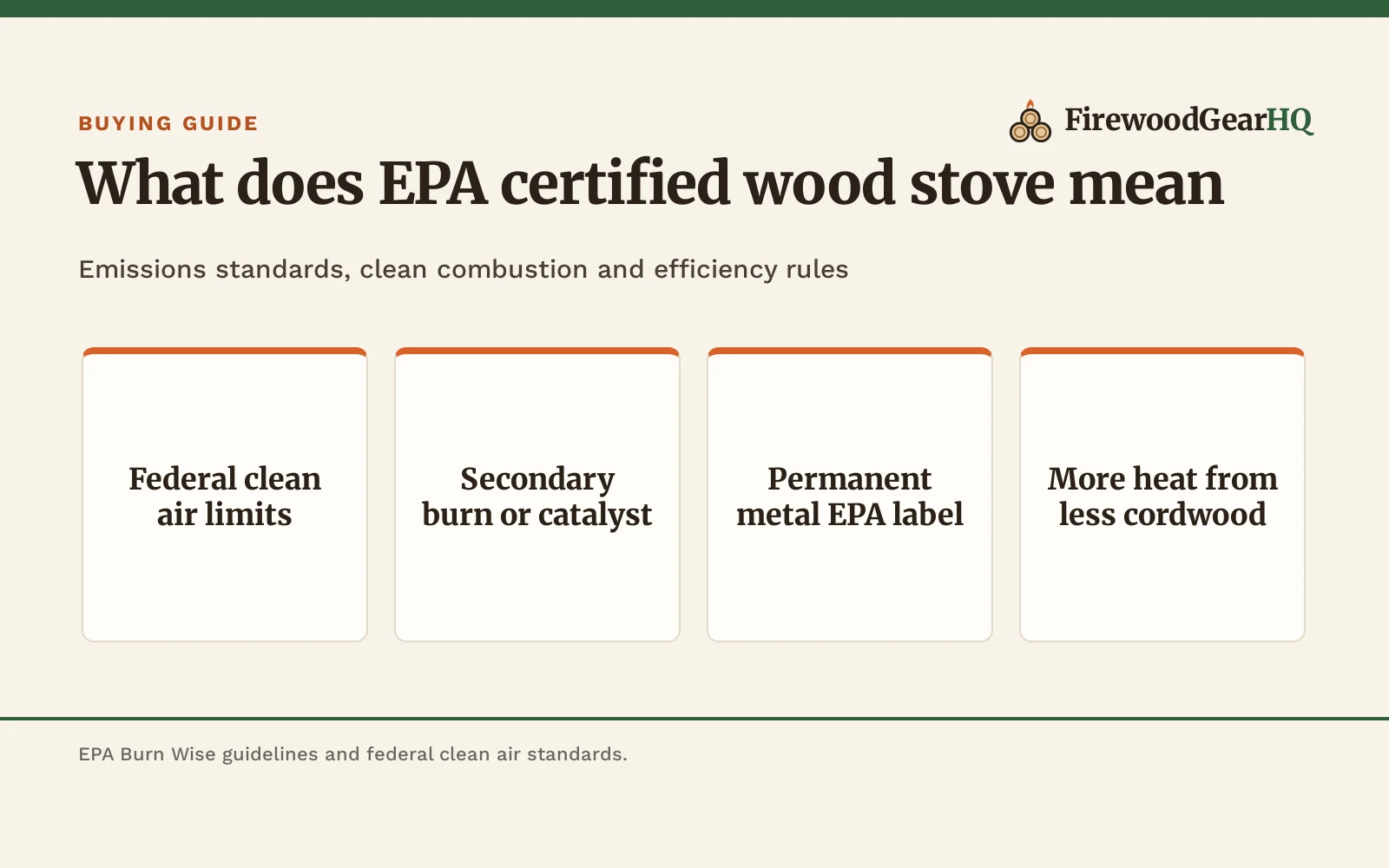
An EPA certified wood stove is a residential wood heater that meets mandatory clean air standards set by the U.S. Environmental Protection Agency. To earn certification, the stove must limit particulate smoke emissions to strict federal levels during independent laboratory evaluation before it can be legally sold. For homeowners asking what does EPA certified wood stove mean, it represents an airtight, high-efficiency appliance engineered to burn firewood cleanly, deliver more usable room heat, and reduce creosote buildup compared to older, uncertified heaters.
FirewoodGearHQ earns a commission when you buy through links on our product pages, at no extra cost to you. Read our affiliate disclosure.
What does EPA certified wood stove mean?
Wood smoke is not just water vapor; it contains unburned gases, organic vapors, and tiny solid particles. When wood burns incompletely at low firebox temperatures, these compounds escape up the chimney flue as visible smoke. The Environmental Protection Agency regulates residential wood heaters under the Clean Air Act New Source Performance Standards to control this particulate discharge.
Under the EPA 2020 wood stove standard, all newly manufactured residential wood heaters sold in the United States must comply with strict particulate emission limits. Achieving this level of clean combustion requires modern engineering. Unlike old conventional stoves that allowed smoky exhaust to vent directly into the atmosphere, a certified stove re-burns the smoke gases inside the firebox. This secondary combustion process extracts extra heat from the firewood while reducing the particulate matter exiting the flue pipe.
EPA certified wood stove designs compared
| Stove design | Combustion method | Operating characteristics |
|---|---|---|
| Non-catalytic | Secondary air tubes and insulated baffles ignite smoke gases | Straightforward operation, relies on hot fires to burn cleanly |
| Catalytic | Ceramic or metallic honeycomb combustor lowers smoke ignition point | Maintains clean, steady heat on low, extended overnight burns |
| Hybrid | Combines secondary air injection tubes with a catalytic combustor | Burns cleanly across wide heat output ranges and variable draft |
| Pellet | Automated auger feeds compressed wood fuel with mechanical draft | Continuous, steady heat with regulated airflow and low smoke |
Manufacturers use distinct engineering approaches to satisfy federal emissions criteria:
Non-catalytic combustion
Non-catalytic stoves dominate the residential market due to mechanical simplicity. These stoves feature perforated stainless steel tubes positioned across the top of the firebox beneath an insulated ceramic baffle. As fire heats the combustion chamber, preheated secondary air feeds through the tubes directly into the rising smoke. The fresh oxygen ignites the combustible gases, creating rolling secondary flames without requiring internal moving parts or catalytic elements.
Catalytic combustion
Catalytic stoves channel smoky exhaust through a coated ceramic or metal honeycomb combustor located above the primary firebed. The chemical catalyst reduces the temperature at which smoke gases ignite, allowing unburned vapors to combust even during low, smoldering fires. This makes catalytic heaters popular for homeowners seeking long, steady heat output through cold nights.
Hybrid combustion
Hybrid wood stoves integrate both technologies into a single firebox. Secondary burn tubes consume the bulk of volatile gases during active flaming, while a catalytic combustor cleans the exhaust stream during low-draft settings. This dual system provides versatile heat management across shifting outdoor conditions.
How to verify a wood stove is EPA certified
Never rely on marketing descriptions alone when checking certification. Confirm compliance through these verifiable indicators:
- Permanent metal label: look for a riveted metal plate on the back or side of the stove. The plate lists the EPA compliance statement, model name, manufacturer, and emissions rating.
- EPA hangtag: new stoves on showroom floors display a temporary paper hangtag showing the certified smoke output and efficiency range.
- EPA Burn Wise database: search the official EPA Burn Wise directory of certified wood heaters to verify that the exact model is currently listed.
- Safety listing label: confirm the unit carries a safety certification mark from an accredited laboratory indicating compliance with UL solid-fuel room heater safety standards.
- Owner documentation: review the manual for the official EPA compliance certification and required operating practices.
Key benefits of an EPA certified wood stove
Upgrading to an EPA certified stove provides direct practical benefits for everyday home heating:
Better fuel economy: by burning smoke gases rather than venting them up the flue, a certified stove extracts more heat energy from every cord of wood. You burn less firewood each winter to achieve the same indoor comfort.
Reduced creosote accumulation: creosote forms when unburned smoke vapors cool and condense inside the chimney. Cleaner combustion leaves fewer sticky residues on flue walls, lowering chimney fire hazards. To keep operating temperatures in the ideal combustion range, monitor the flue pipe with the best stove thermometer.
Code and insurance approval: modern building codes frequently mandate EPA certification for solid-fuel room heaters. Installing an uncertified unit can complicate homeowner insurance policies or violate local zoning laws. If you are planning an indoor heating upgrade, compare freestanding models in our guide to the best wood stove for heating a house.
Wood burning appliances exempt from EPA certification
Not every wood-burning appliance falls under residential EPA certification standards. Federal regulations exempt specific categories:
Traditional open fireplaces are exempt because their open hearths draw huge volumes of room air, preventing controlled secondary combustion. Dedicated wood cookstoves designed primarily for food preparation with an integrated oven and cooking surface are also excluded from standard heater rules.
Portable camping equipment, including lightweight tent heaters and outdoor camp stoves such as the Camp Chef Alpine or Green Stove Defender, are exempt because they are engineered strictly for temporary outdoor shelter rather than permanent home heating. Finally, vintage antique stoves built before federal emissions standards existed remain exempt from retail manufacturing laws, although local municipal ordinances may prohibit installing them.
Installation and wood stove safety
Proper stove operation begins with safe installation. Install strictly per manufacturer specifications and local building code requirements. Never undertake complex chimney pipe installations without professional guidance; hire a certified specialist. Maintain proper clearances to combustible walls and floors, install functional smoke and carbon monoxide alarms in adjacent living areas, schedule an annual chimney inspection with a certified sweep, and burn seasoned wood only. Keep track of seasonal maintenance routines with our wood stove safety checklist.
Install stoves and inserts to the manufacturer's instructions and your local code, usually by a certified installer with a permit and inspection. Keep the listed clearances to combustibles, run working smoke and carbon monoxide detectors, have the chimney inspected and cleaned every year to prevent creosote fires, burn only seasoned wood, and check local burn rules. See EPA Burn Wise, NFPA heating safety, CPSC carbon monoxide guidance and the Chimney Safety Institute of America (CSIA). Read our Safety Disclaimer.
Frequently Asked Questions
How do I know if my existing wood stove is EPA certified?
Check the back and lower sides of the stove cabinet for a permanent metal plate riveted to the frame. The label will explicitly state compliance with EPA emissions standards alongside the model number and manufacturer. If the stove only carries a decorative brand badge without regulatory text, it is an older uncertified unit. You can also verify the model in the official EPA Burn Wise database.
What is the EPA 2020 wood stove standard?
The EPA 2020 wood stove standard is the federal regulation governing particulate emissions for newly manufactured residential wood heaters. Implemented to improve air quality, this standard lowered the allowable smoke emissions for newly sold stoves, requiring manufacturers to implement refined secondary air tubes, catalytic combustors, or hybrid designs to ensure cleaner burning.
Can I legally install an uncertified wood stove?
In most areas, local building codes and municipal clean air ordinances prohibit installing uncertified wood stoves in residential dwellings. Retailers cannot legally sell new uncertified stoves for home heating under federal rules. In addition, insurance companies often deny property coverage if an uncertified solid-fuel heater is installed. Always verify local municipal rules before choosing a stove.
Do EPA certified wood stoves require seasoned firewood?
Yes. EPA certified stoves require seasoned cordwood to maintain the high internal temperatures needed to ignite smoke gases. Burning green or damp firewood smothers secondary combustion flames, causes heavy soot deposits on catalytic elements, cools the chimney flue, and produces excess creosote. Verify firewood dryness before loading with the best firewood moisture meter.
Do EPA certified wood stoves produce creosote?
While certified stoves dramatically reduce creosote by burning combustible gases in the firebox, poor operating habits can still cause creosote. Burning wet wood, closing air dampers too early, or venting into an uninsulated flue leads to smoke condensation. Clean the chimney regularly with the best chimney sweep kit for wood stoves, and read our guide on what is creosote and how to prevent it.
What is the difference between catalytic and non-catalytic EPA stoves?
Non-catalytic stoves use stainless steel secondary air tubes and insulated baffles to burn smoke gases above the fire bed, requiring no combustor replacement and offering simple operation. Catalytic stoves route smoke through a honeycomb combustor that ignites smoke at lower temperatures, delivering long, steady heat output. Both designs meet federal clean air certification criteria.
Related guides
Explore our complete hearth collection for more heating advice and wood preparation guides. Visit our wood stoves hub for sizing guidelines and setup essentials. If you are choosing a stove, learn how to choose a wood stove and calculate heating requirements with what size wood stove do I need. For daily operation, check how to start a fire in a wood stove, learn how to keep a wood stove burning all night, and improve heat circulation across your home with the best wood stove fan. If you are reviewing tax incentive rules, see our guide on the wood stove tax credit.
About the author
The FirewoodGearHQ editorial team researches firewood and wood heating equipment from published specifications, ratings and warranty terms, and scores every pick the same way. We do not run our own product trials.