How to Start a Fire in a Wood Stove: Step-by-Step Guide
How to start a fire in a wood stove using the top-down method, preheating the flue draft, arranging kindling, and managing airflow for clean heat without smoke.
 By FirewoodGearHQ Editorial
Updated October 9, 2026
By FirewoodGearHQ Editorial
Updated October 9, 2026
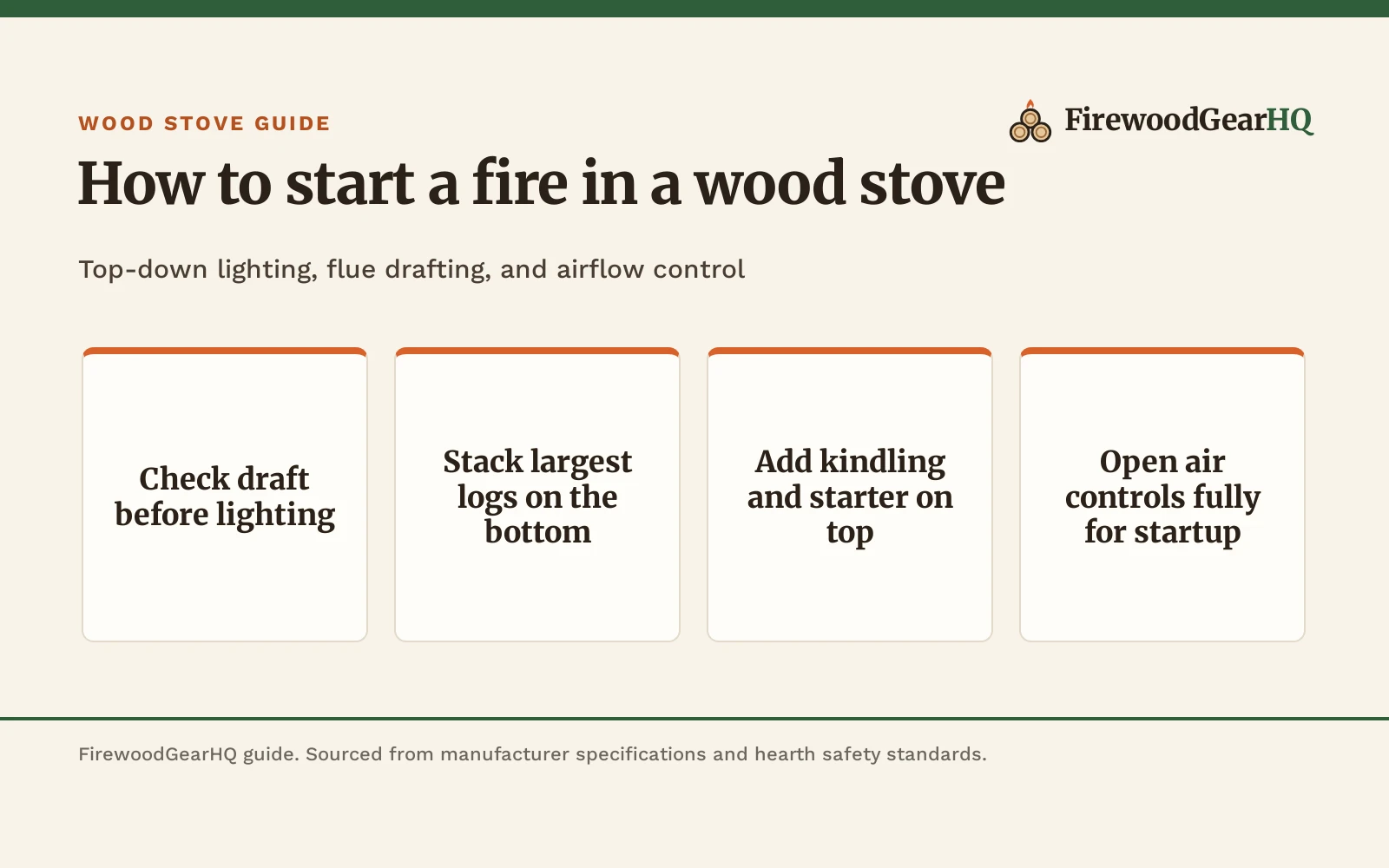
Learning how to start a fire in a wood stove cleanly relies on establishing an upward chimney draft and assembling fuel with the top-down method. Place large, seasoned split logs across the firebox floor, stack smaller kindling across the base wood, place a natural fire starter at the peak, and open primary combustion air controls fully before lighting. Igniting the top layer directs heat upward to warm the flue, burning downward through the woodpile with minimal smoke, clean glass, and steady heat output.
FirewoodGearHQ earns a commission when you buy through links on our product pages, at no extra cost to you. Read our affiliate disclosure.
The quick answer
Modern airtight wood stoves burn most cleanly when loaded from the bottom up and lit from the top down. Traditional fires light kindling beneath cold logs, which smothers early flames and produces heavy smoke. In contrast, top-down lighting places the largest fuel on the bottom and the smallest kindling on top. Lighting the top kindling warms the upper firebox and flue collar right away, drawing combustion air inward and establishing an upward draft as the fire burns downward into larger wood. Pair top-down loading with dry cordwood and fully open air intakes during startup for a reliable fire without smoky backdrafts.
How to start a fire in a wood stove
Follow these practical steps to build, draft, light, and manage a clean wood stove fire from a cold start.
Clear the firebox and open air controls
Inspect the firebox floor before loading fuel. A shallow layer of ash insulates hot coals, but deep piles block air inlets. If ash is piled high, remove the excess into a metal bucket or clean it using the best ash vacuum for wood stoves, following how to dispose of wood stove ashes safely. Open the bypass damper (if equipped) and slide all primary combustion air controls wide open.
Stack the large base logs
Place split logs flat along the firebox floor, oriented parallel with narrow air gaps between them. Always burn dry cordwood selected from our guide to the best wood for a wood stove, seasoned per our chart on how long to season firewood. Check split faces with a meter from our best firewood moisture meter guide before bringing firewood inside.
Add kindling across the fuel stack
Lay medium kindling perpendicular across the base logs, then arrange smaller split sticks in a crisscross grid on top. This open lattice provides air channels and a stable platform for the starter. Splitting kindling is straightforward with a dedicated tool from our best kindling splitter review.
Position the fire starter
Place a natural fire starter on top of the kindling bed. Commercial listings provide concrete figures for starter sizing and burn performance:
Billy Buckskin Co. specifies that its natural pine fatwood sticks measure around 8 inches long with a thickness ranging from 0.3 to 1.25 inches, stating an easy start with just 2 sticks or placing 2 to 3 sticks among kindling. Pure Garden lists that its resin fire sticks ignite a fire using 2 to 3 sticks stacked beneath dry kindling. Vivlly also states that its resin-rich pine sticks light fast with 2 to 3 sticks placed with room for airflow. Sun Joe lists that its FATWOOD40 natural pine kindling sticks supply quick-lighting resin pine in a 40-pound package (640 Ounce). For options using wax binders or pre-cut formats, HGD specifies that its natural pine shavings and wax starters burn for about 6 minutes even in damp conditions. MELTIX lists that its individual sawdust and wax cubes provide up to 10 minutes of burn time. Realcook states that its tumbleweed starters deliver a burning time of 8 to 10 minutes. WABUPD lists that its natural pine wood starters provide sustained auxiliary heat for 8 to 12 minutes while requiring storage temperatures below 45°C.
Check the draft and light from the top
Before lighting, verify flue draft direction. Cold chimneys, especially exterior masonry flues, can hold a heavy column of sinking air that pushes smoke into the room when the door opens, as detailed in our guide on why does my wood stove smoke when I open the door. If cold air is sinking downward, hold a lit match or small flame near the upper baffle plate inside the firebox for a moment to warm the flue and initiate upward draft. Once draft moves upward, ignite the fire starter at the top of the kindling stack.
Regulate draft and latch the stove door
Close and latch the stove door promptly after lighting. If draft is sluggish on startup, the door may remain cracked open a small fraction for a brief moment to feed fresh air to the kindling, but never leave an unlatched stove unattended. Keep primary air controls wide open while flames spread into the main split logs. Monitor flue and surface heat using a gauge from our best wood stove thermometer or best stove thermometer guide. Once operating heat stabilizes and a glowing coal bed forms, close the bypass damper to engage secondary combustion, and adjust primary air controls downward for an even, efficient burn. To circulate warm air into living spaces without power cords, place the best wood stove fan on the stove top, chosen from our stove accessories hub.
Fire starter specifications and burn times
The table below compares published figures from manufacturer listings for natural fatwood sticks and packaged starters:
| Brand | Starter type and material | Stated ignition or burn time | Package size or weight |
|---|---|---|---|
| Billy Buckskin Co. | Fatwood pine sticks (around 8 inches long, 0.3 to 1.25 inches thick) | Easy start with 2 sticks; 2 to 3 sticks per fire | 50 pounds (50 Count) |
| Pure Garden | All-natural pine wood sticks | Lights quickly with 2 to 3 sticks | 25 lbs (11.14 kg) |
| Vivlly | Resin-rich fatwood pine sticks | Lights fast with 2 to 3 sticks | 10 pounds |
| Sun Joe | FATWOOD40 natural pine kindling sticks | Quick-lighting resin pine | 40 pounds (640 Ounce) |
| HGD | Pine wood shavings and wax squares | Burns for about 6 minutes | 32 Count or 64 Count |
| WABUPD | Pine wood starter cubes and sticks | Sustained auxiliary heat for 8 to 12 minutes (store below 45°C) | 110 Count (2.3 pounds) |
| Realcook | Wax, sawdust, and hardwood tumbleweeds | Burns for 8 to 10 minutes | 72 Counts (1.43 pounds) |
| MELTIX | Compressed wood sawdust and wax cubes | Up to 10 minutes of burn time | 160 Count |
Natural fatwood sticks from Billy Buckskin Co., Pure Garden, Vivlly, and Sun Joe ignite via organic pine resin without synthetic additives. Packaged starters from makers like HGD, Realcook, and MELTIX blend wood fibers with wax binders, while WABUPD uses pure pine wood to sustain heat until adjacent kindling ignites.
Top-down fire vs bottom-up fire in a wood stove
Building a top down fire wood stove setup offers clear combustion advantages over bottom-up fires. In a bottom-up fire, kindling burns under heavy, cold logs. The flame is chilled by the wood above, producing unburned smoke that coats the chimney with creosote and creates dark soot on the door glass, as explained in why does my wood stove glass turn black.
The top-down fire wood stove method avoids this problem. Because flames burn on top, heat rises directly into the flue collar to establish positive draft immediately. As top kindling forms glowing coals, heat radiates down onto the base logs. Smoke rising from warming lower logs must pass through the active flame layer, burning off unburned gases for cleaner emissions and clear glass.
Essential wood stove safety and operation rules
Safe wood stove operation requires following manufacturer instructions, local building codes, and official hearth standards:
- Professional installation and clearances: Install wood stoves strictly according to manufacturer specifications and local building codes, observing required clearances to combustible walls and hearth pads. Never attempt installation yourself; hire an installer certified by the National Fireplace Institute (NFI) or the Chimney Safety Institute of America (CSIA).
- Annual chimney inspection: Schedule an annual inspection and sweeping with a certified CSIA professional to clear creosote deposits before each heating season.
- Smoke and carbon monoxide alarms: Maintain operational smoke alarms and carbon monoxide (CO) detectors on every level of the home and near bedrooms, following U.S. Consumer Product Safety Commission (CPSC) guidance.
- Burn seasoned firewood only: Follow U.S. EPA Burn Wise guidance by burning only clean, dry cordwood. Never burn trash, treated lumber, plastics, or glossy paper.
- Never use liquid accelerants: Never pour gasoline, lighter fluid, kerosene, or alcohol into a wood stove. Flammable liquids cause dangerous flash fires and stove damage.
- Maintain hearth clearances: Keep kindling boxes and rugs clear of the stove door. Store firewood indoors on an inside wood rack for firewood, and keep hearth tools organized using a fireplace tools set with wood rack.
- Federal tax credit update: The federal tax credit for wood and pellet stoves has expired and is no longer available. Explore stoves in our wood stoves guide and see blowers in our best wood burning stove with blower review.
Frequently Asked Questions
Why does a wood stove smoke when lighting a new fire?
A cold chimney flue contains heavy, sinking air that pushes smoke back into the room. Cold firewood or closed air dampers also cause smoking. Preheating the flue by holding a flame near the upper baffle plate reverses this cold draft before lighting the woodpile.
Should the wood stove door stay open when starting?
No, wood stoves are designed to operate with the door closed. While cracking the door a fraction of an inch can supply extra air during initial ignition, the door should be latched as soon as kindling catches so primary air dampers regulate combustion safely.
What is the top-down method for a wood stove?
The top-down method stacks large split logs at the bottom of the firebox, kindling in the middle, and a fire starter on top. Lighting the top warms the chimney right away, drawing smoke upward while the fire burns cleanly downward.
Can paper or cardboard be used to start a wood stove fire?
Small twists of plain newsprint can help warm the flue, but large amounts of paper or cardboard should be avoided. Burning paper creates fly-ash that clogs flue passages and dirts the glass. Natural fire starters and fatwood sticks burn cleaner and longer.
How much air should a wood stove get when starting?
Keep bypass dampers and all primary air controls fully open when lighting. Abundant oxygen helps the firebox reach clean operating temperature quickly. Once the stove reaches operating heat, close the bypass damper and adjust primary air controls downward for an even burn.
Related guides
Explore our complete hearth resources for reliable winter warmth. Browse our stove accessories collection and pick the best wood stove fan to circulate heat efficiently. Monitor burn temperatures with a reliable gauge from our best wood stove thermometer and best stove thermometer guides. For clean hearth maintenance, choose the best ash vacuum for wood stoves and learn how to dispose of wood stove ashes safely. Troubleshoot drafting and soot issues with our guides on why does my wood stove smoke when I open the door and why does my wood stove glass turn black. Stock the right firewood by consulting the best wood for a wood stove, tracking drying schedules with how long to season firewood, and checking moisture with the best firewood moisture meter. Prepare kindling quickly using the best kindling splitter, store cordwood indoors using an inside wood rack for firewood, and keep tools within reach with a fireplace tools set with wood rack. Finally, review our comprehensive ratings on freestanding wood stoves and forced-air circulation in our best wood burning stove with blower review.
About the author
The FirewoodGearHQ editorial team researches firewood and wood heating equipment from published specifications, ratings and warranty terms, and scores every pick the same way. We do not run our own product trials.