Wood Stove Pipe Temperature: What Readings Mean
Wood stove pipe temperature readings show whether a burn is running cool, in its working range or too hot, and a thermometer on the flue pipe makes that reading easy to check at a glance.

On this page
Top picks at a glance
As an Amazon Associate I earn from qualifying purchases.
- 1
 DuraVent DuraPlus 6" Diameter 24" Length DuraVent DuraPlus9.8/10View on Amazon
- 2
 Guide Gear Outdoor Wood Stove Pipe Extension Accessories9.2/10View on Amazon
- 3
 Rutland EZ Spread Wood Stove Gasket Cement9.5/10View on Amazon
By midwinter the stove is the center of the house, loaded morning and night, and the pipe above it carries every burn up the flue. A thermometer on that pipe gives a reading you can see from across the room, and wood stove pipe temperature is the reading that tells you whether the fire is running cool, steady or too hot. This guide explains what the dial shows, what the color zones mean and how to use the reading through a burn.
FirewoodGearHQ earns a small commission if you buy through links on this page. The price you pay stays the same. Read our affiliate disclosure.
The quick answer
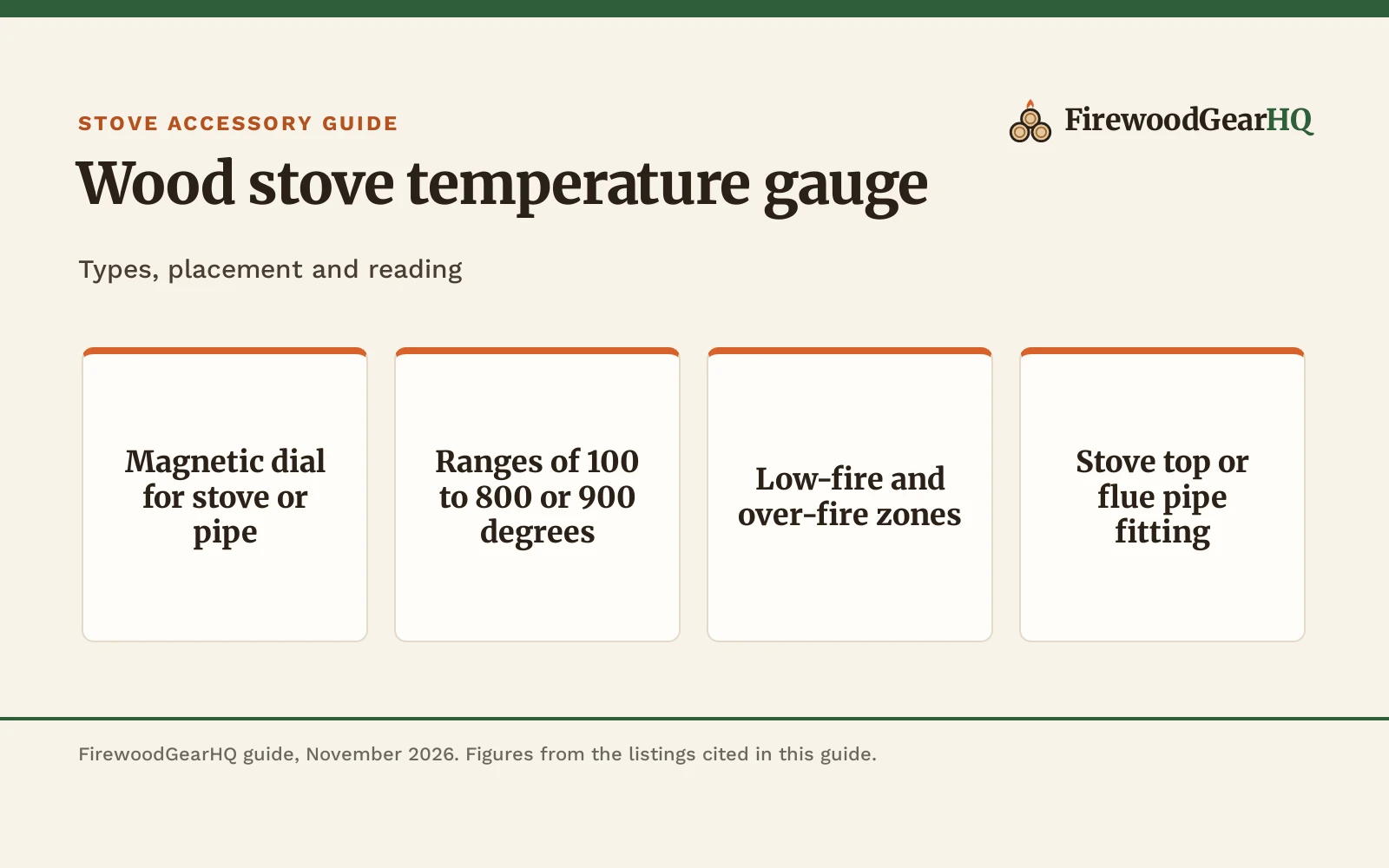
A wood stove pipe temperature reading comes from a thermometer on the flue pipe, and the dial shows where the burn sits at a glance. Magnetic dials sold for this job read from 100 to 800 or 100 to 900 degrees Fahrenheit, depending on the model, and a probe model made for double wall pipe reads up to 1700 degrees Fahrenheit. A reading in the low-fire zone points to a cool burn that builds creosote, and a reading in the over-fire zone points to wasted fuel and heat, so the middle of the dial is where the burn belongs.
Wood stove pipe temperature: what the dial shows
The dial on a stove pipe thermometer is a simple gauge with a needle and marked zones. Most magnetic models use a large dial, and the Frienda 1-piece and 2-piece dials measure 3.35 inches across. The dial shows the temperature as a number, and models with color zones add a second way to read it at a glance. A probe model reads internal flue temperatures rather than the surface of the pipe.
Magnetic dials and probe thermometers
Two kinds of thermometer cover the two kinds of pipe. A magnetic dial sticks to the surface of a single wall flue pipe, and the Rutland burn indicator is made for single wall stove pipes. The Frienda and Copkim magnetic (on Amazon) models carry a magnetic back for the stove top or side and an extra hook for a single wall flue pipe. Direct attachment to grilles should be avoided, as the maker states.
A probe thermometer suits a double wall pipe, where a surface magnet cannot read the flue gas inside. The Kingdder probe (on Amazon) model carries a 4 inch probe that reaches into the double wall flue, and it reads up to 1700 degrees Fahrenheit. Follow the maker manual and local code for the fit.
What the color zones mean
The color zones on the dial turn a number into a judgment. The low-fire zone sits at the cool end of the dial, and the Rutland gauge states that it indicates excessive creosote buildup, the deposit that coats a cool flue. The middle zone is the working range, between the creosote risk at the cool end and the wasted heat at the hot end. The over-fire zone sits at the hot end, and the Rutland gauge states that it indicates wasted fuel and heat, while the Frienda gauges warn of overheat damage.
Read the zone, not just the number. A needle that settles in the working range means the fire is burning as it should, while a needle in the low-fire or over-fire zone means the burn is too cool or too hot. The zones are marked on the dial itself, so there is no need to memorize a figure.
Where to put the thermometer
Place a magnetic dial where the needle is easy to see and the magnet holds flat. On a single wall pipe the gauge sits on the pipe itself, and on the stove it sits on the top or the side. The hook on the Frienda and Copkim models gives another way to hang the gauge on a single wall flue pipe. Keep the dial clear of grilles, as the maker states, and keep it where a glance from the room shows the needle.
A probe model belongs in the double wall flue, with the probe inside the pipe and the dial outside where it can be read; the Kingdder model uses a 4 inch probe.
What a low reading means
A low reading means the fire is burning cool, and a cool burn is the one that leaves the most behind in the flue. The low-fire zone on the Rutland gauge indicates excessive creosote buildup, and creosote in the flue is a chimney fire risk. Wood that is not dry is a common cause, since a fire spends its heat boiling water out of wet wood before it can warm the pipe. Burn only seasoned wood, and check the wood with a moisture meter before a load goes in. See the best firewood moisture meters.
A low reading can also come from a fire that was never built up, such as a small load on a cold stove or a damper shut too soon. Add wood or stoke the fire and watch the needle climb back into the working range.
What a high reading means
A high reading means the fire is running hotter than the pipe needs, and heat that goes up the flue never warms the room. The over-fire zone on the Rutland gauge indicates wasted fuel and heat. The Frienda gauges warn against overheat damage, and a pipe that stays in the over-fire zone is running past the working range. Ease the fire back and let the needle settle.
How to use the reading through a burn
The thermometer earns its place by being read often. Glance at it when the fire is lit, when wood is added and at bedtime. A needle that climbs steadily into the working range and holds there means the burn is on track. A needle that falls back toward the low-fire zone is the cue to add wood or stoke the fire. A needle that keeps climbing past the working range is the cue to ease off and let the fire settle.
Keep the dial clean and the magnet seated flat. The gauge is a guide, not a control, and the stove manual has the last word on how the stove should run. For the rest of the stove, see the wood stove safety checklist, and keep the pipe clean with the guide on how to clean stove pipe.
FAQ: wood, fire and gear
What is a normal wood stove pipe temperature?
There is no single figure that fits every stove, so the zones on the dial are the guide. A magnetic dial reads from 100 to 800 or 100 to 900 degrees Fahrenheit, depending on the model, and a probe model reads up to 1700 degrees Fahrenheit, but the reading that matters is the zone the needle sits in. A needle in the working range means the burn is running as it should, while a needle in the low-fire zone points to creosote buildup and one in the over-fire zone points to wasted fuel and heat.
Where do you put a stove pipe thermometer?
On a single wall flue pipe, a magnetic dial sticks to the pipe itself, or it can sit on the stove top or side. A probe thermometer goes into a double wall pipe, with the probe inside the flue and the dial outside where it can be read. Keep the gauge clear of grilles, where the needle is easy to see.
Can you use a magnetic thermometer on a double wall pipe?
Not for a flue reading. A magnetic dial reads the surface of a single wall pipe, and the Rutland burn indicator is made for single wall stove pipes. A double wall pipe hides the flue gas behind an outer wall, so it needs a probe model, such as the Kingdder gauge with its 4 inch probe.
Why does a stove pipe temperature stay low?
A needle that stays in the low-fire zone usually means the fire is burning cool. Wood that is not dry is a common cause, and a small load or a damper shut too soon can hold the reading down as well. Burn only seasoned wood, build the fire up before settling the stove, and watch the needle climb into the working range.
What happens if the pipe runs too hot?
A pipe in the over-fire zone wastes fuel and heat up the flue, and the Frienda gauges warn against overheat damage from a hot pipe. Ease the fire back, let the needle settle into the working range.
Is a thermometer needed on a stove pipe?
It is not required, but it makes the burn visible: without a gauge, a cool smoky burn and a hot wasteful one can look much the same from the room. With a gauge on the pipe, the needle shows which one is happening. See the best wood stove thermometers if you are choosing one.
More firewood guides
See the stove accessories hub, the best wood stove thermometers and the best wood stove for heating a house. Also see the how to clean stove pipe safely at home, the how to seal a wood burning stove pipe and the pellet stove exhaust temperature guide. Also see the wood stove safety checklist.