Wood Stove Temperature Gauge: Types, Placement and Reading
What a wood stove temperature gauge reads, where to put it on the stove top or flue pipe, how its zones work, and what to do with the reading.

On this page
Top picks at a glance
As an Amazon Associate I earn from qualifying purchases.
- 1
 Magnetic Stove Temperature GaugeView on Amazon
- 2
 Condar Stove Pipe ThermometerView on Amazon
- 3
 2 pcs BBQ Grill Temperature GaugeView on Amazon
- 4
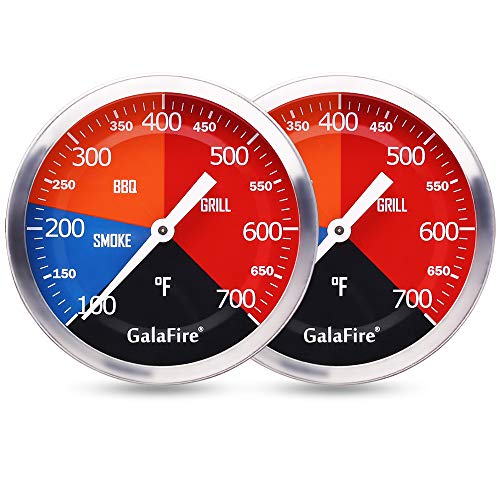 GALAFIRE BBQ Thermometer GaugeView on Amazon
- 5
 Runleader Digital Tach Hour Meter Engine Temperature GaugeView on Amazon
A stove that runs too cool smokes and wastes wood, and a stove that runs too hot wastes heat and risks damage to the flue. A wood stove temperature gauge takes the guesswork out of that middle ground: a dial on the stove top or the flue pipe that shows, at a glance, whether the fire is burning in its working zone. This guide explains what the gauge reads, where to put it, how to read its zones, and what to do with the reading.
More options to weigh up
 Magnetic Stove Temperature GaugeCheck price on Amazon
 Condar Stove Pipe ThermometerCheck price on Amazon
 2 pcs BBQ Grill Temperature GaugeCheck price on Amazon
 GALAFIRE BBQ Thermometer GaugeCheck price on Amazon
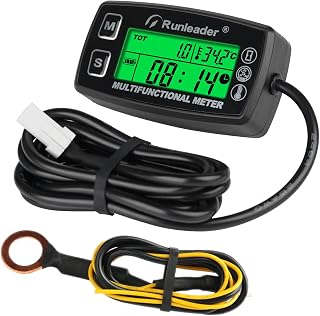 Runleader Digital Tach Hour Meter Engine Temperature GaugeCheck price on Amazon
FirewoodGearHQ earns a small commission if you buy through links on this page. The price you pay stays the same. Read our affiliate disclosure.
The quick answer: wood stove temperature gauge
A wood stove temperature gauge is a dial thermometer that reads the surface temperature of the stove or the flue pipe. The common kind is magnetic: a magnet on the back holds it on the stove top, the stove side or a single-wall flue pipe, and a hook offers a second way to hang it on the pipe. The dial shows a range with marked zones, so the needle tells you whether the fire is running cool, in its working zone, or too hot, without opening the stove or guessing from the flame.
Types of gauges
Magnetic stove-top gauges
The common gauge in the listings is a magnetic dial that sticks to the stove top or side. The Frienda listings describe an aluminum dial with a bimetal sensor, a brass pointer and a metal handle, and a magnetic back that attaches to most stove tops or sides. The dial on the single Frienda gauge measures 3.35 inches across, and the 1-piece and 3-piece Frienda listings give a reading range of 100 to 900 degrees Fahrenheit. The bright or colorful needle reads clearly from a distance, per the listings, so the gauge can be checked from across the room.
Magnetic flue-pipe gauges
A pipe gauge reads the surface of the flue pipe rather than the stove body, and the listings describe the same magnetic back with a hook for hanging on a single-wall flue pipe. The Rutland listing states its gauge is made for single wall stove pipes, and gives a range of 100 to 800 degrees Fahrenheit, or 35 to 430 degrees Celsius. The Rutland listing also states a 12 month warranty. The Frienda 4-pack listing gives the same 100 to 800 degree Fahrenheit range with color zones on the dial, and the same 2.48 inch square dial size as the 3-pack.
Probe gauges
A third kind, the probe gauge, reads the flue gas inside the pipe through a hole rather than the pipe surface. None of the listings here is a probe gauge, so this guide covers the magnetic kind the listings describe, and a probe gauge needs its own fitting instructions from its maker.
Where to put the gauge
On the stove top
Set the gauge on a flat spot on the stove top or side where the magnet holds firm and the dial faces the room. The Frienda listings state the magnetic back attaches to most stove tops or sides. Give the needle time to settle before reading it, since the dial follows the metal temperature, not the flame.
On the flue pipe
For a pipe reading, hang the gauge on the single-wall flue pipe with the magnet or the hook, above the stove where the pipe is straight and clear. The Rutland listing states its gauge is made for single wall stove pipes. A pipe reading and a stove-top reading describe different surfaces, so keep the gauge in one spot and learn what its needle does there, rather than moving it around and comparing readings from different places.
Where not to put it
The Frienda listings warn against attaching the gauge directly to grilles. A gauge also has no business on a surface its listing does not cover: the Rutland listing states its gauge is made for single wall stove pipes, so check the listing before fitting a magnetic gauge to any other pipe. Keep the dial where it can be seen without leaning over the stove.
How to read the gauge
The dial carries marked zones rather than a single target number. The Rutland listing labels a low-fire zone for excessive creosote buildup and an over-fire zone for wasted fuel and heat, with the working zone between them. Read the needle against those zones, not against a number remembered from another stove: the listings here give overall ranges of 100 to 900 degrees Fahrenheit on the Frienda 1-piece and 3-piece gauges and the LJB gauge, and 100 to 800 degrees Fahrenheit on the Rutland gauge and the Frienda 4-pack, and each dial marks its own zones. The needle is bright or colorful, per the listings, so the zone it points to reads clearly from a distance.
How to use the reading
Needle in the low zone
A needle in the low-fire zone means the fire is burning cool. The Frienda listings say that by watching the stove temperature, you can take timely action like adding wood or stoking the fire, so a low reading is the cue to tend the fire, not to ignore it. Check first that the gauge sits flat on the metal: a gauge hanging loose or sitting on a grille reads low for no other reason.
Needle in the working zone
When the needle sits in the marked working zone, the fire is burning as the gauge intends. Leave the air and the fuel alone and let the fire run; the gauge earns its keep by showing that nothing needs doing.
Needle in the over-fire zone
A needle in the over-fire zone means the stove is running hotter than the gauge intends, and the Rutland listing ties that zone to wasted fuel and heat. Stop adding wood and let the fire burn down before feeding it again. If the needle stays high with no fresh fuel, check the stove and the flue as the stove manual directs.
Common mistakes
- Reading a pipe gauge as if it were a stove-top gauge, or the reverse. The Rutland gauge is made for single wall stove pipes, so its reading belongs on the pipe.
- Sticking the gauge on a grille. The Frienda listings warn against direct attachment to grilles.
- Moving the gauge from spot to spot and comparing the readings. One gauge in one spot gives a steady reference; readings from different surfaces do not compare.
- Chasing a single number. The dial marks zones, and the listings give overall ranges, not a target figure for every stove.
- Ignoring a low needle. A fire that stays in the low-fire zone sits where the Rutland listing marks excessive creosote buildup, and needs tending.
FAQ: wood, fire and gear
Where do you put a wood stove temperature gauge?
On the stove top or side, or on a single-wall flue pipe, held by the magnetic back or the hook. The Frienda listings state the magnetic back attaches to most stove tops or sides, and the Rutland listing states its gauge is made for single wall stove pipes. Do not attach it directly to grilles, per the Frienda listings.
What temperature should a wood stove run at?
Read the zones on the dial, not a single figure. The listings here give overall ranges of 100 to 900 degrees Fahrenheit on the Frienda 1-piece and 3-piece gauges and the LJB gauge, and 100 to 800 degrees Fahrenheit on the Rutland gauge and the Frienda 4-pack, and each dial marks its own low-fire, working and over-fire zones. Keep the needle in the marked working zone.
Do magnetic stove thermometers work on double-wall pipe?
The listings here cover single-wall pipe only: the Rutland listing states its gauge is made for single wall stove pipes. Check the listing for the gauge before fitting it to a double-wall pipe.
What is the difference between a stove-top gauge and a flue-pipe gauge?
Placement and what each one reads. A stove-top gauge reads the stove surface, and a flue-pipe gauge reads the pipe surface, so the two readings describe different places and do not compare directly. The Rutland gauge is made for single wall stove pipes, while the Frienda listings describe attachment to the stove top, the stove side or the flue pipe.
Can I leave the gauge on the stove while it burns?
Yes. The listings describe the gauges as monitoring tools for use while the stove runs, held by the magnetic back or the hook. The LJB listing describes its gauge as providing temperature monitoring during use, and the Frienda listings describe the gauge as a practical assistant in daily stove operation.
More firewood guides
See the stove accessories hub, the best stove thermometer picks, the best wood stove for heating a house guide and the best wood stove fan picks. Burning damp wood keeps the needle low, so check the best firewood moisture meters before blaming the gauge.