Fire Starter Types: A Complete Guide for Stoves and Fireplaces
A complete guide to fire starter types, comparing wax cubes, tumbleweeds, fatwood sticks and ferro rods for wood stoves, fireplaces and outdoor campfires.

On this page
Top picks at a glance
As an Amazon Associate we earn from qualifying purchases.
- 1
 Rutland Fire Starter for Campfires9.7/10View on Amazon
- 2
 WH 370 pcs Natural Fire Starters for Indoor Fireplace9.7/10View on Amazon
- 3
 Fatwood Fire Starter Sticks 25lb Box9.7/10View on Amazon
When winter cold arrives and the morning fire needs lighting, choosing the right fire starter turns a cold hearth into steady warmth. The primary fire starter types include compressed wax and sawdust cubes, wood wool tumbleweeds, resin-rich pine fatwood sticks, and ferrocerium rods. Wax cubes and tumbleweeds provide clean auxiliary flame for wood stoves and fireplaces, fatwood sticks offer resinous heat from pine wood, and ferro rods throw hot sparks in wet outdoor conditions. Choosing among them depends on your hearth and flue setup.
FirewoodGearHQ may earn a small commission if you buy through links on this page. The price you pay stays the same. Read our affiliate disclosure.
The quick answer
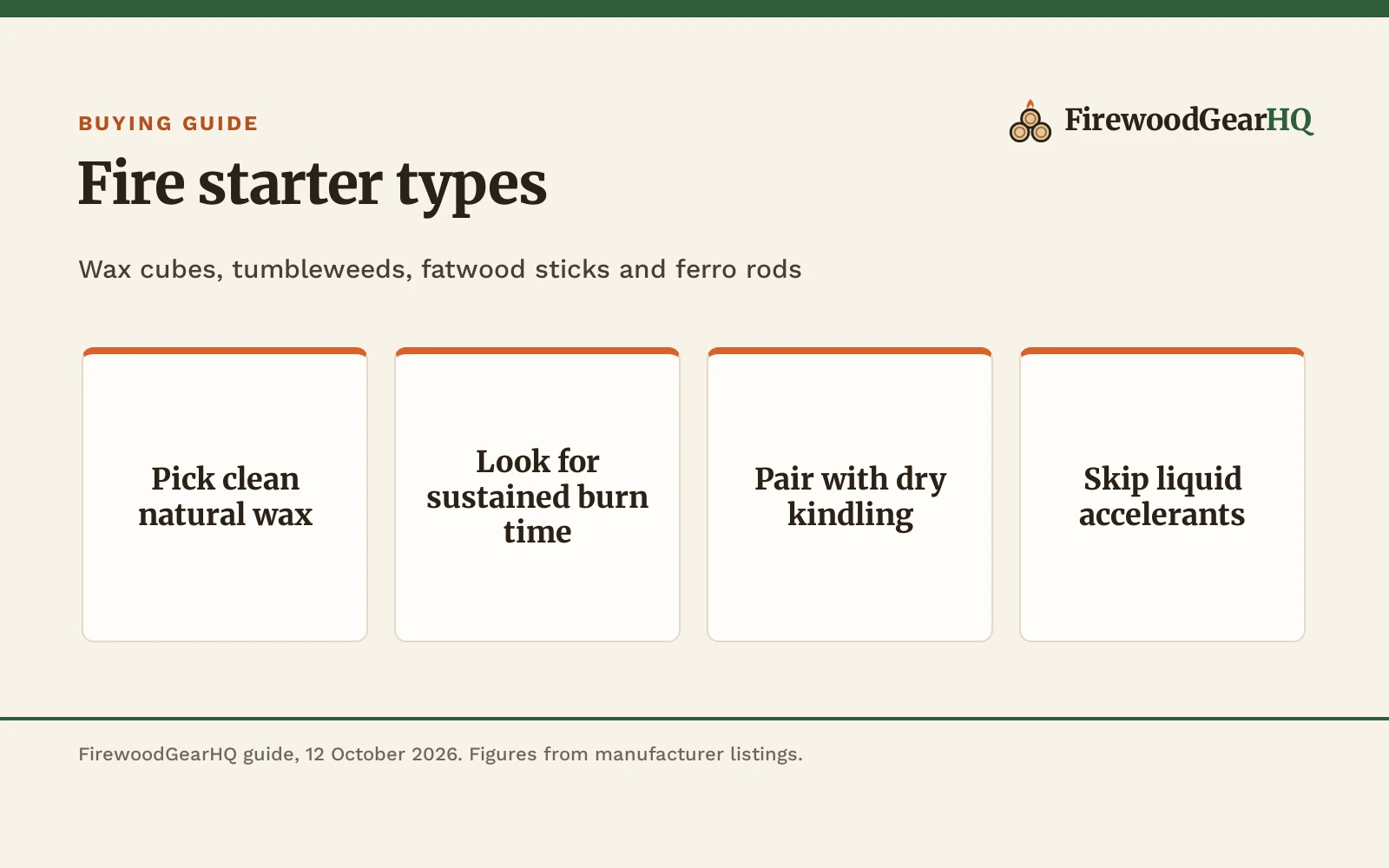
For most indoor wood stoves and hearth fireplaces, wood wool tumbleweeds and compressed wax cubes are clean, reliable fire starter types. They catch quickly from a match without flare-ups, burn long enough to ignite dry kindling, and leave minimal ash. If you prefer a natural option without paraffin, resin-rich pine fatwood sticks light easily from match flame. Backcountry survival kits benefit from ferrocerium rods, which strike sparks in wet conditions where matches fail.
For product recommendations, see our guide to the best fire starters for wood stoves and our roundup of the best fire starter for indoor fireplace. The table below compares the main options.
Fire starter types comparison chart
The table below compares the primary fire starter types for wood stoves, fireplaces, and campfires. Figures come from published manufacturer specifications.
| Starter type | Stated burn duration | Key materials | Best application |
|---|---|---|---|
| Wax and sawdust cubes | Up to 10 minutes (SUNLIFER listing) | Hardwood sawdust, natural waxes | Airtight wood stoves, fireplace inserts, charcoal grills |
| Wood wool tumbleweeds | 8 to 10 minutes (Realcook and HGD listings) | Pine wood shavings, wax binder | Cold wood stoves, open fireplaces, pizza ovens |
| Resin-rich pine wood sticks | 8 to 12 minutes (WABUPD listing); unstated for BYLTIR | Natural pine heartwood, resin-rich pine kindling | Hearth fires, kindling stacks, outdoor fire pits |
| Ferrocerium rod and striker | Sparks at 5,500 F (bayite listing) | Pyrophoric ferrocerium alloy, tool-grade steel | Wet camping, emergency packs, outdoor survival |
Use these figures as reference points. Actual burn duration in your firebox depends on split size, airflow, and wood moisture.
How each fire starter type works
Each fire starter relies on a distinct balance of surface area, fuel density, and binder to sustain flame while kindling catches.
Wax and sawdust cubes
Wax and sawdust cubes blend fine wood fibers with paraffin or vegetable wax. Stanbroil packages 144 squares of odorless fire starters made from natural waxes and wood sawdust in a break-apart brick format. SUNLIFER lists a burn duration of up to 10 minutes for its natural wax and sawdust igniters, providing sustained heat for kindling splits. Wax cubes burn cleanly with minimal smoke and leave little ash, making them well suited for airtight wood stoves and fireplace inserts.
Wood wool tumbleweeds
Wood wool tumbleweeds are spun wood shavings dipped in wax. Their open weave catches flame quickly. The maker HGD lists an ignition time of 0.5 to 3 seconds for its wood shaving starters, along with a burn time of 8 to 10 minutes per piece. Realcook lists an 8 to 10 minute burn time for its wax, sawdust, and hardwood tumbleweeds in a pack of 72 pieces, while DIMTORI offers packs of 70 pieces of pine wood shavings with plant-based binders. Their tall flame transfers heat rapidly to kindling splits.
Resin-rich fatwood pine sticks
Fatwood is harvested from the resin-soaked heartwood of pine stumps. Flammable sap hardens in the wood, creating natural kindling without additives. BYLTIR lists a 10 pound box of premium fatwood sticks harvested from pine stumps without artificial additives or synthetic waxes. The maker WABUPD lists sustained heat lasting 8 to 12 minutes for its pine wood fire starters, noting that natural wood grain resists wind and dampness. Saturated with organic resin rather than petroleum distillates, fatwood stores for years without drying out.
Ferrocerium rods and steel strikers
Ferrocerium rods are metallic alloys that shower hot sparks when scraped with steel. A survival kit from bayite features a rod measuring 4 inches long by 3/8 inch in diameter, paired with a tool-grade steel striker with 6 striking edges and a 5 ft paracord lanyard. The manufacturer bayite lists a spark shower temperature of 5,500 F (3,000 C), noting that the rod sparks reliably in any weather or altitude, even when wet. The rod is waterproof, though sparks must land on dry tinder to catch flame.
Natural kindling and manual splitters
Commercial starters work alongside dry natural kindling rather than replacing it. A starter provides initial flame to ignite slender softwood sticks, which build the coal bed needed for cordwood. Softwoods like pine, spruce, and cedar split into clean kindling. Prepare kindling splits safely with a stationary best kindling splitter or a small best hatchet for kindling.
How to use fire starters safely and effectively
Placing your starter properly ensures quick ignition and clean draft:
- Match lighting method to appliance: In modern wood stoves, the top-down method places larger logs at the bottom, kindling across them, and the starter on top to warm the flue and cut smoke. In open fireplaces, placing the starter beneath kindling lets rising flame catch the wood. See our guide on how to start a fire in a wood stove.
- Leave breathing room: Starters need oxygen. Avoid packing kindling tightly; leave air gaps around the starter.
- Burn dry wood: No fire starter compensates for unseasoned wood. Check split faces with a best firewood moisture meter before burning.
- Monitor operating heat: Keep draft controls open until the firebox is warm. A flue best wood stove thermometer confirms when your stove reaches clean combustion.
- Follow hearth safety standards: Maintain clearances to combustibles per manufacturer and building codes. Install smoke and carbon monoxide alarms on every level, and schedule an annual chimney inspection per CSIA and NFPA guidelines.
Starters and accelerants to avoid indoors
Certain materials should never enter an indoor wood stove or fireplace:
Liquid lighter fluids: Never use charcoal lighter fluid, kerosene, or gasoline in a stove or hearth. Liquid fuels vaporize in enclosed fireboxes, creating explosive vapor mixtures that can blow doors open, crack ceramic glass, and ruin catalytic combustor honeycombs.
Colored paper and cardboard: Glossy paper and packaging cardboard produce heavy fly ash that clogs chimney caps, while inks release harsh fumes. Use clean wood shavings and waxes instead.
Treated lumber and trash: Burning pressure-treated wood or plastics releases corrosive chemicals that destroy stove baffles and chimney liners. Review woods you should never burn and learn what is creosote and how to prevent it before lighting your hearth.
Commercial starters compared with natural kindling
Commercial starters provide repeatable hearth ignition without messy newspaper. Wax cubes and tumbleweeds store cleanly and light reliably. The maker WABUPD advises storing wooden fire starters in a cool, ventilated space below 45°C away from heat sources. Pack counts suit seasonal demands, from starter packs of 32 pieces mentioned by HGD up to reserves of 110, 150, or 216 pieces offered by WABUPD and LantingMing.
Gathered kindling costs nothing but requires dry storage in an best indoor firewood rack or a fireplace tools set with wood rack. For seasonal heating, learn how to season firewood fast and how to keep a wood stove burning all night. Check our guide on how much is a cord of wood for cord planning.
Turn a stack's length, height and depth into full and face cords, and estimate how much wood a winter takes.
Frequently Asked Questions
Which fire starter type is best for wood stoves?
Wax cubes and wood wool tumbleweeds are practical choices for wood stoves. They light quickly, burn steadily to catch dry kindling, and leave minimal ash without fouling door glass or flues.
Can I use liquid lighter fluid in a fireplace or wood stove?
Never. Liquid fuels generate volatile vapors that create flash fire and explosion hazards in enclosed fireboxes, damaging catalytic combustors and cracking stove glass.
How long do fire starters burn?
Realcook and HGD list burn times of 8 to 10 minutes for tumbleweeds, SUNLIFER lists up to 10 minutes for wax and sawdust blocks, and WABUPD lists auxiliary heat lasting 8 to 12 minutes for pine wood starters. Actual duration depends on draft and split size.
Is fatwood safe for indoor fireplaces and wood stoves?
Yes. Fatwood consists of natural pine heartwood saturated with tree resin, containing no petrochemical additives or artificial waxes. It lights easily and burns hot, making it safe for stoves and hearths paired with dry cordwood.
Are fire starters waterproof?
Wax-coated starters and resinous fatwood repel surface moisture. For total waterproof reliability, a bayite ferro rod produces hot sparks at 5,500 F in rain, snow, or high altitude, though sparks require dry tinder to ignite.
How should fire starters be stored indoors?
Store fire starters in a cool, dry location away from heat sources. The maker WABUPD advises storing starters below 45°C and away from children. When cleaning the hearth, shovel cold ashes into an best ash bucket with lid.
Related guides
See the stove accessories hub, the best fire starters for wood stoves and the best fire starter for indoor fireplace. See how to start a fire in a wood stove, the best kindling splitter and the best hatchet for kindling. Check the best wood stove thermometer and best firewood moisture meter. Also see how to keep a wood stove burning all night, how to season firewood fast, woods you should never burn, best ash bucket with lid, fireplace tools set with wood rack, best indoor firewood rack, what is creosote and how to prevent it and how much is a cord of wood.