Why Does My Wood Stove Smoke When I Open the Door?
Why a wood stove spills smoke into the room when opened, how chimney draft works, practical door opening habits and when to call a professional sweep.
 By FirewoodGearHQ Editorial
Updated October 9, 2026
By FirewoodGearHQ Editorial
Updated October 9, 2026
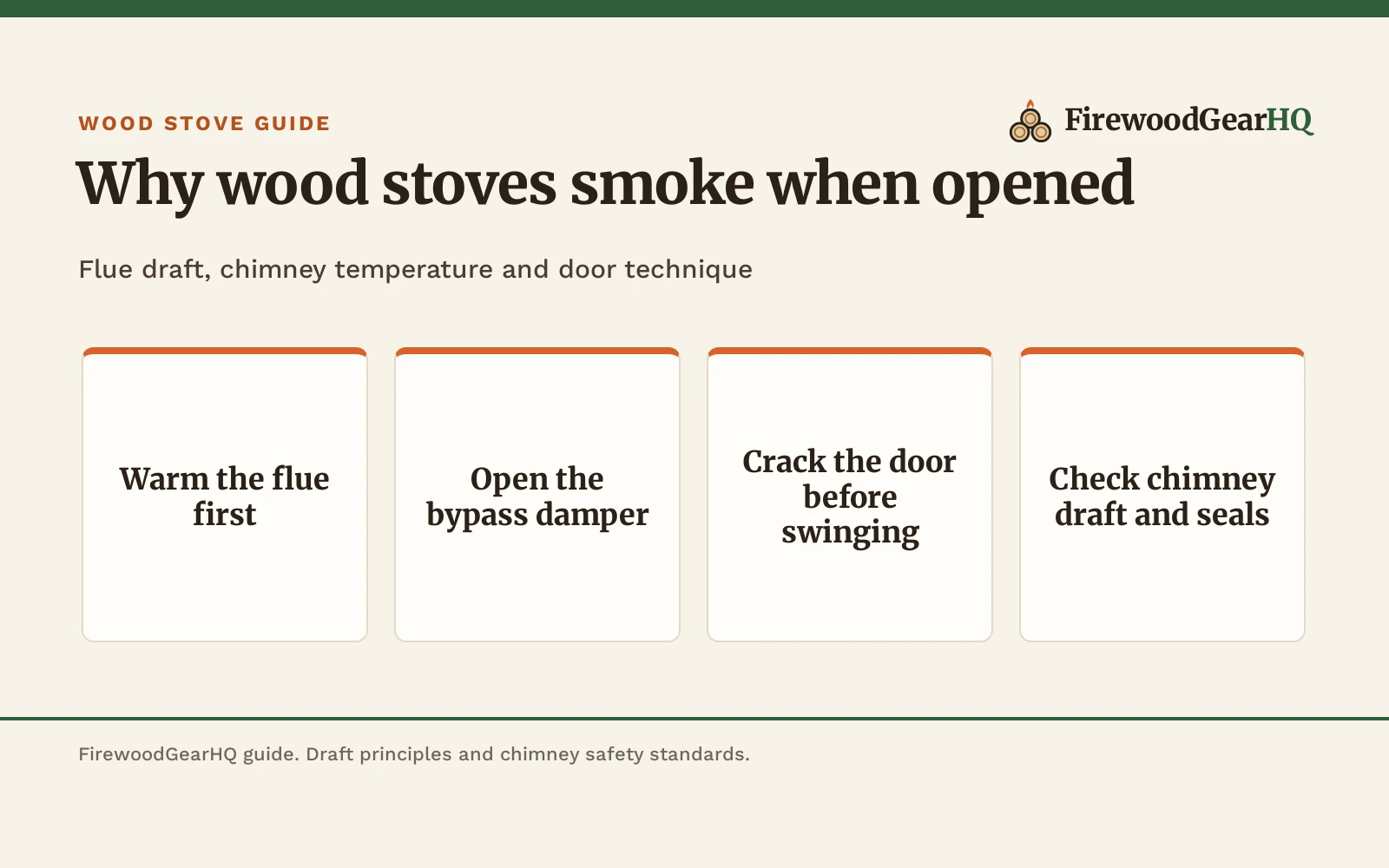
If you are asking why does my wood stove smoke when I open the door, the primary reason is a weak or collapsed chimney draft that allows combustion gases to spill into the room instead of rising through the flue. Opening the door removes the pressure barrier between the firebox and the room, allowing buoyant smoke to roll into the living space. Cold flue passages, closed bypass dampers, shut air controls, and competing household exhaust fans are the most common causes of smoke rollout.
FirewoodGearHQ earns a commission when you buy through links on our product pages, at no extra cost to you. Read our affiliate disclosure.
The quick answer
Wood stoves rely on natural draft to carry exhaust out of your home. Hot flue gases rise up the chimney stack, creating negative pressure that draws fresh air into the firebox. Opening the door equalizes air pressure across the opening. If chimney draft is sluggish or the door is swung open rapidly, buoyant smoke spills across the top of the door frame into the room rather than exiting up the flue. Finding the proper wood stove smoking fix requires understanding draft, using correct door habits, and keeping the flue airtight.
Troubleshooting wood stove smoke by symptom
| Symptom | Likely cause | Fix |
|---|---|---|
| Puff of smoke when unlatching | Opening too quickly | Crack latch slightly, pause, then swing smoothly |
| Continuous smoke spill while open | Cold flue or weak draft | Warm the flue before reloading; burn dry wood |
| Dense smoke billow on catalytic stove | Bypass damper left closed | Open bypass damper fully before unlatching door |
| Smoldering wood rolls smoke on opening | Air intake closed too low | Open air control to ignite fuel before opening door |
| Smoke spills when exhaust appliances run | Negative room pressure | Turn off exhaust fans or crack a window |
| Sluggish draft despite hot fire | Leaking cleanout door or creosote | Check cleanout gaskets; schedule a sweep |
Use this symptom guide to isolate whether your issue stems from operator technique, temporary pressure changes, or mechanical draft restrictions.
Why does my wood stove smoke when I open the door
Several distinct factors cause smoke rollout when a wood stove door opens. Recognizing each condition helps you correct your operating habits and maintain a clean hearth.
Cold chimney flue and collapsed thermal draft
Chimney draft depends on the temperature difference between hot exhaust gas and outside air. Cool air settles inside an exterior or uninsulated chimney stack. Until exhaust warms the flue liner, this cold air column acts like a plug, resisting upward flow and letting buoyant smoke spill into the room.
Opening the door too quickly
Swinging a stove door open rapidly creates a low-pressure wake behind the door face. This sudden suction pulls smoke and ash forward out of the firebox opening, overcoming normal upward chimney draft.
Bypass damper left closed on modern stoves
Clean-burning catalytic and hybrid stoves route exhaust through combustors during normal burning. This winding path increases draft resistance. Opening the door without opening the bypass damper causes smoke spillage. For stoves with a bypass damper, specific replacement components illustrate these dimensions; for instance, the Vermont Castings damper bypass gate listing publishes measurements of 13-1/4″ x 4-3/4″ and an item weight of 4.86 pounds, providing a direct flue opening when opened before reloading.
Air intake closed down before refueling
A stove throttled down to a low burn smolders, filling the firebox with dense smoke. Opening the door suddenly disrupts this stagnant pocket, allowing unburned vapors to roll into the living space before chimney draw establishes.
Leaking chimney cleanout doors and draft dilution
A chimney must remain an unbroken, airtight conduit. If air leaks into cleanout doors at the flue base, cool air is drawn inside, cooling exhaust gases and weakening draft. For chimney cleanout installations, individual component listings provide concrete specifications. For example, US Stove lists an 8-inch opening and a weight of 7.5 pounds on its COD8 cleanout door, Minuteman International lists an 8 by 8-Inch cleanout door weighing 8 pounds and a 12 by 12-Inch model weighing 21 pounds, and Criditpid lists a cleanout door with 0.6 inches cast iron thickness and an item weight of 9.95 pounds. Tight cleanout seals prevent draft dilution.
Negative house pressure and competing exhaust fans
Tight home construction allows powerful range hoods, bathroom fans, and clothes dryers to depressurize indoor air. When indoor pressure drops below outside pressure, the chimney can reverse draft, pulling smoke into the room when the stove door opens.
Step-by-step door opening technique
Follow these steps to prevent smoke rollout:
- Open the bypass damper: Open the bypass lever before touching the door handle to provide a direct path to the flue.
- Open the primary air control: Increase air intake to ignite smoldering fuel, raise firebox heat, and strengthen draft.
- Crack the door latch slightly: Unlatch and hold the door open a fraction of an inch for a brief pause. This equalizes pressure and establishes inward airflow.
- Swing the door open smoothly: Open the door with a calm, steady motion.
- Load fuel toward the back: Place firewood splits toward the rear, leaving front embers undisturbed.
- Close and latch the door promptly: Close firmly, engage the latch, allow fresh wood to catch, then reset air controls.
How to improve stove draft and prevent smoke rollout
Burn dry fuel, as covered in our guide to the best wood for a wood stove and verified using a best firewood moisture meter. Wet wood cools the firebox and weakens draft. Monitor flue heat with a pipe thermometer from our best wood stove thermometer guide.
Distribute room warmth using the best wood stove fan, and read do wood stove fans really work. For built-in blowers, see our best wood burning stove with blower review, or compare heating appliances in our best wood stove for heating a house guide. Remove excess ashes following how to dispose of wood stove ashes safely using a canister from our best ash vacuum for wood stoves review.
Chimney safety and when to call a professional
Install all wood stoves according to manufacturer specifications and local building codes, keeping required clearances to combustible surfaces. Maintain working smoke alarms and carbon monoxide alarms on every level per CPSC guidelines. Burn seasoned wood exclusively as advised by the EPA Burn Wise program. Schedule an annual inspection and sweep by a certified CSIA or NFPA chimney sweep. If draft problems persist after using proper door habits and burning dry wood, hire a professional sweep to inspect liner sizing, chimney height, and draft pressure.
Frequently Asked Questions
Why does smoke come out only when the door opens?
Opening the door equalizes pressure between the firebox and the room. Sluggish chimney draft or swinging the door rapidly allows buoyant smoke to spill into the living space instead of rising up the flue.
How do I stop smoke when reloading wood?
Open the bypass damper, increase primary air intake to ignite fuel, crack the door latch for a brief pause, then swing the door open smoothly and latch it promptly after loading.
Should air controls be open before opening the door?
Yes. Opening the primary air control supplies oxygen to ignite smoldering fuel, heating the firebox and strengthening chimney draft before the door is cracked.
Can a cold chimney flue cause smoke spillage?
Yes. A cold chimney flue holds a column of dense air that blocks upward flow. Warming the flue liner establishes natural convection and stops rollout.
Why does my catalytic stove smoke when opened?
Catalytic combustors restrict draft during normal burning. Opening the stove door without opening the bypass damper forces smoke out into the room.
When should I call a professional chimney sweep?
Call a CSIA-certified sweep if smoke spillage persists despite proper door habits and dry firewood. Blockages, creosote, or improper flue sizing require professional inspection.
Related guides
Visit our stove accessories hub for hearth gear. Circulate heat with the best wood stove fan and check do wood stove fans really work. Track flue temperatures with the best wood stove thermometer, select fuel using our best wood for a wood stove guide, and check moisture with the best firewood moisture meter. For maintenance, see how to dispose of wood stove ashes safely and the best ash vacuum for wood stoves. For heaters, compare the best wood burning stove with blower and the best wood stove for heating a house.
About the author
The FirewoodGearHQ editorial team researches firewood and wood heating equipment from published specifications, ratings and warranty terms, and scores every pick the same way. We do not run our own product trials.