How to Clean Firebrick in a Wood Stove or Fireplace
How to clean firebrick in a wood stove or fireplace, from cooling the stove and brushing off soot to washing with brick cleaner and rinsing clean.

On this page
Top picks at a glance
As an Amazon Associate I earn from qualifying purchases.
- 1
 Rutland Fire Bricks9.5/10View on Amazon
- 2
 Fire Bricks9.3/10View on Amazon
- 3
 Fire Bricks9.2/10View on Amazon
By the end of a burning season, the firebrick lining a wood stove or fireplace firebox turns grey and streaked, with soot ground into every pore and ash settled into the joints. The job looks worse than it is. To learn how to clean firebrick, let the stove cool completely, brush away the loose ash and soot, wash the brick with a damp, non-metallic brush and a cleaner made for fireplace brick, then rinse with clean water and let the brick dry before lighting another fire. The work is slow and dusty rather than hard, and a careful wash can lighten the face of the brick without taking the lining apart.
FirewoodGearHQ earns a small commission if you buy through links on this page. The price you pay stays the same. Read our affiliate disclosure.
The quick answer
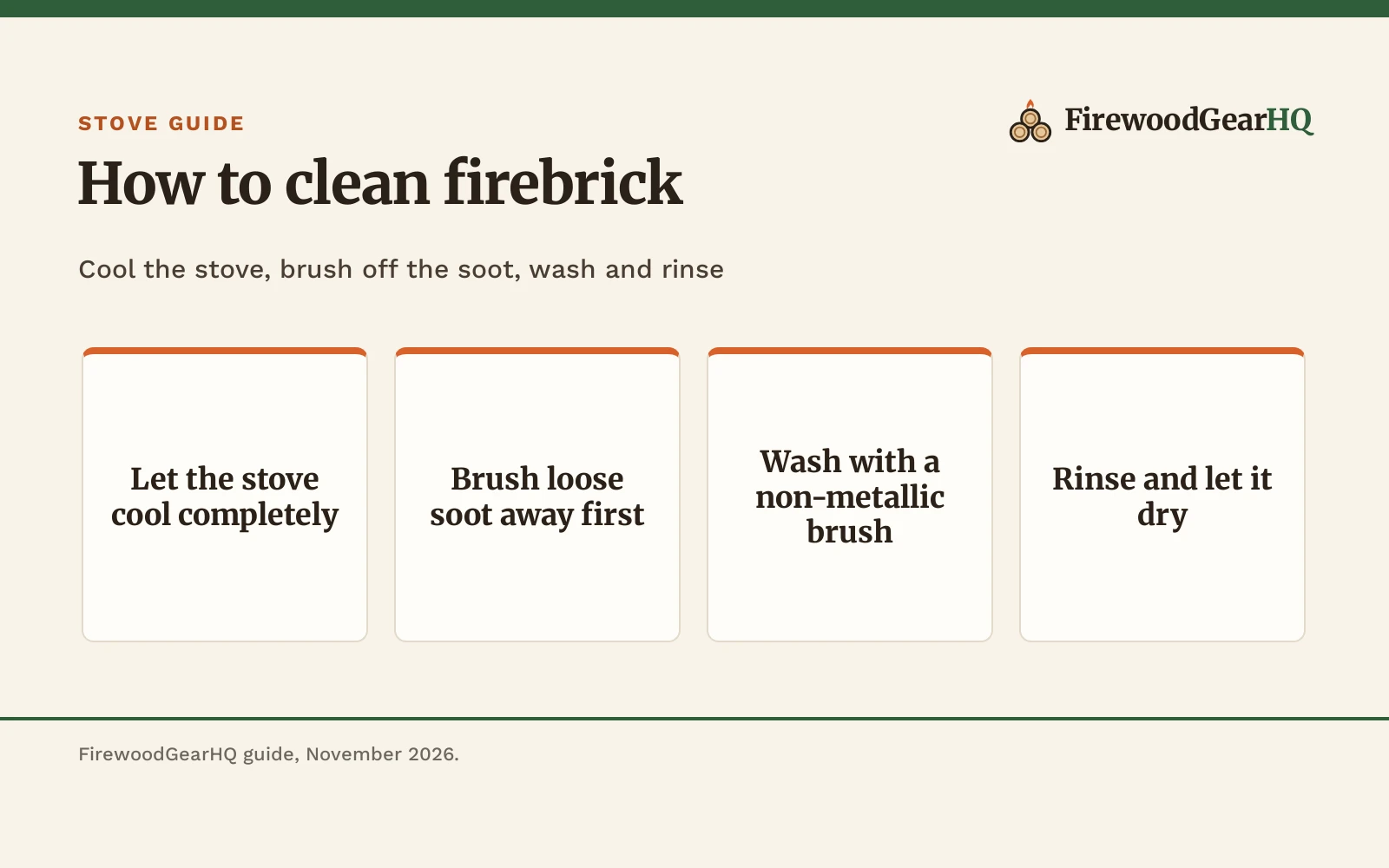
Firebrick is a soft, porous block made to take heat, not hard scrubbing, so the method stays gentle from start to finish. Work only on a cold stove, clear the ash, dry-brush the loose soot, then wash with a cleaner made for fireplace brick and a non-metallic brush. Rutland lists a brick and stone cleaner in a 16 oz bottle that removes soot, creosote and smoke residue, and the maker says to spray the area, scrub with a wet, non-metallic brush and rinse with clean water before the area dries. The listing states a 12 month warranty. Rinse well, let the brick dry, and leave brick that is cracked through or crumbling for replacement rather than scrubbing it harder.
What you need to clean firebrick
Gather the tools before opening the stove door, so soot stays inside the firebox instead of spreading across the hearth.
- A soft, non-metallic brush: the main tool for the brick face. The Rutland cleaner listing calls for a wet, non-metallic brush, and a soft brush clears soot without gouging the brick.
- A small brush for corners and joints: an 18-piece SUCEXIFY crevice (on Amazon) set includes nylon brushes the maker describes as suited to delicate surfaces, and an 8-piece Ctsyuqoo set offers brush diameters from 1/4 inch to 2 inches in 16-inch lengths.
- A bucket of clean water and a cloth: for rinsing the brick and wiping the hearth after the wash.
- A cleaner made for fireplace brick: the Rutland Brick and Stone Cleaner comes in a 16 oz bottle and, per the listing, contains no dangerous acids.
- A metal ash bucket: for the ash cleared out before washing begins. See the ash bucket for a fireplace guide.
- Gloves and eye protection: soot and ash irritate skin and eyes, and a mask keeps dust out of the lungs while brushing.
Leave the heavy deck brushes in the garage. The 57-inch SetSail brush (on Amazon) and the 59-inch KeFanta brush (on Amazon) are made for concrete, patios and decks, and their steel wire bristles are too harsh for soft firebrick. Steel wire can gouge the brick face and leave it rougher, which can trap soot after cleaning.
How to clean firebrick step by step
Let the stove cool completely
Start with a cold stove and a cold firebox. Brick holds heat long after the fire dies, and washing a warm brick can crack it, and cleaner left on a warm surface can dry before it can be rinsed. Wait until the stove feels cool to the touch, then open the door and leave it open while gathering tools. A stove thermometer shows the temperature of the stove top, which helps judge when the stove has cooled; see the stove thermometer guide for the kind that suits a stove top.
Clear the ash and loose soot
Scoop the ash into a metal bucket and carry it outside, then brush the loose soot off the brick with a dry, soft brush, working from the top of the firebox down so dust falls onto the hearth. A vacuum made for ash can take the fine dust, but a plain brush and a dustpan do the job on a small firebox. Washing soot that could have been brushed away turns it into a paste that smears across the brick.
Dry-brush the brick
With the ash out, brush each brick face with short, even strokes, following the joints rather than scrubbing across them. A small nylon brush reaches the corners and joints where soot packs in, and the 16-inch Ctsyuqoo brushes give extra reach into the firebox. Brush gently: the goal is to lift soot, not to wear the brick down. If a brick moves in its seat while brushing, leave it alone and ask a stove dealer or certified pro to reset it.
Wash with brick cleaner
Spray the cleaner onto a small area of brick, then scrub with a wet, non-metallic brush, following the Rutland listing: spray, scrub with a wet brush, and rinse with clean water before the area dries. Work one brick at a time, so no patch of cleaner dries on the brick before rinsing. For the joints, use the small nylon brush and let the cleaner do the work instead of pressing harder.
Rinse and let it dry
Wipe each washed brick with a cloth wrung out in clean water, changing the water when it turns grey, then leave the stove door open so air moves across the brick. Do not light a fire to dry the brick: let it dry on its own before loading wood. A damp brick steams when a fire is lit over it, so patience here pays off at the next lighting.
Removing stubborn soot and creosote stains
Some stains stay after a wash, and they call for another pass rather than a harder tool. Spray the cleaner again on the same stain, scrub it with the wet, non-metallic brush and rinse before the area dries. Repeat the wash on the same stain rather than reaching for a wire brush or a scraper, which marks the brick. Stains near the top of the firebox and around the door opening tend to be the darkest, since smoke and heat collect there.
Creosote inside the flue is a different job from brick cleaning, and a chimney that has not been inspected in a while needs a certified chimney sweep; the chimney cleaning cost guide explains what drives the price of that visit. Keep smoke and CO alarms working, and have the chimney inspected each year. See the how to clean a wood stove glass door guide for the matching job on the glass, and the pellet stove cleaning guide for a pellet burner.
When to replace firebrick instead of cleaning it
Cleaning restores the face of sound brick, but it cannot save brick that is cracked through, crumbling at the edges or missing chunks. A brick that is cracked through still looks dirty after washing, and the crack can keep opening as the stove heats and cools. Loose brick and gaps in the lining let heat reach the steel of the firebox, so a damaged lining is a repair, not a cleaning job. Ask a stove dealer or certified pro to match and fit the replacement brick, and do not run the stove with a lining that is cracked through, crumbling or missing pieces while waiting for the repair. See the fireplace insert size guide on measuring a firebox.
FAQ: wood, fire and gear
Can you clean firebrick with water?
Yes. Wash with a damp, non-metallic brush and rinse with clean water, then let the brick dry fully before lighting a fire. The Rutland listing describes this method: spray, scrub with a wet brush, and rinse before the area dries.
Can you use a wire brush on firebrick?
No. Firebrick is soft, and steel wire can gouge the face and leave it rougher, which can trap soot. Use a soft, non-metallic brush, and a small nylon brush for corners and joints. For a wire brush that suits a pellet stove instead, see the wire brush for cleaning a pellet stove guide.
What removes soot from firebrick?
A cleaner made for fireplace brick, such as the Rutland Brick and Stone Cleaner in a 16 oz bottle, which the listing says removes soot, creosote and smoke residue. Spray it on, scrub with a wet, non-metallic brush and rinse with clean water. Dry-brush loose soot away before washing, so the cleaner works on the stain rather than the dust.
How often should firebrick be cleaned?
Clean the brick when soot builds up enough to dull the firebox, and give it a full wash at the start and end of the burning season. A stove that burns seasoned wood only stays cleaner between washes than a stove that burns damp wood or smolders. Have the chimney inspected each year alongside the brick cleaning.
Should cracked firebrick be cleaned or replaced?
Replace it when the brick is cracked through, crumbling or missing pieces. Cleaning cannot close a crack, and a crack through the brick can keep opening as the stove heats and cools. Ask a stove dealer or certified pro to fit a replacement, and do not run the stove with a lining that is cracked through, crumbling or missing pieces.
More firewood guides
See the stove accessories hub, the wood stove glass door cleaning guide and the pellet stove cleaning guide. Compare brick with stone in the firebrick vs pizza stone guide, and see the best wood stoves and the wood stoves hub for the stove itself. Also see the how to stack logs in a fireplace guide, the gasket rope vs gasket kit for a wood stove guide and the best chimney pipe guide.