Fireplace Insert Size: How to Measure Your Firebox
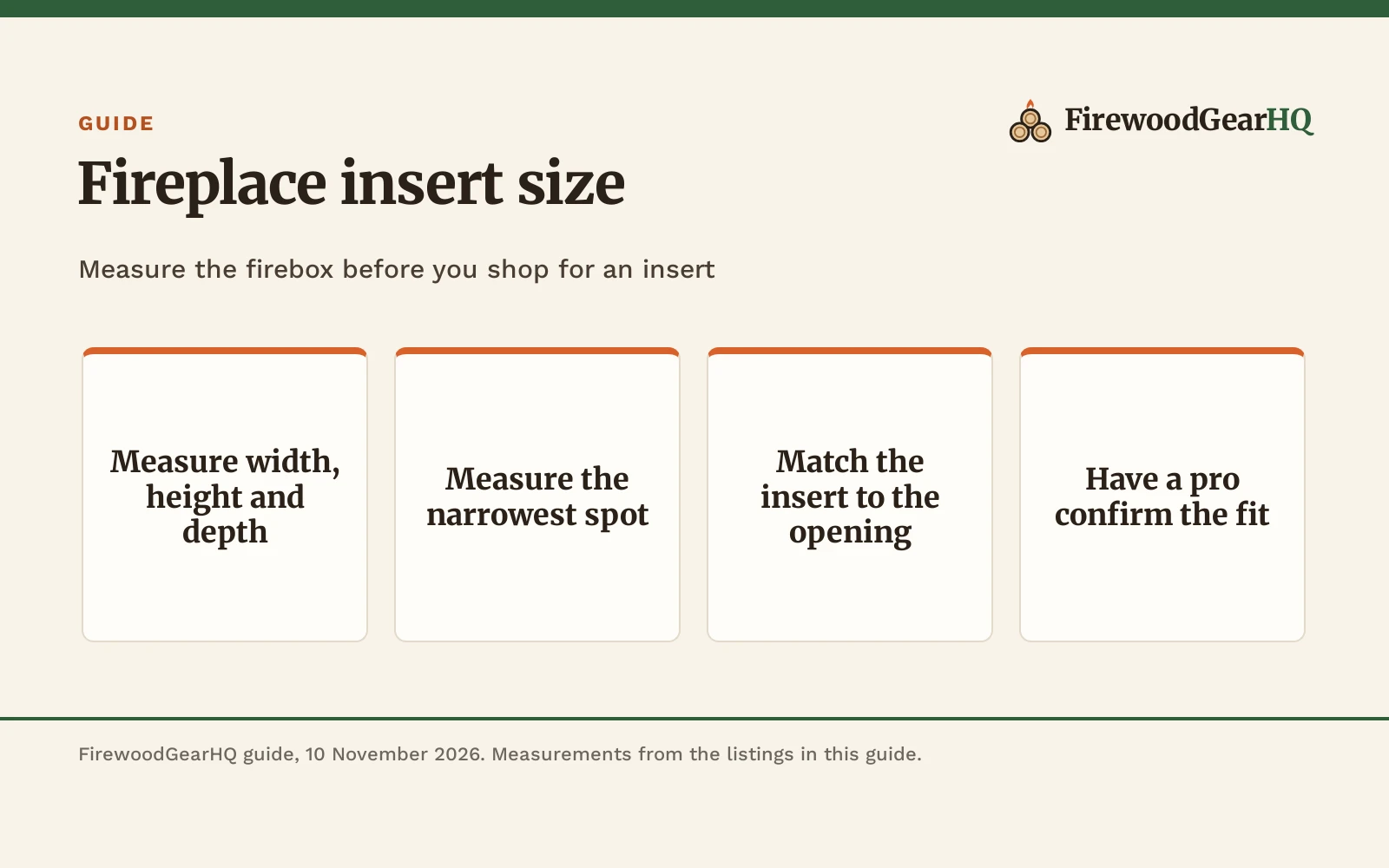
Measure the width, height and depth of the firebox, then match the insert to the smallest reading so it fits the opening.

On this page
Top picks at a glance
As an Amazon Associate I earn from qualifying purchases.
- 1
 Zionheat 72 inch Wide Screen Electric Fireplace-Wall9.8/10View on Amazon
- 2
 HP22i Pellet Stove Fireplace Insert9.7/10View on Amazon
- 3
 20" Electric Fireplace Logs Heater Insert with Remote Home9.4/10View on Amazon
An insert that is too wide will not slide into the opening, and an insert that is too small leaves gaps around the edges that let heat escape up the chimney. Getting fireplace insert size right starts before shopping, with a tape measure and the firebox itself. Measure the width, height and depth of the opening, note the shape of the firebox, and match the insert to the smallest reading at each point. This guide walks through every measurement in order, then explains how to read the figures the listings state.
FirewoodGearHQ earns a small commission if you buy through links on this page. The price you pay stays the same. Read our affiliate disclosure.
The quick answer
Measure the opening at its narrowest point in each direction, then compare those readings with the width, height and depth the maker lists for the insert. If the insert is wider than the opening at any point, it will not fit, so the smallest reading sets the limit. A firebox that narrows toward the back or curves at the top needs the same care: measure where it is narrowest and lowest, and use those readings. The listed figures below show how makers state size, heat and trim, and a certified pro can confirm the fit, the venting and the clearances before anything is ordered.
Fireplace insert size: how to measure your firebox
Measure with the firebox cold and empty, and write each reading down as you go. A steel tape holds its shape across the opening, and a helper holding the far end keeps the tape straight.
Measure the width
Run the tape across the front of the opening from side to side, then run it again at the back of the firebox. Fireboxes often narrow toward the back, so the back reading can be smaller than the front reading, and the smaller reading is the one that sets the fit.
Measure the height
Run the tape from the hearth floor to the top of the opening. If the top curves into an arch, measure to the lowest point of the arch, since that is the height the insert must clear.
Measure the depth
Run the tape from the face of the opening straight back to the rear wall of the firebox. Note any slope in the floor or any brick that juts into the space, since the insert must clear those as well.
Note the shape of the firebox
Look at the firebox as a whole before you shop. A firebox that tapers toward the back, has a raised hearth or a damper frame that drops into the opening can change which insert fits, even when the front opening looks generous. Note the shape of the flue and where it sits, and keep those notes for the pro who confirms the fit.
What the listed sizes mean
Listings state sizes in different ways, so read each figure for what it measures. The width, height and depth of the unit are the figures to compare with the opening, while heat output and trim kits answer different questions.
Unit size
The LegendFlame set lists 23 inches wide, 20 inches high and 10 inches deep, and those figures are the size to compare with the opening. The Buck Stove Model 21 lists 18.13 inches by 23.38 inches by 20.25 inches, so the same comparison applies: each stated figure must fit inside the matching opening reading. Note the LegendFlame depth again: the bullets list 10 inches while the spec table lists 9.5 inches, so trust the bullets and confirm the depth with the maker before you buy.
Heat output
Heat output is a separate question from fit. The Buck Stove Model 81 (on Amazon) lists up to 59,500 BTUs and heats up to 1900 to 2700 square feet, while the Buck Stove Model 21 (on Amazon) lists up to 28,901 BTUs and heats up to 800 to 1800 square feet. Match the heat figure to the room the insert will warm, and remember that the maker lists the maximum output, so the figure is a best case rather than a daily average.
Trim kits and doors
Trim kits cover the gap where the insert meets a larger opening. The Buck Stove Model 81 lists a 12 inch trim kit and the Model 21 lists a 9 inch trim kit, with frames that can be cut to size. Glass doors are a separate item for masonry fireplaces, not a way to close the gap around an insert: the Pleasant Hearth Carlisle doors list 37.5 inches by 28.0 inches, with a depth of 1.85 inches, and the listing states the glass doors reduce heat loss up the chimney by as much as 90% when the fire is not lit.
Logs and embers
Gas logs and embers fill a gas insert once the size is settled. The BIOMAND set holds 10 pieces of ceramic wood, with logs from 15 inches to 10 inches, and the Stanbroil set holds 4 pieces, with logs of 14 inches, 12.5 inches, 12 inches and 10 inches. The Midwest Hearth embers (on Amazon) come in a 6 oz bag, and the listing states one bag covers an 18 to 24 inch gas log set.
Matching the insert to the opening
Lay the insert’s stated width, height and depth beside the smallest reading for each direction. If any stated figure is larger than the matching reading, the insert will not fit that opening, so look for a smaller insert. If the figures line up, the insert can sit in the opening with room for trim and venting as the maker directs and local code requires. See how an insert compares with an open fire in fireplace insert vs open fireplace, and weigh electric against gas in electric vs gas fireplace insert.
Before the fire season starts, fit smoke and CO alarms in the stove room and have the chimney inspected annually. A carbon monoxide detector suits the stove room, and a certified pro can confirm the clearances, the venting and the chimney connection at the same visit. For a wood-burning insert, burn seasoned wood only.
FAQ: wood, fire and gear
What size fireplace insert do I need?
The size that matches the smallest width, height and depth readings of the firebox. Measure the opening, compare the readings with the figures the maker lists, and pick an insert whose stated figures fit inside the readings. The LegendFlame set in this guide lists 23 inches wide, 20 inches high and 10 inches deep.
How do I measure my firebox for an insert?
Measure the width across the front and again at the back, the height from the hearth to the top of the opening, and the depth from the face of the opening to the rear wall. Write each reading down, note where the firebox narrows or curves, and use the smallest reading in each direction when you compare inserts.
Can a fireplace insert be wider than the opening?
No. An insert wider than the opening will not slide into place, and forcing it can damage the insert and the firebox. Choose an insert whose stated width fits inside the smallest width reading, and have a certified pro confirm the fit before ordering.
Does an electric log set need the same measurements?
It depends on where the set goes. If it goes into the opening, measure the same width, height and depth and compare them with the stated size. The LegendFlame set in this guide measures 23 inches wide, 20 inches high and 10 inches deep, and the listing states it suits free standing in existing openings or a cabinet.
What if my fireplace opening is arched?
Measure the height to the lowest point of the arch, since that is the height the insert must clear. Measure the width at the narrowest point as well, and use those readings when you compare inserts.
Should a professional fit the insert?
Yes. A certified pro can confirm the fit, the venting and the clearances, inspect the chimney and confirm that the insert meets local code. That visit is the right time to ask about smoke and CO alarms for the stove room as well.
More firewood guides
See the wood stoves hub, the best fireplace insert for heating a house and the best wood stove for heating a house. For the firebox itself, see the best fireplace grate for a prefab fireplace and the best lava rocks for gas fireplace. Also see our best carbon monoxide detector picks for the stove room.