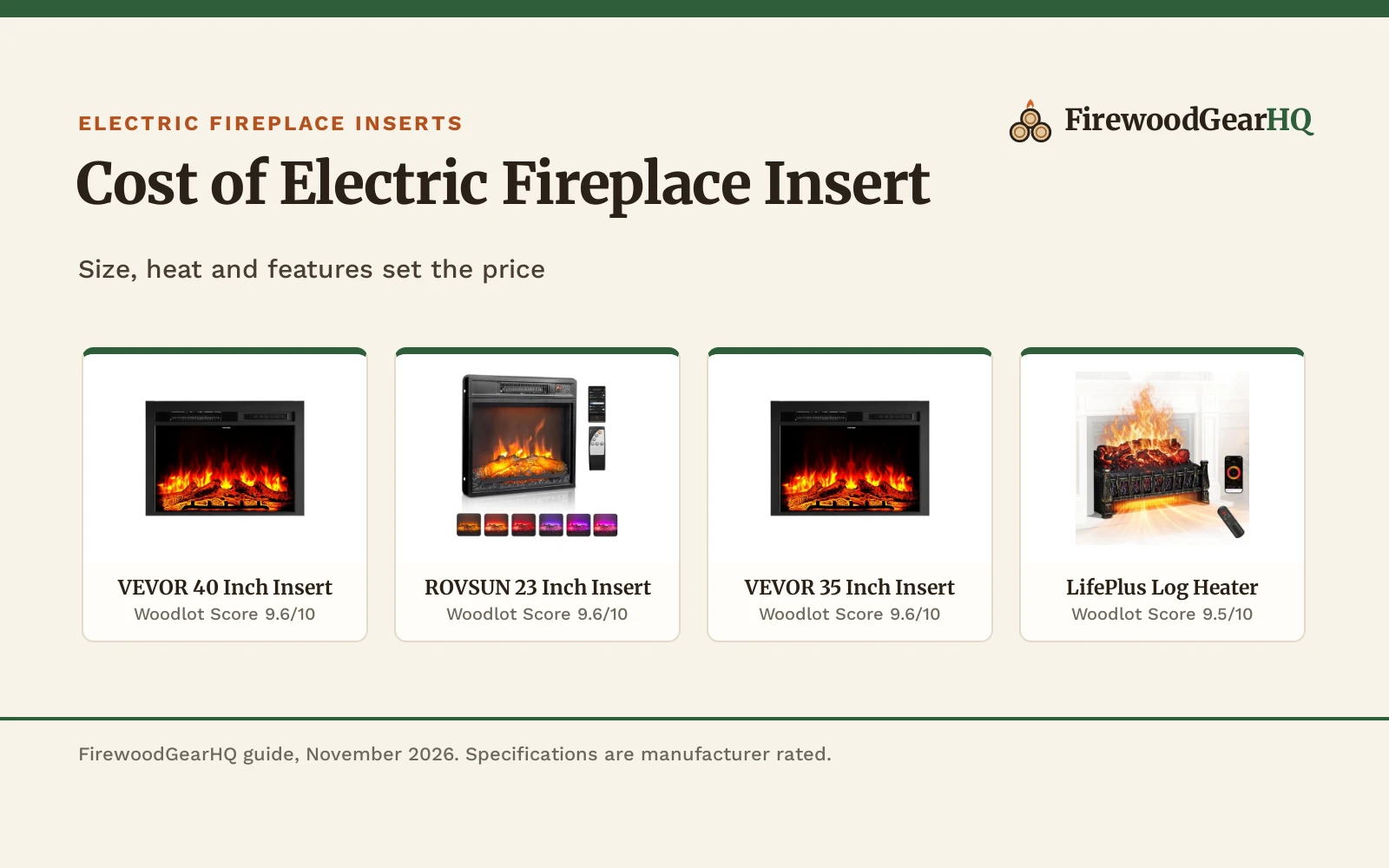
Cost to Install Fireplace Insert: What Sets the Bill
The cost to install a fireplace insert comes from the insert, the chimney liner, the hearth work and the labor, and it moves with the size of the firebox and the state of the chimney.

On this page
Top picks at a glance
As an Amazon Associate I earn from qualifying purchases.
- 1
 Ventylis Wall Thimble9.6/10View on Amazon
- 2
 Zonon 2 Pcs Black Stove Pipe 6 X 24 Inch with 6 Inch9.4/10View on Amazon
- 3
 Tent Stove Jack Kit: Flexible Silicone Pipe Boot9.2/10View on Amazon
An open fireplace looks warm on a cold night, and it sends much of its heat up the chimney while the room stays cool. A fireplace insert closes that open box with a steel or cast iron firebox that burns wood and pushes heat into the room instead. The cost to install fireplace insert hardware comes from the insert itself, the chimney liner, the hearth and surround work, and the labor to fit it all, and it moves with the size of the firebox and the state of the chimney.
FirewoodGearHQ earns a small commission if you buy through links on this page. The price you pay stays the same. Read our affiliate disclosure.
The quick answer
There is no set figure for the job, because the insert, the liner, the hearth and the labor each move the total. A sound chimney and a firebox that already fits the insert keep the work simple. A chimney that needs a liner, a firebox that needs resizing, or a hearth that needs rebuilding adds work at each step. The sections below walk through each part, so you can see where the money goes.
Cost to install fireplace insert: the parts of the job
The bill breaks into parts, and each part can grow or shrink with the house. The insert leads the bill, and the liner, the hearth work and the labor follow it.
The insert itself
The insert is a steel or cast iron firebox with a door, a glass window and an air control, sized to slide into the fireplace opening. Larger fireboxes and heavier builds take more material and more handling. Wood stove listings show the same size pattern: the Cleveland Iron Works listing heats up to 750 sq. ft. and takes logs up to 11 inches long, while the Comfort Glow listing heats 900 sq. ft. and fits 22-inch logs, so the size of the unit tracks the size of the space it heats and the wood it burns. The Cleveland Iron Works wood stove listing weighs 120.15 pounds. Glass doors add to the price of the insert itself.
The chimney liner
A liner is a metal tube that runs down the chimney and connects the insert to the flue, and it keeps smoke and gas on a clear path out of the house. A chimney that already has a sound liner needs less work than a chimney that needs a liner fitted from top to bottom. The liner must match the flue collar on the insert, and collar sizes are stated per unit: the Comfort Glow wood stove (on Amazon) listing states a 6-inch flue collar. A tall chimney or a chimney with bends takes more liner and more labor to fit, and a liner that is the wrong size can leave the insert drafting poorly.
The hearth and surround
The hearth is the floor in front of the fireplace, and the surround is the facing around the opening, and each must suit the insert that goes in. A hearth that is too small or a surround that does not fit the new firebox needs rebuilding, and that work adds to the bill. A surround that needs cutting or patching adds time on site, so the state of the hearth and surround moves the labor as much as the parts do.
Labor, permits and inspection
Labor covers the time a certified pro spends on site fitting the insert and the liner and checking the draft, and it grows with the hours on site. A permit from the local authority and an inspection after the work are part of many installs, and the maker instructions and local code set what the pro must do. The work calls for a certified pro, not a weekend project, because the insert, the liner and the flue must work as a set. Get the quote in writing, with each part of the job listed, so you can see what the bill covers.
Size the insert to the firebox and the room
An insert that is too large will not fit the firebox, and an insert that is too small may not heat the room. Measure the firebox opening, the depth and the height before you shop, and match those figures to the insert the maker lists. The fireplace insert size guide shows how to measure the opening. Heat output tracks the room too: the Cleveland Iron Works wood stove listing heats up to 750 sq. ft., and the Comfort Glow wood stove listing heats 900 sq. ft., so the larger figure suits the larger room. Log length matters too: the Cleveland Iron Works wood stove listing takes logs up to 11 inches long, and the Comfort Glow wood stove listing fits 22-inch logs, so the firebox sets the wood you can burn.
The chimney decides much of the job
The state of the chimney sets how much liner work the job needs. A straight, sound chimney takes a liner with less trouble than a chimney with bends, damage or a flue that is the wrong size. The flue and the liner must match the collar on the insert: the Comfort Glow wood stove listing states a 6-inch flue collar. Have a certified chimney sweep inspect the chimney and clean it before the install, and ask for the inspection in writing. Smoke and CO alarms belong in the house, and the chimney needs an annual inspection after the insert is in use. Burn only seasoned wood.
What to ask a pro
A short list of questions helps you read a quote. Ask what liner the job needs and how it connects to the flue collar. Ask what hearth or surround work the firebox needs, and whether the permit and the inspection are in the quote. Ask how the warranty reads: the Cleveland Iron Works wood stove listing carries a 5 Year Limited warranty, and the Comfort Glow wood stove listing carries a 1-year warranty, so the term on the unit you buy is worth reading before you sign. Ask when the work will be done and what access the pro needs on the day.
FAQ: wood, fire and gear
Does a fireplace insert need a chimney liner?
Most installs need a liner, because the liner gives the smoke and gas a clear path from the insert to the top of the chimney. A chimney with a sound liner already in place may need less work, and a chimney with no liner or a damaged flue needs a liner fitted. The liner must match the collar size on the insert: the Comfort Glow wood stove listing states a 6-inch flue collar. A certified pro can tell you what your chimney needs.
Can I install a fireplace insert myself?
It is not a job for a weekend DIYer. Fitting an insert means fitting the firebox, the liner and the flue as a set, and the maker instructions and local code set how it must be done. Have a certified pro do the fitting, and the work needs a permit and an inspection in many places. Ask a certified pro for a quote, and keep it in writing.
How do I pick the right size insert?
Measure the firebox opening, the depth and the height, and match those figures to the insert the maker lists. Then match the heat to the room: the Cleveland Iron Works wood stove listing heats up to 750 sq. ft., and the Comfort Glow wood stove listing heats 900 sq. ft., so the larger figure suits the larger room. Log length matters too: the Cleveland Iron Works wood stove listing takes logs up to 11 inches long, and the Comfort Glow wood stove listing fits 22-inch logs.
What warranty comes with a fireplace insert?
It varies by the unit, so read the term on the insert you buy. Wood stove listings show how terms vary: the Cleveland Iron Works listing carries a 5 Year Limited warranty, and the Comfort Glow listing carries a 1-year warranty. Ask the pro to list the warranty term in the quote.
Does an insert work in any fireplace?
Not every fireplace takes an insert. The firebox must fit the unit, the chimney must take a liner, and the hearth must suit the new firebox. A certified pro can measure the fireplace and tell you whether an insert fits.
More firewood guides
See the best fireplace insert for heating a house guide and the wood stoves hub, and the best wood stove for heating a house guide and the stove accessories hub.