Catalytic vs Noncatalytic Wood Stove: Which One Should You Buy?
A catalytic vs noncatalytic wood stove choice turns on burn time, creosote and upkeep, and the gear below shows each side of that choice.

On this page
Top picks at a glance
As an Amazon Associate I earn from qualifying purchases.
- 1
 Ashley Hearth AW2520E-P 29.7/10View on Amazon
- 2
 Midwest Hearth Wood Stove Catalytic Combustor for RegencyView on Amazon
- 3
 siohdagu Multifunction Wood Burning Stove with ChimneyView on Amazon
- 4
 Wood Stove Catalytic Combustor for Vermont CastingsView on Amazon
- 5
 IMPERIAL GROUP USA Stove BoardView on Amazon
- 6
 Protalwell Wood Stove Catalytic CombustorView on Amazon
- 7
 Hearth Wood Stove Catalytic CombustorView on Amazon
Late autumn is when the woodpile gets honest. The stacks are full, cold nights have arrived, and the stove becomes the center of the evening. Choosing a catalytic vs noncatalytic wood stove is a choice about how the stove handles smoke: the catalytic style passes smoke through a coated ceramic part where gases the fire missed can burn, and the simpler style has no such part in the smoke path. In short, the catalytic style suits a house stove that runs long and steady, while the simpler style suits a portable stove or a burner who wants no part to replace. No full-size catalytic stove sits in the gear list below: the catalytic side is shown by a replacement combustor for named inserts, and the simpler side by portable rocket stoves, with a creosote remover alongside for flue care.
More options to weigh up
 Midwest Hearth Wood Stove Catalytic Combustor for RegencyCheck price on Amazon
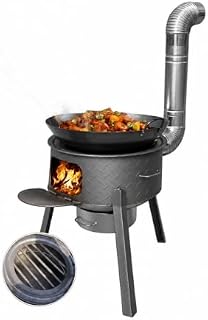 siohdagu Multifunction Wood Burning Stove with ChimneyCheck price on Amazon
 Wood Stove Catalytic Combustor for Vermont CastingsCheck price on Amazon
 IMPERIAL GROUP USA Stove BoardCheck price on Amazon
 Protalwell Wood Stove Catalytic CombustorCheck price on Amazon
 Hearth Wood Stove Catalytic CombustorCheck price on Amazon
FirewoodGearHQ earns a small commission if you buy through links on this page. The price you pay stays the same. Read our affiliate disclosure.
Catalytic vs Noncatalytic Wood Stove: The Quick Answer
A catalytic stove passes smoke through a coated ceramic combustor, where gases the fire missed burn as they pass through it. The maker of the combustor in this guide says it removes 70 percent of harmful wood stove emissions, stretches the burn up to 8 hours longer than a non-catalytic stove, and helps prevent creosote buildup in the flue. A noncatalytic stove has no such part: it burns wood in a firebox or a rocket body with no coated part in the smoke path. On the listings here, pick the catalytic part for a matching house insert that runs through the cold months, and the simpler style for portable outdoor cooking, or when you want no combustor to maintain or replace.
How a catalytic wood stove works
The catalytic part is a ceramic combustor that sits in the path of the smoke. As smoke passes through it, gases and particles the fire left behind burn on the coated surface, so smoke that would have left unburned adds heat instead. The combustor in this guide measures 3 x 18.5 x 2.5 inches, is made in the USA, and fits Regency CI2700 and CI2600 inserts and Hampton HI400 and HI500 inserts, replacing OEM 106-534.
The maker lists a 5-year prorated warranty, with warranty claims at 0.4 percent. Those are the maker claims. The combustor is a part, not a stove on its own, and a buyer needs a matching insert before ordering.
How a noncatalytic wood stove works
A noncatalytic stove burns wood in a firebox or a rocket body with no coated part in the smoke path, so there is no combustor to watch, clean or replace. The rocket stoves here are portable steel stoves built for camp and backyard cooking, not for heating a house: the multifunction stove uses a chimney design to guide smoke out, and the portable rocket stove comes with a grill rack and 3 removable wok rings.
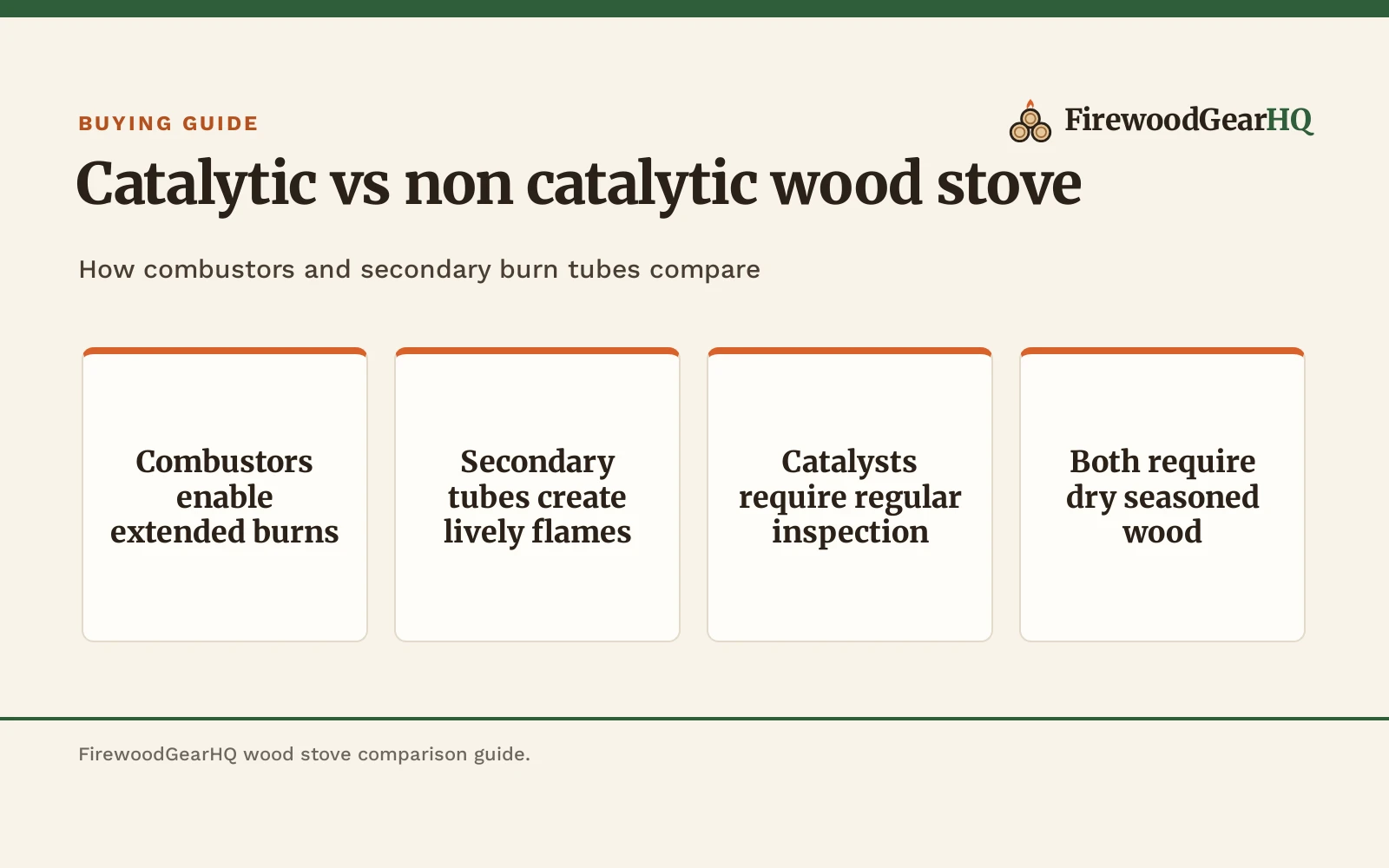
Catalytic vs Noncatalytic Wood Stove at a Glance
| Point | Catalytic | Noncatalytic |
|---|---|---|
| Burn time | Maker claims up to 8 hours longer than a non-catalytic stove | No burn time is stated for the rocket stoves |
| Emissions | Maker claims the combustor removes 70 percent of harmful wood stove emissions | No emissions figure is stated |
| Creosote | Maker claims the combustor helps prevent creosote buildup | No creosote claim is stated for the rocket stoves; the remover powder here is for flue care |
| Part to replace | Ceramic combustor, 3 x 18.5 x 2.5 inches | No combustor; the rocket stoves here have steel bodies, and the portable rocket stove here has a grill rack and wok rings |
| Warranty | 5-year prorated warranty on the combustor here | 1 year warranty on the rocket stoves here |
The gear in this guide
The gear list covers 4 products in ranked order, from the strongest listing to the narrowest. Each entry uses only the facts its listing states.
Top pick: Midwest Hearth catalytic combustor
This ceramic combustor is the catalytic side of the comparison in hardware form. It measures 3 x 18.5 x 2.5 inches, is made in the USA, and fits Regency CI2700 and CI2600 inserts and Hampton HI400 and HI500 inserts, replacing OEM 106-534. The maker says it removes 70 percent of harmful wood stove emissions, stretches the burn up to 8 hours longer than a non-catalytic stove, saves up to 1/3 of the cost of a cord of wood, and helps prevent creosote buildup. The maker lists a 5-year prorated warranty and says warranty claims run at 0.4 percent.
Suits an owner of a matching Regency or Hampton insert who is shopping on the maker’s claims of longer burns and less creosote; skip it without a matching insert, or when shopping for a whole stove rather than a part.
siohdagu portable rocket stove
This is the most capable of the portable stoves here. The 16.9 inch body measures 16.9 x 16.9 x 19.68 inches, weighs 15.87 pounds, withstands temperatures up to 1472℉ (800℃) and supports up to 220 lb. It comes with a grill rack, 3 removable wok rings, protective gloves, assembly accessories and a manual, and the maker gives a 1 year warranty. The maker lists camping, backyard gatherings, fishing trips and emergency preparedness among its uses, and the stove burns wood, charcoal, branches or dry leaves.
Suits a camper or backyard cook who wants a portable stove for grilling, boiling and frying; skip it for heating a house, since this is a portable cooking stove.
siohdagu multifunction stove with chimney
This steel stove measures 20.5 x 20.5 x 22.44 inches in a 20.5 inch size, with a chimney design that guides smoke out and burner rings in various sizes for different cookware. Its detachable structure packs down for transport. The maker lists camping, tent heating, hunting, fishing, cooking, barbecue and emergency preparedness among its uses, and gives a 1 year warranty.
Suits a camper who wants a chimney design and a stove that breaks down for the trip; skip it for heating a house, since this is a portable outdoor stove.
Meeco’s Red Devil creosote destroyer
This is flue care, not a stove. The 5 lb container holds a powder for wood stoves and fireplace inserts, made in the USA. The maker directs the user to sprinkle in 2 tablespoons every 3rd fire, or every other day if burning 24/7, and says the powder is activated by burning in a medium fire at 325 to 350 degrees. The maker says regular use keeps the chimney cleaner, with less buildup.
Suits a stove owner keeping up with creosote between chimney cleanings; skip it when shopping for a stove, since this is a maintenance powder.
Safety notes for either stove
A house stove needs an install done per the maker directions and local code, and chimney work left to a certified sweep. Keep smoke and CO alarms in place, have the chimney inspected each year, and burn seasoned wood only. The multifunction stove lists tent heating among its uses, but the maker does not state the stove is made to run inside a tent. Never run a stove, heater, grill or fire pit inside a tent or gazebo unless the maker states it is made for that setup, and keep a CO alarm in place for any such use.
FAQ: wood, fire and gear
Which burns longer, a catalytic or a noncatalytic wood stove?
For the combustor here, the maker claims it stretches the burn up to 8 hours longer than a non-catalytic stove and saves up to 1/3 of the cost of a cord of wood. That is the maker’s claim for this part, and no burn time is stated for the rocket stoves here, so these listings do not settle burn time for the two styles in general.
Does a catalytic stove make less creosote?
The maker of the combustor here claims catalytic combustors prevent the buildup of creosote, and links catalytic stoves to a decrease of 75 percent in creosote-caused fires since 1990. Those are the maker’s claims for this part. The creosote remover powder here is made for regular flue care between cleanings.
How long does a catalytic combustor last?
The listing gives no lifespan figure. The maker lists a 5-year prorated warranty, with warranty claims at 0.4 percent. A buyer who wants a lifespan figure needs to ask the maker.
Can a wood stove heat a tent?
The multifunction stove here lists tent heating among its uses, but the maker does not state the stove is made to run inside a tent. A stove never belongs inside a tent unless the maker states it is made for that setup, and any such use needs a CO alarm in place.
What size catalytic combustor fits my stove?
The combustor here measures 3 x 18.5 x 2.5 inches in ceramic and fits Regency CI2700 and CI2600 inserts and Hampton HI400 and HI500 inserts, replacing OEM 106-534. Check the fit against the insert model before ordering.
How do I use creosote remover powder?
Sprinkle in 2 tablespoons every 3rd fire, or every other day if burning 24/7. The maker says the powder is activated by burning in a medium fire at 325 to 350 degrees, and that it is made for wood stoves and fireplace inserts.
More firewood guides
See the best wood stove for camping and the best wood stove for tent camping for portable picks, and compare fuels in wood burning camp stove vs propane camp stove. For upkeep, see how to clean stove pipe, chimney cap maintenance and wood stove pipe temperature.