Catalytic Wood Stove Maintenance: Cleaning and Care
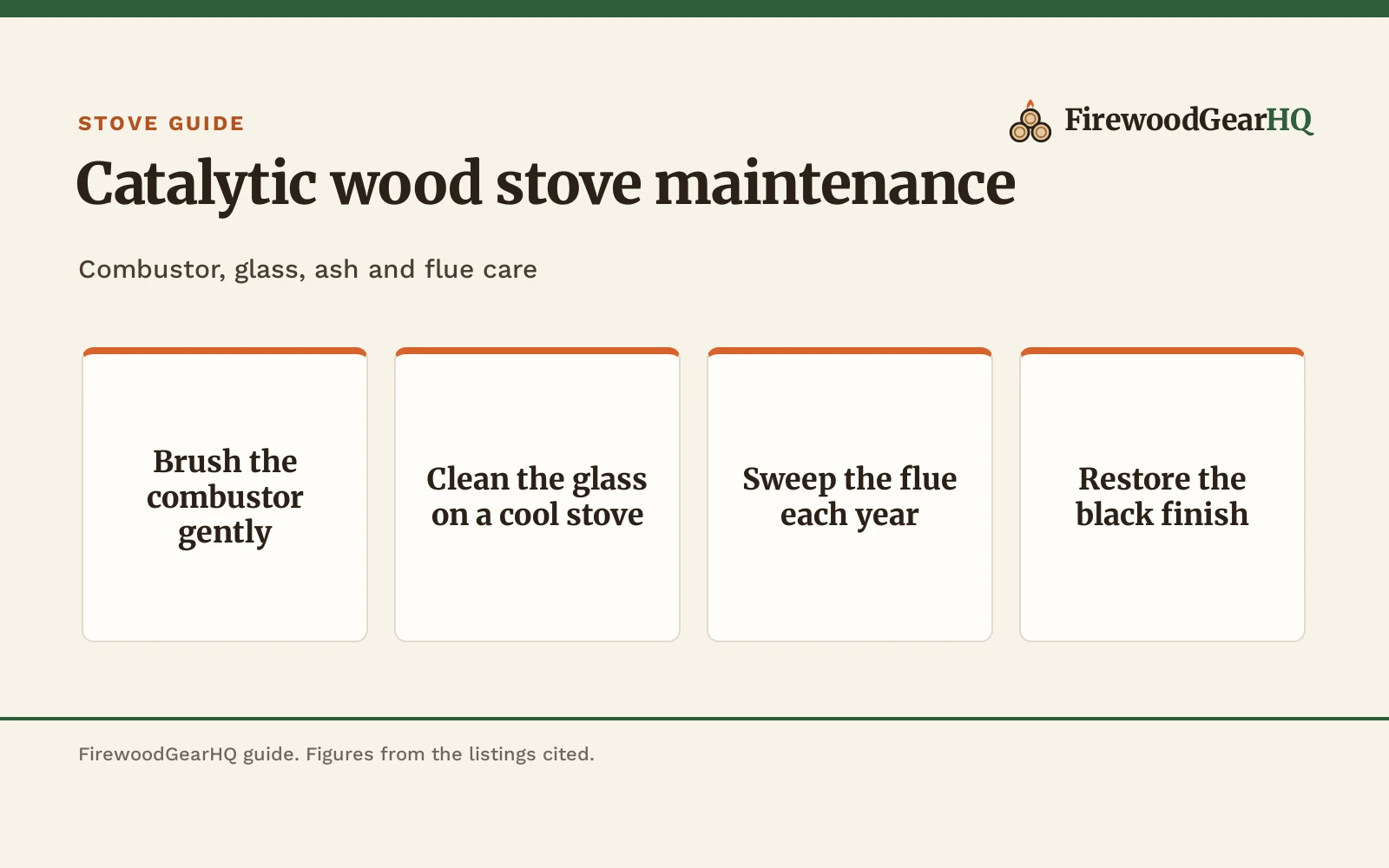
Catalytic wood stove maintenance means keeping the combustor clear, the glass clean, the ash out and the flue swept, with the finish restored when the black fades.

On this page
By midwinter the stove has burned through weeks of fires, the glass has gone dark with soot, and the fire takes longer to catch than it did in the fall. That is when catalytic wood stove maintenance earns its keep: a clean combustor, clear glass and a swept flue let the stove burn the way it was built to burn. This guide walks through each part in turn, with the tools and figures the listings state.
As an Amazon Associate I earn from qualifying purchases. FirewoodGearHQ earns a small commission if you buy through links on this page. The price you pay stays the same. Read our affiliate disclosure.
The quick answer
Catalytic wood stove maintenance means keeping the combustor clear, the glass clean, the ash out of the firebox and the flue swept, with the finish restored when the black fades. Clean the glass with a stove glass cleaner, brush the combustor gently, shovel the ash once the stove is cold, and sweep the chimney with a brush kit that matches the flue. Inspect the chimney each year, and burn seasoned wood only.
The parts to care for in catalytic wood stove maintenance
A catalytic stove has 4 parts that need regular care: the combustor, the glass, the firebox and the flue. The combustor is the part that burns the smoke, so it decides how clean the stove runs. The glass shows the fire and tells you how the stove is burning. The firebox holds the ash, and the flue carries the smoke out. Work through them in that order, from the inside of the stove out to the chimney.
Clean the glass
Start with the glass, because it shows the state of the fire. The Furniture Clinic Stove Care Kit (on Amazon) pairs a 17 oz bottle of cleaner with an 8.5 oz tub of restorer for cast iron and glass on fireplaces, and its cleaner cuts through soot and dirt on the glass and metal. Spray the cleaner onto the glass and wipe it off with a clean cloth, and use an abrasive pad for stubborn marks on the glass. The CleanCrown 3-in-1 kit (on Amazon) lists an 8.8 oz cleaner with a scrubbing pad and a scraper, and states it is safe for fireplace glass as well as electric glass top stoves and ceramic cooktops. For a plain glass cleaner, the Weiman kit (on Amazon) lists a 10 oz cream with 3 scrubbing pads and 1 scraper, and the Cerama Bryte kit (on Amazon) lists a 10 oz bottle with a scraper, a pad tool and 1 cleaning pad in a 4 piece kit. Work on a cool stove, and buff the glass with a paper towel or a microfiber cloth for a clear finish.
Care for the catalytic combustor
The combustor sits in the path of the smoke and burns off the gases that would otherwise leave as smoke. When it clogs with fly ash, the stove smokes more, the glass darkens faster and the fire struggles to hold. Let the stove go cold, then lift the combustor out if the maker shows a way to remove it, and brush the fly ash off gently with a soft brush. Do not use a wire brush on the combustor face, and do not wash it with a cleaner made for glass or metal. Look at the face in good light: a combustor with cracks, missing pieces or a face that stays clogged after brushing has reached the end of its life, and a new one comes from the stove maker. Put it back the way it came out, with the face toward the fire.
Clear the ash and the firebox
Ash builds up under the fire and chokes the air that feeds it, so clear the firebox once the stove is cold. The CKLT set lists a 16-inch ash shovel and brush set with a stand, built from manganese steel with a heat resistant rubber handle. The handle runs 6 inches, the stand is 9.5 inches tall on a 5-inch weighted base, and the set is a 3-piece hearth cleaning set for indoor wood-burning stoves, open fireplaces, outdoor fire pits, BBQ grills and coal boilers. Shovel the ash into a metal container with a lid, brush the fine ash from the corners, and leave a thin bed of ash for the next fire. Keep the container outside, away from the house and the woodpile, until the ash is cold through.
Brush the flue and chimney
Soot and creosote build up on the flue walls, and the Sealegend listing states plainly that the build-up can cause fires. Sweep the flue with a brush kit that fits it, and inspect the chimney each year. The Sealegend kit (on Amazon) works from the bottom up so no ladder is needed. Match the brush head to the flue: the 30-foot AOGYiKang kit lists 4-inch and 6-inch heads, and the 21-foot kit lists a 4-inch head, so pick the head that matches the pipe.
| Kit | Reach | Brush heads | Notes |
|---|---|---|---|
| Sealegend chimney sweep kit | 46 feet | Flexible brush, plus a spare set of bristles | 14 rods at 39.3 inches each, with a drill adapter |
| AOGYiKang 30-foot kit | 30 feet | 4-inch and 6-inch heads, 3 nylon brush heads | Rods work with or without a drill |
| AOGYiKang 21-foot kit | 21 feet | 4-inch head, 2 nylon brush heads | For a 4-inch cleaning area |
After sweeping, check the flue from the top and the bottom for missed patches, and look for a cracked liner or loose joints. A chimney that shows damage, or a flue that stays blocked after sweeping, is a job for a certified chimney sweep. Keep the smoke and CO alarms in the house working, and burn seasoned wood only.
Restore the finish
Heat and handling fade the black on the stove body over the seasons. The Furniture Clinic restorer puts the black back into log burners, grates and fireplaces, covering faded and worn areas of metal in just one application. Rub the restorer into the metal, polish it off, and light the stove: once applied and dried, in 10 mins, it will not flake or peel off. The Imperial stove polish lists an 8 oz bottle that restores and preserves cast iron and steel, in a water soluble and low odor formula. Use the restorer on a cold stove.
FAQ: wood, fire and gear
How often should I clean my catalytic wood stove?
Clean the glass and clear the ash through the burning season, brush the combustor when fly ash builds up, and sweep the flue and inspect the chimney each year. A stove that smokes more than usual or shows dark glass soon after cleaning is asking for a check.
Can I use a cooktop cleaner on wood stove glass?
Reach for a cleaner made for stove glass. The Furniture Clinic kit is made for log burners and stoves, and the CleanCrown kit states it is safe for fireplace glass. The Weiman and Cerama Bryte kits are cooktop cleaners for glass and ceramic ranges.
What size chimney brush do I need?
Match the brush head to the flue. The 30-foot AOGYiKang kit lists 4-inch and 6-inch heads, and the 21-foot kit suits a 4-inch cleaning area. Measure the flue before you buy, and pick the head that matches it.
How do I clean a catalytic combustor?
Let the stove go cold, lift the combustor out if the maker shows a way to remove it, and brush the fly ash off gently with a soft brush. Do not use a wire brush on the face, and do not wash it with a cleaner made for glass or metal.
How long does the stove restorer take to dry?
The Furniture Clinic listing states the restorer dries in 10 mins once applied. Rub it into the metal, polish it off, and light the stove.
More firewood guides
See the wood stoves hub, the best wood stove for heating a house and how to clean a wood stove glass door. For the flue, see wood burning stove chimney parts and stove pipe sizes, and for pellet stoves see pellet stove maintenance.