Firebrick vs Pizza Stone: Which One Should You Buy?
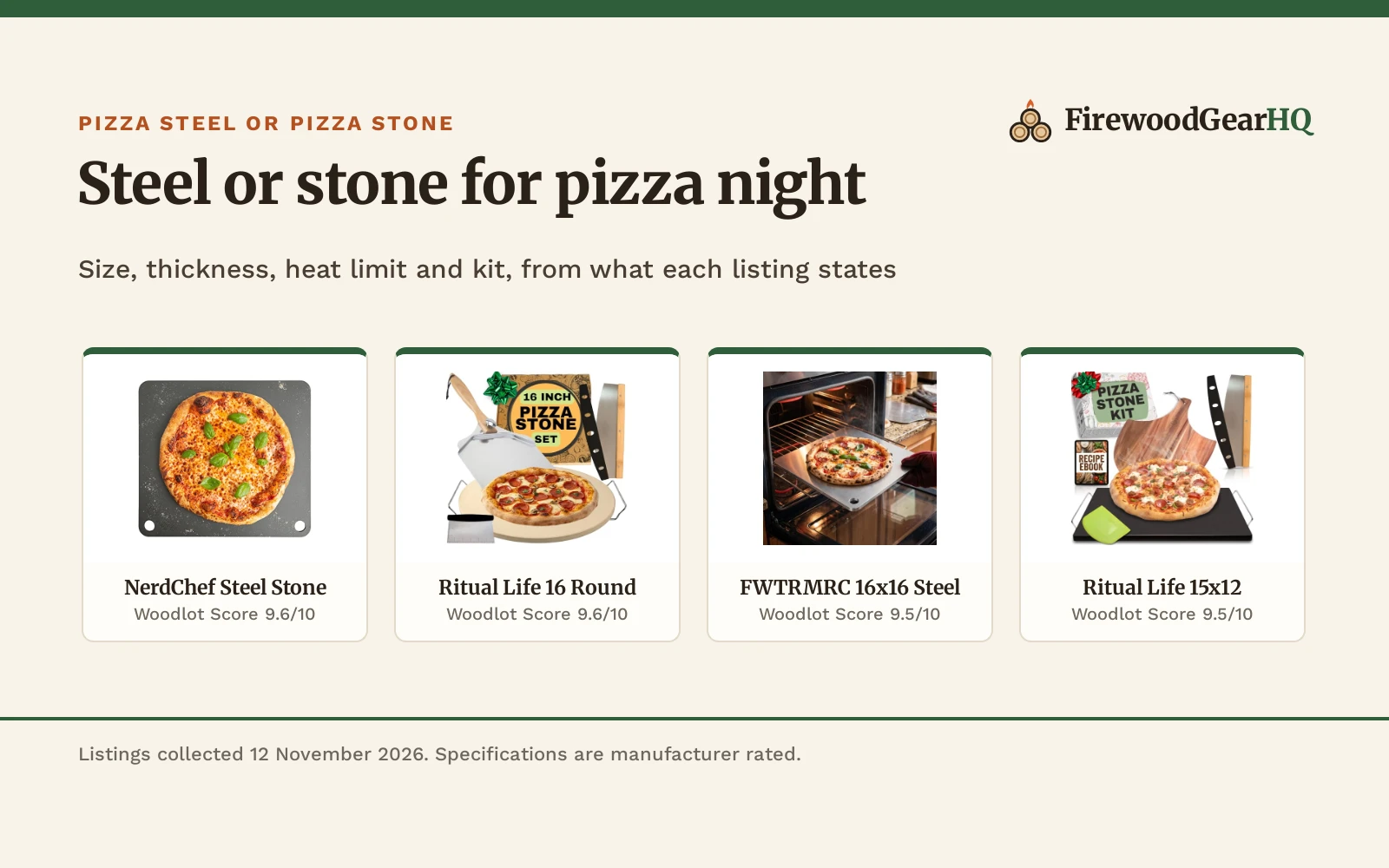
A firebrick is built to line stoves and ovens and take direct flame while a pizza stone is a baking slab, and this guide compares the two on heat, thickness and food contact.

On this page
Top picks at a glance
As an Amazon Associate I earn from qualifying purchases.
- 1
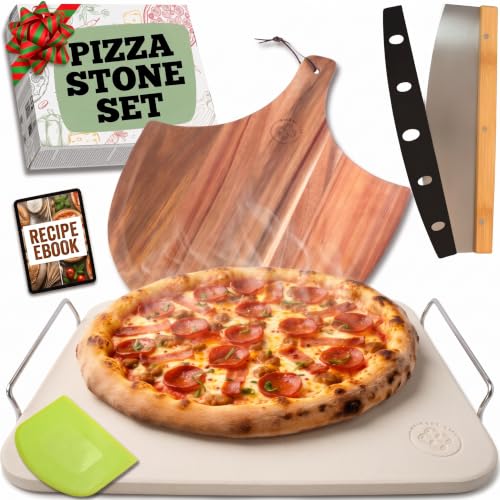 Pizza Stone for Oven and Grill Set9.5/10View on Amazon
- 2
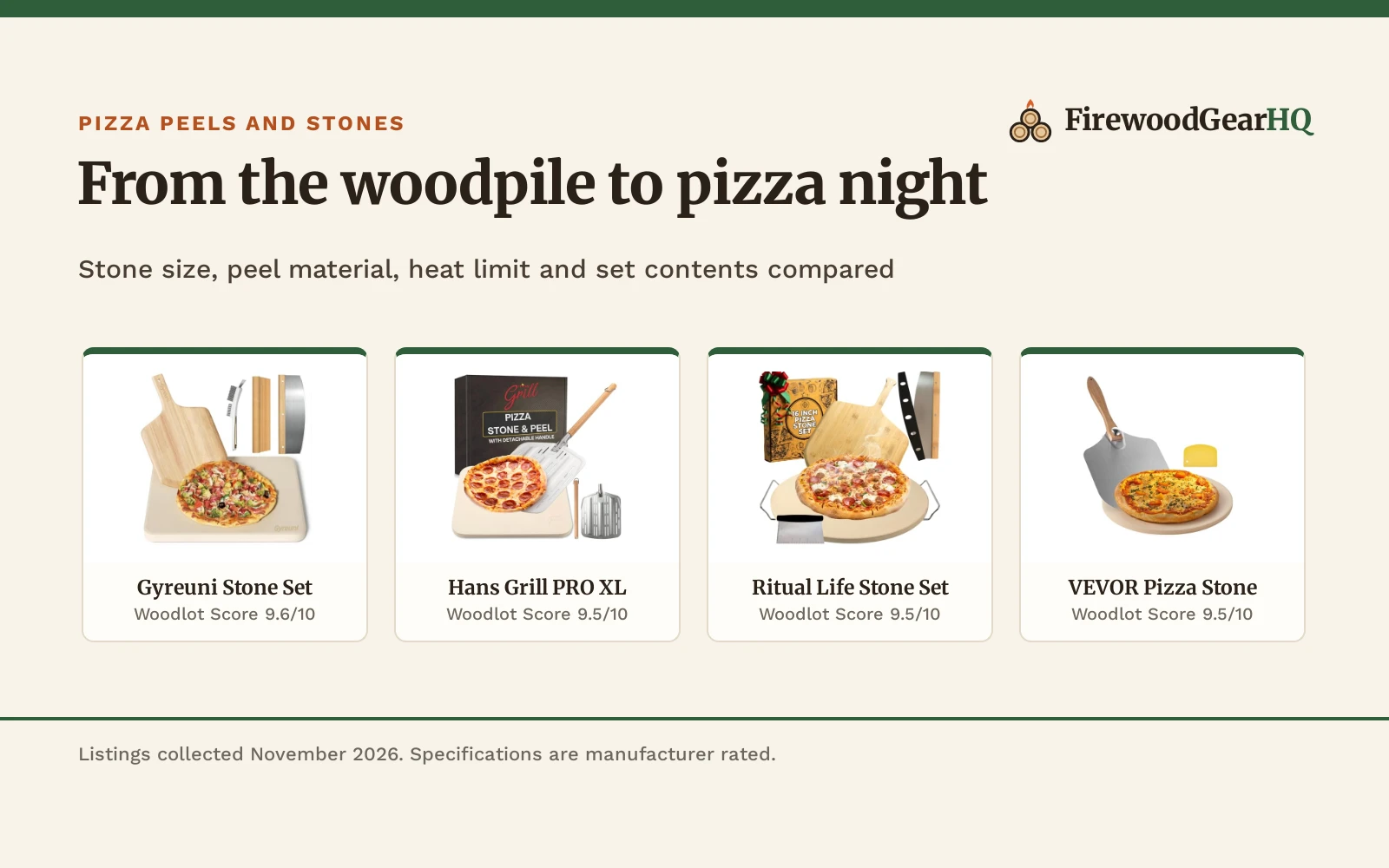
 Gyreuni 13 Pizza Stone for Oven and Grill with Pizza Peel9.4/10View on Amazon
- 3
 Gyreuni 16'' Cordierite Pizza Stone for Oven and Grill with9.5/10View on Amazon
- 4
 Fire BricksView on Amazon
- 5
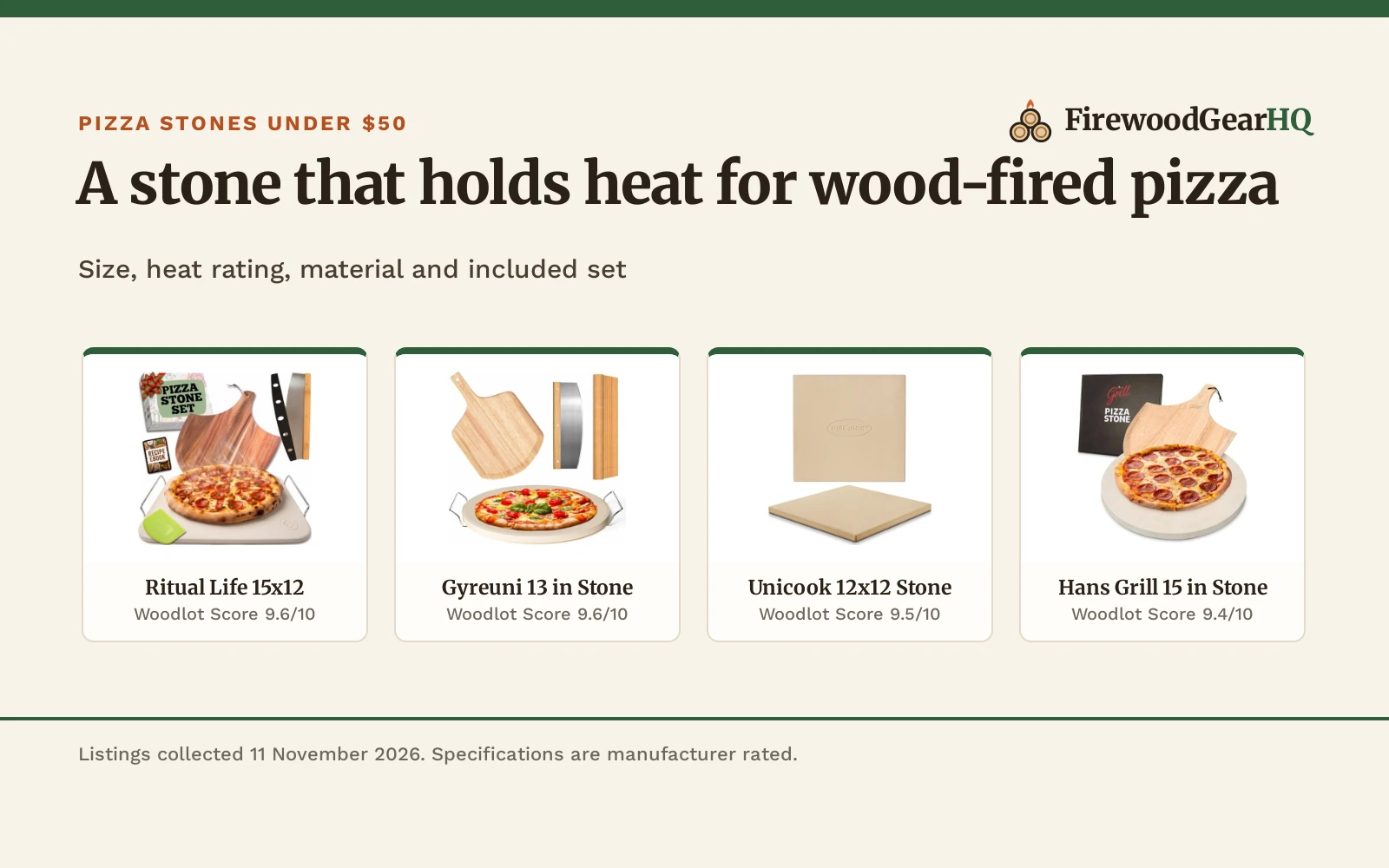
 Unicook 12"x12" Square Pizza Stone for Oven GrillView on Amazon
- 6
 Hans Grill Rectangular Pizza Stone with PeelView on Amazon
- 7
 Hans Grill Circular Pizza StoneView on Amazon
- 8
 Old Stone Round Pizza StoneView on Amazon
- 9
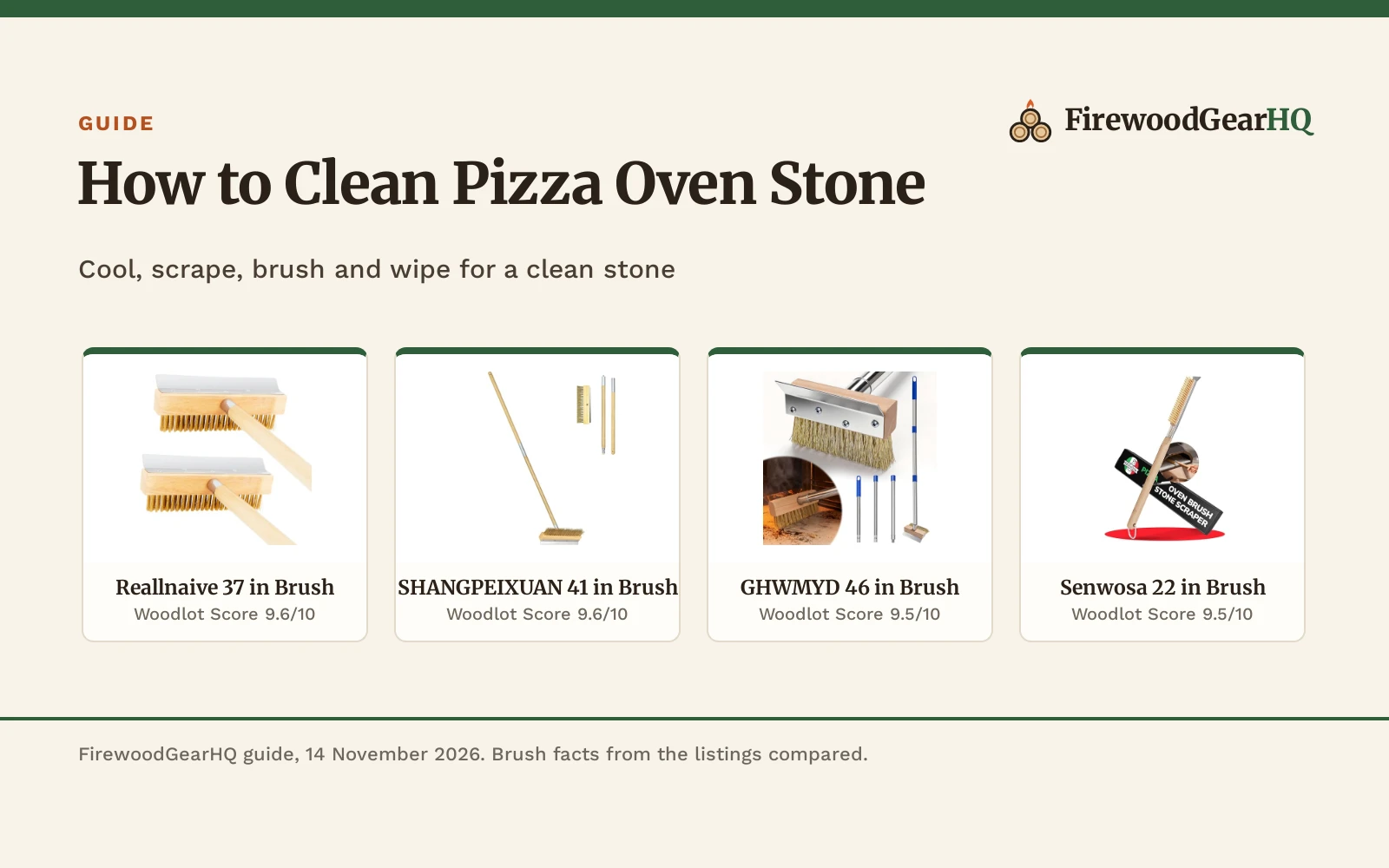
 Senwosa 26” Pizza Oven Brush with Stone ScraperView on Amazon
Fall is the season for stacking the last cords, sweeping the chimney and getting the outdoor oven ready for cold-weather cooking, and a pizza night by the fire is a fine use of a wood-fired oven. The question comes up every time an oven floor needs replacing or a first oven goes in: firebrick vs pizza stone, which one belongs under the pie? For a wood-fired oven floor, a firebrick is the stronger pick, because it is made to line stoves, fireplaces and ovens and to take direct flame, while a pizza stone is a baking slab made for even oven heat rather than for lining a firebox. This guide lays out what each one is, how the three firebricks in the gear section compare, and how to pick between them.
More options to weigh up
 Fire BricksCheck price on Amazon
 Unicook 12"x12" Square Pizza Stone for Oven GrillCheck price on Amazon
 Hans Grill Rectangular Pizza Stone with PeelCheck price on Amazon
 Hans Grill Circular Pizza StoneCheck price on Amazon
 Old Stone Round Pizza StoneCheck price on Amazon
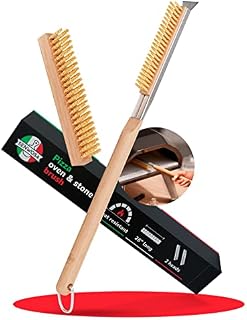 Senwosa 26” Pizza Oven Brush with Stone ScraperCheck price on Amazon
FirewoodGearHQ earns a small commission if you buy through links on this page. The price you pay stays the same. Read our affiliate disclosure.
Firebrick vs pizza stone: the quick answer
A firebrick is a refractory brick made to line wood stoves, fireplaces, kilns and pizza ovens, and the listings in this guide rate bricks to 2700F, 2,700+ F and 2310°F/1270°C. A pizza stone is a flat baking slab that sits on the oven floor and gives the crust a hot, dry surface. If the floor will see flame, ash and the heat of a wood fire, pick a firebrick: the clay Protalwell brick is food safe and lists direct food contact, and the Rutland soapstone brick is listed as commonly found in pizza ovens and masonry heaters. If the floor sits in a home oven and only bakes, a pizza stone does the job.
What a firebrick is
A firebrick is a brick made to live inside heat: it lines wood stoves, fireplaces, fire pits, kilns and pizza ovens, and it holds its shape where an ordinary brick would crack and crumble. The listings in this guide show the range on offer. The Protalwell clay brick here is food safe and can sit in direct contact with food. The Rutland soapstone brick here is listed as commonly found in pizza ovens and masonry heaters. The CFKJ insulating brick here is made from alumina and silica and is rated for ovens and kilns. The bricks here come in packs, and the sizes run from a slim 0.79 in slab to a thick 2-1/2 in block.
What a pizza stone is
A pizza stone is a flat slab that lives on the oven floor and does one job: it takes heat from the oven and hands it to the crust, so the base bakes crisp while the top cooks. It is a baking tool, not a lining brick, and it is not made to take the place of the firebrick that lines a stove or a kiln. A stone suits an oven where the floor is heated evenly and the slab is not asked to carry flame or to line a firebox. In a wood-fired oven, where flame licks the floor and ash settles on it, the lining brick is the material made for that work.
The gear: three firebricks compared
The Rutland soapstone brick leads the group. The listing states soapstone radiates heat much longer than clay fire bricks, and it lists the brick as commonly found in pizza ovens and masonry heaters, with a rating of 2,700+ F and a size of 9.0 inches x 4.5 inches x 1.25 inches in a case of 6. It also states that the brick absorbs and retains heat, so less fuel lasts longer. For a pizza oven floor, that mix of a high rating, a stated pizza oven use and long heat radiation is the strongest set of claims in this guide.
The Protalwell clay brick follows close behind. The listing states the brick is food safe, can sit in direct contact with food and can be used in pizza ovens and smokers, with a rating of 2700F and a size of 9″ x 4-1/2″ x 2-1/2″ in a 4-Pack. It states a flat and smooth surface that is easy to clear of ash, strong thermal insulation, and use outdoors for a long time. One wrinkle: the title says 4-Pack while the spec table lists the number of items as 1, so trust the title and check the pack size before ordering.
The CFKJ insulating brick ranks last for oven-floor use. The listing states an insulating brick made from alumina and silica, rated to 2310°F/1270°C, sized 9″ x 4.5″ x 0.79″ and sold as 18 Pieces for ovens, kilns, blacksmith work, fireplaces and forges. Its rating is the lowest of the three, and its listing frames it as an insulating brick rather than a floor brick. One wrinkle: the title and bullets state a thickness of 0.79 in while the spec table lists the thickness as 0.04 inches, so trust the title and bullets and check the thickness before ordering.
How to choose between them
Match the heat rating to the oven
Start with the rating the listing states. A wood-fired oven runs hot, and the bricks here state ratings of 2700F, 2,700+ F and 2310°F/1270°C. Pick a brick whose stated rating clears the heat the oven will see, and do not guess at a rating the listing does not state.
Check the thickness and the floor
Thickness sets how the floor feels under the peel and, for a dense brick, how much heat the floor holds. The bricks here run from 0.79 in to 2-1/2 in thick, with the Rutland brick at 1.25 inches. A thick clay brick gives a solid floor, while a slim insulating brick suits lining work more than a floor that takes a peel.
Food contact matters for a pizza floor
The pie sits straight on the floor, so check that the brick is safe for food contact. The Protalwell listing states the clay brick is food safe and can sit in direct contact with food. The other listings here do not state food safety, so do not assume it: a brick with neither a food-safety statement nor a stated pizza oven use belongs in the stove lining, not under the pie.
Count the pack
A floor takes more than one brick, so count the pack before ordering. The listings here offer a 4-Pack, 18 Pieces and a case of 6. Measure the floor, count the bricks the floor needs, and order the pack that covers it with a spare or two for cuts and breakage.
FAQ: wood, fire and gear
Can I use a firebrick as a pizza stone?
Yes, if the listing states food contact or a pizza oven use. The Protalwell clay brick states it is food safe, can sit in direct contact with food and can be used in pizza ovens, and the Rutland soapstone brick is listed as commonly found in pizza ovens. A brick with neither a food-safety statement nor a stated pizza oven use belongs in the stove lining, not under the pie.
Which firebrick holds heat longest?
Of the three here, the Rutland soapstone brick: the listing states soapstone radiates heat much longer than clay fire bricks and that the brick absorbs and retains heat, so less fuel lasts longer.
Can firebrick go in a wood stove?
Yes. The Protalwell listing states the brick is a replacement for wood stoves, fireplaces, fire pits, kilns and pizza ovens, and the Rutland listing states firebricks for wood-burning fireplaces and woodstoves.
What size are these firebricks?
The Protalwell brick is 9″ x 4-1/2″ x 2-1/2″, the CFKJ brick is 9″ x 4.5″ x 0.79″, and the Rutland brick is 9.0 inches x 4.5 inches x 1.25 inches. All three share the same face size, and they differ in thickness.
How many bricks come in a pack?
The Protalwell brick comes as a 4-Pack, the CFKJ brick as 18 Pieces, and the Rutland brick as a case of 6. Check the spec table against the title before ordering: the Protalwell spec table lists the number of items as 1, while the title says 4-Pack.
More firewood guides
See the wood-fired cooking hub and the pizza ovens section for more on cooking with wood fire. For the fire itself, see the best wood for a wood stove and the best fire starters for wood stoves, and read how to choose a wood stove if the stove is next on the list.