How to Install Firebrick in a Fireplace
How to install firebrick in a fireplace, from a cold, cleaned-out firebox and measuring the old lining to dry-fitting and setting replacement brick.

On this page
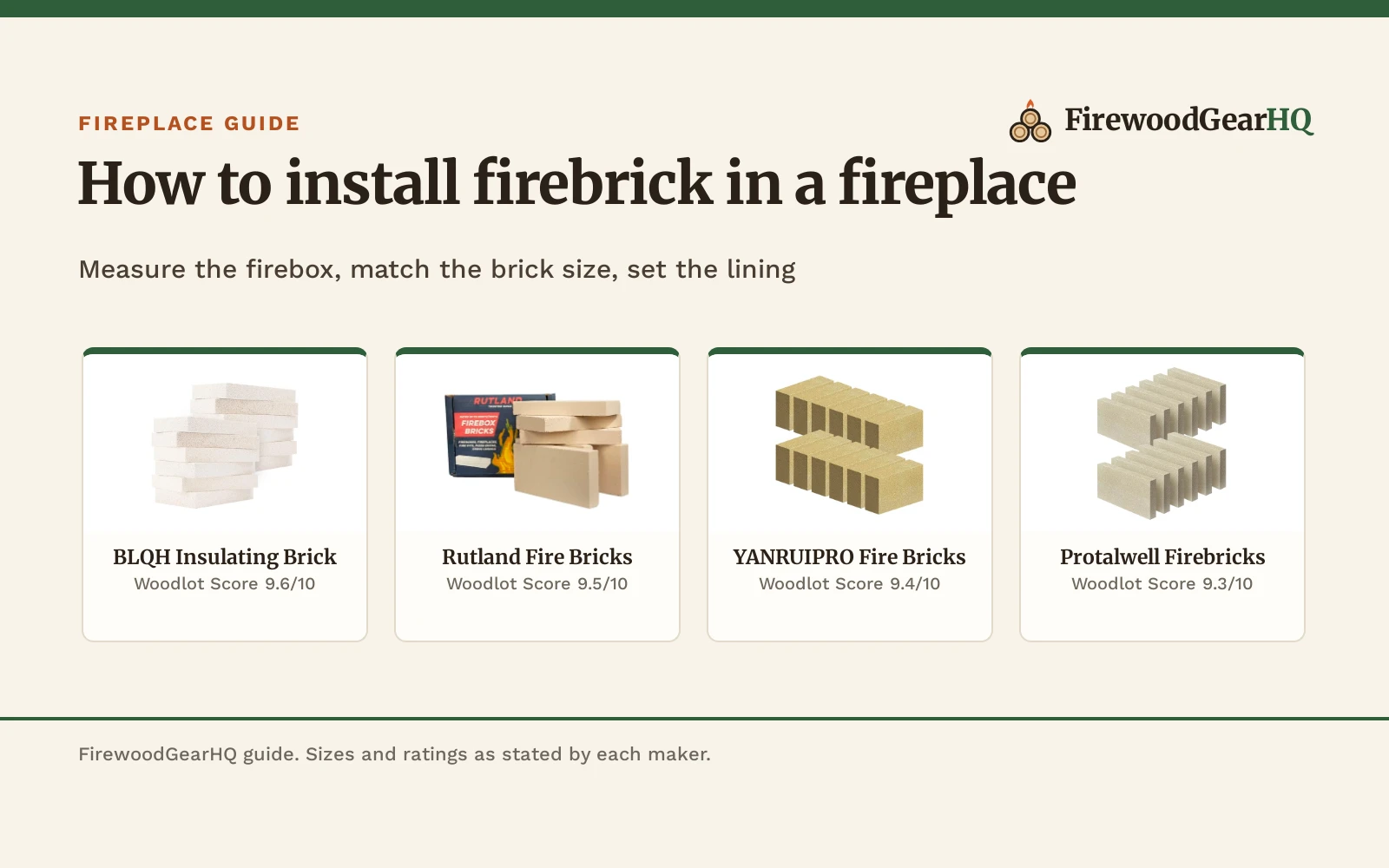
Top picks at a glance
As an Amazon Associate I earn from qualifying purchases.
- 1
 12 Pieces Insulating Fire Brick for Ovens, Kilns9.6/10View on Amazon
- 2
 Rutland Fire Bricks, Properly Cured High9.5/10View on Amazon
- 3
 Fire Bricks, Indoor Use High Temperature Insulated9.4/10View on Amazon
- 4
 Woodstove Firebricks, Fire Bricks9.3/10View on Amazon
Burning season puts the firebox to work night after night, and a cracked or crumbling lining is easy to spot when ash is cleaned out and the grate is lifted away. Learning how to install firebrick in a fireplace starts with a cold firebox, a clear view of the damaged brick, and replacement brick that matches the size already in place. A damaged firebox beyond the lining is work for a certified professional.
FirewoodGearHQ earns a small commission if you buy through links on this page. The price you pay stays the same. Read our affiliate disclosure.
12 Pieces Insulating Fire Brick for Ovens, Kilns
Insulating fire brick, 9 x 4.5 x 1.25 inches, pack of 12, rated up to 2375°F, for lining a fireplace firebox.
Pros
- Rated up to 2375°F (1303°C), highest stated here
- Pack of 12 pieces
- Stated size 9 x 4.5 x 1.25 inches
- Alumina and silica, for ovens, kilns and fireplaces
Cons
- Fixed size, so measure the firebox before ordering
- Insulating brick rather than clay brick
- Pack of 12, more than a small patch may need
- No warranty term is stated
Rutland Fire Bricks, Properly Cured High
Fire clay replacement brick, 9 x 4.5 x 1.25 inches, 6-pack, certified for residential use at 2000°F, for fireplace lining repair.
Pros
- Certified for residential use at 2000°F (1093°C)
- Maker states non-brittle, accurate to size
- Made in the USA, per the maker
- For wood stove, fireplace and pizza oven use
Cons
- 6-pack, fewer pieces than the 12-piece packs here
- Rated at 2000°F, below other ratings stated here
- Ivory color may stand out against darker lining
- 1.25 inch thickness, thinner than the 2.5 inch pick
Fire Bricks, Indoor Use High Temperature Insulated
Clay fire brick, 9 x 4.5 x 2.5 inches, pack of 12, rated at 2200°F, for a thicker fireplace lining.
Pros
- Stated rating of 2200°F
- Pack of 12 at 2.5 inch thickness
- Clay with dense insulating material, per the maker
- For lining a fireplace or wood stove
Cons
- Not waterproof; maker says not for outdoor use
- Maker states not for forging ovens
- 2.5 inch thickness takes more firebox depth
- Yellow color may not match existing lining
Woodstove Firebricks, Fire Bricks
Lightweight fire brick, 9 x 4.5 x 0.75 inches, set of 12, rated at 2200°F, maker says it can be drilled and cut.
Pros
- Maker says it can be drilled and cut
- Stated rating of 2200°F
- Set of 12 at 0.75 inch thickness
- For lining wood stoves and fireplaces
Cons
- 0.75 inch thickness suits only a thin lining
- Not waterproof; maker says not for outdoor use
- Maker states not for forging ovens
- No warranty term is stated
The quick answer
To install firebrick in a fireplace, let the fireplace go fully cold, clean out ash and loose debris, remove the damaged brick, measure the opening, and dry-fit replacement brick of the same stated size before setting it with refractory mortar made for fireplace use, unless the fireplace maker directs a dry-laid lining, following the mortar maker directions. Stop for a certified chimney professional if the firebox walls or flue are damaged beyond the brick lining.
What firebrick does in a fireplace
Firebrick lines the firebox where flame and hot coals sit. The lining faces the heat, helps hold heat in the firebox, and shields the masonry behind it from direct flame. When brick cracks, crumbles or falls out, the masonry behind it faces direct flame instead of the lining made for that heat.
Steps: how to install firebrick in a fireplace
Let the fireplace go cold and clean it out
Do not start while the firebox, ash or masonry still holds heat. When everything is cold, remove ash, charred wood and loose debris so the floor and walls are visible. Look over every brick for cracks, crumbling faces and missing pieces.
Remove the damaged brick
Work the damaged brick out without breaking up sound brick around it. Keep the removed pieces to match size and thickness. If the masonry behind the lining is cracked, soft or missing, stop there. Damage past the lining, a damaged damper or a cracked flue calls for a certified chimney professional.
Measure the opening and match the stated size
Measure the opening left by the old brick and compare it with the stated size of the replacement brick before you buy. The picks below state sizes of 9 x 4.5 x 1.25 inches, 9 x 4.5 x 2.5 inches and 9 x 4.5 x 0.75 inches, so thickness is the figure that changes most between them. Measure the firebox itself as well, the way you would for a fireplace insert.
Dry-fit, then set the brick
Dry-fit each new brick in place before any mortar is mixed. The brick should sit flush with the lining around it, with no rocking and no wide gaps. When the fit is right, set the brick with refractory mortar made for fireplace use, unless the fireplace maker directs a dry-laid lining, and follow the mortar maker directions for mixing, joint size and setting time.
Let it set and check before burning
Leave the repair alone until any mortar has set as its maker directs, and do not build a fire against fresh work to speed it up. When the maker directions allow, start with a small fire and watch the lining as it warms. Keep clearances to combustibles as the fireplace maker and local code require, and burn seasoned wood only.
Firebrick for this job
The measuring step above is where these picks earn their place, because each states a brick size, a pack count and a temperature rating to match against your firebox.
Safety checks before you burn again
New lining does not fix a damaged flue, a faulty damper or a chimney that needs cleaning. Follow the fireplace maker directions and local code for clearances and for what may be burned, keep smoke and carbon monoxide alarms in working order, and keep up annual chimney inspection by a certified professional. See our wood burning fireplace safety checklist for the gear that belongs by the hearth.
FAQ: wood, fire and gear
Can I replace just the cracked firebrick?
Yes, when the brick around it is sound and the masonry behind the lining is in good shape. Match the stated size and thickness of the brick you removed, dry-fit the replacement, and set it as the mortar maker directs.
What size firebrick do I need?
Measure the opening left by the old brick and match that size. The picks here state 9 x 4.5 x 1.25 inches, 9 x 4.5 x 2.5 inches and 9 x 4.5 x 0.75 inches, so thickness is the main difference to check.
Does firebrick need mortar?
Set replacement brick with refractory mortar made for fireplace use unless the fireplace maker directs a dry-laid lining. Follow the mortar maker directions for mixing, joint size and setting time, and let the repair set fully before burning.
Can firebrick be cut to fit?
The Protalwell maker says its firebricks can be drilled and cut. For other brick, follow the maker directions for that product before cutting, and measure and dry-fit so cutting stays a last resort.
When should I call a professional instead?
Call a certified chimney professional when damage goes past the lining, when the masonry behind the brick is cracked or missing, or when the damper or flue is damaged.
More firewood guides
See the stove accessories hub, our wood burning fireplace dimensions guide for measuring the firebox, and the wood burning fireplace safety checklist.