Chainsaw Safety Tips: Gear Up Before the First Cut
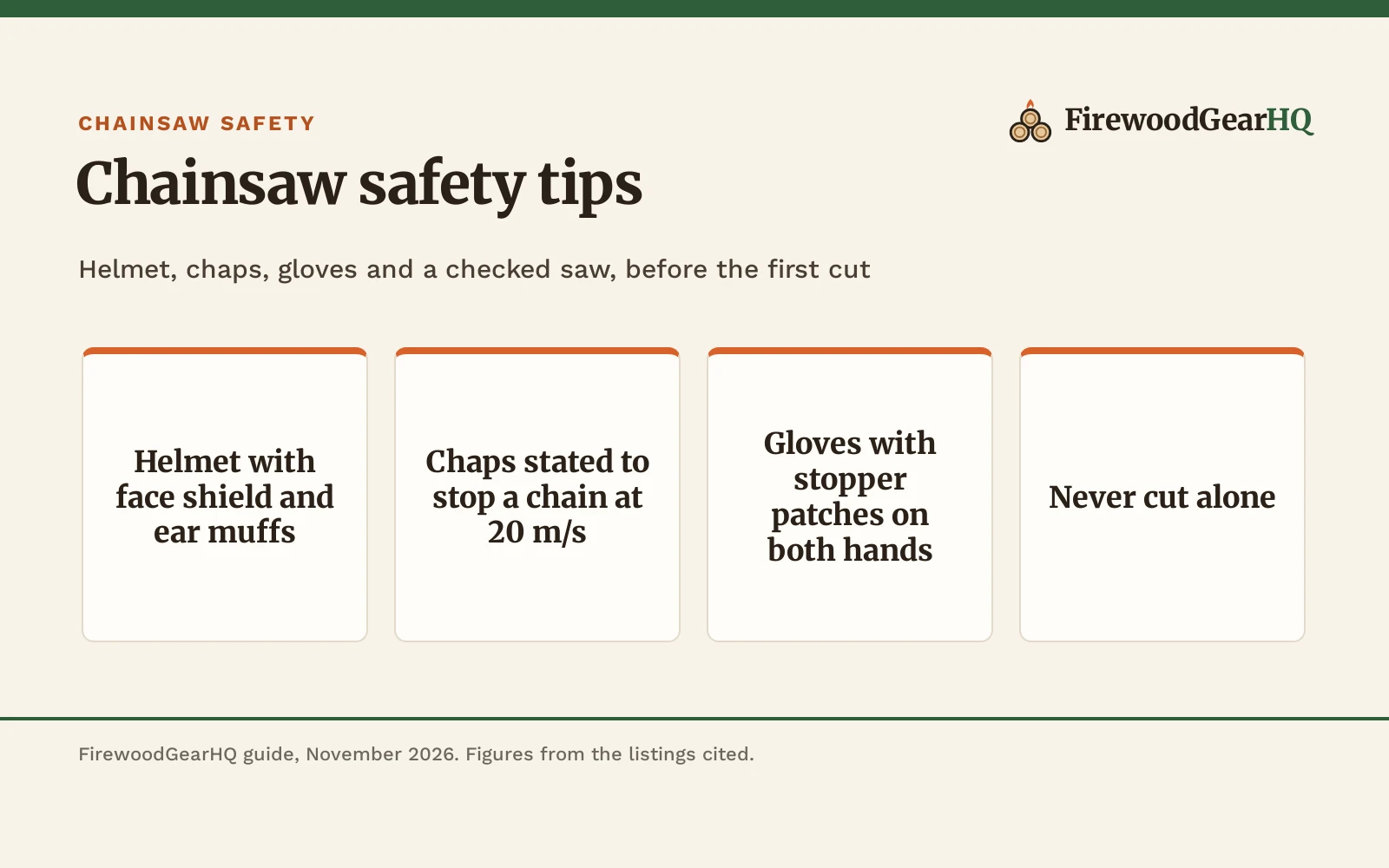
Gear up with a helmet, chaps and gloves, check the chain brake and never cut alone: these chainsaw safety tips keep a cutting day safe.

On this page
Top picks at a glance
As an Amazon Associate I earn from qualifying purchases.
- 1
 NoCry ANSI Z89.1 Rated Arborist Helmet9.7/10View on Amazon
- 2
 KAKEI Chainsaw Chain 16 Inch 3/8" LP Pitch .043" Gauge 559.6/10View on Amazon
- 3
 Granberg G778-36 Alaskan MKIV Chainsaw Mill9.6/10View on Amazon
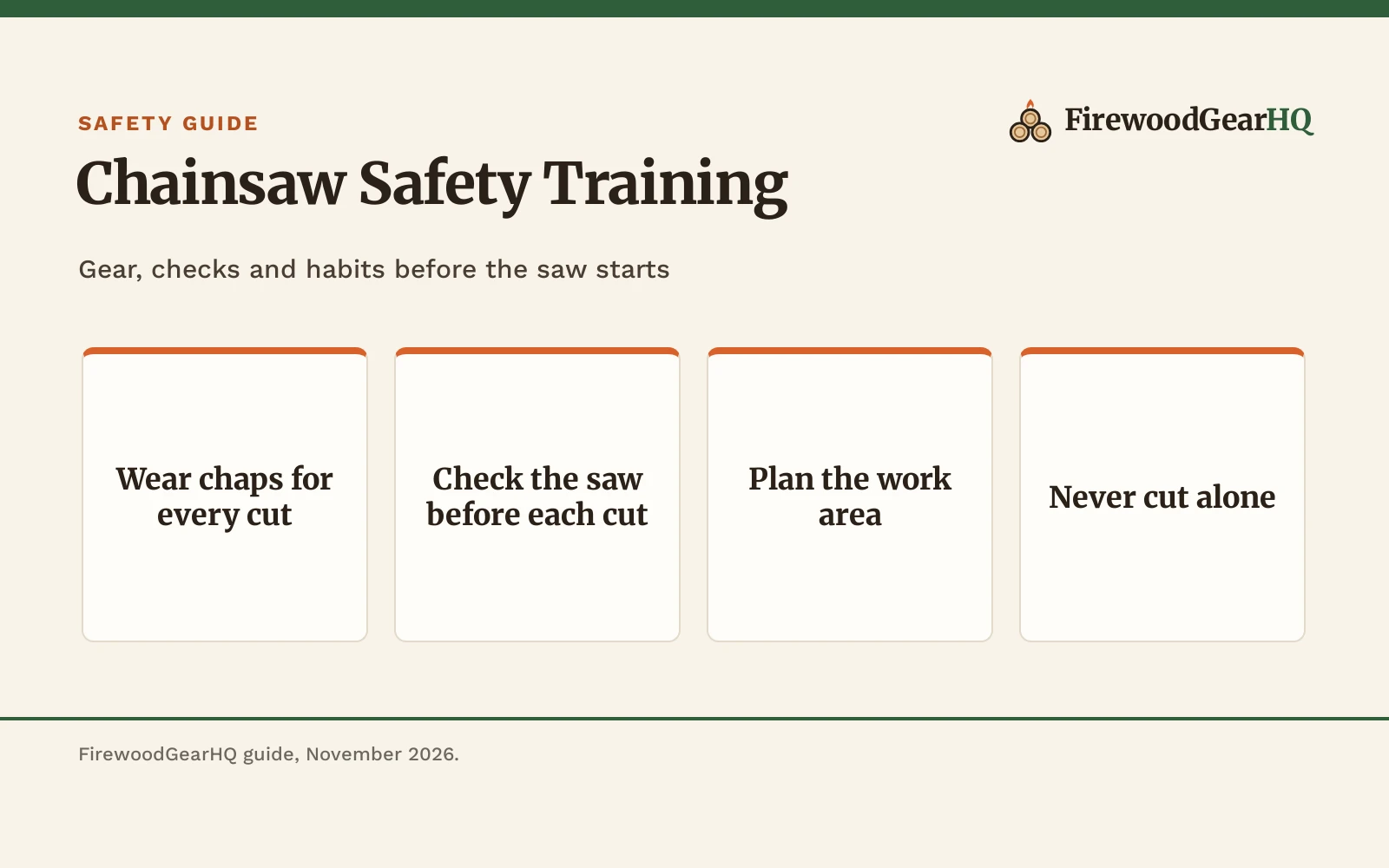
Fall cutting season means a saw in your hands and a pile of rounds waiting by the splitter, and that is when a rushed cut causes trouble. These chainsaw safety tips cover the gear to wear and the habits to keep before the saw starts, while you cut, and after the last round is stacked. Gear up first, check the saw, cut with a plan, and never cut alone.
FirewoodGearHQ earns a small commission if you buy through links on this page. The price you pay stays the same. Read our affiliate disclosure.
The quick answer
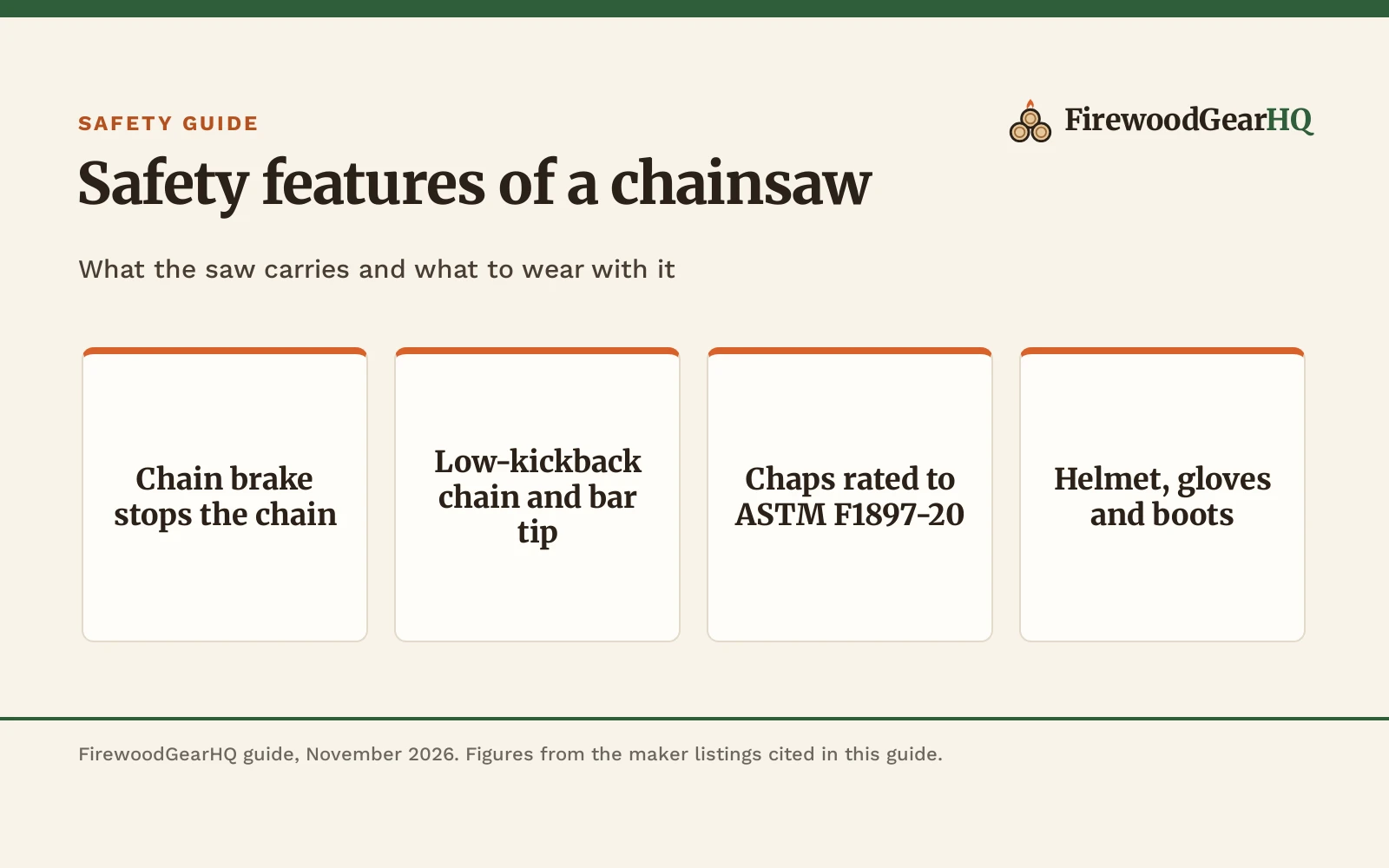
Wear a helmet with a face shield and ear muffs, chaps, gloves and sturdy boots before the saw starts. Check that the chain brake works, the chain is sharp and sits snug on the bar, and the bar oil and fuel are topped up. Grip the saw with both handles, watch the kickback zone at the tip of the bar, and never cut alone.
Chainsaw safety tips: what to wear
Helmet, face shield and ear muffs
A forestry helmet covers head, face, eyes and ears in one piece of gear. The GREEN DEVIL helmet (on Amazon) is a 4-in-1 set: a hard hat, a built-in visor, a metal mesh face shield and ear muffs, with an adjustable 6-point suspension and a size range of 53 to 63 cm, or 20.86 to 24.80 in. The listing states the helmet system is fully compliant with OSHA and ANSI/ISEA Z89.1-2014, Type I (top impact), Class C, with the ear muffs meeting ANSI S3.19 and the face shield and visor meeting ANSI Z87.1-2015 and CE EN 1731. The NEIKO helmet (on Amazon) is a simpler set with a clear face shield, a steel mesh face shield, adjustable ear muffs and a yellow hard hat, with a dial to adjust the fit, and the listing states it weighs 2.49 pounds. The FORESTER combo kit (on Amazon) adds a helmet that meets ANSI/ISEA Z89.1-2009 Type 1, Class E, G and C, with a mesh face shield at ANSI Z87.1a and ear muffs at ANSI S12.42 21 dB, plus clear safety glasses at ANSI Z87.1-2003.
Chaps that stop a chain
Chaps are the gear that stands between a running chain and your legs. The CRISERT chaps (on Amazon) use an 8-layer polyester blend that the listing states can stop a chain moving at 20 m/s, with 180° cut protection below the waist and 360° protection for the lower legs, and they meet EN ISO11393-2. They fit heights of 65 to 75 inches, with the waist adjusting to 52 in and the length adjusting down to 27 in. The GeerDuo set pairs chaps with a work apron in 900D Oxford fabric, with 10 pockets on the apron, and the chaps fit a waist of 25 to 49 inches with snap fasteners and leg straps. The FORESTER combo kit includes apron-style chaps at Class B, UL Classified to the ASTM leg protection standard and F3325-19, in a 35 in size, measured from the top of the belt to the bottom of the leg opening. See the chainsaw chaps size chart before you order, and the do chainsaw chaps work guide for how the layers stop a chain.
Gloves with stopper patches
Regular work gloves protect against splinters and blisters, but they do nothing against a running chain. The Vgo chainsaw gloves put UHMWPE stopper fabric patches inside the back of both hands, made to stop the tooth chain, and the listing puts them at EN ISO11393-4 level 1, class 1, 20 m/s. The palms use goat leather with abrasion protection at EN388 level 2, and the cuffs are neoprene with a hook and loop closure for a firm fit. See the best chainsaw gloves guide for more options.
Boots and the rest
No listing here states a boot, but sturdy boots with a good grip belong on your feet before you start a saw: wet leaves, sawdust and sloped ground make footing uncertain, and a boot that grips keeps you steady. Wear long sleeves and close-fitting clothes that cannot catch on a branch, and tie back long hair. Eye protection matters even with a face shield down, since dust and chips find their way around a mesh screen, and the FORESTER kit includes clear safety glasses as well. Keep a first aid kit within reach of the cutting area.
Check the saw before every cut
A safe cut starts before the saw starts. Check that the chain brake engages and releases cleanly, and that the chain is sharp and sits snug on the bar without sagging. Look over the bar for damage, check the fuel and bar oil, and make sure the chain oiler is feeding oil to the bar. A dull chain forces you to push, and pushing is when a saw binds and kicks, so keep the chain sharp with a file or a sharpener; see the best chainsaw sharpener guide. If anything on the saw feels wrong, stop and sort it out before you cut.
Cut with a plan
Know where you will stand and where you will step back before the saw touches wood. Plant your feet wide on solid ground, grip the saw with both handles, and keep the tip of the bar away from wood, since the kickback zone at the tip is where a saw jumps. Never cut above shoulder height, and never cut with the saw between your legs or above your head. Cut one log at a time, and let the saw do the work instead of forcing it through the cut. Work with someone nearby, and agree on where each of you stands before the saw starts.
When something goes wrong
If the chain stops, the saw binds, or the saw kicks, let go of the throttle and set the saw down before you look at the cut. Do not reach for a bound bar while the chain is still moving, and do not pull a stuck saw free by force. Step back, stop the saw, and open the cut with a wedge before easing the bar out. If the chain comes off the bar, stop the saw, refit the chain, and check the tension before you cut again. A cut that needs force is a cut to stop and rethink.
After the cut
Let the saw cool before you put it away, and clean sawdust from the bar and the air filter so the next start is easy. Store the saw with the bar covered, out of reach of children, and keep fuel in a marked container away from heat. The Vgo glove listing states the gloves should be stored in a ventilated and dry place, away from direct sunlight and away from fire and heat, with no contact with alkaline substances. Hang chaps and helmets where they stay dry and where you will see them before the next cutting day, so the gear is on before the saw starts.
FAQ: wood, fire and gear
Do I need chaps for a small saw?
Yes. A small saw still runs a chain fast enough to cut flesh, and the CRISERT chaps are stated to stop a chain moving at 20 m/s. Chaps are cheap insurance against a slip, and the 8-layer fabric costs little comfort once you are used to wearing it. See the chainsaw chaps vs chainsaw pants guide if you want leg protection that wears like trousers.
What does a chainsaw helmet protect against?
Head, face, eyes and ears. The GREEN DEVIL 4-in-1 set covers all 4 with a hard hat, a built-in visor, a metal mesh face shield and ear muffs, and the listing states compliance with OSHA and ANSI/ISEA Z89.1-2014, Type I, Class C. The face shield helps stop flying wood chips and branches, the visor shields the eyes from debris, and the ear muffs cut the noise of the saw. See the chainsaw helmet vs hard hat guide for the difference between a forestry helmet and a plain hard hat.
How do I pick chaps that fit?
Measure your height, waist and leg length, then match them to the listing. The CRISERT chaps fit heights of 65 to 75 inches, with the waist adjusting to 52 in and the length adjusting down to 27 in, while the GeerDuo chaps (on Amazon) fit a waist of 25 to 49 inches. The FORESTER chaps come in a 35 in size, measured from the top of the belt to the bottom of the leg opening.
Can I wear regular work gloves?
Regular gloves help with splinters and blisters, but they have no stopper fabric, so they do nothing against a running chain. The Vgo gloves put UHMWPE stopper patches inside the back of both hands, rated at EN ISO11393-4 level 1, class 1, 20 m/s. If you want gloves for carrying and stacking only, see the best firewood gloves for men guide; for cutting, wear gloves made for a saw.
Should I cut alone?
No. Always cut with someone nearby who can help if the saw kicks or a log shifts, and let someone know where you are cutting and when you expect to be back. A phone in your pocket is no help if you cannot reach it, so keep your cutting partner in sight. If no one can stay with you, cut another day.
More firewood guides
See the chainsaw gear hub, the best chainsaw helmet for firewood cutting and the best chainsaw chaps guides, plus the chainsaw safety gear checklist and the best chainsaw safety kit for beginners. Cutting your own? Start with the best chainsaw for firewood.