Chainsaw Safety Gear Checklist: What PPE for Chainsaw Work
A complete chainsaw safety gear checklist covering essential personal protective equipment for woodcutters, from cut-retardant chaps and helmets to boots and gloves.
 By FirewoodGearHQ Editorial
Updated October 9, 2026
By FirewoodGearHQ Editorial
Updated October 9, 2026
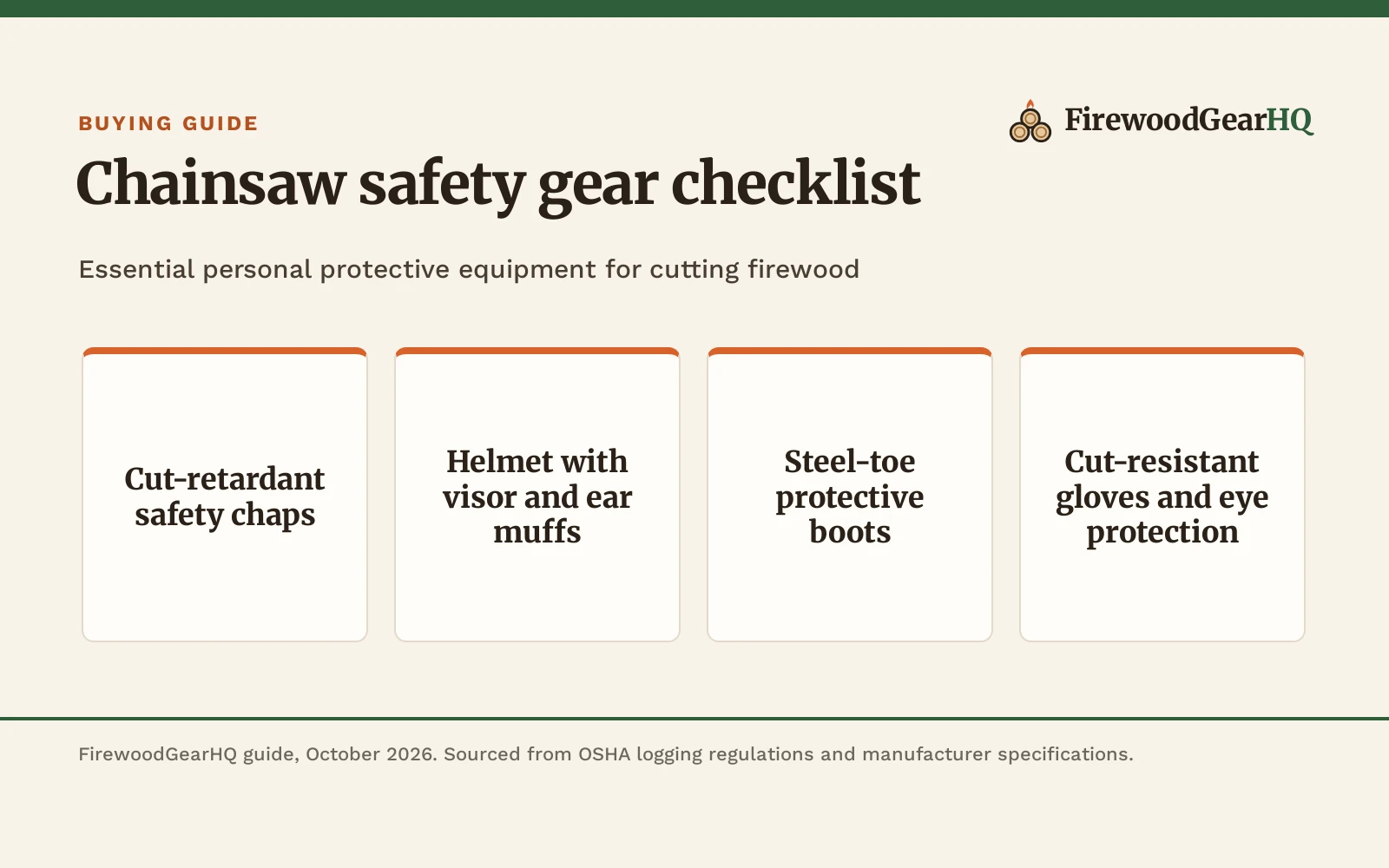
A complete chainsaw safety gear checklist requires personal protective equipment designed to guard against high-speed cutting chains, flying wood debris, and severe noise. Every operator must put on cut-retardant chaps, a forestry helmet system with a mesh face shield and ear muffs, protective eye glasses, heavy cut-resistant gloves, and steel-toe boots before starting a saw. Equipping this full head-to-toe gear set dramatically reduces the severity of kickback injuries and flying chip hazards during firewood cutting.
FirewoodGearHQ earns a commission when you buy through links on our product pages, at no extra cost to you. Read our affiliate disclosure.
The quick answer
Personal protective equipment forms an indispensable barrier between the saw chain and your body. No clothing can provide absolute protection against a running chain, but purpose-built safety apparel buys vital reaction time and can bind a moving chain before it cuts deep tissue. Woodcutters should never pull the starter cord without full safety gear fitted, regardless of how brief the cutting task might seem. Inspect each piece of equipment before heading outside, verify every buckle is secure, and replace any item that shows heavy wear, oil saturation, or shell damage.
Chainsaw safety gear checklist
| Gear item | Protection zone | Key safety feature |
|---|---|---|
| Safety helmet | Head, face and hearing | Hard shell, wire mesh visor, and mounted ear muffs |
| Chainsaw chaps | Thighs, knees and shins | Cut-retardant fibers that bind the drive sprocket |
| Protective gloves | Hands and wrists | Cut-resistant fabric on the back of the hand |
| Safety boots | Feet, toes and ankles | Steel toe cap and ballistic cut-retardant instep |
| Safety glasses | Eyes | Impact shield worn behind mesh visor for dust |
| First aid kit | Emergency response | Weatherproof case with pressure dressings and tourniquet |
Review this checklist before every cutting session to confirm each piece of personal protective equipment is fitted and undamaged.
Essential chainsaw safety gear explained
Chainsaw chaps and protective pants
Chainsaw chaps shield the front and sides of your legs from accidental chain contact. Modern chaps enclose internal layers of loose cut-retardant fibers inside a rugged woven shell. When spinning saw teeth strike the garment, they slice the outer shell and immediately snag the loose fibers. These threads pull into the drive sprocket, binding the clutch drum and halting the chain before it can penetrate deep muscle tissue. Apron-style chaps buckle over work pants, while full-wrap designs enclose the calves. Chaps should reach from the belt line down past the boot tops. For details on stopping mechanics, see our guide on how chainsaw chaps work.
Forestry helmet systems with face shield and ear muffs
A forestry helmet combines head protection, hearing defense, and face shielding into a single piece of gear. Falling branches pose a constant hazard in the woodlot, making a rigid hard hat essential. The wire mesh visor deflects flying wood chips without fogging up, while mounted ear muffs reduce loud engine noise. For example, the SAFEBUILDER CR99 forestry helmet combines an ABS hard shell meeting ANSI Z89.1-2014 Type 1 Class C standards, a 6-points suspension fitting head sizes from 53-63cm / 20.87-24.80 inch, a wire mesh visor, and mounted ear muffs meeting EN 352-3 and ANSI S3.19-1974 with an item weight of 1.1 kg. Some woodcutters prefer a chainsaw helmet with chin strap for added stability on rough ground.
Cut-resistant chainsaw gloves
Chainsaw gloves safeguard your hands from flying chips, sharp cutters during chain handling, and bar contact. Many designs add cut-retardant fabric across the back of the left hand, which rests near the front handle and faces high exposure during sudden kickback rotation. Leather palms maintain a secure grip on the throttle trigger and front bar. For example, Vgo… lists leather chainsaw gloves with cut-retardant fabric patches that meet EN ISO 11393-4 level 1 (class 1, 20 m/s) and CE certification under EN388:2122X, with an item weight of 0.21 kg. Snug cuffs keep sawdust out during bucking.
Steel-toe protective boots
Protective footwear guards against falling firewood rounds and accidental chain drops near the ground. Quality chainsaw boots feature steel toe caps and cut-retardant ballistic fabrics layered across the instep and tongue. Deep lug outsoles deliver dependable traction across damp soil, wet bark, and loose terrain, preventing slips while carrying a running saw. Durable leather uppers stabilize the ankles when stepping over logs or brush.
Eye protection and safety glasses
While a helmet mesh visor deflects wood chunks and brush, fine sawdust passes through wire mesh openings. Operators should wear impact-rated safety glasses underneath the visor to shield their eyes from airborne debris. Clear lenses suit shaded woodlots and overcast days, while tinted lenses reduce glare in direct sunlight. Wraparound frames prevent dust from blowing behind the lenses during crosscutting.
Worksite first aid kit and emergency readiness
Even with complete personal protective equipment, operators must prepare for accidents. Keep a logging first aid kit at the cutting site with pressure bandages, gauze pads, and an accessible tourniquet to manage severe bleeding. For emergency response, First Aid Only lists its 5216 weatherproof metal forestry loggers first aid kit as meeting OSHA regulations, packed in a 9.5 x 2.13 x 6.75 inches case weighing 2.95 pounds with 69 pieces to support a 25-person logging worksite. Always establish a communication plan before cutting wood.
How to inspect and maintain chainsaw safety gear
Protective equipment requires routine inspection to ensure dependable performance in the woods. Review each item before and after cutting:
- Chaps outer shell: Check for fabric tears or holes. If oil or fuel saturates the cut-retardant fibers, wash according to manufacturer directions, as oil buildup degrades fiber action. Replace chaps if chain teeth have sliced inner layers.
- Helmet shell integrity: Check the hard hat shell for cracks, dents, or sun fading. Hard hats exposed to sunlight degrade over time and must be replaced per manufacturer intervals or after a severe impact.
- Mesh visor and glasses: Clean sawdust from the wire visor and confirm the hinge holds securely. Inspect safety glasses for surface scuffs that impair vision.
- Ear muff seals: Check foam cushions for cracks or hardening. Muff pads must seal smoothly against your head to reduce engine volume.
- Glove seams: Inspect palm leather and stitching for thinning or open seams around the fingers.
- Boot tread: Inspect outsole lugs for wear and confirm safety toe caps remain firmly covered without exposed edges.
What happens during a chainsaw kickback
Kickback represents the most hazardous dynamic reaction during chainsaw operation. When the moving cutters around the upper quadrant of the guide bar tip touch solid wood, a hidden branch, or a pinched cut, the chain can catch abruptly. Instead of cutting through the wood, rotational energy drives the guide bar upward and backward toward the operator at high velocity. When operating the best chainsaw for firewood, kickback can occur in a fraction of a second, faster than human reflex can react. Personal protective gear provides vital defense: the front hand guard trips the chain brake, the helmet deflects an ascending bar, eye protection blocks expelled debris, and chaps guard against downward chain drops. Never cut alone in the woods, maintain a firm wrap grip with thumbs tucked, and keep the nose of the bar clear of obstructions.
Standard workwear compared to chainsaw PPE
Everyday workwear offers virtually no defense against a high-speed saw chain. Standard denim jeans or canvas work pants tear open instantly on contact with spinning cutters, offering zero resistance. In contrast, purpose-built chainsaw chaps contain specialized ballistic fibers designed specifically to pull into the sprocket and arrest chain motion. Standard leather work gloves lack cut-retardant backing and cannot stop a rotating chain. Standard baseball caps or unrated construction hats fail to provide integrated face shielding, hearing protection, or severe impact resistance. Investing in genuine, certified personal protective equipment is essential for anyone processing firewood.
Wear cut-resistant chaps, a helmet with face screen and hearing protection, gloves and sturdy boots. Know where the kickback zone is (the upper tip of the bar), keep the chain brake working and the chain sharp, and never cut alone in the woods. Felling trees is hazardous work: hire a professional for large, leaning or storm-damaged trees, especially near buildings or power lines. See OSHA logging safety for chain saw operators. Read our Safety Disclaimer.
Frequently Asked Questions
What PPE for chainsaw work is required?
A full safety gear setup includes cut-retardant chaps or pants, a forestry safety helmet equipped with a wire mesh face visor and ear muffs, impact-rated eye protection, cut-resistant gloves, and steel-toe boots with high-traction soles. Operators should also keep an OSHA-compliant first aid kit close at hand.
Do chainsaw chaps really stop a running chain?
Yes. Specialized cut-retardant fibers inside the chaps pull out when struck by the saw teeth and jam the drive sprocket, bringing the chain to a sudden stop.
Can I use a standard construction hard hat for chainsaw work?
A basic construction hard hat lacks the integrated face shield and mounted hearing protection necessary for forestry tasks. A dedicated forestry helmet provides integrated ear muffs, a fog-free wire visor, and secure harness retention.
Are cut-resistant gloves necessary if my saw has a chain brake?
Yes. While a chain brake is a crucial mechanical safeguard, severe kickback or hand slippage can still cause accidental contact. Cut-resistant gloves provide critical ballistic protection across the back of the hand and shield skin from sharp teeth, flying debris, and rough bark.
Why should you never operate a chainsaw alone?
Chainsaw work involves severe hazards, including deep lacerations, crush injuries from falling timber, and sudden mechanical failures. Having a partner present ensures immediate first aid application and emergency communication if an accident occurs.
Related guides
See our complete chainsaw gear hub and the main chainsaws directory. Before heading out to the woodpile, read our guide on how to start a gas chainsaw and maintain sharp cutters with the best chainsaw sharpener. Match your cutting setup using our guides on what chainsaw chain do I need, how long should a chainsaw bar be, and what size chainsaw do I need for firewood. Also see our guides on electric chainsaw vs gas, best battery chainsaw for homeowners, and log splitter safety rules.
About the author
The FirewoodGearHQ editorial team researches firewood and wood heating equipment from published specifications, ratings and warranty terms, and scores every pick the same way. We do not run our own product trials.