Electric Chainsaw vs Gas: Which One Should You Buy?
A direct comparison of electric and gas chainsaws, covering cutting power, runtime, routine maintenance, noise levels, weight and how to choose the right saw for your property.
 By FirewoodGearHQ Editorial
Updated October 9, 2026
By FirewoodGearHQ Editorial
Updated October 9, 2026
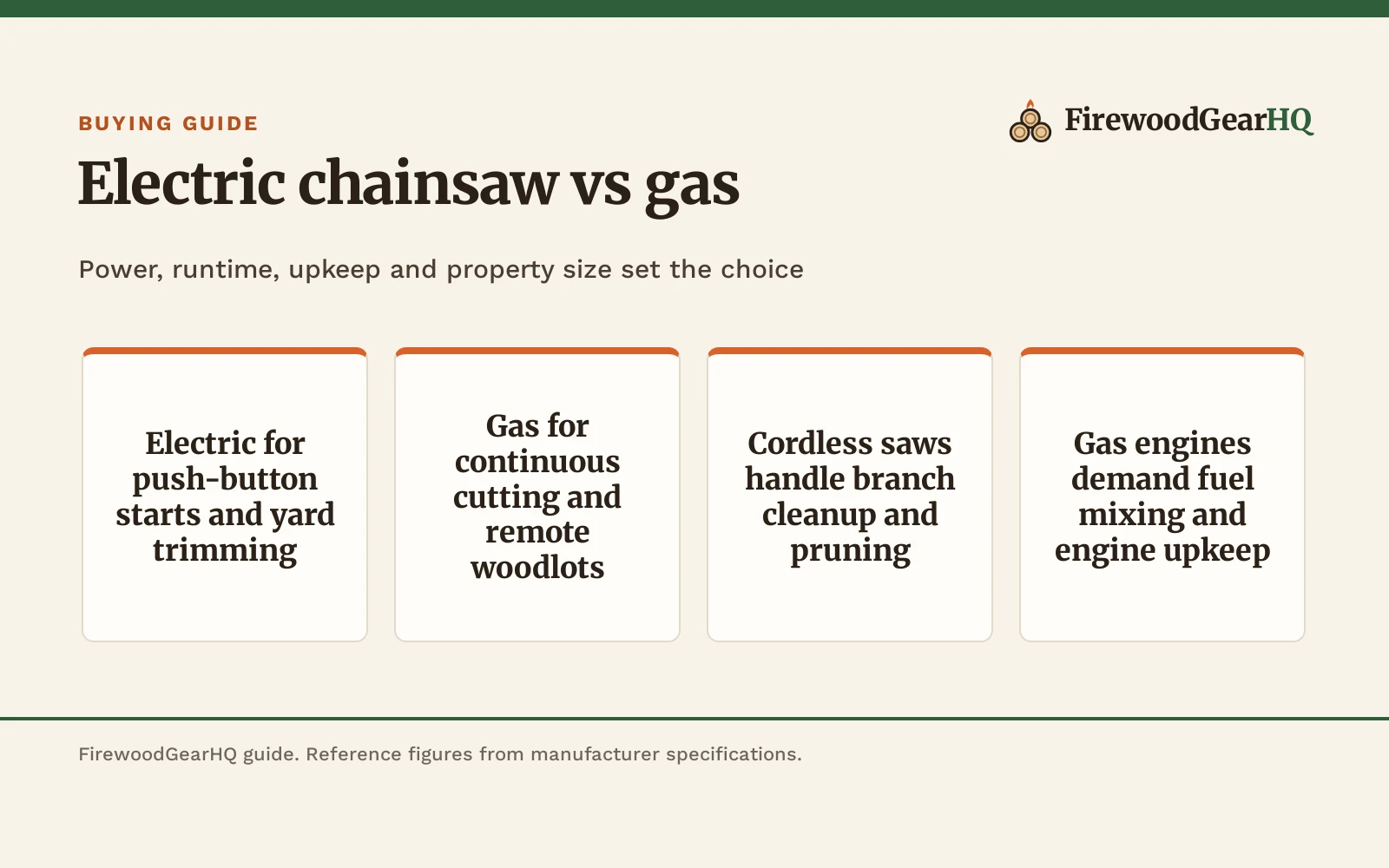
When deciding between an electric chainsaw vs gas, the best choice depends on your cutting workload, yard size and maintenance preference. Electric chainsaws are ideal for suburban yards, storm cleanup, pruning and cutting small batches of firewood because they start with a trigger press, run quietly and eliminate exhaust fumes and fuel mixing. Gas chainsaws remain the practical choice for bucking full cords of dense hardwood, cutting far from electrical outlets and powering through heavy logs all day. If you need clean, quiet convenience for routine residential trimming, buy electric; if you need maximum portable power for remote woodlot cutting, buy gas.
FirewoodGearHQ earns a commission when you buy through links on our product pages, at no extra cost to you. Read our affiliate disclosure.
The quick answer
For most homeowners maintaining a residential property, an electric chainsaw delivers plenty of cutting ability with far less hassle. Battery-powered saws handle limb pruning, downed branches and seasonal firewood chores without engine exhaust, pull cords or carburetor tuning. You squeeze the trigger and start cutting immediately. If you want a dependable yard tool for suburban cleanup and occasional firewood duty, explore the best electric chainsaw options.
Gas-powered chainsaws remain essential when you cut away from power outlets, work on remote woodlots or process multiple cords of dense hardwood each season. A gas engine provides sustained cutting torque and rapid refueling in the field, allowing you to work through fallen timber all day without waiting on battery chargers. For heavy bucking and extensive firewood prep, a saw from our best chainsaw for firewood guide delivers the sustained cutting power you need.
Electric chainsaw vs gas: key differences
While both designs spin a cutting chain around a guide bar, they operate on different mechanical systems and suit different cutting tasks. The table below outlines how electric and gas chainsaws compare across daily operation, upkeep, noise and cutting capability.
| Feature | Electric chainsaw | Gas chainsaw |
|---|---|---|
| Power source | Lithium battery pack or corded electrical outlet | Gasoline mixed with engine oil |
| Starting method | Push-button switch or instant trigger pull | Pull-cord recoil starter with choke and primer |
| Noise profile | Low noise, quiet motor that stops between cuts | Loud engine exhaust requiring hearing protection |
| Routine maintenance | Bar lubrication and chain sharpening | Fuel mixing, spark plug checks, air filter cleanout and carburetor tuning |
| Direct emissions | Zero exhaust fumes during operation | Engine exhaust emissions |
| Cutting mobility | Cordless models run anywhere; corded models require an outlet | Unrestricted mobility across remote acreage and woods |
| Primary applications | Residential pruning, storm debris and firewood prep | Continuous bucking, large logs and remote woodlots |
Small yards with nearby outlets or light trimming needs favor electric power, while rural properties and thick hardwood rounds demand the portable muscle of gas.
Electric chainsaws: convenience, quiet running and low upkeep
Electric chainsaws eliminate the mechanical frustrations that cause occasional woodcutters to struggle with small gas engines. Available in cordless battery and corded electrical designs, they offer immediate cutting power for residential properties.
Cordless battery vs corded electric models
Cordless battery chainsaws offer complete freedom of movement around your yard and tree line. Modern brushless motors draw power from lithium battery packs to deliver smooth cutting performance on branches and logs. For example, cordless listings such as the Seesii feature a 12-inch cutting bar, a 1200W brushless motor, a 60mL bar oil reservoir and two 4.0Ah batteries, with a listed weight of 12 lbs for balanced handling during pruning and yard cleanup. Cordless tools let you walk straight to a downed limb and start cutting without handling power cords or fuel cans.
Corded electric chainsaws provide continuous cutting sessions within reach of an outdoor electrical outlet and a suitable extension cord. Because they draw power directly from household current, corded models never suffer from battery fade or recharge delays. The Oregon CS1500 listing shows an 18-inch guide bar powered by a 15 Amp motor rated at 2400 watts, weighing 12.6 pounds. The Oregon listing also includes an integrated self-sharpening system that sharpens the chain on the saw in 3 to 5 seconds, backed by a 2-year warranty.
Starting simplicity and low upkeep
Electric chainsaws start with a trigger squeeze. There are no pull cords, no cold-weather choke adjustments and no flooded engines. When you release the trigger, the motor stops completely, producing silence between cuts. Maintenance is equally straightforward: keep the bar oil reservoir filled, maintain proper chain tension, and sharpen the cutting teeth with a file or a best chainsaw sharpener.
Gas chainsaws: portable power, longer bars and all-day cutting
Gas-powered chainsaws remain the backbone of heavy firewood harvesting and woodlot management, providing raw cutting torque and freedom from cords or battery chargers.
Engine muscle and cutting speed
A gas engine delivers high rotational speed and sustained cutting torque that pulls a sharp chain smoothly through dense, knotty logs. When bucking thick rounds of oak, maple or hickory, gas power maintains chain velocity under heavy load where electric motors might bog down. Gas chainsaws drive guide bars ranging from a compact 12-inch or 16-inch bar on a best small gas powered chainsaw up to an 18-inch bar or larger on a best heavy duty gas chainsaw, giving you the reach needed to process thick logs in a single cut.
Rapid refueling and engine maintenance
Gas saws excel on remote properties where electricity is unavailable. When the fuel tank runs dry, you refill the tank with fresh fuel mix, top off the bar oil, and resume cutting within moments. The trade-off is mechanical upkeep. A gas engine requires mixing gasoline and engine oil, cleaning air filters regularly, and tuning the carburetor. Seasonal storage requires running the fuel system dry or adding fuel stabilizer to prevent ethanol from degrading fuel lines. Mastering how to start a gas chainsaw properly is an essential skill for every gas saw owner.
How to choose between electric and gas
Selecting the right chainsaw comes down to matching the tool to your property size, cutting volume and comfort with engine maintenance.
Choose an electric chainsaw if:
- Your property is a suburban lot with work located near home or garage outlets.
- Your cutting tasks consist of pruning limbs, clearing storm branches and preparing firewood for a fire pit.
- You want instant trigger starting without pulling starter ropes or storing fuel cans.
- You prefer quiet operation and simple upkeep with no fuel mixing.
- Browse the best battery chainsaw for homeowners for reliable cordless yard models.
Choose a gas chainsaw if:
- You manage acreage or timber stands far beyond electrical outlets.
- You harvest multiple cords of dense hardwood each year to heat your home with a wood stove.
- You routinely cut thick logs that require continuous high-torque cutting power.
- You need all-day cutting where you can refuel in moments and keep working.
- Explore our best 16 inch chainsaw guide for versatile mid-size cutting performance.
Chainsaw safety gear and operating rules
Whether you operate an electric or gas chainsaw, safety must remain your primary focus. According to safety guidance from the OSHA logging eTool, every chainsaw operator must wear proper personal protective equipment and follow disciplined operating rules.
Essential protective equipment
- Chainsaw chaps: Specialized protective chaps contain cut-retardant fibers designed to clog the drive sprocket and stop the chain instantly upon contact.
- Helmet system with face screen and hearing protection: A hard hat protects against falling overhead branches, a wire mesh face screen deflects flying wood chips, and earmuffs shield your ears from loud engine noise.
- Heavy-duty work gloves: Leather gloves improve grip control and protect hands from wood splinters, sharp chain teeth and vibration.
- Protective boots: Steel-toe boots with cut-resistant material and non-skid lug soles provide firm footing on uneven ground.
- Find essential protective items in our chainsaw gear section.
Kickback prevention and saw mechanics
Kickback occurs when the moving chain at the upper tip of the guide bar contacts an object, throwing the bar violently upward toward the operator. Always maintain a firm two-handed grip with your left thumb wrapped under the front handle. Saws reduce this hazard through an inertia-activated chain brake that stops the chain in milliseconds and a low-kickback chainsaw chain with bumper drive links. Never cut alone in remote areas, and point complex tree felling tasks to certified professional arborists and official tree care services.
Turn a stack's length, height and depth into full and face cords, and estimate how much wood a winter takes.
Frequently Asked Questions
Which is better, a gas or electric chainsaw?
Neither design is universally superior; each excels in specific cutting environments. An electric chainsaw is better for suburban homeowners who want push-button starts, quiet operation, zero exhaust fumes and minimal upkeep for branch pruning and light firewood. A gas chainsaw is better for woodlot owners and rural property managers cutting multiple cords of dense hardwood who need maximum portable power and rapid refueling in the field.
How much does a gas powered chainsaw weigh?
A gas chainsaw weighs substantially more than a bare electric tool because of the engine block, recoil assembly, carburetor, muffler, fuel tank and oil reservoir. When filled with fuel mix and bar lubricant, a gas saw gains additional operating weight that increases arm and shoulder fatigue over extended cutting sessions compared to compact electric saws.
Are gas powered chainsaws illegal in California?
No. Gas-powered chainsaws are not illegal to own or operate in California. Homeowners and contractors can continue using their existing gas chainsaws across the state without legal penalties.
Can you buy gas powered chainsaws in California?
Regulations adopted by the California Air Resources Board restrict retailers from selling newly manufactured gas-powered small off-road engines, requiring new models sold in the state to meet zero-emission standards. While previously manufactured inventory could be sold through retail channels, store shelves in California have shifted predominantly toward cordless battery and corded electric chainsaws.
How does a gas powered chainsaw work?
A gas chainsaw uses an internal combustion engine that burns a mixture of gasoline and two-cycle air-cooled engine oil. Pulling the starter cord spins the engine flywheel, moving the piston to draw fuel and air through the carburetor into the cylinder where the spark plug ignites it. As the engine throttles up, an automatic centrifugal clutch engages a drive sprocket that spins the cutting chain around the guide bar, while an oil pump feeds lubricant to reduce bar friction.
How does an electric chainsaw work?
An electric chainsaw replaces the gas engine and carburetor with an electric motor powered by a lithium battery pack or a corded household outlet. Squeezing the trigger switch sends electrical current through an electronic speed controller to the motor, spinning the drive sprocket and cutting chain instantly. An automatic lubrication pump delivers bar and chain oil whenever the motor runs.
Related guides
Explore our complete chainsaws hub to compare saw categories, or visit our specialized sections for battery chainsaws and gas chainsaws. For firewood harvesting, see our top recommendations in the best chainsaw for firewood guide and the best electric chainsaw for cutting trees. If you need a compact gas saw for cleanup, review the best small gas powered chainsaw or step up to heavy felling power with the best heavy duty gas chainsaw. Keep your saw running smoothly with our step-by-step tutorial on how to start a gas chainsaw, maintain sharp cutters with the best chainsaw sharpener, and gear up with essential protective equipment from our chainsaw gear guide.
About the author
The FirewoodGearHQ editorial team researches firewood and wood heating equipment from published specifications, ratings and warranty terms, and scores every pick the same way. We do not run our own product trials.