Chainsaw Helmet vs Hard Hat: Which One Should You Buy?
Chainsaw helmet vs hard hat: a chainsaw helmet is a hard hat with a face screen and ear muffs built in. For running a saw, wear the helmet; for stacking and splitting, the hard hat is enough.

On this page
Top picks at a glance
As an Amazon Associate we earn from qualifying purchases.
- 1
 NoCry ANSI Z89.1 Rated Arborist Helmet9.8/10View on Amazon
- 2
 UM ULTRAMAXX 6-in-1 Chainsaw Helmet with Face Shield and9.6/10View on Amazon
- 3
 GREEN DEVIL Forestry Chainsaw Safety Helmet with Bluetooth9.6/10View on Amazon
- 4
 3-Pack Breathable Mesh Skull Cap Sweat Control Helmet LinerView on Amazon
- 5
 Lift Dax Fiber Resin Full Brim Safety Helmet/Hard HatView on Amazon
- 6
 SAFEBUILDER Safety Hard Hats Vented Safety Helmet ANSI ClassView on Amazon
- 7
 Forestry Safety Helmet Chainsaw Helmet with Mesh Face ShieldView on Amazon
- 8
 GREEN DEVIL Forestry Chainsaw Safety Helmet with BluetoothView on Amazon
- 9
 GREEN DEVIL Forestry Chainsaw Safety Helmet with Mesh FaceView on Amazon
A chainsaw helmet is a hard hat with the extras built in: a face screen and ear protection on the same shell, so one piece of gear covers impact, eyes and ears. A hard hat on its own covers only impact. For any work where a saw is running, the chainsaw helmet vs hard hat question is really whether you want to carry three separate pieces of gear or wear one.
More options to compare
 3-Pack Breathable Mesh Skull Cap Sweat Control Helmet LinerCheck price on Amazon
 Lift Dax Fiber Resin Full Brim Safety Helmet/Hard HatCheck price on Amazon
 SAFEBUILDER Safety Hard Hats Vented Safety Helmet ANSI ClassCheck price on Amazon
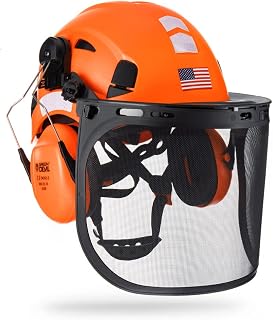 Forestry Safety Helmet Chainsaw Helmet with Mesh Face ShieldCheck price on Amazon
 GREEN DEVIL Forestry Chainsaw Safety Helmet with BluetoothCheck price on Amazon
 GREEN DEVIL Forestry Chainsaw Safety Helmet with Mesh FaceCheck price on Amazon
FirewoodGearHQ may earn a small commission if you buy through links on this page. The price you pay stays the same. Read our affiliate disclosure.
chainsaw helmet vs hard hat: what each one protects
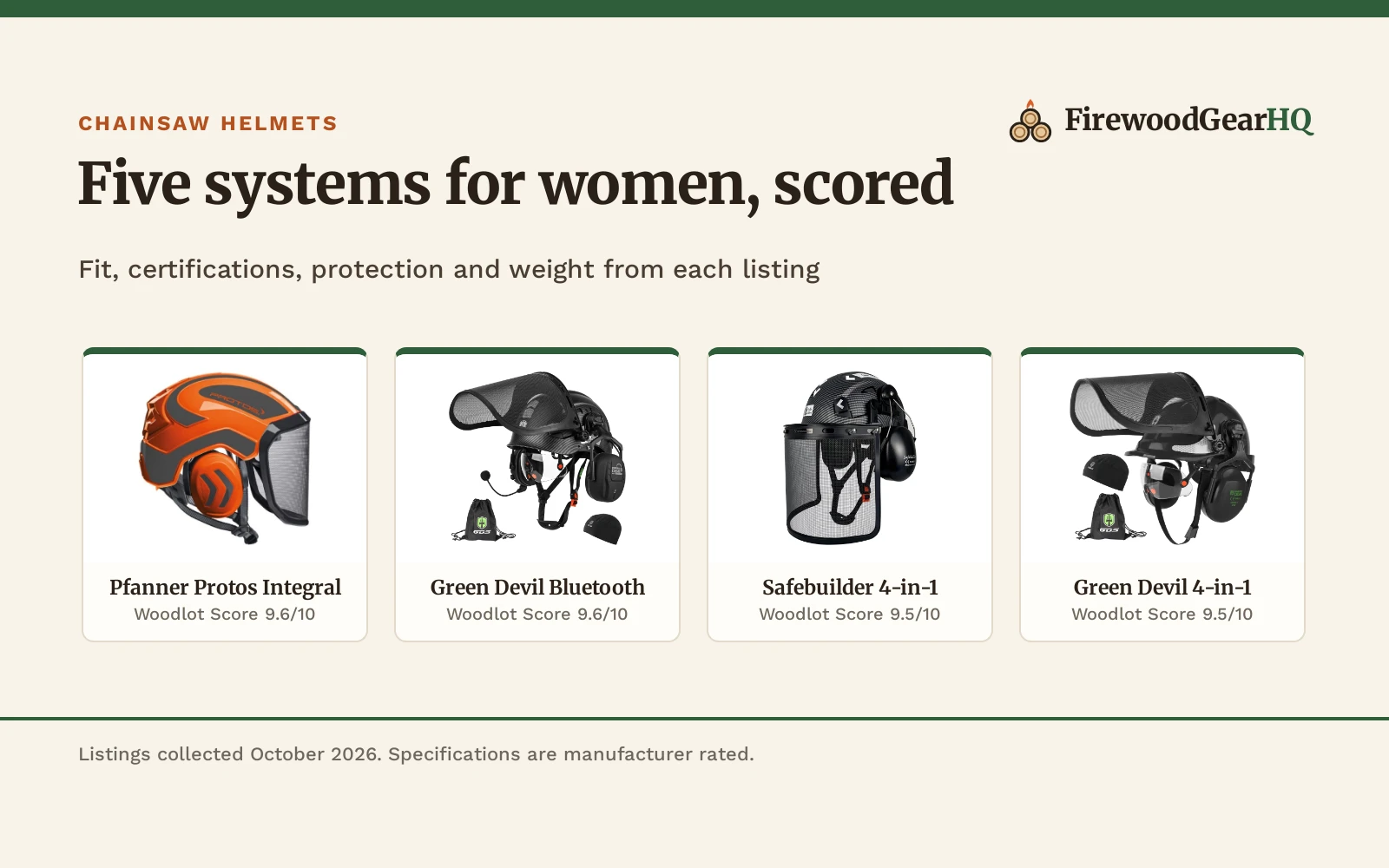
A hard hat is impact protection. The listings in our reference set are rated to ANSI Z89.1, with electrical classes C, G and E, and they are the same shells you see on construction sites and in the woods. A chainsaw helmet starts from the same kind of shell and adds a mesh or polycarbonate face screen plus ear muffs, usually on brackets that let the screen flip up. The shell protects the skull; the screen stops chips and sawdust; the muffs cut the saw’s roar. Three jobs, one helmet.
What a hard hat gives you
A hard hat handles falling and flying objects: a dead branch knocked loose, a log that shifts on the pile, a tool dropped from above. The ANSI Z89.1 rating on the reference listings is the impact standard, and the class rating covers electrical exposure: Class C is conductive and offers no electrical protection, Class G is general use with low-voltage protection, and Class E is electrical with high-voltage protection. Around the woodpile, the impact rating is what matters most; the class matters when you cut near power lines or work around the house electrical service.
What the chainsaw helmet adds
The face screen is the big difference. Felling and bucking throw chips at face height, and limbing puts your face close to the bar. Safety glasses protect the eyes but leave the rest of the face open; a screen covers the whole face and still lets air through so it does not fog the way sealed goggles can. The ear muffs matter because a saw runs loud enough to damage hearing over a season of cutting. Wearing the muffs on the helmet means they are always there, unlike loose earplugs that get left in the truck.
Side by side
On impact protection, the two are the same: a chainsaw helmet is built on a hard hat shell. On eye and face protection, the helmet wins outright with its screen. On hearing, the helmet wins with its muffs. On weight and heat, the hard hat wins: it is lighter and cooler, which matters on a long day of splitting and stacking with no saw running. On convenience, the helmet wins for cutting work because everything is one unit; there is nothing extra to remember, nothing to lose, and the screen flips up when you stop cutting.
When a hard hat is enough
If no saw is running, a hard hat is the right call. Splitting with a maul or a splitter, stacking, hauling, and working around a falling tree crew as a spotter all call for impact protection without the screen and muffs in the way. A hard hat is also the better choice in real heat, since the open shell vents more air than a helmet with a screen. Pair it with safety glasses and earplugs when the noise or the chips demand it, and you have the same coverage as the helmet, just in separate pieces.
When you need the chainsaw helmet
Any time you pull the starter cord, reach for the helmet. Felling, limbing, bucking and storm cleanup put chips, branches and noise at you all at once, and that is exactly the combination the helmet was built for. If you cut alone, the helmet matters even more: there is nobody to hand you the glasses you forgot. Our best chainsaw helmet for small heads guide covers fitted options, and the chainsaw safety gear checklist lists the rest of the kit that goes with it.
What to check when you buy
Three things on the listing matter. First, the ANSI Z89.1 rating: every hard hat in our reference set carries it, and any helmet or hat you buy for cutting work should too. Second, the electrical class: Class C is conductive with no electrical protection, Class G is general use with low-voltage protection, and Class E is rated for high-voltage electrical work. Pick the class for your site, not just the impact rating. Third, the suspension: the reference listings use 4-point ratchet suspensions, and some note that 4-point suspensions can be converted to 6-point. A ratchet suspension adjusts to the head with a knob, and more suspension points spread the load on impact. If you plan to add a visor and muffs later, check that the shell accepts accessory brackets before you buy.
Frequently Asked Questions
Can I wear a hard hat with ear muffs and glasses instead of a chainsaw helmet?
Yes, and many cutters do. A hard hat plus clip-on muffs and safety glasses covers impact, ears and eyes. The helmet is simply more convenient: one unit, nothing to forget, and a full face screen instead of glasses.
What does ANSI Z89.1 mean?
It is the US standard for industrial head protection, covering impact and penetration resistance. The hard hat listings in our reference set carry this rating, and any helmet or hat you buy for cutting work should too.
What are Class C, G and E on a hard hat?
They are electrical classes: Class C is conductive with no electrical protection, Class G is general use with low-voltage protection, and Class E is rated for high-voltage electrical work. For woodcutting, the impact rating matters more than the class unless you cut near power lines.
Do I need the face screen if I wear safety glasses?
Glasses protect the eyes; the screen protects the whole face from chips and sawdust. For limbing and bucking, where debris flies at face height, the screen is the safer choice. See our best safety glasses for chainsaw use for eye protection pairings.
Can I add a visor to my hard hat?
Many hard hat shells accept accessory brackets for visors and muffs, which turns a hard hat into something close to a chainsaw helmet. Check that the accessories fit your shell’s slot pattern before buying.
Related guides
Also see our chainsaw chaps Class A vs Class B and the chainsaw safety gear checklist.