Best Splitting Axe Under $100 (2026): 5 Firewood Axes Compared
Five firewood axes under $100 compared by head weight, handle length, materials, balance and sheath, from a 14 in Estwing hatchet to a 36 in Toolzeen splitting maul.

On this page
Top picks at a glance
As an Amazon Associate we earn from qualifying purchases.
- 1
 Best OverallToolzeen 36-Inch Maul9.7/10View on Amazon
- 2
 Best Name BrandCouncil Tool Jersey9.6/10View on Amazon
- 3
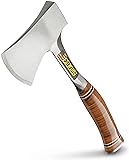 Best Splitting HatchetEstwing Sportsman’s9.6/10View on Amazon
- 4
 Best Budget Full-Size AxeTruper 4 lb Single Bit9.5/10View on Amazon
- 5
 KSEIBI 274178 Splitting Axe 36-Inch Wood Splitter ForgedView on Amazon
- 6
 35.5" Splitting AxeView on Amazon
- 7
 Fiskars X27 Super Splitting Axe 36"View on Amazon
- 8
 Coleman Axe with Durable Steel Head & Non-Slip Grip HandleView on Amazon
- 9
 ESTWING Fireside Friend Splitting MaulView on Amazon
As fall firewood preparation begins and winter burning approaches, having the right tool at the chopping block saves hours of physical effort. A homeowner splitting seasoned rounds or preparing kindling does not need an expensive professional forestry tool, but a budget axe still needs clean balance, dependable steel and a secure head that will not come loose on impact. This guide evaluates five options to find the best splitting axe under 100, comparing head weights, handle lengths, materials and overall build quality, ranging from compact 14 in hatchets to a full-size 36 in splitting maul.
FirewoodGearHQ may earn a small commission if you buy through links on this page. The price you pay stays the same. Affiliate disclosure.
Quick picks
- Best Overall Toolzeen 36-Inch Maul: 36 in composite handle with a 4.4 lb forged head, convex splitting wings and an included sheath. Check price on Amazon
- Best Name Brand Council Tool Jersey: 3.5 lb Jersey pattern head forged in the USA on a 36 in curved American hickory handle. Check price on Amazon
- Best Splitting Hatchet Estwing Sportsman’s: Forged in one piece from American steel with a 14 in leather grip and ballistic nylon sheath for kindling. Check price on Amazon
- Best Budget Full-Size Axe Truper 4 lb Single Bit: 4 lb single-bit head on a 35 in seal-coated American hickory handle for heavy splitting swings. Check price on Amazon
The picks

36" Splitting Axe, Chopping Axe|Splitting Maul
A 36 in splitting maul with a 4.4 lb forged carbon steel head, convex splitting wings, a lightweight fiberglass composite handle and an included sheath.
Pros
- Dedicated convex wing grind blade for splitting rounds
- 36 in fiberglass composite handle absorbs shock
- Protective sheath included in the box
- 4.4 lb head weight delivers splitting momentum
Cons
- No warranty term stated on the listing
- 6.8 lb total weight requires two hands and fatigue control
- Little-known brand with limited service history
- Title lists 36 in while spec table lists 36.5 in length

COUNCIL TOOL 3.5 lb Jersey Axe, 36" Curved Handle
A 3.5 lb Jersey pattern felling and splitting axe made in the USA with a forged tool steel head and a 36 in curved American hickory handle.
Pros
- Made in the USA from domestically sourced tool steel
- 36 in curved American hickory handle dried below 10% moisture
- Baltimore Jersey pattern with prominent lugs for handle security
- Double wedge head attachment for long-term durability
Cons
- No warranty term stated on the listing
- Tapered felling bit can stick in knotty firewood rounds
- No protective sheath included in the box
- Spec table erroneously lists a 36 in width

ESTWING Sportsman's Axe, 14" Leather Grip Hatchet
A 14 in camping hatchet forged in one piece from solid American steel with a hand-sanded genuine leather grip and a ballistic nylon sheath.
Pros
- Forged in one piece from solid American steel
- Made in the USA in Rockford, IL since 1923
- Hand-sanded and lacquered genuine leather grip
- Rugged ballistic nylon sheath with belt loop included
Cons
- No warranty term stated on the listing
- 14 in length is built for kindling rather than large rounds
- 1.8 lb weight lacks the force to split full firewood logs
- Listing bullets state a 4 in edge while spec table lists 3.25 in
Single Bit Axe
A full-size 4 lb single bit axe featuring a high polished alloy steel head on a 35 in seal-coated American hickory wood handle.
Pros
- Heavy 4 lb head weight generates substantial splitting momentum
- 35 in American hickory wood handle provides full two-hand leverage
- Seal-coated wooden handle protects against weather exposure
- Affordable price point for a full-size firewood axe
Cons
- No warranty term stated beyond an unelaborated description
- No protective sheath included with the axe
- Single bit profile can wedge tightly in stringy hardwoods
- Spec table contains careless errors listing dog toy and plant food

Purple Dragon 14" Camping Hatchet Axe with Sheath
A compact 13.9 in camp hatchet featuring full tang construction reinforced with 4 solid rivets, a wood handle and a protective sheath.
Pros
- Full tang construction reinforced with 4 solid rivets
- Protective sheath included for edge safety and transport
- Compact 13.9 in length easy to maneuver for kindling
- Wide 4.9 in cutting edge for chopping and trimming
Cons
- No warranty term stated on the listing
- Head weight is not stated on the listing
- Contradictory blade material between bullets and spec table
- Thin blade profile is unsuited for splitting heavy firewood logs
More options to compare
 KSEIBI 274178 Splitting Axe 36-Inch Wood Splitter ForgedCheck price on Amazon
 35.5" Splitting AxeCheck price on Amazon
 Fiskars X27 Super Splitting Axe 36"Check price on Amazon
 Coleman Axe with Durable Steel Head & Non-Slip Grip HandleCheck price on Amazon
 ESTWING Fireside Friend Splitting MaulCheck price on Amazon
Compare the picks
| Model | Woodlot Score | Head weight | Length | Handle material | Sheath | Warranty (stated) |
|---|---|---|---|---|---|---|
| Toolzeen 36-Inch Maul | 9.7/10 | 4.4 lb (6.8 lb total) | 36 in (36.5 in listed) | Fiberglass composite | Included | Not stated |
| Council Tool Jersey | 9.6/10 | 3.5 lb | 36 in | Hickory wood | Not stated | Not stated |
| Estwing Sportsman’s | 9.6/10 | Not stated head (1.8 lb total) | 14 in | Leather grip on steel | Included | Not stated |
| Truper 4 lb Single Bit | 9.5/10 | 4 lb (5.3 lb total) | 35 in (34.75 in listed) | Hickory wood | Not stated | Not stated |
| Purple Dragon 14-Inch | 9.4/10 | Not stated | 13.9 in (14 in listed) | Wood | Included | Not stated |
Specifications are manufacturer rated, collected 12 October 2026. Weights and lengths are as listed. Listing details vary across sellers, and several listings leave specific dimensions or warranty terms unstated.
How we scored them
Each axe is scored out of 10 on performance, build, value, safety and warranty, using only what the listing publishes. The criteria and weights are on our How We Pick page.
| Product | Woodlot Score | Perf. /35 | Build /25 | Value /25 | Safety /10 | Warranty /5 |
|---|---|---|---|---|---|---|
| Toolzeen 36-Inch Maul | 9.7 | 30 | 21 | 22 | n/a | 0 |
| Council Tool Jersey | 9.6 | 28 | 24 | 21 | n/a | 0 |
| Estwing Sportsman’s | 9.6 | 26 | 24 | 21 | n/a | 0 |
| Truper 4 lb Single Bit | 9.5 | 26 | 19 | 20 | n/a | 0 |
| Purple Dragon 14-Inch | 9.4 | 21 | 18 | 20 | n/a | 0 |
Scores run from 9.2 to 9.8: each product’s point total is placed on that range, so more points always means a higher score. Safety counts only for powered gear or where the listing states safety features; where it does not apply, the score is taken over the remaining 90 points.
Buying guide: best splitting axe under 100
Splitting maul or traditional axe?
When selecting a woodlot axe on a budget, the primary decision is choosing between a dedicated splitting maul and a traditional single-bit chopping axe. A splitting maul features a heavier head with wide, convex splitting wings designed to push wood fibers apart on impact. This wedge action prevents the blade from sticking in dense, knotty rounds. In contrast, a traditional felling or chopping axe has a slim, tapered bit made for severing wood grain. While a sharp single-bit axe can split clean, straight-grained firewood, it is more prone to wedging tightly into stubborn wood. For a deeper breakdown of these distinct tool geometries, read our guide on splitting axe vs maul and learn what is a splitting maul.
Handle length and material
Handle length dictates leverage and swing speed. A 35 in or 36 in handle allows a woodcutter to swing with both hands, generating the downward momentum needed to burst apart wide hardwood rounds. Shorter 14 in handles are tailored for single-handed kindling duty near the hearth or wood stove. Handle materials also affect user fatigue and tool longevity. Traditional American hickory offers natural flex and shock absorption, and a damaged wooden haft can be replaced with a new wedge. Composite fiberglass handles resist weather exposure and rot, pairing durable synthetic shafts with rubberized grips to dampen vibration. For proper stance and mechanics, see our walkthrough on how to split wood with an axe.
Hatchet vs full-size axe for firewood
A compact 14 in hatchet cannot replace a 36 in splitting axe when processing cordwood, but it remains an essential woodpile companion. Hatchets excel at shaving kindling, splitting small branch rounds and limbing downed saplings. Attempting to split large rounds with a hatchet is inefficient and increases fatigue. Full-size axes deliver the necessary kinetic force for splitting stove wood. To explore small splitting options, check our guides on the best hatchet for splitting wood and hatchet vs axe.
Steel quality and head attachment
A dependable axe head must hold an edge while withstanding repeated strikes against dense logs. Forged carbon steel and alloy tool steel provide high impact resistance. Solid one-piece steel construction eliminates the risk of handle separation, while traditional wooden handles rely on a secure eye with wooden and steel wedges. Keeping the cutting edge clean and sharp reduces deflection during swings; explore maintenance tools in our guide to the best axe sharpener.
When to step up to a dedicated maul or splitter
Budget axes under $100 handle typical domestic firewood chores admirably. However, property owners splitting large volumes of twisted oak, elm or hickory often require heavier equipment. When manual swinging becomes exhausting, consider upgrading to a dedicated best splitting maul or using a heavy best splitting wedge for difficult rounds. For larger budgets, see our overall review of the best splitting axe.
Clear the swing area (overhead too), split on a solid chopping block at a comfortable height, keep your feet apart with the block in front of you, and wear eye protection and sturdy boots. Replace a cracked or loose handle before you swing again. Read our Safety Disclaimer.
Around the Woodpile
- Maintain a clear swing zone around the chopping block, keeping ground free of tripping hazards, pets and bystanders.
- Store axes and hatchets in a dry indoor area with their protective sheaths fitted to shield cutting edges and prevent moisture exposure.
- Inspect wooden handles before every splitting session to confirm the head attachment and wedge system remain tight and secure.
- Wipe clean and dry steel blades after outdoor work to reduce corrosion and preserve edge performance.
Frequently Asked Questions
What is the difference between a splitting axe and a splitting maul?
A splitting axe generally features a lighter head and a moderately tapered profile for swinging speed, whereas a splitting maul uses a heavier head with wide splitting wedges designed to force rounds apart without sticking. Compare tool designs in our article on maul vs axe and check how heavy should a splitting maul be.
Can a 14 inch hatchet split firewood rounds?
A 14 in hatchet lacks the head weight and swing leverage required to burst full-size firewood rounds. It is designed for splitting kindling, shaving fatwood and chopping small limbs. For dedicated hearth kindling tools, see the best hatchet for kindling.
Is hickory better than fiberglass for an axe handle?
Hickory is a traditional hardwood that absorbs impact shock naturally and can be replaced if broken. Fiberglass is impervious to rot, rain and weather, making it virtually maintenance-free, though it often transmits slightly more vibration unless paired with a cushioned grip.
Do I need a splitting wedge with an axe under $100?
For straight-grained wood, a sharp axe or maul splits rounds cleanly on its own. For knotted, twisted or crotch wood, driving a steel wedge into the log with a sledge or maul prevents your axe from binding tightly in the grain. See the best splitting wedge for stubborn wood.
How should I sharpen a splitting axe?
A splitting axe does not need a razor edge like a carving knife; a moderately sharp, convex bevel holds up best against high-impact splitting. Use a flat bastard file or puck sharpener following the factory bevel, as outlined in our guide to the best axe sharpener.
Related guides
Explore our complete firewood equipment coverage in the axes and mauls section. For alternative splitting tools, compare our top picks in the best splitting axe, evaluate heavy-duty strikers in the best splitting maul, or read our breakdown of the best log splitter axe. Beginners learning tool handling can review the best axe for beginners, while those clearing timber should visit the best felling axe. For effortless kindling production at the wood stove, explore the best kindling splitter. Review proper splitting mechanics in our guide on how to split wood with an axe, compare premium axes in Fiskars vs Gransfors Bruks splitting axe, understand head differences in splitting axe vs maul, and weigh manual tools against machines in log splitter vs splitting maul.