Best Floor for Firewood Shed (2026)
The best floor for a firewood shed uses raised wooden slats on sturdy runners to maximize bottom airflow and drainage while keeping logs off damp ground.

On this page
Top picks at a glance
As an Amazon Associate we earn from qualifying purchases.
- 1
 MCombo Outdoor Storage Cabinet with Shelves9.6/10View on Amazon
- 2
 Patiowell 5x3 FT Outdoor Storage Shed9.6/10View on Amazon
- 3
 vidaXL Garden Log Storage Shed Galvanized Steel9.5/10View on Amazon
When stacking logs for winter heating, choosing the best floor for firewood shed setups ensures your firewood dries quickly and stays protected from ground moisture. An elevated wooden slatted deck resting on concrete blocks or pressure-treated runners provides the premier balance of bottom airflow, drainage, and structural support. Keeping the bottom tier off damp soil prevents fungal rot and insect damage throughout the seasoning year.
FirewoodGearHQ may earn a small commission if you buy through links on this page. The price you pay stays the same. Read our affiliate disclosure.
The quick answer
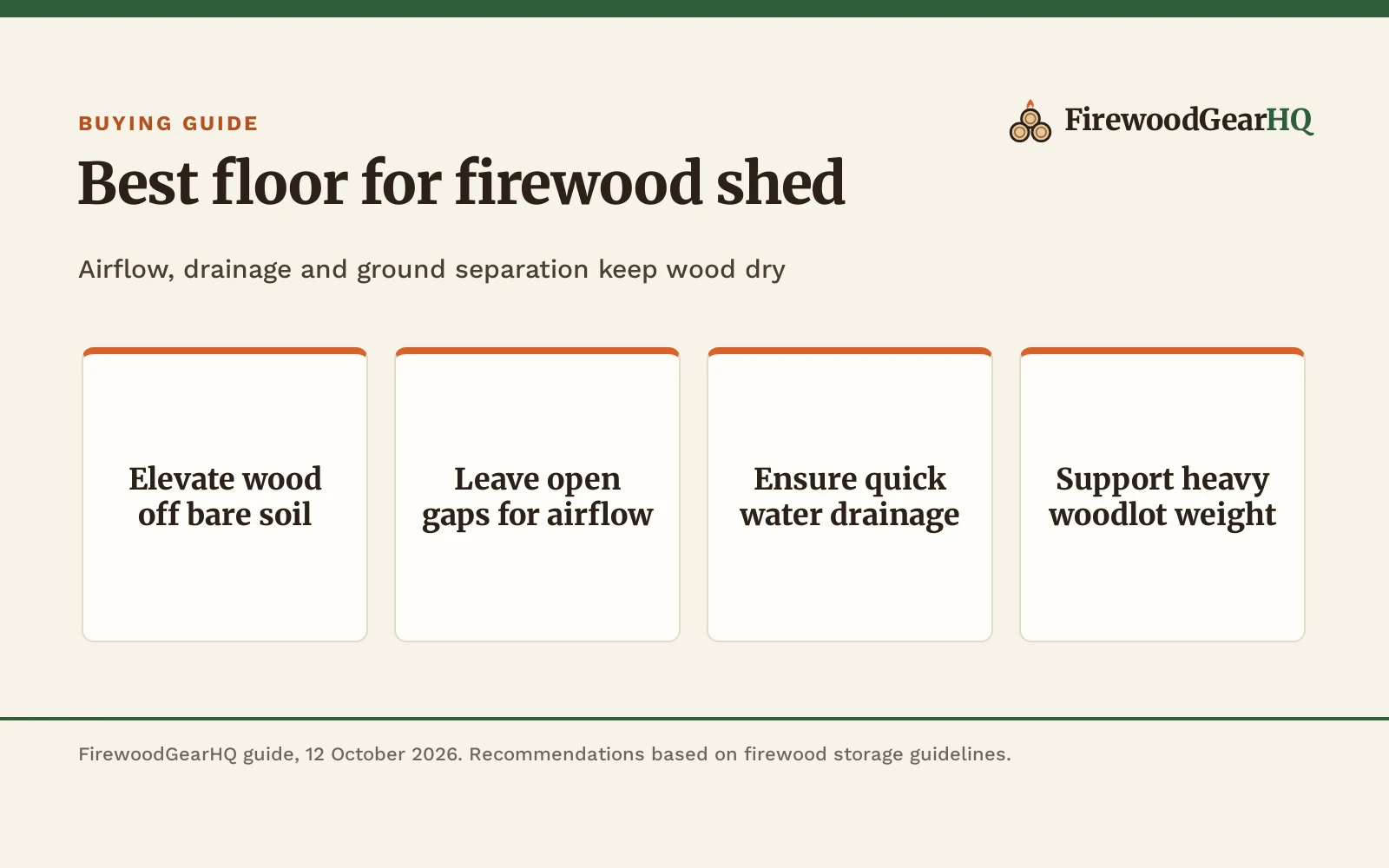
Bare earth is the enemy of dry wood. Soil releases moisture vapor, and split logs placed directly on dirt absorb groundwater through capillary action. Over time, bottom firewood becomes damp, fostering mold, decay, and insects. A proper firewood shed floor elevates the bottom tier, allows unobstructed air movement from below, and drains storm runoff quickly.
A raised slatted deck of pressure-treated lumber is the most reliable flooring design. Gaps between floorboards let ambient air currents pull moisture from bottom logs. Setting recycled wooden pallets on concrete patio pavers provides a practical budget alternative, while solid concrete slabs require secondary risers to prevent trapped condensation.
Best floor for firewood shed comparison
Selecting flooring depends on site conditions, budget, and shed framing. The table below compares common floor designs for airflow, drainage, and structural support.
| Floor material | Airflow and drainage | Best application | Drawbacks |
|---|---|---|---|
| Raised wooden slats | Continuous bottom airflow; water drains through board gaps | Permanent timber sheds and seasoning piles | Requires framing lumber and foundation blocks |
| Coarse gravel on fabric | Excellent ground drainage; eliminates standing mud | Ground base beneath open pole sheds or slatted decks | Lacks under-stack airflow if wood rests directly on rock |
| Wooden pallets on pavers | Generous under-stack airflow through pallet runners | Budget firewood shelters and quick setups | Pallet wood decays faster if pavers sink into soil |
| Poured concrete slab | Flat and durable; prevents burrowing pests | Enclosed outbuildings and multi-use storage structures | Lacks bottom airflow; puddles and condensation collect |
While gravel and concrete provide solid bases, neither replaces an elevated slatted platform for drying wood. Laying coarse crushed rock over landscape fabric beneath an open slatted deck yields the best long-term results.
What makes an effective firewood shed floor
A firewood shelter requires constant air movement to carry away moisture evaporating from split timber.
Ground clearance and soil isolation
Soil holds moisture from rain and snow. Elevating the stack isolates wood from ground dampness and rot, while denying termites and carpenter ants a bridge into the woodpile, which helps when exploring how to keep bugs out of firewood.
Under-stack airflow and bottom ventilation
Slatted flooring with deliberate gaps between planks lets ambient air circulate beneath stacked rows, carrying away evaporating moisture so bottom splits season alongside upper tiers.
Drainage and load-bearing capacity
Even in a firewood shed outdoor with roof, driving rain enters. Slatted floors let runoff drain through immediately rather than forming puddles.
Flooring must also support substantial weight. For example, VICEARTH specifies that its 8 ft outdoor firewood rack supports up to 1200 lbs of wood with a 1/2 cord capacity, measuring 96 × 11.8 × 44.4 inches. On smaller setups, VEVOR lists a 4 ft metal rack engineered for a 660 lb capacity holding a 1/4 cord of split logs, with a structural weight of 43 lbs. Shed floors holding multiple cords must carry this heavy wood without sagging into wet ground.
Evaluating floor options for a firewood shed
Woodburners utilize several primary flooring methods when building a firewood storage shelter.
Raised pressure-treated wooden slats
Pressure-treated decking boards laid with uniform gaps across heavy skids represent the premier choice for firewood shed floors. Pressure-treated lumber resists fungal rot and insects. Narrow spaces between boards ensure water drains instantly and air flows into bottom stacks. Resting runners on concrete blocks or gravel keeps framing lumber out of standing water.
Coarse crushed gravel with landscape fabric
Crushed stone over landscape fabric creates a clean, free-draining base for lean-tos. The fabric suppresses weeds and soil vapor, while angular rock drains surface water quickly. Because gravel alone does not circulate air under the pile, placing timber skids or a best outdoor firewood rack on the gravel is recommended.
Recycled wooden pallets on concrete blocks
Recycled wooden pallets offer an affordable alternative with open side channels that promote airflow. To prevent pallet wood from rotting on damp soil, place solid concrete patio pavers beneath pallet runners to keep wood off the ground.
Poured concrete slab or solid pavers
A poured concrete slab creates a durable, level surface that carries heavy loads. However, bare concrete lacks bottom drainage, and temperature swings can cause surface condensation. If using a slab floor, place timber sleepers, pallets, or a best firewood rack with cover on the concrete to raise logs off the masonry.
Ground preparation beneath the shed floor
A durable floor requires proper ground preparation. Choose an elevated, well-drained site catching prevailing winds. Clear topsoil down to firm subsoil, slope the grade away from the shed, and lay woven geotextile fabric topped with crushed angular rock for a porous base.
Set concrete pavers, deck blocks, or pressure-treated skids on the gravel to carry framing. Manufactured storage designs show how makers balance dimensions and stability. Aoxun lists an open-front shed featuring a 6′ x 6′ footprint with 36 square feet of floor space and an overall height of 76 inches, weighing 96.8 pounds. For compact yards, Aoxun offers a wooden cabinet measuring 31.1 inches long by 16.54 inches wide and 65.35 inches high with 3.58 square feet of floor space and a weight of 150 pounds. AECOJOY lists a 5×2 outdoor firewood rack storage shed providing 38 cu ft of storage capacity with a frame rated for 60 mph wind resistance. For wider footprints, LANTRO JS lists an outdoor metal shed rack measuring 129.9 inches across with a steel floor frame and raised floor slats that elevate logs for airflow.
Airflow design: connecting floor to walls and roof
The floor must work with the shed walls and roof to maintain ventilation while shielding timber from rain.
Leave narrow gaps between stacked rows and shed walls. Building walls with spaced wooden slats allows crosswinds to blow through the stacks. Reviewing how to stack firewood with open spacing between logs ensures air circulates across split faces.
Roof overhangs protect the floor and woodpile from precipitation. For example, TBMLC lists an outdoor log holder built from 0.8 mm thick galvanized steel with a 32-inch diameter metal roof that shields firewood while keeping sides open. On freestanding units, LIANTRAL utilizes an 8-leg frame measuring 48.8 inches long by 12.6 inches wide and 33.3 inches high on a 4 ft rack, using two support rods to secure a galvanized roof that shelters logs above elevated runners. Comparing a firewood shed vs rack helps determine whether a permanent shed or modular rack fits your firewood best.
Turn a stack's length, height and depth into full and face cords, and estimate how much wood a winter takes.
Frequently Asked Questions
Do I need a permit for a firewood shed?
Permit rules depend on local zoning bylaws and structure size. Small detached outbuildings below local square footage limits often do not require permits, but setback regulations usually apply. Always verify setback limits with your local building office before clearing ground.
How to build a wood shed for firewood?
Clear the site, lay landscape fabric, and spread crushed gravel. Set concrete deck blocks or skids to support the floor frame. Fasten pressure-treated decking with consistent board gaps to promote upward airflow. Add upright posts supporting an angled shed roof and open-slatted walls for cross-ventilation.
Will firewood dry in a shed?
Firewood dries reliably in a shed if the structure has open walls and a slatted floor. Moving air and ambient warmth pull moisture from split grain. In contrast, enclosing green firewood inside an airtight garden shed traps moisture, causing mold and rot.
How to build a cheap firewood shed?
Use recycled materials on a skid base. Wooden shipping pallets placed on concrete pavers create an instant slatted floor. Frame walls with salvaged fence posts and cap the structure with reclaimed corrugated metal roofing for a low-cost, well-ventilated shelter.
Can you store firewood in a shed?
Yes, storing firewood in a ventilated shed protects fuel from rain and snow while keeping wood off damp ground. Both seasoned splits and green firewood store safely if stacked loosely so air circulates between rows.
Related guides
See the firewood storage hub, the best firewood racks with covers and the best firewood moisture meters. Cutting your own? Start with the best chainsaw for firewood and keep the chain sharp with the best chainsaw sharpener. Split by hand with the best splitting maul or best splitting axe, or see the best log splitter for home use. Also see our firewood shed outdoor with roof. Also see our firewood shed vs rack. Also see our best outdoor firewood rack. Also see our best firewood rack for a full cord. Also see our best firewood log rack brackets. Also see our cheap firewood rack. Also see our cover for firewood storage rack. Also see our firewood rack outdoor with cover. Also see our firewood rack for porch. Also see our metal wood racks outdoor for firewood. Also see our inside wood rack for firewood. Also see our indoor firewood rack ideas. Also see our best indoor firewood rack. Also see our best fireplace log holder. Also see our can you bring firewood indoors. Also see our how to stack firewood. Also see our should you cover firewood. Also see our how long does firewood take to season. Also see our how to season firewood fast. Also see our how to tell if firewood is seasoned. Also see our how to keep bugs out of firewood. Also see our how much is a cord of wood. Also see our face cord vs full cord.