How to Sharpen a Splitting Axe: Step-by-Step Guide
How to sharpen a splitting axe with a mill file and stone, maintaining the durable convex bevel needed to force firewood rounds apart without chipping.

On this page
Top picks at a glance
As an Amazon Associate we earn from qualifying purchases.
- 1
 Honoson 2 Pieces Dual Grit Axe Sharpener Puck Stone9.5/10View on Amazon
- 2
 Fiskars Axe & Knife Blade Sharpener9.4/10View on Amazon
- 3
 Fiskars X27 Super Splitting Axe 36"9.8/10View on Amazon
- 4
 KSEIBI 274178 Splitting Axe 36-Inch Wood Splitter ForgedView on Amazon
- 5
 35.5" Splitting AxeView on Amazon
- 6
 Crescent 6 lb. HEADLOCK™ Fiberglass Splitting AxeView on Amazon
- 7
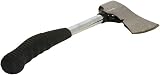 Coleman Axe with Durable Steel Head & Non-Slip Grip HandleView on Amazon
- 8
 ESTWING Fireside Friend Splitting MaulView on Amazon
- 9
 KSEIBI 274150 Camping Hatchet Axe Durable Camping Hatchet forView on Amazon
When crisp fall mornings turn to heavy firewood splitting, a dull tool turns clean splits into exhausting glancing blows. Knowing how to sharpen a splitting axe restores that clean wedge strike without ruining the head geometry. To sharpen a splitting axe, clamp the head securely in a bench vise, push a flat mill file across the cutting edge while matching its factory convex curve, and remove any wire burr with a sharpening stone. Unlike a felling axe or carving tool, a splitting axe does not need a razor edge; it needs a durable, convex wedge profile that forces wood grain apart without chipping or rolling over.
More options to compare
 KSEIBI 274178 Splitting Axe 36-Inch Wood Splitter ForgedCheck price on Amazon
 35.5" Splitting AxeCheck price on Amazon
 Crescent 6 lb. HEADLOCK™ Fiberglass Splitting AxeCheck price on Amazon
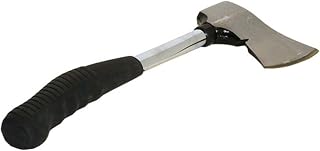 Coleman Axe with Durable Steel Head & Non-Slip Grip HandleCheck price on Amazon
 ESTWING Fireside Friend Splitting MaulCheck price on Amazon
 KSEIBI 274150 Camping Hatchet Axe Durable Camping Hatchet forCheck price on Amazon
FirewoodGearHQ may earn a small commission if you buy through links on this page. The price you pay stays the same. Read our affiliate disclosure.
The quick answer
A splitting axe relies on impact and wedge geometry rather than razor sharpness to burst logs apart. Clamp the axe head securely in a bench vise with the edge facing upward. Use a flat mill file to make smooth forward strokes across the bevel into the cutting edge, following the original convex curve of the cheeks. Turn the axe over to file the opposite face evenly. Finish by honing both sides with a circular sharpening stone to remove the rough wire burr, then apply light oil to prevent rust. A working convex edge splits cleanly without chipping on knots or deflecting off stubborn rounds.
Splitting axe profiles and sharpening tools
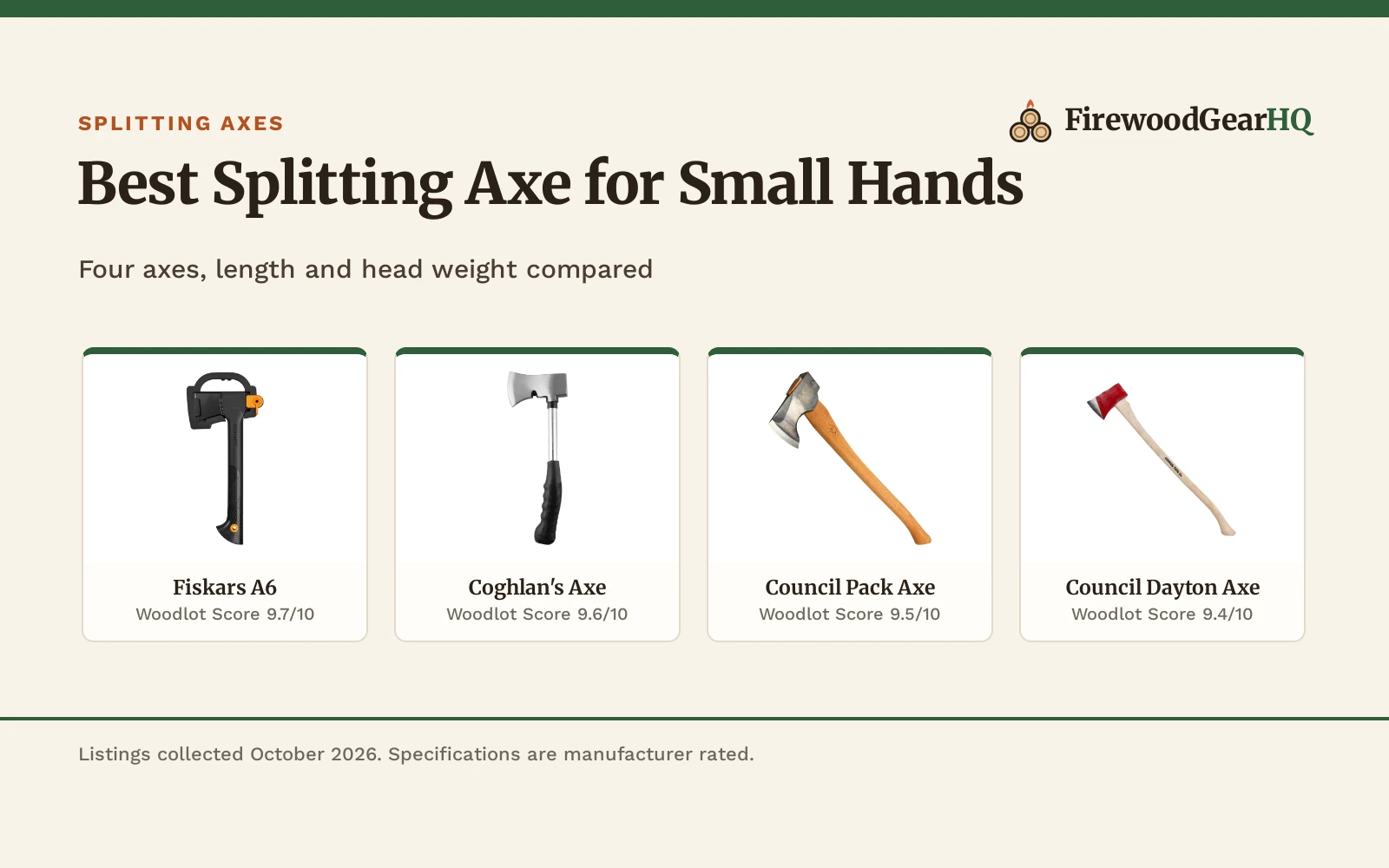
A splitting axe differs fundamentally from a felling axe. A felling axe uses a thin bit to slice across wood fibers, whereas a splitting tool uses head mass and flared cheeks to push wood apart along the grain. In reference listings, Crescent lists a 6 lb head on the CFAXE6, DWFKHT lists a 4.5 lbs head of 1065 high carbon steel on a 35.5 in handle, HFS lists a 4.4 lb forged steel head with a 3.54 in cutting edge, KSEIBI lists a 4.5 pounds head on a 36 in handle with an 8 in blade length, and glorousamc lists a 4.5 pounds head with a 3.5 in blade length. Each maker builds a broad wedge behind the cutting edge. Matching that profile during maintenance keeps your tool splitting efficiently. On the woodlot, the best splitting axe pairs with the best axe sharpener to keep cords moving to the stacks.
| Model | Stated head weight | Stated length | Blade profile notes |
|---|---|---|---|
| Crescent CFAXE6 | 6 lb | 36 in | Splitting wedge profile with alloy steel blade |
| DWFKHT Splitting Axe | 4.5 lbs | 35.5 in | Wedge-shaped blade of 1065 high carbon steel |
| HFS Splitting Axe | 4.4 lb | 35 in | Forged steel head with 3.54 in cutting edge |
| KSEIBI 274178 | 4.5 pounds | 36 in | Forged carbon steel with 8 in blade length |
| glorousamc Splitting Axe | 4.5 pounds | 36.5 in | Wedge head with 3.5 in blade length |
Use these reference figures to see how makers balance head weight and wedge profiles. Stouter head weights provide striking momentum, while broad cheeks pop wood fibers outward.
How to sharpen a splitting axe
Clamp the axe head securely
A loose axe moves under file pressure, rounding off bevel angles or causing slips. Mount the axe head firmly in a bench vise lined with scrap wood or rubber jaw pads to protect the finish. Position the bit pointing upward at comfortable elbow height. If working outdoors without a vise, clamp the head flat against a sturdy workbench or heavy splitting block with bar clamps.
Clean and inspect the bit
Wipe sawdust, dried sap, and soil off the head with a rag dampened in light oil. Inspect the cutting edge along its entire length. Look for rolled steel, blunted flat sections, or chips caused by dirty logs or ground contact. Clearing away pitch keeps file teeth from loading up with gummy residue.
Push the file into the edge
Use a flat mill bastard file fitted with a secure handle. Grasp the handle with your dominant hand and support the tip with the other hand. Rest the file on the bevel at the factory angle and push forward across the blade into the cutting edge with firm, steady pressure. Lift the file off the steel on the return stroke; dragging file teeth backward across hard steel ruins the tool.
Preserve the convex bevel
Pay close attention to maintaining the convex swell of the cheeks. Rather than holding the file rigidly flat, roll your stroke slightly along the natural curve of the cheek. This creates a strong, rounded bevel that supports the cutting edge with solid steel. Filing a flat, thin bevel weakens the edge, causing it to chip against knots or lodge deep inside green rounds.
File both sides evenly
File across the blade from toe to heel in overlapping passes. Maintain steady pressure until a uniform line of clean steel appears along the bit. Turn the axe around in the vise and repeat the same filing technique on the opposite cheek. Equal filing on both faces keeps the cutting edge centered with the eye and handle.
Hone off the wire burr
Filing pushes a thin wire burr of displaced metal over the opposite side of the blade. Lubricate a sharpening stone or puck with light honing oil or water. Rub the stone in circular motions along both bevels from the cheek down to the edge. Honing polishes away file marks and snaps off the wire burr, leaving a clean, durable working edge.
Protect the bare steel
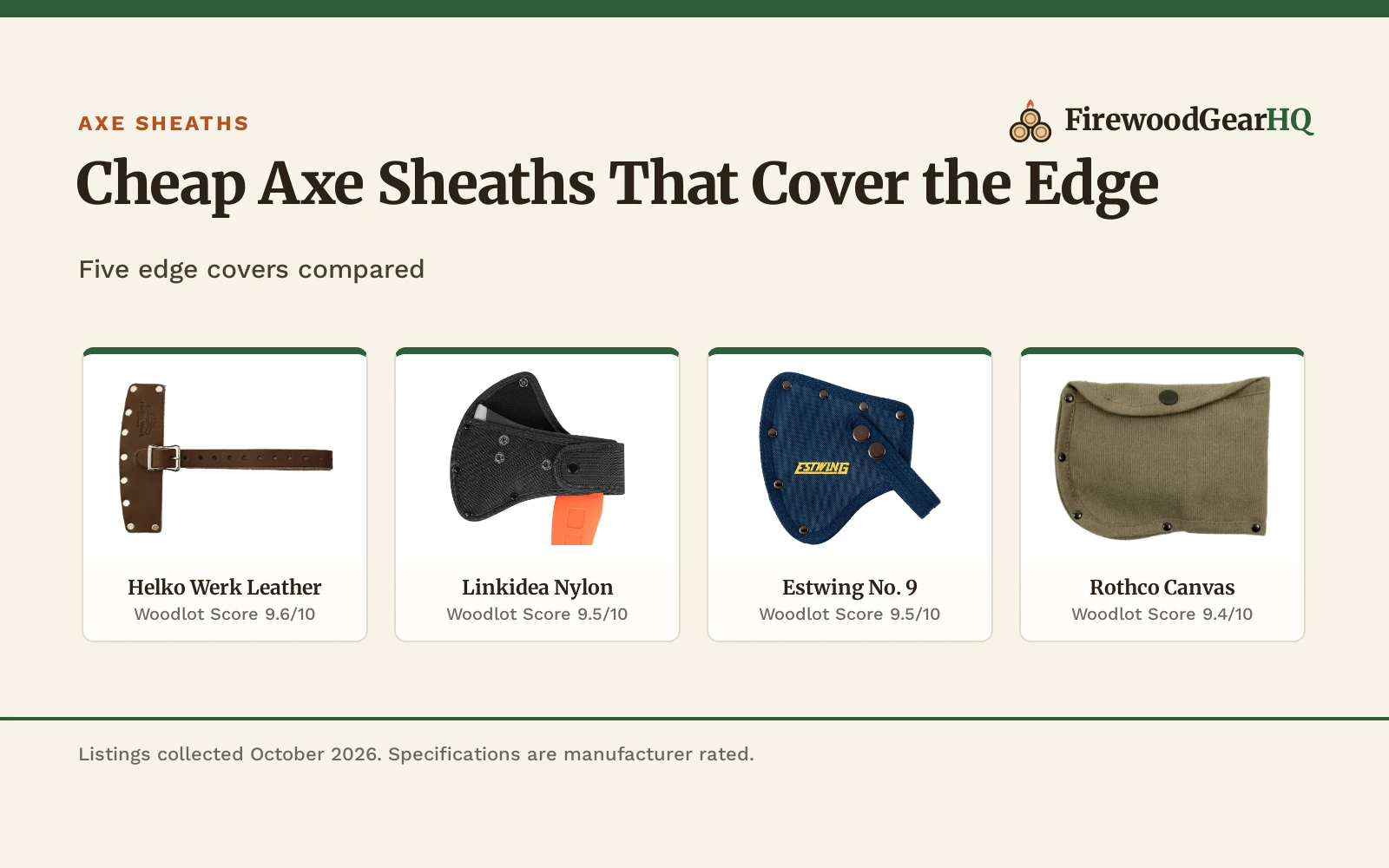
Freshly exposed carbon steel rusts quickly in damp wood sheds. Wipe away all filing dust and honing slurry with a clean cloth. Rub a light coat of oil over the bare metal to seal out moisture. Cover the cutting edge with a leather sheath before storing the tool or carrying it to the woodpile.
How to tell when a splitting axe is sharp enough
A splitting axe needs a working edge rather than a razor finish. Check these practical signs to confirm the tool is ready for splitting:
- Light reflection: Look directly down the cutting edge under good lighting. A dull edge or nick reflects bright flashes of light. A properly shaped edge appears as a continuous dark line without shiny spots.
- Thumb pad check: Lightly press your thumb pad across the edge without sliding along the blade. A crisp edge catches the skin ridges. If the steel feels smooth and slippery, the bit needs further filing.
- Wood bite: Press the edge into a firewood round with light hand pressure. A sharp axe bites the wood grain immediately rather than skidding off.
- Cheek thickness: Sight the head from the poll down to the edge. The steel must swell outward behind the bit to provide splitting leverage.
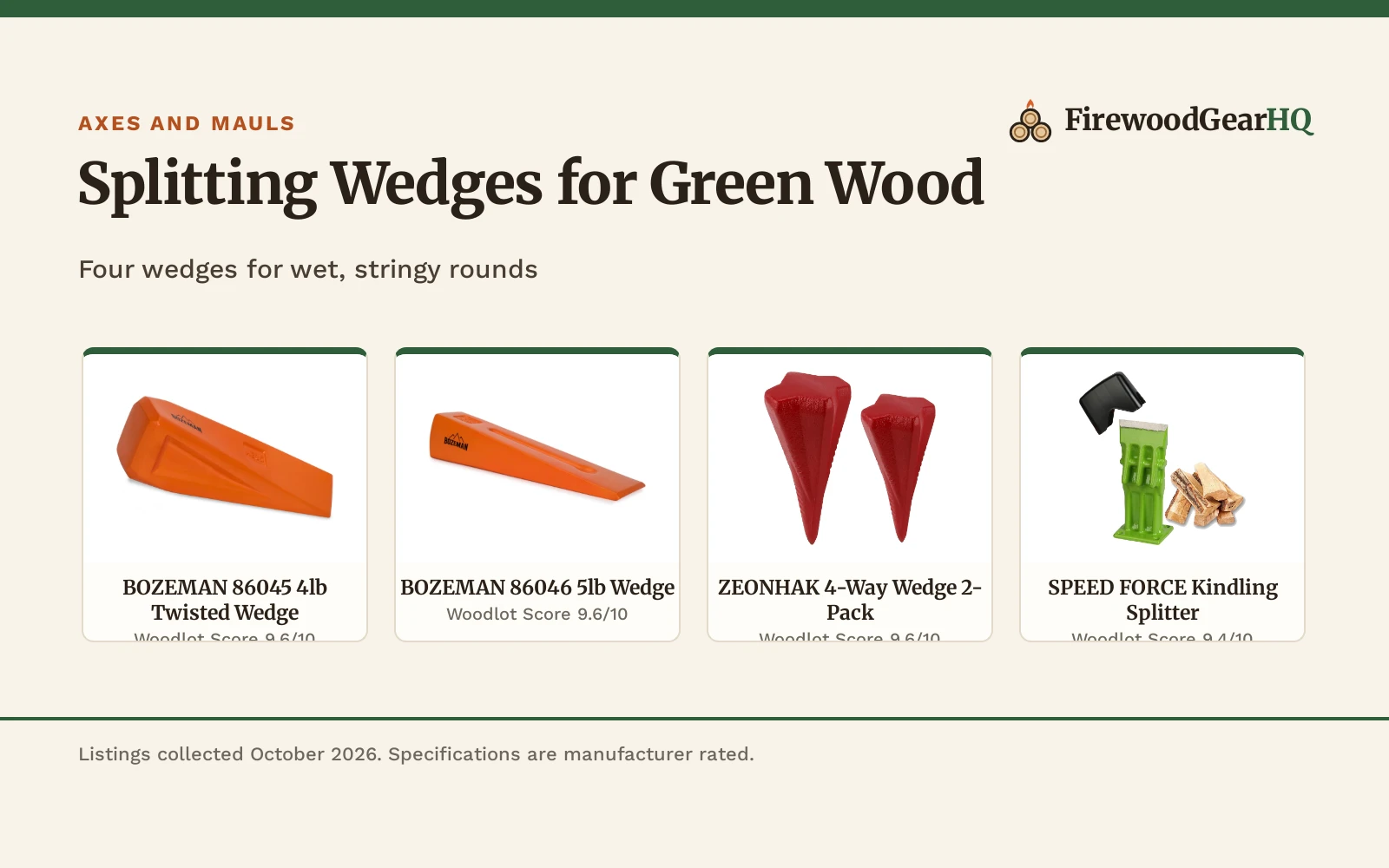
If you regularly split stubborn firewood, reviewing splitting axe vs maul and how to split wood with an axe helps match tool weight to your wood species.
What happens if you sharpen a splitting axe like a razor
Sharpening a splitting axe to a razor edge ruins its performance on the woodpile. Firewood splitting relies on high-velocity impact against dense, knotted wood. A razor-sharp edge creates several immediate problems:
- Chipping and rolling: A thin, acute edge lacks the steel support needed to absorb heavy impact. Hitting frozen wood or hardwood knots chips or folds thin steel on stubborn knots.
- Binding inside rounds: A razor edge slices into wood fibers without wedging them apart. The blade buries itself deep in the round, sticking fast. Freeing a stuck axe wastes energy and strains the handle.
- Premature dulling: Delicate slicing edges degrade rapidly under impact. A stout convex profile stays effective across multiple cords of firewood without constant touch-ups.
Keep the cutting edge crisp enough to bite, but let the broad wedge cheeks do the splitting work.
Bench grinders and power sharpeners
High-speed bench grinders and angle grinders can ruin an axe head within moments. Dry grinding wheels create intense heat at the thin cutting edge. Once the steel turns straw, blue, or purple, the factory temper is lost. Overheated steel softens permanently and will never hold an edge again.
A flat mill file and sharpening stone cut cold steel safely without generating damaging heat. If heavy repairs require power equipment, use a slow-speed water-cooled sharpener that keeps the blade wet during grinding. For routine maintenance, manual filing remains the safest and most reliable method.
Clear the swing area (overhead too), split on a solid chopping block at a comfortable height, keep your feet apart with the block in front of you, and wear eye protection and sturdy boots. Replace a cracked or loose handle before you swing again. Read our Safety Disclaimer.
Frequently Asked Questions
How sharp should a splitting axe be?
A splitting axe should be working sharp, not razor sharp. The edge must bite into the end grain on impact so the head does not deflect, but the profile behind the edge must stay thick and convex to burst the log apart. A razor edge chips and binds, while a stout convex wedge splits cleanly.
Should I use a file or a stone to sharpen a splitting axe?
Combine a mill file and a sharpening stone for complete edge maintenance. A flat mill file removes metal efficiently to repair nicks, re-establish the bevel angle, and shape the convex curve. A sharpening stone smooths out coarse file scratches and hones away the wire burr, leaving a clean, durable working edge.
Can I sharpen a splitting axe without taking it off the handle?
Yes. You do not need to remove the axe head from the handle. Clamp the axe head securely in a bench vise with the handle hanging free, or clamp the tool flat on a sturdy workbench so the head remains rock solid during filing.
Why does my splitting axe get stuck in logs?
A splitting axe sticks in logs when the bevel has been ground too thin and flat. A thin, flat bevel penetrates deep into wood fibers like a wedge without sufficient shoulder flare to pop the round open, causing the blade to bind tightly. Conversely, an excessively blunt edge bounces off or glances without penetrating at all. Restoring a smooth convex wedge profile gives the edge enough bite to start the split while allowing the flared cheeks to force the log apart.
How often should you sharpen a splitting axe?
Hone your splitting axe with a stone whenever the edge feels slick or begins glancing off knotty rounds. Touch-up frequency depends on wood species and how clean the bark is; sandy or frozen logs dull an edge much faster than clean, dry rounds. Filing with a mill file is only needed when visible chips, rolled steel, or heavy wear appear.
Can I use an angle grinder to sharpen my splitting axe?
Avoid using an angle grinder or high-speed bench grinder. The rapid friction creates excessive heat that ruins the steel temper, permanently softening the edge. A handheld flat mill file and sharpening stone remove metal safely without risking heat damage.
Related guides
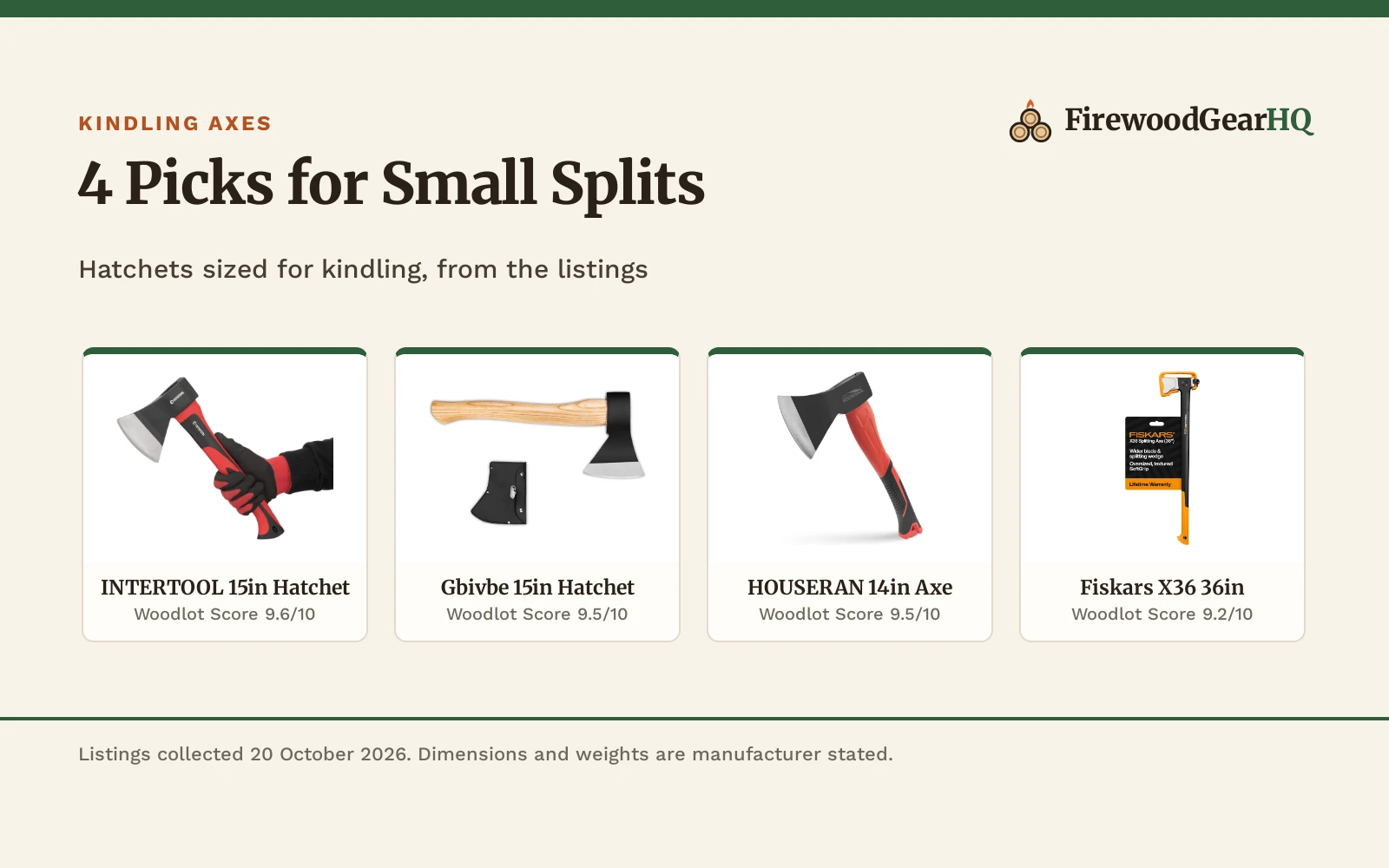
See the axes and mauls hub, the best splitting axe and the best axe sharpener. Compare splitting tools in splitting axe vs maul and maul vs axe. Splitting firewood by hand? Review how to split wood with an axe, choose a heavy hitter with the best splitting maul, or compare head weights in how heavy should a splitting maul be. For stubborn, knotted rounds, learn how to use a splitting wedge and see the best splitting wedge. Also see our best log splitter axe. Also see our best hatchet for splitting wood. Also see our best axe for beginners. Also see our best hand wood splitter. Also see our best kindling splitter. Also see our log splitter vs splitting maul.